Our Short List of 3

- Display: 7.4-inch HDR OLED, 1280 by 800, up to 90 Hz
- Processor: AMD Zen 2 and RDNA 2 custom APU
- Memory: 16 GB LPDDR5
- Storage: 512 GB NVMe, plus a microSD slot

- Connectivity: Bluetooth wireless and USB-C wired
- Joysticks: TMR electromagnetic, anti-drift design
- Triggers: Hall effect, with mode switching
- Extras: two remappable back buttons, motion control

- Connectivity: Xbox Wireless and Bluetooth
- Port: USB-C for wired play
- Controls: hybrid D-pad, dedicated Share button
- Power: AA batteries or optional rechargeable pack
All 5 Picks at a Glance
| Product | Specs | Action |
|---|---|---|
| Valve Steam Deck OLED 512GB |
| Check price on Amazon |
| 8BitDo Ultimate 2 Bluetooth Controller |
| Check price on Amazon |
| Xbox Wireless Controller, Carbon Black |
| Check price on Amazon |
 Logitech G502 HERO |
| Check price on Amazon |
 Samsung T9 Portable SSD 2TB |
| Check price on Amazon |
JDM: Japanese Drift Master, Gaming Factory’s open-world drift game set in a fictional Japanese prefecture, launched in May 2025 with licensed Japanese cars and a story told partly through manga pages. The Linux question arrives in an unusual shape: this is one of the rare games in this series sold on two PC storefronts, so the native question has to be answered twice, once for Steam and once for GOG.
Both answers are no. Steam’s record flags the game for Windows alone, and GOG’s own product record, read directly, lists Windows as its only supported system. What Linux players get instead is the Proton route, and on paper it is a strong one: a Platinum headline on ProtonDB and a Playable badge from Valve’s Steam Deck testing. This piece reads each record on its own terms: the flags, the depots, the add-on apps, the community file and the Deck sheet.
As an Amazon Associate, we earn from qualifying purchases.
Quick answer
JDM: Japanese Drift Master is not native on Linux: Steam’s record flags Windows only, with an empty-shell Linux requirements field and a single Windows depot. The route is Proton: ProtonDB’s headline tier is Platinum across 26 reports, Valve rates the game Playable on Steam Deck, and GOG sells a Windows-only edition.
Two storefronts, one Windows build
Start with the second storefront. GOG genuinely sells this game: its product page is live and in stock, and its product API record (product 1378826880) carries a content system compatibility field reading Windows true, Mac false, Linux false. A DRM-free edition exists, then, and it is the same Windows build, not a hidden Linux port. One wrinkle deserves naming: GOG’s embed search returns zero products for this title even though the product page and API record exist, a documented blind spot in GOG’s search surfaces. The product record is decisive, and it says Windows only.
That leaves Steam as the edition both compatibility records describe. Steam lists the game at app 1153410, developed by Gaming Factory and published by Gaming Factory with 4Divinity and Beep Japan, released 21 May 2025. Its categories include single-player and multiplayer, full controller support and Steam Cloud. No anti-cheat is named on the record, no third-party DRM notice appears, and no external account is required; the multiplayer, with lobbies of up to eight players, runs on the Epic Online Services SDK that SteamDB detects among its technologies, alongside Unreal Engine.
What Steam’s record shows
The platform flags read Windows true, Mac false, Linux false. The requirements fields show the populated-but-empty pattern this series keeps meeting: the Windows tab is genuinely filled in, while the Mac and Linux fields hold Minimum and Recommended headings over empty lists. A Linux tab therefore exists in form but not in content; there is no Linux requirement anywhere in it, because there is no Linux build to describe.
The depot census settles the matter. SteamDB’s record shows exactly one content depot, 1153411, configured for 64-bit Windows at 16.57 GiB, and the size total filtered to Windows equals the unfiltered base-game total. Beside it sit only the Windows redistributables, the VC 2022 and DirectX packages. There is no Linux depot, no Mac depot and no shared depot. The registered assets are the standard client icon, client tga, icon and logos; no Linux client icon is registered, and the extended OS field is an empty string.
The published Windows requirements describe a moderately hungry Unreal Engine game: at minimum a Core i5-9400F or Ryzen 5 2600, 16 GB of RAM and a GTX 1660 class card under DirectX 12, rising to 32 GB of RAM and an RTX 3060 Ti class card at recommended. Those numbers explain the community file’s split between smooth desktop runs and tighter handheld ones.
The add-on apps: no flag hiding anywhere
The base record’s DLC array holds three apps, each read individually. The Supporter Pack (3749550), JDM: Made in USA (4054180) and JDM: American Classics (4449300) all flag Windows true, Mac false, Linux false, the same shape as the base game. No soundtrack app exists anywhere in the family, so the soundtrack trap, where an audio product’s Linux flag gets credited to the game by a family-level scan, cannot fire here. Across all four family records, the Linux flag count is zero.
The Proton file: a Platinum headline with a wheel-shaped caveat
ProtonDB’s game page gives this title a Platinum headline tier across 26 reports. One evidence limit must be stated plainly: the summary endpoint returned a not-found response throughout this session, by direct request and by browser fetch alike, so the best-reported and trending tiers and the confidence score could not be read; this article claims only the headline tier and the report count the game page itself displays.
The same page carries a stray heading. ProtonDB displays a “Natively Supports” heading for this game, generated by the populated-but-empty Linux requirements field. Steam’s record contradicts it on every layer, flags, requirements, depots and icons, so the heading is wrong, and this article follows Steam.
The filings under the headline are mostly straightforward. Reports on Proton 9.0-4 and 10.0-3 describe out-of-the-box runs, with frame rates at high settings on mid-range cards. Three recurring blemishes appear. Racing wheels are the big one: several reporters found a G29 or a Thrustmaster wheel simply not detected, across multiple Proton versions, while Xbox and PlayStation pads worked immediately; the game’s own record rates controller support as full, and the filings suggest that promise holds for gamepads rather than wheels. One desktop report describes the graphics options resetting to low or the Deck preset on every launch, with the intro video rendering as coloured blocks. Occasional crashes and stuck loading screens appear in a minority of filings.
The Steam Deck sheet
Valve rates JDM: Japanese Drift Master Playable on Steam Deck, and SteamOS separately Compatible. One evidence note: Valve’s own compatibility endpoint returned an empty result set for this app this session, so the verdict, its checks and its test paperwork were read through SteamDB’s republication of Valve’s data, the fallback route used before.
Three of the four checks pass cleanly: all functionality is accessible with the default controller configuration, the game shows Steam Deck controller icons, and the default graphics configuration performs well. The single deduction is small in-game text. A note adds that the game does not default to external Bluetooth or USB controllers and may require switching the controller through the Quick Access Menu. The test paperwork dates the check to 8 October 2026, against build 24471801, with proton-stable as the recommended runtime. The current public build is 26542938, published in November 2026, so the badge grades a superseded build rather than the one on sale today.
Gear that fits the record
The gear below follows the record’s shape: the handheld the Playable badge was written for, two pads for docked and desktop play, a mouse for desktop sessions, and library storage.
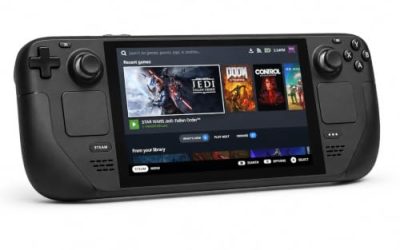
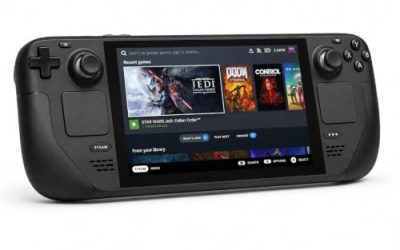
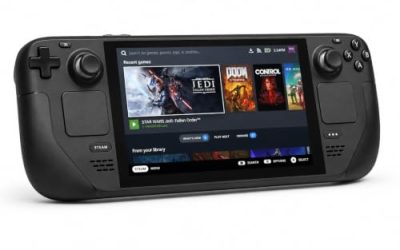
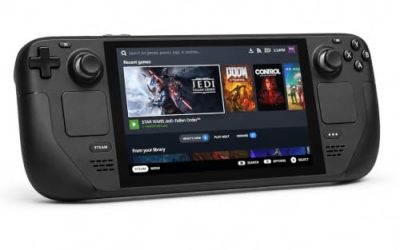
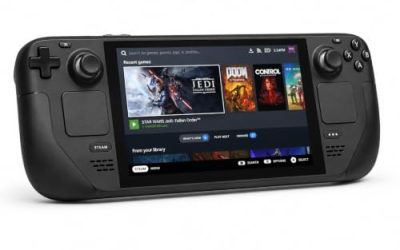
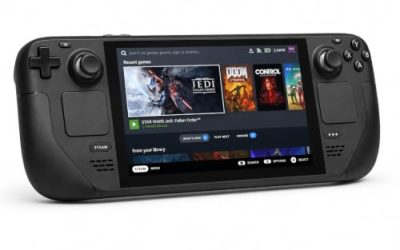
Valve Steam Deck OLED 512GB
- Display: 7.4-inch HDR OLED, 1280 by 800, up to 90 Hz
- Processor: AMD Zen 2 and RDNA 2 custom APU
- Memory: 16 GB LPDDR5
- Storage: 512 GB NVMe, plus a microSD slot
The handheld the Playable badge was written for. Valve’s sheet passes the Windows build under proton-stable with small text as the only deduction, and the community filings describe the low preset running well on it.
8BitDo Ultimate 2 Bluetooth Controller
- Connectivity: Bluetooth wireless and USB-C wired
- Joysticks: TMR electromagnetic, anti-drift design
- Triggers: Hall effect, with mode switching
- Extras: two remappable back buttons, motion control
The docked and desktop pad pick. Steam lists full controller support for the game, and this pad covers the couch case with back buttons for menu shortcuts.
Xbox Wireless Controller, Carbon Black
- Connectivity: Xbox Wireless and Bluetooth
- Port: USB-C for wired play
- Controls: hybrid D-pad, dedicated Share button
- Power: AA batteries or optional rechargeable pack
The safest guest pad: Steam Input support is universal, the glyphs match what most games display, and it pairs over Bluetooth or its own wireless standard. On the handheld, the test sheet’s note applies: an external pad may need a manual Quick Access Menu switch before it takes over.
Logitech G502 HERO
- HERO optical sensor, up to 25,600 DPI
- 11 programmable buttons
- Adjustable weight system
- Wired USB connection
JDM’s menus and tuning screens reward a precise pointer at a desk, and eleven programmable buttons cover the inputs a long session repeats.
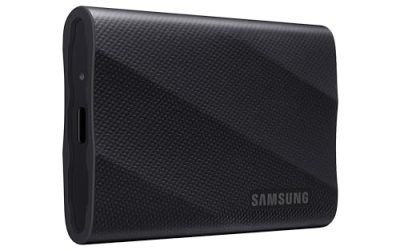
Samsung T9 Portable SSD 2TB
- Capacity: 2 TB portable SSD
- Interface: USB 3.2 Gen 2×2, USB-C connector
- Maker-rated speeds: up to 2,000 MB per second read, 1,950 MB per second write
- Features: Dynamic Thermal Guard, maker-rated drop resistance
For moving a Linux game library between a desktop and a laptop, a fast USB-C drive is the simple answer. The headline figure needs a Gen 2×2 host port; on a lesser port the drive runs at that ceiling instead.
How to choose
Choose between the two storefronts on the installer, not the build, because both sell the same Windows code. The Steam copy is the one Valve’s Deck sheet and the ProtonDB file describe, and it carries Steam Cloud saves; the GOG copy is the DRM-free offline installer of the identical build. On a Linux desktop, install under Proton and leave the compatibility tool at its default before experimenting: the Platinum headline rests mostly on default-Proton filings. Bring a gamepad as your primary input, since the record’s full controller support is the shape the filings confirm. On Steam Deck, expect the low preset and small text.
Who should skip
Skip this one if you are shopping for a native Linux drift game: neither storefront sells one, and ProtonDB’s stray heading does not change that. Skip it if your rig is a racing wheel: multiple filings, across several Proton versions, report wheels going undetected while pads work. Skip the GOG copy if you are buying it in the hope that a second storefront means a second, Linux-friendly build; the product record rules that out. And skip it on Deck if small text is a hard limit for you, because that is the exact deduction Valve recorded.
FAQ
Is JDM: Japanese Drift Master native on Linux?
No. Steam’s record for app 1153410 flags Windows only, its Linux requirements field is an empty shell, and its single content depot is configured for Windows. GOG’s product record agrees, listing Windows as the only supported system.
How well does JDM: Japanese Drift Master run under Proton?
ProtonDB’s headline tier is Platinum across 26 reports. Most filings describe out-of-the-box runs on recent Proton versions; the recurring problems are undetected racing wheels, occasional crashes, and one report of graphics settings resetting at launch.
Is JDM: Japanese Drift Master Steam Deck Playable?
Yes. Valve rates it Playable, with SteamOS separately Compatible, tested in October 2026 under proton-stable. The only deduction is small in-game text; the tested build has since been superseded.
Can I buy JDM: Japanese Drift Master on GOG instead?
Yes, but it changes nothing for Linux. GOG’s product record lists Windows as the only supported system, so the GOG edition is the same Windows build in a DRM-free installer, with no Linux version attached.
Final verdict
JDM: Japanese Drift Master is a Windows-only release sold twice. Neither Steam’s record nor GOG’s product record carries a Linux build, the depot census shows a single Windows content depot, and the one Linux-looking signal, ProtonDB’s stray heading, is an artefact of an empty requirements field. What Linux players get is a strong Proton file with a Platinum headline, a Playable Deck badge whose only deduction is small text, and one real caveat: bring a gamepad, because the wheel support the genre invites is exactly where the filings complain. Buy either storefront’s copy, and play it under Proton.
Product and ASIN Reference
| Product | ASIN |
|---|---|
| Valve Steam Deck OLED 512GB | B0CQ3RWQQZ |
| 8BitDo Ultimate 2 Bluetooth Controller | B0F194QFT2 |
| Xbox Wireless Controller, Carbon Black | B08DF248LD |
| Logitech G502 HERO | B07GBZ4Q68 |
| Samsung T9 Portable SSD 2TB | B0CHFS9K14 |