Tannenberg is the Eastern Front entry in Blackmill Games’ WW1 Game Series, the squad-based multiplayer shooter line that also includes Verdun and Isonzo. Those are separate games with separate records, and nothing here transfers from them. Tannenberg first sold on Steam in November 2017, reached full release in February 2019, and its Linux story is the simple one: the native build is real, it is in the package buyers receive, and it is still maintained.
A Linux flag on a store page is a claim, not a delivery, so this piece reads the delivery layers one by one: the depot census, the requirements tab, the community file, Valve’s Deck paperwork, the anti-cheat documentation and the second-storefront ruling. Two layers carry honest wrinkles, both named where they belong.
As an Amazon Associate, we earn from qualifying purchases.
Quick answer
Yes. Tannenberg is native on Linux: Steam flags all three platforms, the Linux requirements tab is fully written, and the Linux depot sits inside the package Steam sells, with manifests current to October 2025. Valve rates it Playable on Steam Deck, though its 2022 test graded the Windows build under Proton, not the native one.
The depot census: the Linux build is in the package Steam sells
The decisive layer for any native claim is the depot list, because a depot is the actual file set Steam delivers. Tannenberg’s record carries one content depot per platform: Windows 32-bit and 64-bit builds, a macOS build, and depot 633461, named Tannenberg Linux, at 8.44 GiB on disk. Its file census reads like a Unity Linux build should: 224 files, including native shared libraries, game data and FMOD audio banks. It is no placeholder; the all-platforms marker depot elsewhere in the list is the 0 B one.
Membership matters as much as existence, and here it is clean. The store package Steam sells, package 172621, lists depot 633461 among its contents, and the depot’s own package list names 172621 in return: the build ships in the ordinary store purchase, not on a test branch or a CD-key sub. Maintenance is current, too: the latest manifest is dated 16 October 2025, on the current public branch build, updated in step with the Windows depots. A native build from 2017 still receiving manifests beside its Windows sibling is supported, not a leftover.
What the store page promises
Steam’s flags for app 633460 read Windows true, Mac true, Linux true, and the requirements tab behind the Linux flag is fully written at both tiers. The minimum names Ubuntu 18.04 or later, 64-bit only, other distributions likely to work but not officially supported, on period hardware: a Core i5-2500K or Phenom II X4 940, 4 GB of RAM, a GeForce GTX 960M or Radeon HD 7750 class card with 2 GB of video memory, broadband internet and 8 GB of storage. The recommended tier raises memory to 16 GB and video memory to 4 GB. The minimum’s notes add the condition shaping the whole game: multiplayer only, with a stable, fast connection called out by name.
The rest of the record is plain: achievements, trading cards, Steam Cloud, no third-party DRM notice, no external account, and controller support rated partial, a fact the Deck sheet echoes.
The one add-on in the array, and why it changes nothing
The base game’s DLC array holds exactly one app: the Tannenberg Original Soundtrack (1239620), a music product from December 2020, flagging Windows, Mac and Linux all true. In a Windows-only game that shape is a trap, because a family scan credits the album’s Linux flag to the game. Here it cannot mislead: the base game carries its own flag, requirements and depot, so the ruling is made on the game alone. The census also lists a Supporter Edition upgrade depot, belonging to a separate add-on app; it plays no part in the ruling.
Two honest gaps in the paperwork
First, the icon registry: the registered assets are the standard client icon, icon and logo artwork, with no Linux client icon among them. That is a cosmetic gap, not a delivery gap, but the registry lacks the small badge some native games display. Second, a limit of this session rather than of the record: the per-system launch-entry list could not be extracted from the text rendering used here, so no launch-entry claim is made either way. The ruling rests on the layers read in full: flags, requirements, depot census and package membership.
The ProtonDB file: Gold, filed mostly by native players
ProtonDB’s summary record for app 633460 was read in full this session: a Gold settled tier, a Platinum best-reported tier and a Gold trending tier, across 15 reports with moderate confidence. ProtonDB classifies the game as native, and its game page carries the Natively Supports heading; for once, that heading agrees with Steam’s record.
The tiers need one qualification. Most filings are native filings, not Proton runs, so the Gold headline describes a mixed file. The native colour is strong, with flawless runs at high settings and online multiplayer rated Excellent in several filings. It is not unanimous: one native filing reports the audio missing entirely, and older Proton filings complain about frame rates dropping in busy scenes. Fifteen reports is a thin file, as the moderate confidence label concedes.
The Steam Deck sheet: Playable, and graded on the Windows build
Valve rates Tannenberg Playable on Steam Deck, with SteamOS separately rated Compatible. The passing items matter most: Steam Deck controller glyphs are shown, interface text is legible, and the default graphics configuration performs well. The two deductions are input-shaped: some functionality is not accessible under the default controller configuration, requiring the touchscreen, the virtual keyboard or a community configuration, and entering text requires manually invoking the on-screen keyboard. Both follow from the record’s partial controller rating.
The paperwork carries the most interesting split in this record. Valve’s test is dated 26 February 2022, against build 8131196, long superseded, and its test configuration names the recommended runtime as proton-7.0-1. In plain terms, the Playable badge certifies the Windows build under an old Proton, not the native Linux build a desktop player would install. The badge is real, but the native route on Deck is not what the sheet measures: read it as a floor, not a description of the Linux build.
Anti-cheat: a silent record on an online game
Tannenberg is an online PvP game, so the anti-cheat question is a fair one, and the honest answer is documentary. The Steam record names no anti-cheat, carries no DRM notice and requires no external account; its detected technologies are the Unity engine and networking middleware. The AreWeAntiCheatYet database, read in full this session, holds no entry for this app in either direction. That is documentation silence, stated as silence: no source consulted certifies an anti-cheat status here, and none is claimed. What the record does show is native players filing working online multiplayer reports.
The storefront ruling
There is no DRM-free copy to weigh. GOG’s natural product address for this title resolves to the general catalogue rather than a product page, its embed search returns no product, and its catalogue search’s only hit is an unrelated strategy add-on borrowing the Tannenberg name. No GOG edition exists on any platform; the Steam copy is the only PC edition sold.
Gear that fits the record
The gear below follows the record’s shape: the handheld the badge was written for, two pads, a mouse and library storage.
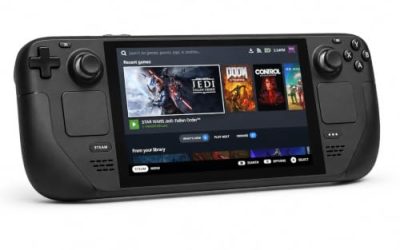
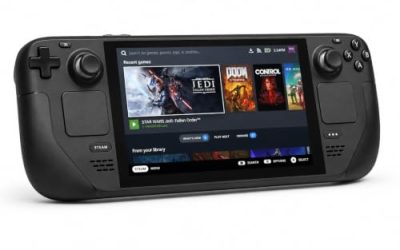
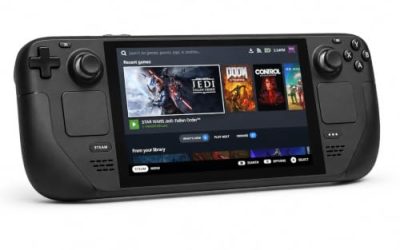
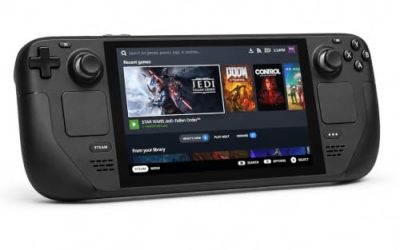
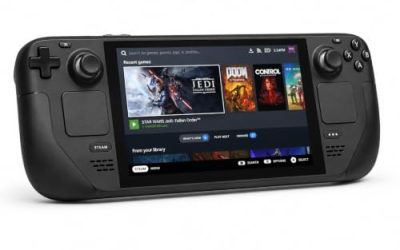
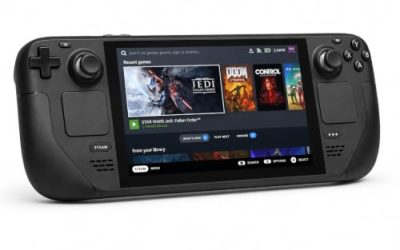
Valve Steam Deck OLED 512GB

The handheld the Playable badge was written for, with legible text and a performant default configuration on Valve’s sheet.
Specs
- Display: 7.4-inch HDR OLED, 1280 by 800, up to 90 Hz
- Processor: AMD Zen 2 and RDNA 2 custom APU
- Memory: 16 GB LPDDR5
- Storage: 512 GB NVMe, plus a microSD slot
- Wireless: Wi-Fi 6E and Bluetooth
- Channel note: Valve sells the Deck mainly through its own store, so Amazon listings are third-party sellers
8BitDo Ultimate 2 Bluetooth Controller
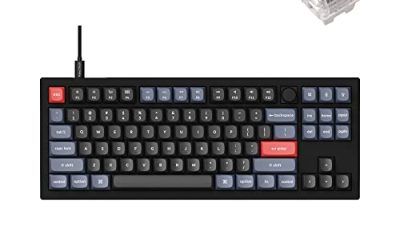
The docked and desktop pad pick: with controller support rated partial, a pad covers play while a keyboard handles text and menus.
Specs
- Connectivity: Bluetooth wireless and USB-C wired
- Joysticks: TMR electromagnetic, anti-drift design
- Triggers: Hall effect, with mode switching
- Extras: two remappable back buttons, motion control
- In the box: charging dock included
Xbox Wireless Controller, Carbon Black
The safest guest pad in PC gaming: Steam Input support is universal, the glyphs match what most games display, and it pairs over Bluetooth or its own wireless standard.
- Connectivity: Xbox Wireless and Bluetooth
- Port: USB-C for wired play
- Controls: hybrid D-pad, dedicated Share button
- Power: AA batteries or optional rechargeable pack
Logitech G502 HERO
A precise wired mouse for the server browser between matches, with eleven programmable buttons for the inputs a long session repeats.
Specs
- HERO optical sensor, up to 25,600 DPI
- 11 programmable buttons
- Adjustable weight system
- Wired USB connection
- On-board memory profiles
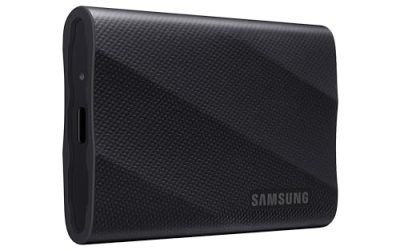
Samsung T9 Portable SSD 2TB
For moving a Linux game library between machines, a fast USB-C drive is the simple answer; the headline figure needs a Gen 2×2 host port.
Specs
- Capacity: 2 TB portable SSD
- Interface: USB 3.2 Gen 2×2, USB-C connector
- Maker-rated speeds: up to 2,000 MB per second read, 1,950 MB per second write
- Features: Dynamic Thermal Guard, maker-rated drop resistance
How to choose
Choose the Steam copy: it is the only PC edition, and it carries the native build. On a Linux desktop or laptop, install the native version directly; no compatibility layer is part of the documented route, and the published minimum is hardware from the game’s own era. The one real requirement is the connection: the record calls the game multiplayer only, so wire in where you can. On Steam Deck, expect the Playable experience Valve describes, with the two input deductions. For input everywhere, plan on partial controller support: a pad for play, a keyboard within reach for text.
Who should skip
Skip this one if you want an offline or single-player campaign: the record’s own notes call the game multiplayer only. Skip it if you need a DRM-free installer, because no GOG edition exists. Skip the Deck plan if partial controller support and a manual keyboard invoke are more friction than you accept on a handheld. And skip it if a 15-report community file feels too thin to trust.
FAQ
Is Tannenberg native on Linux?
Yes. Steam flags all three platforms, the Linux requirements tab is populated at both tiers, and the Linux depot sits inside the store package with manifests current to October 2025.
Does the Steam Deck Playable badge cover the native build?
No. Valve’s test paperwork is dated February 2022, grades a long-superseded build, and names a Proton runtime as the recommended configuration, so the badge certifies the Windows build under Proton. The native build is the desktop route; the badge is a floor for handheld play.
What does ProtonDB say about Tannenberg?
Its summary record reads Gold on the settled and trending tiers and Platinum on the best-reported tier, across 15 reports with moderate confidence, and the site classifies the game as native. Most filings are native reports describing clean runs; one reports missing audio.
Can I buy Tannenberg on GOG instead?
No. GOG’s own searches return no product for this game, and the only catalogue hit is an unrelated add-on that borrows the name. The Steam copy is the only PC edition on sale.
Final verdict
Tannenberg is what a native Linux release should look like: flags that tell the truth, a requirements tab with real hardware in it, a full-size Linux depot in the store purchase, and manifests still landing in step with the Windows build eight years after release. The wrinkles are paperwork, not delivery: no Linux client icon in the registry, and a Deck badge grading the Windows build under an old Proton. Buy the Steam copy, install the native build on desktop, and treat the Playable badge as the handheld’s floor.
Product and ASIN Reference
| Product | ASIN |
|---|---|
| Valve Steam Deck OLED 512GB | B0CQ3RWQQZ |
| 8BitDo Ultimate 2 Bluetooth Controller | B0F194QFT2 |
| Xbox Wireless Controller, Carbon Black | B08DF248LD |
| Logitech G502 HERO | B07GBZ4Q68 |
| Samsung T9 Portable SSD 2TB | B0CHFS9K14 |