METAL GEAR SOLID Δ: SNAKE EATER is KONAMI’s ground-up remake of the 2004 jungle stealth classic, rebuilt in Unreal Engine and released on 28 August 2025. For Linux players the first question is the simplest one: is there a native build? Steam’s record answers it without ambiguity, and every deeper layer of that record — the depot census, the requirements tabs, the icon registry — answers it the same way.
What makes this game interesting is not the native question but the split that follows it: the desktop Proton file is one of the strongest a big-budget remake has earned, while Valve’s own Steam Deck sheet refuses the game outright.
As an Amazon Associate, we earn from qualifying purchases.
Quick answer
METAL GEAR SOLID Δ: SNAKE EATER has no native Linux build: Steam’s record flags Windows only, and the single content depot is a Windows build. The Linux route is Proton, where the community file is unusually strong — Platinum on every tier across 73 reports. The Steam Deck is the exception: Valve rates it Unsupported on graphics performance.
The record, layer by layer
Start with the platform flags, because here they are only the first of several agreeing layers. The record for app 2417610 flags Windows true, Mac false and Linux false. The Windows requirements tab is genuinely populated at both tiers: Windows 10 or 11 (64-bit), a Core i5-8600 or Ryzen 5 3600 at minimum, an RTX 2060 Super at minimum and an RTX 3080 recommended, DirectX 12 throughout, and 118 GB of storage with an SSD recommended. It is a heavyweight specification, and it matters when the Deck verdict arrives.
The depot census is decisive. SteamDB’s listing shows exactly one content depot, 2417611, at 118.88 GiB — matching the storage figure in the requirements — accompanied only by the standard Windows redistributables, VC 2022 and DirectX June 2010. There is no Linux depot, no Mac depot and no shared depot with an operating-system split. The registered icon assets are clienticon, clienttga and icon; no LinuxClientIcon exists. The osextended field is an empty string, leaving no trace of a Mac or Linux launch configuration. Developer and publisher both read KONAMI, and the record’s own controller field reads full support.
So the ruling is not a flags-only inference: flags, requirements, depots, icons and launch configuration all say the same thing. As sold, this is a Windows-only release, and the Linux copy a player installs is the Windows build under Proton.
The empty Linux tab, and the heading it creates
One layer of the record looks, at a glance, like it disagrees. The Mac and Linux requirements fields are not absent — they are populated-but-empty shells, carrying Minimum and Recommended headings over lists with nothing in them. No Linux requirements have ever been published for this game; the headings are scaffolding.
That empty shell has a visible side effect. ProtonDB’s game page for this title carries a “Natively Supports” heading. The heading is generated from the presence of that Linux requirements field, not from any Linux build, and it contradicts everything else on both records: the flags, the depot census and the absent Linux icon. Where the heading and the record disagree, this article follows the record. There is no native Linux version of this game, whatever the stray heading suggests.
What Proton delivers on a desktop
With the native question closed, the practical question is how the Windows build behaves under Proton — and the community file is about as strong as this class of release produces. ProtonDB’s summary record for app 2417610 reads Platinum on the settled, best-reported and trending tiers, across 73 reports with strong confidence. That is the full summary, read directly, not a headline figure.
The filings behind the medal deserve a careful read, because Platinum describes compatibility, not polish. Desktop reports describe full playthroughs out of the box on Proton 10 and GE-Proton builds, across AMD, NVIDIA and Intel Arc hardware. The recurring complaints concern the game itself rather than the translation layer: traversal stutter, lag in the food and item menus, shader compilation at launch, and a frame rate the game itself caps at 60 — behaviours reporters also see on Windows. On a desktop with a discrete GPU, the Linux experience tracks the Windows one closely.
The Steam Deck sheet is the hard line
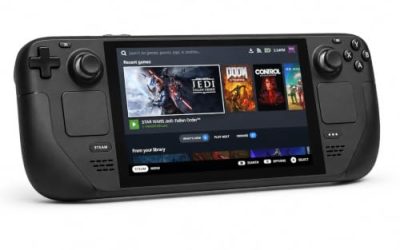
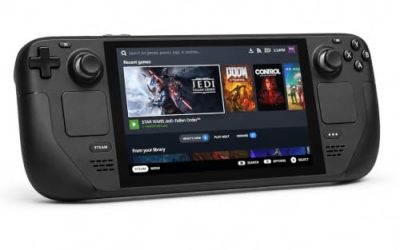
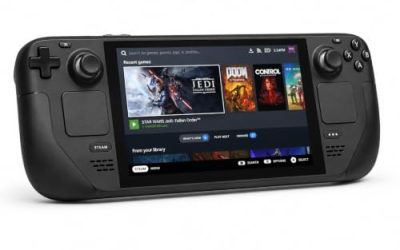
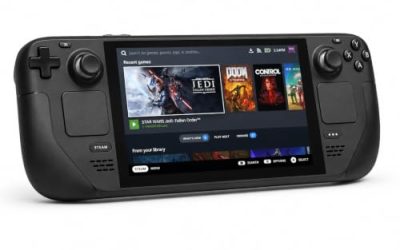
The handheld picture is different, and it comes from Valve, not the community. Valve’s compatibility record resolves to Unsupported, with graphics performance as the sole failing item: the game’s graphics settings cannot be configured to run well on Steam Deck. The test ran on 28 August 2026 against build 21521628, the current public branch build, so the refusal grades the game as sold today, not a superseded version. The same sheet names proton-stable as the recommended runtime and rates SteamOS on desktop hardware separately as Compatible, noting that external controllers may need a Quick Access Menu switch to take over.
The community’s Deck filings line up with Valve’s refusal rather than against it. Deck reporters describe significant performance problems, and the most positive Deck reports lean on a community mod to reach stability. A game whose published minimum is an RTX 2060 Super was always going to strain a handheld APU; plan this one for a desk, not a Deck.
The rest of the family: one DLC, no second storefront
The base game’s DLC array holds exactly one app, read individually: the Sneaking DLC Pack, app 3364840, released with the base game and flagged Windows-only, like the game it attaches to. There is no soundtrack app anywhere in this family, so the familiar trap — a music app carrying the family’s only Linux flag — cannot fire here. The family’s Linux-flag count is zero across both records.
There is also no second PC storefront to weigh. GOG’s catalogue holds other Metal Gear titles, including the original METAL GEAR SOLID and METAL GEAR RISING: REVENGEANCE, all Windows-only editions of different games; it holds no product record for the Delta remake, and the natural product address resolves to the general catalogue rather than a product page. No GOG edition of this remake exists. The Steam copy is the only PC edition, and it is the build both compatibility records above describe.
One note belongs in the open. The game carries online multiplayer modes, the record names no anti-cheat system, and the AreWeAntiCheatYet database — read in full — holds no entry for this app. That is documentation silence, stated as such, and no conclusion is drawn from it either way.
Gear that fits the record
The record’s shape is a desktop game: a heavy Windows build, full controller support, and a handheld verdict that rules the Deck out. The gear below follows that shape.
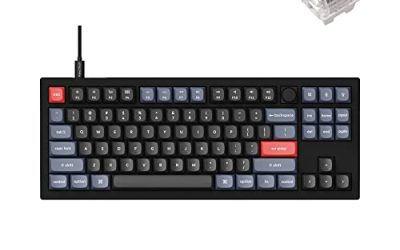
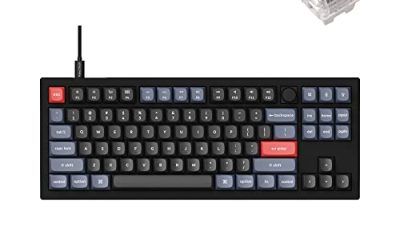
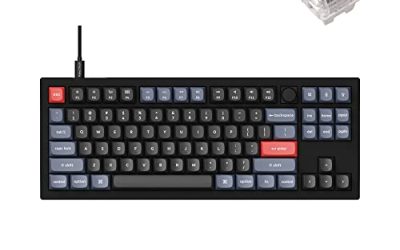
Keychron V3
The keyboard pick for desktop sessions: a tenkeyless board with QMK and VIA support lets you remap keys at the keyboard level, which keeps working across every Linux install you plug it into.
Specs
- Tenkeyless layout with rotary knob
- QMK and VIA remapping support
- Hot-swappable K Pro Brown switches
- Wired USB-C connection
- Maker-rated 1,000 Hz polling
8BitDo Ultimate 2 Bluetooth Controller
The couch and desk pad pick. Steam lists full controller support for the game, and this pad covers the third-person case with modern sticks and triggers plus back buttons for the inputs a long stealth session repeats.
Specs
- Connectivity: Bluetooth wireless and USB-C wired
- Joysticks: TMR electromagnetic, anti-drift design
- Triggers: Hall effect, with mode switching
- Extras: two remappable back buttons, motion control
- In the box: charging dock included
Xbox Wireless Controller, Carbon Black
The safest guest pad in PC gaming: Steam Input support is universal, the glyphs match what most games display, and it pairs over Bluetooth or wireless.
- Connectivity: Xbox Wireless and Bluetooth
- Port: USB-C for wired play
- Controls: hybrid D-pad, dedicated Share button
- Power: AA batteries or optional rechargeable pack
Logitech G502 HERO
The survival viewer, codec calls and inventory screens are menu work, and at a desk a precise wired mouse turns those trips into single clicks. Eleven programmable buttons cover the confirm, cancel and camera inputs a long session repeats.
Specs
- HERO optical sensor, up to 25,600 DPI
- 11 programmable buttons
- Adjustable weight system
- Wired USB connection
- On-board memory profiles
Samsung T9 Portable SSD 2TB

At roughly 119 GB before patches, the install is one of the largest around, and an SSD is recommended outright. A fast portable drive earns its place moving a library between machines or holding an offline backup. The headline figure needs a Gen 2×2 host port; on a lesser port the drive runs at that ceiling.
Specs
- Capacity: 2 TB portable SSD
- Interface: USB 3.2 Gen 2×2, USB-C connector
- Maker-rated speeds: up to 2,000 MB per second read, 1,950 MB per second write
- Features: Dynamic Thermal Guard, maker-rated drop resistance
How to choose
Choose the Steam copy: it is the only PC edition on sale and the exact build both records describe. On a desktop or laptop, install under Proton and start with the default compatibility tool — the Platinum file says current Proton releases run the game, with GE-Proton as the documented alternative. Budget storage first: the depot is close to 119 GB and the requirements ask for an SSD. Full controller support makes a pad the natural primary input; keep a keyboard and mouse for the menu work. Do not buy this game for a Steam Deck library; buy it for a desk.
Who should skip
Skip this one if you are shopping for a native Linux Metal Gear: this remake is not it, and the Linux tab on its store page is an empty shell, not a build. Skip it if the Steam Deck is your only gaming machine — Valve’s Unsupported verdict was earned on the current build, on graphics performance, and the community’s own Deck filings agree. Skip it if your PC sits near the published minimum and you expect headroom; filings describe stutter and menu lag even on strong hardware. And skip it if you want a DRM-free installer, because no GOG edition exists.
FAQ
Is METAL GEAR SOLID Δ: SNAKE EATER native on Linux?
No. Steam’s record flags Windows only, the single content depot is a Windows build accompanied only by Windows redistributables, no LinuxClientIcon is registered, and the Linux requirements field is an empty shell. The “Natively Supports” heading on ProtonDB is generated by that empty field and does not describe a real build.
How well does it run under Proton on a Linux desktop?
Very well, by the community record: Platinum on the settled, best-reported and trending tiers, across 73 reports with strong confidence. Filings describe complete playthroughs on current Proton and GE-Proton builds, with the main complaints — traversal stutter, menu lag, a frame-rate cap the game itself imposes — also reported on Windows.
Can I play it on a Steam Deck?
Valve’s answer is no. The Deck record resolves to Unsupported, with graphics performance as the sole failing item, tested on 28 August 2026 against the current public build. SteamOS on desktop hardware is rated Compatible separately, but for the handheld the verdict and the filings agree.
Is the Sneaking DLC Pack any different on Linux?
No. The single DLC app is flagged Windows-only, exactly like the base game, and runs through the same Proton route. There is no soundtrack app in this family, so no related product carries a Linux flag either.
Final verdict
METAL GEAR SOLID Δ: SNAKE EATER is a Windows-only remake with a two-part Linux story. At a desk, it is one of the strongest Proton cases in its class: a unanimous Platinum file, full controller support on the record, and complaints that mostly trace to the game’s own demands rather than the translation layer. On a Steam Deck, Valve’s Unsupported verdict — current build, graphics performance — closes the question. Buy the Steam copy for a Linux desk with a real GPU, read the empty Linux tab for what it is, and leave the handheld out of the plan.
Product and ASIN Reference
| Product | ASIN |
|---|---|
| Keychron V3 | B0B2DMMMG2 |
| 8BitDo Ultimate 2 Bluetooth Controller | B0F194QFT2 |
| Xbox Wireless Controller, Carbon Black | B08DF248LD |
| Logitech G502 HERO | B07GBZ4Q68 |
| Samsung T9 Portable SSD 2TB | B0CHFS9K14 |