Slice & Dice is Tann’s dice-driven roguelike battler, where a five-hero party fights through escalating encounters and every ability a hero owns is printed on the faces of a die rolled each turn. It lived on phones and small storefronts for years before reaching Steam on 20 March 2024, which raises the usual question for a port of that vintage: did Linux get a real build, a compatibility-layer shrug, or nothing at all?
The record gives the best of the three answers. Steam’s own data for app 1775490 carries a native Linux build with its own depot, its own requirements tab and a Deck sheet whose recommended runtime is the native one. This article walks the record layer by layer — flags, requirements, depots, assets, Deck paperwork, the ProtonDB file and the storefront sweep — so the ruling rests on evidence, not platform icons.
As an Amazon Associate, we earn from qualifying purchases.
Quick answer
Yes — Slice & Dice is genuinely native on Linux. Steam’s record carries a dedicated Linux depot of about 170 MB, published Ubuntu requirements and all three platform flags set true, and Valve’s Deck sheet names the native runtime. The Deck verdict is Playable, ProtonDB settles at Platinum across ten reports, and no Proton layer is required on desktop.
What the Steam record actually ships
The platform flags, for once, tell the truth: windows, mac and linux all read true, and the layers underneath agree. The Linux requirements tab is genuinely populated rather than an empty shell — Ubuntu 14.04 LTS, 2 GB of RAM, graphics capable of OpenGL 3.0+ support. Two quirks ride along, worth naming as printed: the tab’s processor row simply repeats the operating-system string, an obvious paste slip, and its storage figure reads 1 GB where the Windows tab reads 100 MB. Neither changes the ruling; the rest of the tab is coherent.
The depot census is decisive. Steam delivers three content depots: Windows at about 156 MB, macOS at about 180 MB, and a dedicated Linux English depot at about 170 MB — a build, not a paperwork gesture. SteamDB’s technology detection reads a JVM SDK underneath: this is a Java-based game, and the Linux build is that codebase packaged for Linux rather than a from-scratch port. The macOS leg is equally real, with a populated Mac tab naming OSX 10.14+ and a clienticns registered for it.
One quirk runs the other way — the inverse of the usual pattern. The registered assets are clienticon, clienttga, icon and clienticns: no LinuxClientIcon in any form, even though the Linux depot is real and delivered. Most weeks the fossil shape is an icon with no build behind it; here the build exists and the icon was never registered. The absence is cosmetic, but it shows why icon-spotting is unreliable in either direction.
The add-on family has nothing to audit: the record exposes no DLC array at all, so the soundtrack all-true trap has no surface to fire on. What is sold is the single game, native on all three desktop platforms.
The Deck sheet: Playable, grading the native build
Valve’s compatibility sheet resolves to Playable, with the SteamOS side marked Compatible, and the sheet was read for this article through SteamDB’s republication of Valve’s own data. The detail that matters most sits in the configuration block: the recommended runtime is listed as native. Valve’s testers were not grading a Windows build squeezed through Proton; they graded the Linux build itself, which makes this badge a native-build verdict rather than a compatibility-layer one.
The passes are the practical ones: all functionality accessible with the default configuration, legible interface text, and a default graphics configuration that performs well. Two deductions keep the badge at Playable — the game sometimes shows mouse, keyboard or non-Deck controller icons, and entering text requires manually invoking the on-screen keyboard. The configuration also lists the supported input class as “other” rather than gamepad, which connects to a silence elsewhere in the record: the game carries no controller-support field of its own at all. Nothing in Steam’s data rates pad support for this game, and the ProtonDB filings below show Deck players leaning on community layouts and trackpad-as-mouse mappings. Any pad claim would be invented; the record is silent and the community fills the gap.
One staleness note, stated plainly. Valve’s test is dated 10 April 2024, against build 13882139, from the game’s first weeks on Steam; the current public build is 26465297, built in November 2026. The native runtime line means the verdict describes the right artifact, but the date makes this a supplement-candidate sheet.
The ProtonDB file
ProtonDB’s summary reads cleanly: settled tier Platinum, best-reported Platinum, trending Platinum, across ten reports, confidence moderate. Because a native build exists, the interesting question in the filings is which artifact each reporter actually ran, and the file splits in an instructive way.
The desktop native filings are the strongest evidence in the set. One Linux Mint reporter calls the native build flawless; a Flatpak-runtime filing states outright that no Proton was needed because the game works natively. A NixOS reporter adds the one genuine tinker note: a launch option setting a glibc tunable, needed there because the game’s bundled Java runtime requires an executable stack — a narrow caveat about the JVM packaging, not the build’s existence. Several Deck filings instead ran the Windows build under Proton, some flawlessly with community layouts, one older report noting a missing gamepad and silent audio. Those describe the fallback route, not the native one.
ProtonDB’s own classification agrees with Steam’s record: the game page files Slice & Dice as Native and carries the “Natively Supports” heading, and here the heading is correct on every layer checked. Heading verdict: agrees.
Anti-cheat and the storefront sweep
There is no anti-cheat layer to rule on. The game is single-player only, names no anti-cheat and no DRM notice, and the AreWeAntiCheatYet database — read in full at its current home, 1,167 entries — holds no entry for Slice & Dice in either direction. That is documentation silence, not a clearance certificate; for an offline single-player game it is also the expected state of affairs.
The GOG sweep comes back empty. The natural product address resolves to GOG’s general games catalogue rather than a product page, and no product record exists there. Ruled on the absent page and record, not on search silence: GOG sells no edition of this game.
Gear that fits the record
The picks below follow the record’s shape: the handheld whose sheet graded the native build, two pads for docked play through Steam Input mapping — the route the filings use, since the game lists no controller support — a mouse for desktop sessions, and fast storage for a portable library.
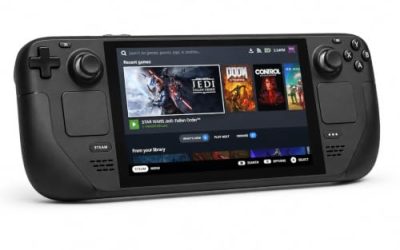
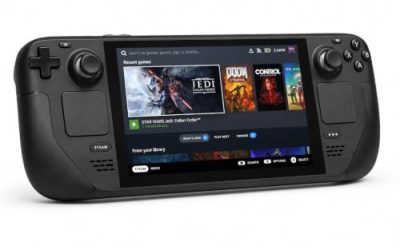
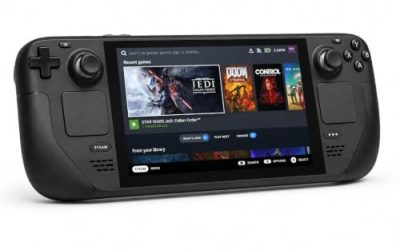
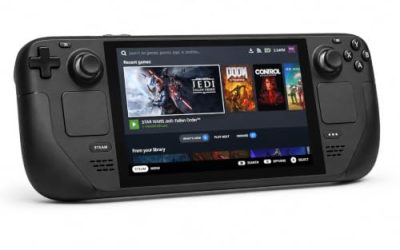
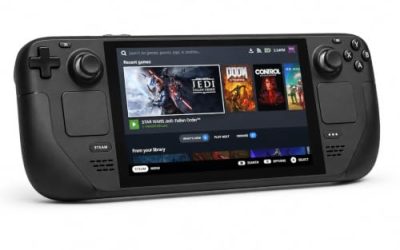
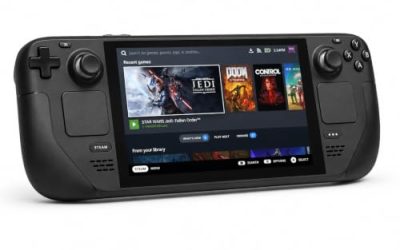
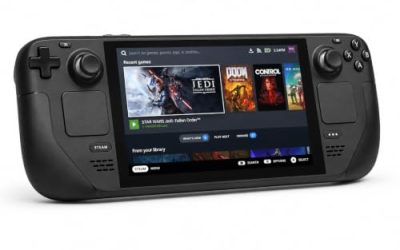
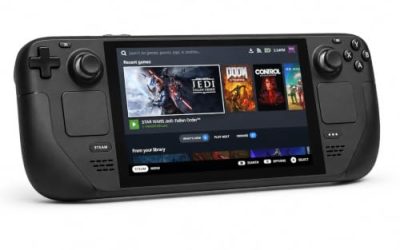
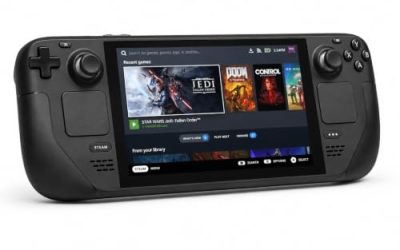
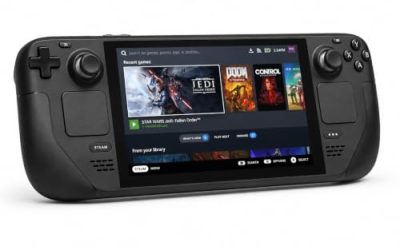
Valve Steam Deck OLED 512GB

The handheld on Valve’s test sheet. The badge grades the native Linux build, the game’s requirements are trivial next to the APU, and the two deductions are absorbed in the first session.
Specs
- Display: 7.4-inch HDR OLED, 1280 by 800, up to 90 Hz
- Processor: AMD Zen 2 and RDNA 2 custom APU
- Memory: 16 GB LPDDR5
- Storage: 512 GB NVMe, plus a microSD slot
- Wireless: Wi-Fi 6E and Bluetooth
- Channel note: Valve sells the Deck mainly through its own store, so Amazon listings are third-party sellers
8BitDo Ultimate 2 Bluetooth Controller
The docked pad pick. With no controller support on the game’s own record, docked play runs through Steam Input and community layouts, and this pad’s remappable back buttons make that mapping work comfortable over long runs.
Specs
- Connectivity: Bluetooth wireless and USB-C wired
- Joysticks: TMR electromagnetic, anti-drift design
- Triggers: Hall effect, with mode switching
- Extras: two remappable back buttons, motion control
- In the box: charging dock included
Xbox Wireless Controller, Carbon Black
The safest guest pad in PC gaming: Steam Input support is universal, the glyphs match what most games display, and it pairs over Bluetooth or its own wireless standard. On the handheld, the test sheet’s note applies: an external pad may need a manual Quick Access Menu switch before it takes over.
- Connectivity: Xbox Wireless and Bluetooth
- Port: USB-C for wired play
- Controls: hybrid D-pad, dedicated Share button
- Power: AA batteries or optional rechargeable pack
Logitech G502 HERO
Slice & Dice is a game of menus, dice faces and target selection, and at a desk a precise wired mouse is the input the interface was born for. Eleven programmable buttons cover the confirm, cancel and inspection clicks a long run repeats.
Specs
- HERO optical sensor, up to 25,600 DPI
- 11 programmable buttons
- Adjustable weight system
- Wired USB connection
- On-board memory profiles
Samsung T9 Portable SSD 2TB
For moving a Linux game library between a desktop and a laptop, or keeping an offline backup of installers, a fast USB-C drive is the simple answer. The headline figure needs a Gen 2×2 host port; on a lesser port the drive runs at that ceiling.
Specs
- Capacity: 2 TB portable SSD
- Interface: USB 3.2 Gen 2×2, USB-C connector
- Maker-rated speeds: up to 2,000 MB per second read, 1,950 MB per second write
- Features: Dynamic Thermal Guard, maker-rated drop resistance
How to choose
Choose the native build, because there is no decision left to make. On a Linux desktop, install and launch as Steam offers it; forcing a Proton version routes you to the Windows build for no benefit. Leave the compatibility tool unset, and if you are on NixOS and the game refuses to start, the glibc launch option in the ProtonDB file is the known fix. On the Deck, expect a Playable-grade experience: set a community layout or trackpad-as-mouse mapping early, and remember that text entry will ask for the on-screen keyboard. Buy on Steam, since no GOG edition exists, and treat the April 2024 Deck test as a verdict on the right build at an old date.
Who should skip
Skip the Deck as your primary platform if you want a pad-first experience with zero mapping work: the record lists no controller support, the sheet’s input class is “other”, and the smooth Deck reports lean on community layouts you must choose and tweak. Skip the game entirely if dice decide too much for your taste — the design is about steering randomness, not eliminating it. Online-focused players should also pass: this is single-player and offline. And if you only buy DRM-free, the empty GOG sweep settles it.
FAQ
Is Slice & Dice native on Linux?
Yes. All three platform flags read true, the Linux requirements tab is genuinely populated, and Steam delivers a dedicated Linux depot of about 170 MB. ProtonDB classifies the game as Native as well. The one oddity is cosmetic: no LinuxClientIcon is registered despite the real build.
What is the Steam Deck verdict for Slice & Dice?
Playable, with SteamOS marked Compatible, and the sheet’s recommended runtime is the native build rather than a Proton version. The deductions are non-Deck glyphs and manual keyboard invocation for text entry. The test dates from April 2024.
Does Slice & Dice need Proton on a Linux desktop?
No. The native filings on ProtonDB report flawless runs, and forcing Proton only switches you to the Windows build. The single documented exception is NixOS, where a glibc tunable launch option may be needed for the bundled Java runtime.
Can I buy Slice & Dice on GOG?
No. The game’s natural GOG address resolves to the general catalogue and no product record exists there. Steam is the storefront carrying the game, and its Linux build is native.
Final verdict
Slice & Dice is one of the clean cases. The flags say native, the requirements tab says native, the depot census says native, and ProtonDB’s classification agrees — the ruling survives every layer, with only paperwork quirks to report: a processor row repeating the operating-system string, a missing LinuxClientIcon behind a real build, and an April 2024 Deck test grading a long-replaced build. The honest caveats are input-shaped rather than compatibility-shaped: no controller support on the record, community layouts on the Deck, one NixOS launch-option note. For Linux players, this is a buy-and-play game with nothing to fix.
Product and ASIN Reference
| Product | ASIN |
|---|---|
| Valve Steam Deck OLED 512GB | B0CQ3RWQQZ |
| 8BitDo Ultimate 2 Bluetooth Controller | B0F194QFT2 |
| Xbox Wireless Controller, Carbon Black | B08DF248LD |
| Logitech G502 HERO | B07GBZ4Q68 |
| Samsung T9 Portable SSD 2TB | B0CHFS9K14 |