Machinarium is the wordless point-and-click adventure Amanita Design released on 16 October 2009, built around a small robot named Josef solving inventory and logic puzzles in a scrap-metal city. Because the game is old, small and still widely sold, Linux players keep asking one question: did this classic ever get a native Linux version, or is the Steam copy a Windows game that Linux runs through Proton?
The record answers the same way at every layer. Steam flags the game for Windows and Mac only, its depot table holds no Linux build, and the one relative that flags Linux is a soundtrack package, not the game. Linux players instead run the Windows build under Proton, where the community file is deep and strong, and the same build carries a Steam Deck Verified badge.
As an Amazon Associate, we earn from qualifying purchases.
Quick answer
Machinarium has no native Linux build. Steam’s record flags Windows and Mac only, the Linux requirements field is an empty list, and SteamDB’s depot table holds one Windows depot and one macOS depot with no Linux depot in any package. Linux play means the Windows build under Proton, which holds a Platinum tier on ProtonDB, and the game is Steam Deck Verified.
What Steam’s own record lists
Start with the store record, because everything else here is checked against it. The platform flags read windows true, mac true and linux false. The Windows field is genuinely populated at the minimum tier: Windows XP through Windows 10, a 1.8 GHz processor, 1 GB of memory and 1 GB of free space. The Mac field is populated at the minimum tier too, naming OS X 10.12 Sierra or later, an Intel Mac at 1.8 GHz, 1 GB of memory, the same storage, and a note requiring Metal support on Mac hardware from 2012 or later. The Linux field is an empty list outright — no published Linux requirements at all. No platform here publishes a recommended tier, so the Linux emptiness is no formatting accident.
The record describes a single-player Adventure and Indie game with full controller support, Steam Cloud and Family Sharing among its categories. Two gaps are worth stating as gaps: no DRM notice and no external account notice appear. On anti-cheat, three sources agree: Steam names none, SteamDB’s page names none among its detected technologies, and Are We Anti-Cheat Yet carries no entry for the game. Developer and publisher are both Amanita Design, exactly as the record states.
The depot table settles it
Store flags can be clerical errors, so the delivery layer is the real test — and here it is clean. SteamDB’s depot table holds exactly two content depots: depot 40701, the Windows build, at 296.26 MiB, and depot 40702, the macOS build, at 301.09 MiB. Together they account for the entire 597.36 MiB size on disk, and filtered to Windows with no DLC, the total is the Windows depot alone, byte for byte. No Linux depot exists in the table, hidden or otherwise. The record’s operating-system list, ValidOSList, names macOS and Windows only, and its one extended OS value, osextended, reads macos64 — Mac packaging metadata.
The branch list agrees: its legacy branches are an old Mac OpenGL build and a legacy DirectX 9 32-bit build, maintenance lines for the two platforms the game ships on. A Linux build has never needed a branch here because, on this record, one has never existed.
The one Linux flag in the family belongs to the soundtrack
The game’s relatives hold one Linux flag, and it deserves a direct answer. The full DLC array holds exactly one app: the Machinarium Soundtrack + Art Book, app 40703, a music-type package from November 2011. It flags all three platforms true, Linux included — but its own Linux requirements field is an empty list, and what it delivers is audio and artwork files, not a game build. That flag says something about how the extras were packaged; it says nothing about a Linux version of Machinarium, whose verdict rests on the game alone.
The demo tells the opposite story and still decides nothing: the Machinarium Demo, app 40710, sits outside the DLC array and, judged on its own record, flags Windows and Mac true and Linux false, matching the full game.
ProtonDB: Platinum, under a heading that overpromises
With the native case closed, the practical question is how the Windows build behaves under Proton, and the community file is about as settled as these files get. ProtonDB’s summary API reads Platinum on the headline, best-reported and trending tiers, across 83 reports, with confidence rated strong. Every report underneath was filed under a named Proton version, from older lines through Proton 9.0 and 10.0 builds and GE-Proton customs.
One wrinkle on that page needs naming. The ProtonDB game page heads its requirements block with the words Natively Supports, yet Steam’s record contradicts a native reading at every layer checked above: the false flag, the empty Linux field, the two-depot table. This article follows Steam: the heading is a stray label on an otherwise excellent Proton file. The report texture, kept at report weight, is mostly uneventful start-to-finish runs, with two recurring notes: the mouse cursor vanishing after alt-tabbing or minimising, returning only on a restart, and occasional version sensitivity, fixed by stepping to an older or newer Proton build. Neither note dents the tier.
Steam Deck: Verified, on paperwork from 2022
The Steam Deck record was read directly from Valve’s compatibility endpoint: resolved category 3, Verified, with all four checks passing. SteamOS separately rates Compatible. The paperwork behind the badge, read through SteamDB’s republication of Valve’s test data, dates to 1 July 2022, was performed on build 6787141, and names proton-stable as the recommended runtime — so the badge certifies the Windows build under Proton, not any native port.
One comparison belongs in the open: the public branch now sits on a build from November 2026, far ahead of the July 2022 build Valve tested. The Verified verdict is current on Valve’s endpoint, but the test paperwork predates the branch build the store serves today. Nothing newer contradicts it, but the dates are what they are, stated rather than smoothed over.
The GOG alternative is Windows and Mac too
The GOG shelf was checked on GOG’s own records rather than its search results. A GOG edition exists: the Machinarium Collector’s Edition, whose product record in GOG’s catalogue API lists system compatibility as Windows true, Mac true and Linux false. Its identity was verified first: title and Amanita Design authorship match the Steam record’s game. So the GOG copy is the same two-platform release in different packaging, and no native build is gained by switching storefronts. One caution: GOG’s search surfaces Machinarium 2 first, a separate later game by the same studio, so the ruling rests on the product record itself.
Gear that fits the record
The gear below follows the record’s shape: the handheld the badge was written for, two pads, a mouse for a genre born under one, and library storage.
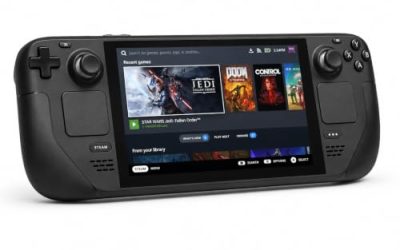
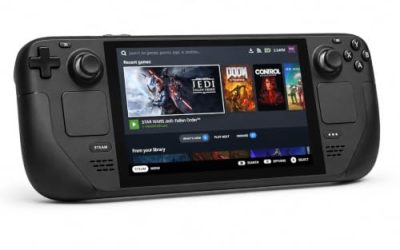
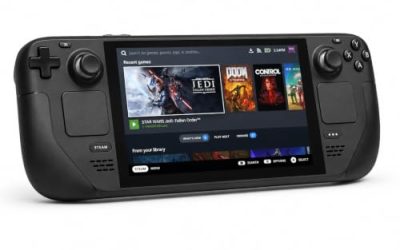
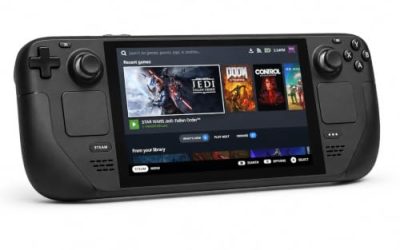
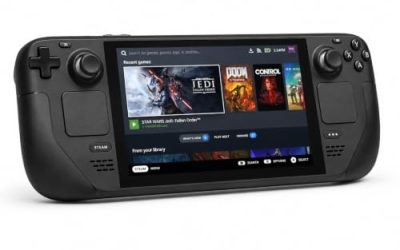
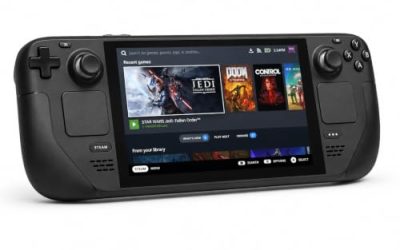
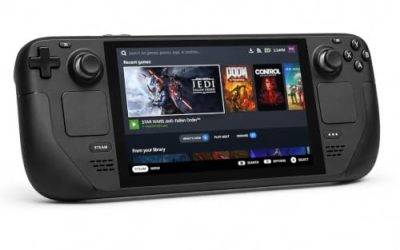
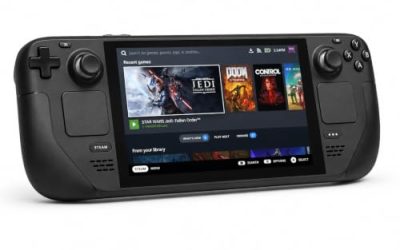
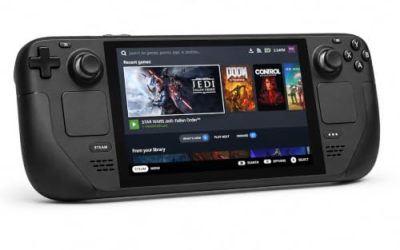
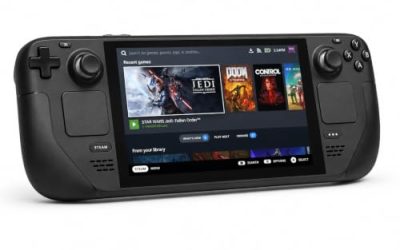
Valve Steam Deck OLED 512GB

The handheld the Verified badge was written for: Valve’s test sheet gives the Windows build a clean pass under proton-stable.
Specs
- Display: 7.4-inch HDR OLED, 1280 by 800, up to 90 Hz
- Processor: AMD Zen 2 and RDNA 2 custom APU
- Memory: 16 GB LPDDR5
- Storage: 512 GB NVMe, plus a microSD slot
- Wireless: Wi-Fi 6E and Bluetooth
- Channel note: Valve sells the Deck mainly through its own store, so Amazon listings are third-party sellers
8BitDo Ultimate 2 Bluetooth Controller

The docked and desktop pad pick: Steam lists full controller support, and this pad covers the couch case with modern sticks, triggers and back buttons.
Specs
- Connectivity: Bluetooth wireless and USB-C wired
- Joysticks: TMR electromagnetic, anti-drift design
- Triggers: Hall effect, with mode switching
- Extras: two remappable back buttons, motion control
- In the box: charging dock included
Xbox Wireless Controller, Carbon Black

The safest guest pad in PC gaming: Steam Input support is universal, and it pairs over Bluetooth or its own wireless standard.
- Connectivity: Xbox Wireless and Bluetooth
- Port: USB-C for wired play
- Controls: hybrid D-pad, dedicated Share button
- Power: AA batteries or optional rechargeable pack
Logitech G502 HERO

Machinarium is a mouse game at heart — every puzzle is a cursor, an inventory item and a hotspot — and a precise wired mouse makes long sessions single clicks.
Specs
- HERO optical sensor, up to 25,600 DPI
- 11 programmable buttons
- Adjustable weight system
- Wired USB connection
- On-board memory profiles
Samsung T9 Portable SSD 2TB

For moving a Linux game library between machines, or keeping an offline backup of installers, a fast USB-C drive is the simple answer. The headline figure needs a Gen 2×2 host port; on a lesser port the drive runs at that ceiling.
Specs
- Capacity: 2 TB portable SSD
- Interface: USB 3.2 Gen 2×2, USB-C connector
- Maker-rated speeds: up to 2,000 MB per second read, 1,950 MB per second write
- Features: Dynamic Thermal Guard, maker-rated drop resistance
How to choose
Choose on storefront, not platform hopes: the answer is identical everywhere, Windows and Mac builds with Linux through Proton. The Steam copy carries the Deck Verified paperwork and the Steam Cloud saves the record lists, and the ProtonDB file was filed overwhelmingly against it. The GOG Collector’s Edition suits a player who simply prefers that library. On a Linux desktop, install the Steam copy, leave the compatibility tool at its default, and change Proton versions only if you hit the version sensitivity a few reporters described. On Deck, install and launch; the badge says no configuration work is expected.
Who should skip
Skip this one if a native Linux binary is a condition of purchase: no storefront sells one, the demo is Windows and Mac only too, and nothing in the record suggests a port is coming for a game of this age. Skip it if you want adventure games that explain themselves — Machinarium has almost no text and teaches through a picture-book hint system. And if the cursor-on-alt-tab reports describe a habit you cannot break, know that quirk going in.
FAQ
Is Machinarium native on Linux?
No. Steam flags Windows and Mac only, the Linux requirements field is an empty list, and the depot table holds one Windows and one macOS depot, no Linux depot anywhere.
Why does the soundtrack package flag Linux if the game does not?
The Machinarium Soundtrack + Art Book is a separate music-type app that flags Linux while its own Linux requirements field sits empty. It delivers audio and artwork, not a game build, so the flag does not make the game native.
How well does Machinarium run under Proton?
ProtonDB rates it Platinum on all three tiers across 83 reports with strong confidence, all filed under named Proton versions. Notes recur about the cursor vanishing after alt-tabbing and occasional version sensitivity.
Is Machinarium Steam Deck Verified?
Yes — Verified, all four checks passing, with SteamOS Compatible. The paperwork dates to July 2022 on build 6787141 with proton-stable as the runtime, so the badge certifies the Windows build under Proton.
Final verdict
Machinarium on Linux is a closed native case wrapped around an open-and-shut Proton one. The store flags, the empty Linux requirements field, the two-depot table and the GOG Collector’s Edition record all say the same thing: Amanita shipped this game for Windows and Mac, and the family’s single Linux flag belongs to a soundtrack. What Linux players get instead is the next best thing: a Platinum Proton file with strong confidence and a Deck Verified badge, in a game small and old enough that its requirements stopped mattering years ago. Buy it on either storefront, run the Windows build, and let Josef get on with his puzzles.
Product and ASIN Reference
| Product | ASIN |
|---|---|
| Valve Steam Deck OLED 512GB | B0CQ3RWQQZ |
| 8BitDo Ultimate 2 Bluetooth Controller | B0F194QFT2 |
| Xbox Wireless Controller, Carbon Black | B08DF248LD |
| Logitech G502 HERO | B07GBZ4Q68 |
| Samsung T9 Portable SSD 2TB | B0CHFS9K14 |