Just Cause 4, Avalanche Studios’ open-world action game, sells on Steam under the Just Cause 4 Reloaded name, and its record is plain about platforms: Windows is the only operating system flagged. There is no Linux build, no Mac build, and no Linux requirements tab in any form. What the record does carry is a named DRM notice, a long add-on list, and a community file deep enough to judge the Proton route on evidence.
This piece reads each record separately: Steam’s flags and DRM notice for the game (app 517630, established from Steam’s own store search), every add-on app in the family, the ProtonDB summary, Valve’s Deck test sheet, and the storefront ruling.
As an Amazon Associate, we earn from qualifying purchases.
Quick answer
Just Cause 4 is not native on Linux: Steam flags the game Windows only and its Linux requirements field is an empty list. The route is Proton: ProtonDB rates the Windows build Gold overall, Platinum on its best-reported tier, across 115 reports, and Valve rates the game Playable on Steam Deck. Buy the Steam copy, the only PC edition sold.
What Steam’s own record says
Steam’s appdetails record for Just Cause 4 Reloaded (app 517630) lists the platforms as Windows true, Mac false, Linux false. The Linux requirements field is an empty list outright, the barest pattern this series tracks: not the empty shell of headings over blank lists, but no Linux tab in any form, so nothing on the store page can be misread as a requirements list.
The record names its DRM in plain text. The third-party DRM notice reads “Denuvo Anti-tamper”, quoted here exactly as Steam carries it. No external account notice appears on the record, and no separate launcher is named. Steam lists single-player, Steam Achievements, full controller support, Steam Trading Cards, Steam Cloud, Remote Play on TV and Family Sharing.
The published Windows minimum dates from the game’s December 2018 release: Windows 7 SP1 with the Platform Update, 64-bit only, a Core i5-2400 at 3.1 GHz or an FX-6300 at 3.5 GHz, 8 GB of RAM, a GeForce GTX 760 or Radeon R9 270 with 2 GB of video memory, DirectX 11, and 59 GB of storage. The recommended tier steps up to Windows 10, a Core i7-4770 or Ryzen 5 1600, 16 GB of RAM and a GTX 1070 or Vega 56. Modern Linux hardware clears that bar easily; the only question is the translation layer.
The family sweep: sixteen add-ons, zero Linux flags
The game’s own record lists fifteen add-on apps, and the store search surfaces one more, the Digital Deluxe Content, for sixteen in total. Every one was read individually, and every one is type “dlc”: the Expansion Pass, the three story expansions Danger Rising, Los Demonios and Dare Devils of Destruction, and a long tail of eleven vehicle and gear packs, from the Brawler Mech and The Dragon to the Renegade and Deathstalker Scorpion packs.
All sixteen flag Windows only, each with the same empty-list Linux field as the game itself. The Linux-flag count across the whole family, game included, is exactly zero. Several add-on records repeat the game’s Denuvo Anti-tamper notice; none adds a platform.
The soundtrack trap cannot fire here, for the simplest reason: there is no soundtrack app. Store searches for a Just Cause 4 soundtrack return no apps at all, and no music-type product appears anywhere in the family. No app in the family carries a stray Linux flag to misattribute.
The Proton file
ProtonDB’s summary record for app 517630, read directly this session, gives a Gold headline tier, a Platinum best-reported tier and a Gold trending tier, across 115 reports with strong confidence. That is a healthy file for a 2018 open-world title, and the strong confidence grade means the tiers rest on substance, not a handful of submissions.
One contradiction needs naming. The game’s ProtonDB page carries a “Natively Supports” header, the stray tag this run keeps meeting. It does not survive contact with Steam’s own record, which flags Linux false with an empty requirements field and no native build anywhere in the family. This article follows Steam: the game is a Windows build played through Proton, and ProtonDB’s own tier record does not classify the game as native either.
The recent end of the report file is mixed, and honesty requires saying so. Alongside clean runs, several describe crashes after extended play, slow launches, and fixes involving Proton version switches or launch settings. The Gold headline already prices that in: a good rating, not a flawless one, with the Platinum best-reported tier showing the ceiling when a system and a build agree.
The Steam Deck sheet
Valve rates Just Cause 4 Playable on Steam Deck, its second category, with SteamOS separately Compatible. The verdict and its checks were read from Valve’s own compatibility endpoint directly; the test date and build come through SteamDB’s republication of Valve’s record, the fallback route this project uses for those fields.
Four checks pass: the default controller configuration is fully functional, the game shows Steam Deck controller icons, in-game interface text is legible, and the default graphics configuration performs well. One deduction keeps the game out of the top category: entering some text requires manually invoking the on-screen keyboard. Two notes ride along: first-time setup requires an active internet connection, and the game does not default to external Bluetooth or USB controllers, which may need a manual Quick Access Menu switch first.
The test paperwork dates the check to 3 February 2022, on build 4110618, with proton-stable as the recommended runtime. That runtime line matters: the badge certifies the Windows build under Proton, and with no native build in existence, Proton is the only route, handheld and desktop alike.
The storefront ruling
There is no GOG edition of Just Cause 4. GOG’s own catalogue search for the series returns exactly two products, the original Just Cause and Just Cause 2 Complete Edition, and the address a Just Cause 4 page would occupy redirects to the general catalogue instead. That is a ruling from GOG’s product records, not a single search box. The Steam copy is therefore ruled the only PC edition and the buy — it is the build both compatibility records describe, and it carries the Steam Cloud saves from the store record.
Gear that fits the record
The gear below follows the record’s shape: the handheld Valve tested, two pads for its full controller support, a mouse for desktop aim, and storage for a 59 GB install and its add-ons.
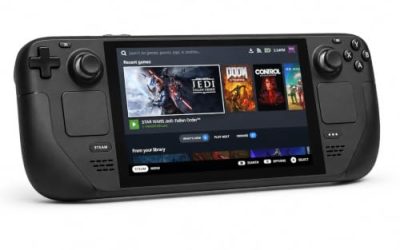
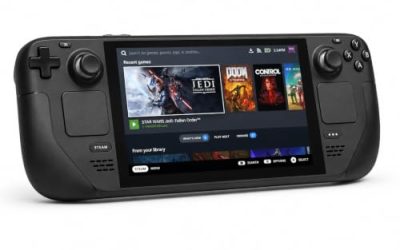
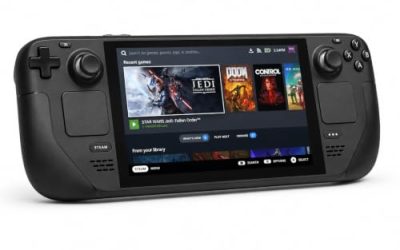
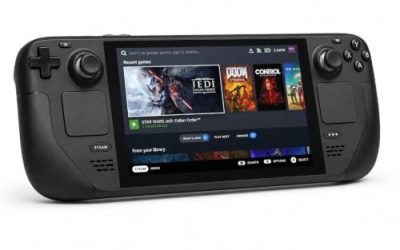
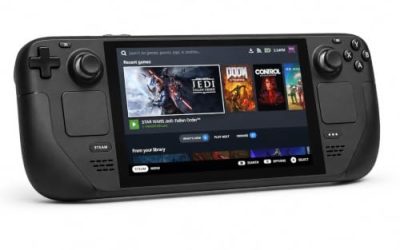
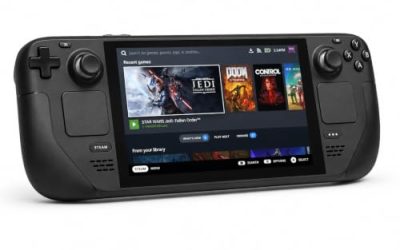
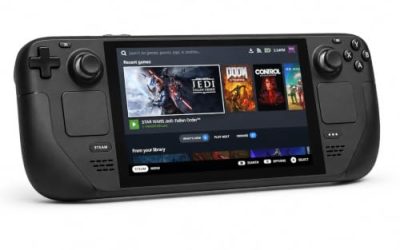
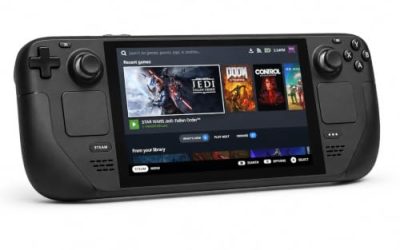
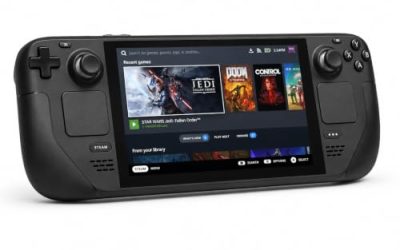
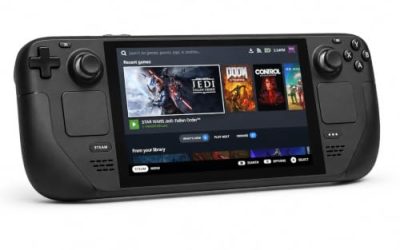
Valve Steam Deck OLED 512GB

The handheld Valve’s Playable badge was written for. The test sheet says the default graphics configuration performs well on Deck, and the 59 GB install fits the internal drive with room to spare.
Specs
- Display: 7.4-inch HDR OLED, 1280 by 800, up to 90 Hz
- Processor: AMD Zen 2 and RDNA 2 custom APU
- Memory: 16 GB LPDDR5
- Storage: 512 GB NVMe, plus a microSD slot
- Wireless: Wi-Fi 6E and Bluetooth
- Channel note: Valve sells the Deck mainly through its own store, so Amazon listings are third-party sellers
8BitDo Ultimate 2 Bluetooth Controller

The docked and desktop pad pick. Steam lists full controller support, and grapple, wingsuit and vehicle play sits naturally on sticks and triggers, with back buttons free for repeated fight inputs.
Specs
- Connectivity: Bluetooth wireless and USB-C wired
- Joysticks: TMR electromagnetic, anti-drift design
- Triggers: Hall effect, with mode switching
- Extras: two remappable back buttons, motion control
- In the box: charging dock included
Xbox Wireless Controller, Carbon Black

The safest guest pad going: Steam Input support is universal, the glyphs match what most games display, and it pairs over Bluetooth or its own wireless standard. On the handheld, an external pad does not take over by default and may need the Quick Access Menu switch.
- Connectivity: Xbox Wireless and Bluetooth
- Port: USB-C for wired play
- Controls: hybrid D-pad, dedicated Share button
- Power: AA batteries or optional rechargeable pack
Logitech G502 HERO

Desktop players who aim with a mouse rather than a stick get a precise wired fit here. Eleven programmable buttons cover the weapon swaps, grapple actions and vehicle inputs a long session repeats.
Specs
- HERO optical sensor, up to 25,600 DPI
- 11 programmable buttons
- Adjustable weight system
- Wired USB connection
- On-board memory profiles
Samsung T9 Portable SSD 2TB

For moving a Linux game library between machines, or keeping an offline backup of installers, a fast USB-C drive is the simple answer. The headline figure needs a Gen 2×2 host port; on a lesser port the drive runs at that ceiling instead.
Specs
- Capacity: 2 TB portable SSD
- Interface: USB 3.2 Gen 2×2, USB-C connector
- Maker-rated speeds: up to 2,000 MB per second read, 1,950 MB per second write
- Features: Dynamic Thermal Guard, maker-rated drop resistance
How to choose
Choose the Steam copy, because it is the only PC edition on sale and the exact build both records describe. On desktop or laptop, install under Proton and start with the default compatibility tool; the Gold headline says most reporters run it well, and the mixed recent reports say to keep a second Proton version in mind if your system disagrees. On Steam Deck, the Playable badge means the default configuration is already the tested one: install, launch, and expect to raise the on-screen keyboard by hand on the rare text prompt. For input, a pad is the native shape of this game on every platform; a mouse earns its place for desktop shooting.
Who should skip
Skip this one if you are shopping for a native Linux open-world game: this is not one, whatever the stray tag on the ProtonDB page suggests, and no add-on in the family changes that. Skip it if you want a DRM-free offline installer, because no GOG edition exists and Steam’s record names Denuvo Anti-tamper on the only copy sold. Skip it if the mixed recent reports worry you and you only play titles with spotless files. And skip it if you dislike an online first-time setup, which the Deck test sheet requires.
FAQ
Is Just Cause 4 native on Linux?
No. Steam’s record for app 517630 flags Windows only, the Linux requirements field is an empty list, and all sixteen add-on apps read the same way. The “Natively Supports” header on the game’s ProtonDB page contradicts Steam’s record; this article follows Steam.
How well does Just Cause 4 run under Proton?
ProtonDB’s summary record reads Gold on the headline and trending tiers and Platinum on the best-reported tier, across 115 reports. Recent reports are mixed: many clean runs, some crashes and slow launches that tinkering addressed.
What does Steam’s record name as the game’s DRM?
The record’s third-party DRM notice reads “Denuvo Anti-tamper”, quoted exactly as Steam carries it, and several add-on records repeat the same notice. No external account notice or separate launcher appears.
Is Just Cause 4 Playable on Steam Deck?
Yes, Playable, Valve’s second category, tested in February 2022 under proton-stable. Four checks pass; the one deduction is that entering text requires invoking the on-screen keyboard by hand. First-time setup requires an internet connection.
Final verdict
Just Cause 4’s paper trail is unusually clean for a Windows-only game: no Linux tab to misread, a family of sixteen add-ons with no stray platform flags, no soundtrack app to inflate a scan, and a DRM notice stated in plain text. What Linux players get is a well-documented Proton route — a Gold community file whose best reports reach Platinum, a Playable Deck badge from 2022, and full controller support throughout. Buy the Steam copy, play it under Proton, and ignore the one stray tag that claims otherwise.
Product and ASIN Reference
| Product | ASIN |
|---|---|
| Valve Steam Deck OLED 512GB | B0CQ3RWQQZ |
| 8BitDo Ultimate 2 Bluetooth Controller | B0F194QFT2 |
| Xbox Wireless Controller, Carbon Black | B08DF248LD |
| Logitech G502 HERO | B07GBZ4Q68 |
| Samsung T9 Portable SSD 2TB | B0CHFS9K14 |