Pepper Grinder, the 2D action platformer from Ahr Ech and MP2 Games, is built around a single tool: a powered drill that lets its pirate hero burrow through earth and water, chew through machinery and enemies, and arc back out of the ground to reach the treasure the Narlings stole from her. It is the kind of indie release whose Linux support is usually a rumour repeated from a store flag; this time the rumour survives an audit.
Steam’s record for app 2076580 does not merely tick a Linux box. It publishes full Linux requirements, and behind the store page sits a dedicated Linux depot inside the package buyers purchase. This piece reads the layers one at a time: flags, requirements, depots, add-on apps, the Proton file, the Deck test sheet and the second storefront.
As an Amazon Associate, we earn from qualifying purchases.
Quick answer
Yes — Pepper Grinder is genuinely native on Linux. Steam flags all three platforms, publishes full Ubuntu requirements, and ships a Linux depot inside the store package. Valve rates it Verified on Steam Deck with the native build as the tested runtime, and GOG sells an edition that lists Linux too. No Proton is required.
What Steam’s own record says
Steam’s appdetails record (app 2076580) names developers Ahr Ech and MP2 Games, publisher Devolver Digital, and a 28 March 2024 release. The platform flags read Windows true, Mac true, Linux true — all three set, the first thing a native claim needs.
The requirements fields are where this record separates itself from the flag-only crowd. The Linux field is populated text at both tiers, not an empty list and not a hollow shell of headings. The minimum names Ubuntu 22.04 LTS, a Core i5-4570T or A10-5800K APU, 8 GB of RAM, a GTX 650, HD 7750 or Iris Pro 580 class GPU with OpenGL 2.1 or later, and 300 MB of storage; the recommended tier raises graphics to a GTX 1050 Ti, RX 470 or Iris Xe class part.
Two smaller fields deserve a note: osarch reads 64, and osextended reads macos64 — a Mac packaging note, not a Linux limitation. Steam lists single-player, Steam Achievements, full controller support, a gamepad-recommended note, Steam Cloud and Family Sharing. No anti-cheat is named on the record, and there is no DRM notice and no external account notice either; both fields are simply absent, stated here as gaps.
The depots: a Linux build in the package buyers get
A store flag means little if nothing ships behind it, so the depot table is the decisive layer. SteamDB’s depot list for app 2076580 holds three content depots: 2076581 for Windows at 202.01 MiB, 2076582 for macOS at 217.83 MiB, and 2076583 for Linux at 214.13 MiB — the second-largest of the three, not a stub.
Its own depot page closes the remaining loophole. Depot 2076583 sits in the store package — sub 741942, billed as Store or CD Key — so the build is part of what a normal purchase delivers, not a beta leftover. Its current manifest, dated 17 April 2024, holds twenty files including a native shared library and a shell script. The public branch stands on build 14088946, built the same day, weeks after launch, so the native build was still maintained after release day.
The family sweep: a soundtrack flag and a Windows-only demo
The record lists exactly one DLC app: the Pepper Grinder Soundtrack (2845440). Read individually, it flags Windows, Mac and Linux all true — but its Linux requirements field is an empty list outright. That is the soundtrack trap in its purest form: a bare flag on an audio product. It changes nothing in either direction; the game’s native case rests on its own depot, not its music.
The second family app is the Pepper Grinder Demo (2220760), absent from the game’s DLC array and judged on its own record. It flags Windows only, Mac and Linux both false, and dates from 2 February 2024, ahead of the full release. A Windows-only demo says something about the demo and nothing about the finished game. The sweep ends clean: one irrelevant soundtrack flag, one separate demo, a verdict belonging to the game alone.
The Proton file: a native classification on a thin report pool
ProtonDB’s game page classifies Pepper Grinder as Native, and its requirements block is headed “Natively Supports” — heading and Steam record agree, the clean outcome this check exists to confirm. No stray-tag contradiction needs disarming here.
One honesty note: ProtonDB’s summary endpoint returned a page-not-found response on both attempts this session, so no headline, best-reported or trending tier figures are claimed anywhere in this article. The game page itself shows a pool of six reports. Most were filed under named Proton versions, several from Steam Deck owners; at least one was filed as Native, from a desktop Linux machine. Six reports is thin, and for a native game it matters less than for a Proton-only title: the verdict rests on Steam’s own record, with ProtonDB’s classification agreeing alongside.
The Steam Deck sheet
Valve rates Pepper Grinder Verified on Steam Deck, its top category, and lists SteamOS separately as Compatible. One evidence note: the verdict and paperwork were read through SteamDB’s republication of Valve’s compatibility record for this app.
All four Verified checks pass: the default controller configuration is fully functional, the game shows Steam Deck controller icons, in-game interface text is legible, and the default graphics configuration performs well. The paperwork dates the test to 1 March 2024 — before the game’s 28 March release — on build 13540245, and the recommended runtime line reads native. That single word is the point in miniature: Valve’s badge certifies the Linux build itself, not a Windows build carried by Proton.
The one caveat is staleness: the public branch has since moved to build 14088946 (April 2024), so the sheet predates the build sold today — a pre-release test, not a re-test of the current build.
The GOG ruling
A second storefront sells the Linux build too. GOG’s product record for Pepper Grinder (product 1881901933, ruled from GOG’s own catalogue API data rather than its storefront search) lists installers for Windows, Mac and Linux, all three compatibility flags set, and a release date matching Steam’s. The identity checks line up: same title, same date, same features.
The search caveat nearly hides this edition: GOG’s storefront search returned no product for the game’s name, while its catalogue API holds the full record. Ruled from the product data, a GOG edition exists, and its Linux installer means the native build is not a Steam exclusive.
Gear that fits the record
The picks follow the record’s shape: the handheld whose test sheet names the native runtime, two pads for a game Steam marks gamepad-recommended, a mouse for desktop sessions, and fast storage for a travelling library.
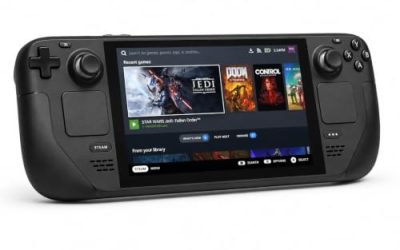
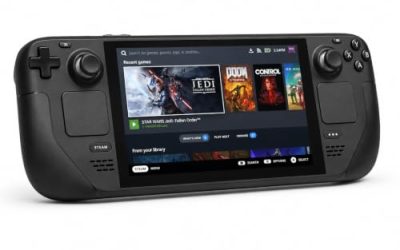
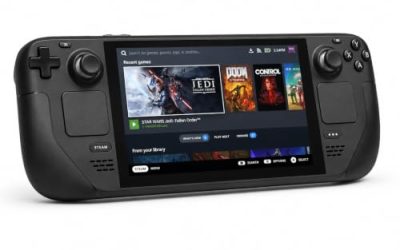
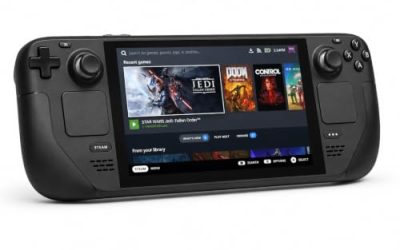
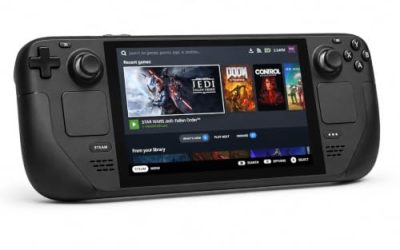
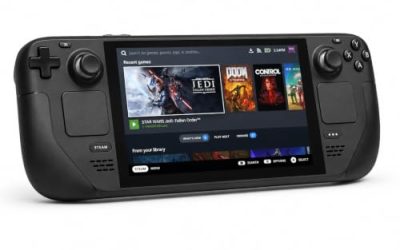
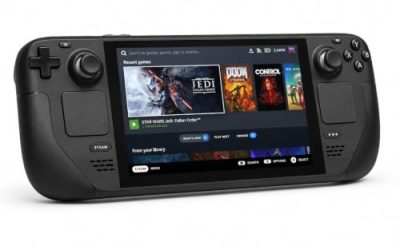
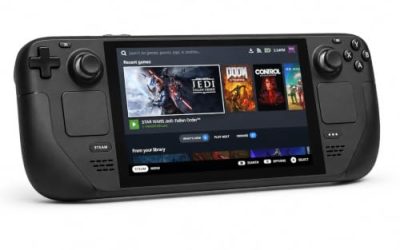
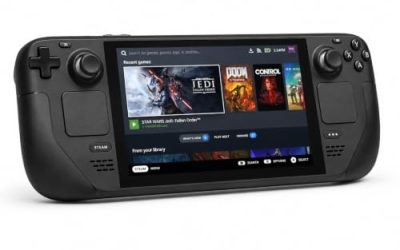
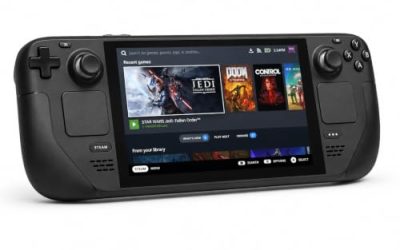
Valve Steam Deck OLED 512GB

The handheld the Verified badge was written for — and here the badge was earned by the native build. The game’s Linux requirements are modest next to the Deck’s APU, and all four test checks pass.
Specs
- Display: 7.4-inch HDR OLED, 1280 by 800, up to 90 Hz
- Processor: AMD Zen 2 and RDNA 2 custom APU
- Memory: 16 GB LPDDR5
- Storage: 512 GB NVMe, plus a microSD slot
- Wireless: Wi-Fi 6E and Bluetooth
- Channel note: Valve sells the Deck mainly through its own store, so Amazon listings are third-party sellers
8BitDo Ultimate 2 Bluetooth Controller

The desktop and couch pad pick. Steam lists full controller support and calls a gamepad recommended, and this pad covers docked play with TMR sticks, Hall effect triggers and back buttons.
Specs
- Connectivity: Bluetooth wireless and USB-C wired
- Joysticks: TMR electromagnetic, anti-drift design
- Triggers: Hall effect, with mode switching
- Extras: two remappable back buttons, motion control
- In the box: charging dock included
Xbox Wireless Controller, Carbon Black

The safest guest pad in PC gaming: Steam Input support is universal, the glyphs match what most games display, and it pairs over Bluetooth or its own wireless standard.
- Connectivity: Xbox Wireless and Bluetooth
- Port: USB-C for wired play
- Controls: hybrid D-pad, dedicated Share button
- Power: AA batteries or optional rechargeable pack
Logitech G502 HERO

At a desk, a precise wired mouse turns menus, map checks and shop trips into single clicks. Eleven programmable buttons cover the confirm, cancel and camera inputs a long session repeats, even in a game that leads with a pad.
Specs
- HERO optical sensor, up to 25,600 DPI
- 11 programmable buttons
- Adjustable weight system
- Wired USB connection
- On-board memory profiles
Samsung T9 Portable SSD 2TB

For moving a Linux game library between machines, or keeping an offline backup of installers, a fast USB-C drive is the simple answer.
Specs
- Capacity: 2 TB portable SSD
- Interface: USB 3.2 Gen 2×2, USB-C connector
- Maker-rated speeds: up to 2,000 MB per second read, 1,950 MB per second write
- Features: Dynamic Thermal Guard, maker-rated drop resistance
How to choose
Choose the edition by where you want the native build to live. On Steam, the Linux depot sits inside the normal store package, so a standard purchase installs the native build with nothing to configure; leave Proton off, because forcing it would swap in the Windows build for no benefit. On GOG, the same build is a DRM-free download with a Linux installer. On Steam Deck, the badge was earned on the native runtime, so the default install is already the tested configuration. For input, follow the store’s own note: a gamepad is recommended, and either pad above suits docked play.
Who should skip
Skip the celebration if your buying rule is a thick community file: ProtonDB holds only six reports, and its summary tiers could not be read this session, so the reassurance here comes from the store and depot records, not report volume. Skip it if you need a demo before buying and play only on Linux — the demo app is Windows only. Skip it if pre-release Deck paperwork is not enough. And skip the title itself if a drill-driven 2D platformer built on momentum and burrowing is not your genre.
FAQ
Is Pepper Grinder native on Linux?
Yes. Steam flags Linux true, publishes populated Linux requirements at both tiers naming Ubuntu 22.04 LTS, and ships a dedicated Linux depot of 214.13 MiB inside the store package. ProtonDB classifies the game as Native too. No compatibility layer is involved.
Does the Steam Deck Verified badge rely on Proton here?
No. Valve’s paperwork names the recommended runtime as native, so the badge certifies the Linux build itself. The test dates to 1 March 2024, before release, on build 13540245; the current branch is build 14088946, so the paperwork predates the build sold today.
The soundtrack flags Linux too — does that matter?
No. The soundtrack is a separate music app whose Linux requirements field is an empty list — a bare tick on an audio product. The game’s native status rests on its own flags, requirements and depot. The demo, separately, is Windows only and proves nothing about the full game.
Can I buy Pepper Grinder on GOG instead?
Yes. GOG’s product record lists Windows, Mac and Linux installers, with a release date matching Steam’s. GOG’s storefront search may not surface it; the ruling comes from the product record itself.
Final verdict
Pepper Grinder is the clean case this series rarely gets to print: a native Linux claim that survives every layer of the audit. The flag is set, the requirements tab is written out in full, the Linux depot is real and inside the store package, ProtonDB’s classification agrees, Valve’s badge was earned on the native runtime, and a second storefront sells the same build. The caveats are small — a six-report community file, pre-release Deck paperwork, a Windows-only demo — and none touches the verdict. On Linux this is a buy-without-homework title: purchase either edition, install the native build, and drill.
Product and ASIN Reference
| Product | ASIN |
|---|---|
| Valve Steam Deck OLED 512GB | B0CQ3RWQQZ |
| 8BitDo Ultimate 2 Bluetooth Controller | B0F194QFT2 |
| Xbox Wireless Controller, Carbon Black | B08DF248LD |
| Logitech G502 HERO | B07GBZ4Q68 |
| Samsung T9 Portable SSD 2TB | B0CHFS9K14 |