Day of the Tentacle Remastered is the Double Fine Productions and Shiny Shoe rebuild of the comedy time-travel point-and-click adventure in which Bernard, Hoagie and Laverne work the same mansion across three eras to stop Purple Tentacle’s world takeover. Steam’s record dates the remaster to 21 March 2016, and its category list is single-player only: Steam Achievements, full controller support, Steam Trading Cards, Steam Cloud, developer commentary, Remote Play and Family Sharing, under the single genre Adventure. The Linux question for a remaster of this age is a fair one: is there a real native build behind the flag, or only paperwork?
This article rules on the record as it stands today. Steam’s store data, the depot table behind it, the game’s family, the community compatibility file, Valve’s Deck sheet and the GOG catalogue were each read directly. Where the record publishes nothing, the article says so rather than filling the gap.
As an Amazon Associate, we earn from qualifying purchases.
Quick answer
Yes. Day of the Tentacle Remastered is native on Linux. Steam flags all three platforms true, the Linux requirements field is populated at both tiers, and the store package delivers a dedicated Linux depot of 2.55 GiB. Valve rates the game Playable on Steam Deck with a native runtime, and a GOG edition listing Linux is a second route.
The store record, layer by layer
The platform flags are the first layer, and here they are unanimous: Windows true, Mac true, Linux true. The Linux requirements field behind the flag is genuinely populated at both tiers, not a heading over an empty list. The minimum tier asks for Ubuntu 14.04 LTS, a 1.7 GHz dual-core processor, 2 GB of RAM, a GeForce GTX 260, Radeon 4870 HD or Intel HD 4000 class card with 512 MB of video memory, and 3000 MB of storage, with an OpenGL 3 note and a warning that Intel graphics users may need newer drivers than Ubuntu 14.04 ships. The recommended tier moves to Ubuntu 16.04 or higher, a Core 2 Duo at 2.2 GHz, 3 GB of RAM and a GeForce GTX 460 or Radeon HD 6850. The Windows and Mac fields are populated at both tiers as well.
Two fields on the record are simply absent, recorded here as gaps: there is no DRM notice and no external account notice. Its osarch field is an empty string, so no architecture value is claimed; the one extended metadata value it carries, macos64 and macosnotarized, is Mac packaging metadata that says nothing against the Linux build. A Linux client icon sits in the asset list, here backed by a build, as the depot table shows next.
What the depot table adds
SteamDB’s depot table holds four content depots: Windows (388211), macOS (388212), 64-bit macOS (388214) and a dedicated Linux depot (388213), each 2.55 GiB on disk. The Linux depot’s own page lists the store package (Store or CD Key billing) among the packages containing it, so the build is delivered to buyers rather than merely documented. Its manifest lists a native shared library among files dominated by the game’s data archive. The public branch stands on build 6047174, built in January 2021. Flag, tab, depot and package all point the same way: the clean shape of a native release.
The family around the game
The family sweep is short because the record carries no DLC array at all: no soundtrack, art book or expansion app exists under this game, so the Linux-flag count is one of one and the native case rests on the game alone. One relative needs separating: the store description notes the adventure was originally released by LucasArts in 1993. That original is a different release, not the app ruled on here, and nothing was drawn from its record.
Anti-cheat, from three sources
The three sources were kept separate, and all three come back negative. Steam’s record names no anti-cheat: the category list is single-player only and neither notice field exists. The depot database’s detected technologies list a single entry, the FMOD SDK: audio plumbing, not protection software. The community anti-cheat tracker’s full dataset, searched by name and by app id, carries no entry for this game.
ProtonDB: a Native classification over a Platinum file
The community compatibility summary answered in full: headline Platinum, best-reported Platinum, trending Platinum, across 21 reports, with confidence rated moderate. The game page’s classification check also completed, and this is the clean-agreement case: the page presents the game as Native under its Natively Supports heading, and Steam’s own record agrees on every layer, so there is no contradiction to resolve. The tier figures describe reports filed under Proton, which for a native title is the fallback route rather than the main story. Report texture, kept at report weight: desktop reports describe the native build running out of the box, while a few Steam Deck reports describe missing audio in the native build there, with forcing Proton as their workaround.
Steam Deck: Playable, on the native runtime
Valve’s own compatibility endpoint answered directly this session: resolved category two, Playable. The sheet passes the game on its default controller configuration, legible interface text and a performant default graphics configuration, and carries two notes: the game sometimes shows non-Steam-Deck controller icons, and it does not support the Deck’s native display resolution, which may cost performance. SteamOS separately rates Compatible. The dated paperwork comes from the depot database’s republication of Valve’s data: tested 16 July 2025, on build 6047174, with native as the recommended runtime. That is the build the public branch still serves, so the paperwork is current on the build axis, and the badge describes the Linux build itself rather than a Proton run.
The GOG edition
A GOG edition exists and lists Linux, ruled from GOG’s own live product page rather than its search results: its structured data names Windows, Linux and macOS as the game’s operating systems, its support line states official support for all three, and it carries a Linux requirements block of its own.
The gear that fits this record
The record’s shape decides the shortlist: a Playable Deck badge written against the native build, full controller support for docked play, a mouse as the genre’s original input, and library room.
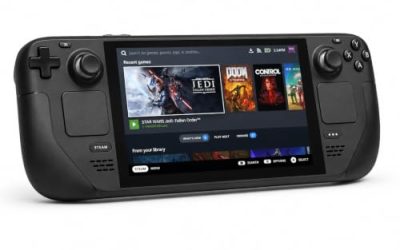
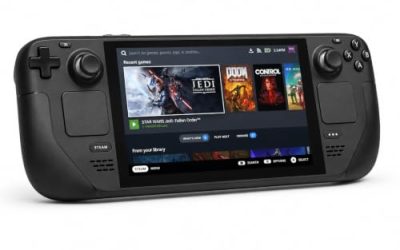
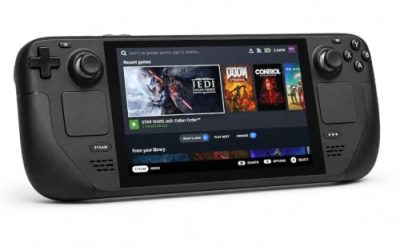
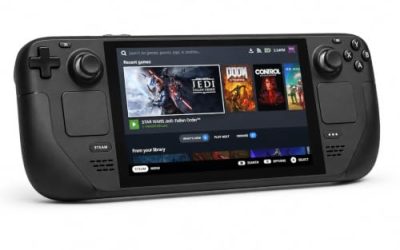
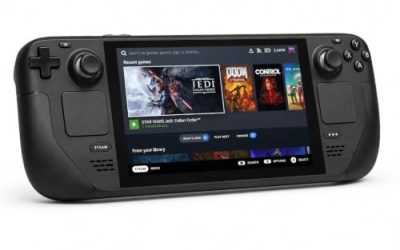
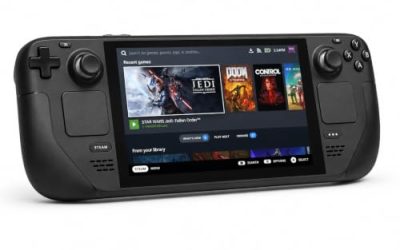
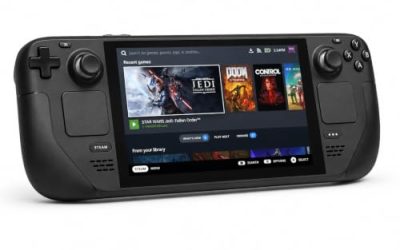
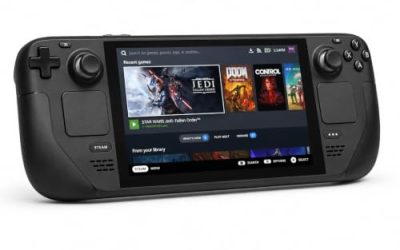
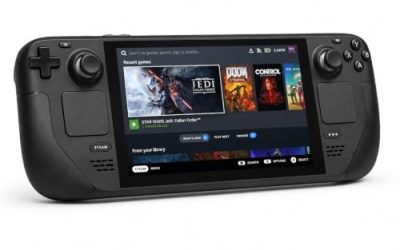
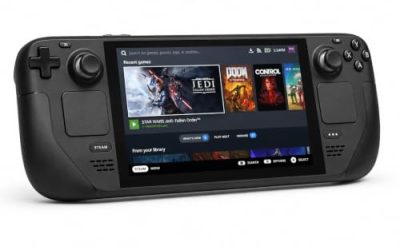
Valve Steam Deck OLED 512GB

The handheld the Playable badge was written for. Valve’s sheet names the native runtime here, so the badge describes the Linux build itself, and the published requirements sit far below the Deck’s APU.
Specs
- Display: 7.4-inch HDR OLED, 1280 by 800, up to 90 Hz
- Processor: AMD Zen 2 and RDNA 2 custom APU
- Memory: 16 GB LPDDR5
- Storage: 512 GB NVMe, plus a microSD slot
- Wireless: Wi-Fi 6E and Bluetooth
- Channel note: Valve sells the Deck mainly through its own store, so Amazon listings are third-party sellers
8BitDo Ultimate 2 Bluetooth Controller

The docked and desktop pad pick. Steam lists full controller support, and this pad covers the couch case with modern sticks and triggers plus back buttons for menu shortcuts.
Specs
- Connectivity: Bluetooth wireless and USB-C wired
- Joysticks: TMR electromagnetic, anti-drift design
- Triggers: Hall effect, with mode switching
- Extras: two remappable back buttons, motion control
- In the box: charging dock included
Xbox Wireless Controller, Carbon Black

The safest guest pad in PC gaming: Steam Input support is universal, and it pairs over Bluetooth or its own wireless standard. One fit note from Valve’s sheet: this game sometimes shows non-Steam-Deck controller icons, so on-screen glyphs may not match the pad in hand.
- Connectivity: Xbox Wireless and Bluetooth
- Port: USB-C for wired play
- Controls: hybrid D-pad, dedicated Share button
- Power: AA batteries or optional rechargeable pack
Logitech G502 HERO

A point-and-click adventure is a mouse genre at a desk: the verb wheel and inventory bar were drawn for a pointer. Eleven programmable buttons cover the confirm, cancel and commentary inputs a session repeats.
Specs
- HERO optical sensor, up to 25,600 DPI
- 11 programmable buttons
- Adjustable weight system
- Wired USB connection
- On-board memory profiles
Samsung T9 Portable SSD 2TB

For moving a Linux game library between machines, or keeping an offline backup of installers, a fast USB-C drive is the simple answer. The headline figure needs a Gen 2×2 host port; on a lesser port the drive runs at that ceiling instead.
Specs
- Capacity: 2 TB portable SSD
- Interface: USB 3.2 Gen 2×2, USB-C connector
- Maker-rated speeds: up to 2,000 MB per second read, 1,950 MB per second write
- Features: Dynamic Thermal Guard, maker-rated drop resistance
How to choose
Choose either storefront: the Steam copy and the GOG copy each list Linux, so the decision is library and launcher preference, not which edition runs. On desktop or laptop, install the native build and leave compatibility settings alone; almost any Linux machine of the last decade clears the recommended line. On a Steam Deck, the Playable badge means two expectations to set rather than fixes to apply: controller glyphs may not always match the pad in hand, and the game does not use the panel’s native resolution. If the native build’s audio misbehaves on a Deck, the community file documents forcing Proton as the reported workaround, with a Platinum record behind it. For input, a mouse is the genre’s shape at a desk and a pad is the couch answer.
Who should skip
Skip this one if you are shopping for the 1993 original rather than the remaster: this article rules on the 2016 rebuild, whose record alone was read here. Skip it if a Playable rather than Verified Deck badge is a hard line for you, because Valve’s two notes, on glyphs and on display resolution, are part of this game’s sheet. Skip it if you need any multiplayer at all: the record is single-player only. And skip the soundtrack question entirely, because there is no soundtrack app in this family to misread.
FAQ
Is Day of the Tentacle Remastered native on Linux?
Yes. Steam flags Linux true, the Linux requirements tab is populated at both tiers, and the store package contains a dedicated Linux depot of 2.55 GiB whose manifest lists a native shared library.
Is Day of the Tentacle Remastered Verified on Steam Deck?
No, it is rated Playable, one step below Verified. Valve’s sheet passes the default controller configuration, legible text and performant default graphics, with notes for non-Deck glyphs and the unsupported native display resolution. The test names the native runtime, on the build the public branch still serves.
Does the game need Proton or any anti-cheat exception on Linux?
No. The native build is the primary route, and no anti-cheat appears in any of the three sources checked. Proton is only a documented fallback; a few Deck reports describe forcing it to work around missing audio in the native build there.
Can I buy Day of the Tentacle Remastered on GOG for Linux?
Yes. GOG’s live product page lists Windows, Linux and macOS as the game’s operating systems, states official support for all three and carries its own Linux requirements block. It is a Linux route in its own right, not a Windows copy for a compatibility layer.
Final verdict
Day of the Tentacle Remastered is one of the clean native records: a true flag backed by a two-tier requirements tab, a sized Linux depot inside the store package with a native library in its manifest, a ProtonDB Native classification Steam agrees with, and a GOG edition listing the same three platforms. The wrinkles are small: a Playable rather than Verified Deck badge with two honest notes, an empty architecture field, and no DRM or account notice because none exists. On Linux, install the native build on either storefront and start time-hopping.
Product and ASIN Reference
| Product | ASIN |
|---|---|
| Valve Steam Deck OLED 512GB | B0CQ3RWQQZ |
| 8BitDo Ultimate 2 Bluetooth Controller | B0F194QFT2 |
| Xbox Wireless Controller, Carbon Black | B08DF248LD |
| Logitech G502 HERO | B07GBZ4Q68 |
| Samsung T9 Portable SSD 2TB | B0CHFS9K14 |