Backpack Battles, the inventory-management autobattler from PlayWithFurcifer, asks you to pack weapons, potions and oddities into a grid-shaped rucksack and watch your arrangement fight other players’ builds. It left Early Access in June 2025, and for Linux players the first question is the usual one: is the Linux support on the store page a real build, or another flag with nothing behind it? This time the answer survives a full read of the record.
That read matters because this game’s paper trail has fooled people before. Early community reports from 2023 insisted the native build did not launch at all, and the record still carries leftover assets pointing at platforms the game does not ship on. Below, each layer gets checked on its own: the flags, the requirements tabs, the depot census, the icons, the add-on family, the Deck test sheet, the community file, and the second-storefront question.
As an Amazon Associate, we earn from qualifying purchases.
Quick answer
Yes. Backpack Battles is genuinely native on Linux. Steam’s record flags Windows and Linux, publishes a populated Linux minimum spec, and ships a dedicated Linux depot of about 342 MB beside the Windows one. Valve rates it Verified on Steam Deck with the native runtime named as recommended, and ProtonDB classifies it Native. There is no GOG edition.
Three locks, all closed: flags, spec sheet, depot
Start with the platform flags, the layer most often wrong in this catalogue. Steam’s record for app 2427700 reads windows true, linux true, mac false. A true Linux flag alone proves little, so the second lock is the requirements tab. The Linux minimum is genuinely populated: it names Fedora 25, Ubuntu 16.04, SteamOS and Mint 18, asks for 1 GB of RAM and 300 MB of storage. Only the Linux recommended tier is an empty list, a thin spot worth naming, but a populated minimum beside a blank recommended is a publishing shortcut, not a shell game. The distro list is old enough to date from the Early Access period rather than a recent paperwork refresh.
The third lock settles it: the depot census. The game ships three content depots. Depot 2427701 is the Windows build at about 337 MB, depot 2427703 is a Windows build for the China storefront at about 335 MB, and depot 2427702 is a dedicated Linux build at about 342 MB on the global branch. A Linux depot within a few megabytes of the Windows one, on the same public branch, is what a real port looks like in the data. The registered assets agree: a LinuxClientIcon is on file with its own hash, and SteamDB’s detection names the Godot Engine, whose Linux exports are a standard output. The discrete launch-entry list was not separately extractable in this session, so the ruling rests on flags, requirements, depots and assets together, which here all point the same way.
Two smaller observations complete the record. The Mac side is a leftover, not a build: the mac flag reads false, both Mac requirements tiers are headings over empty lists, and no macOS depot exists, yet a Mac-format client icon asset still sits in the registered files. It is the inverse of the usual fossil, an icon with no platform behind it, and it changes nothing for Linux. And the add-on family is empty: the record exposes no DLC array at all, so no soundtrack app inflates a family scan and no expansion needs auditing. A separate demo app exists, and that is the whole family.
The Deck badge grades this build, from an older branch
Valve’s own test sheet gives Backpack Battles the top category, Verified, and the configuration underneath is the detail that matters: the recommended runtime is listed as native. The badge grades the Linux build itself, not a Windows build carried by Proton. All four checks pass: the default controller configuration is fully functional, the game shows Steam Deck controller icons, interface text is legible, and the default graphics configuration performs well. The SteamOS side resolves to Compatible, the supported input class is gamepad, and the sheet records no manual keyboard invoke or small-text deduction.
The honest caveat is the date. Valve tested build 14142232 on 24 April 2024, during Early Access and more than a year before the 1.0 release. The current public build is 26640819, shipped in November 2026, so the paperwork certifies the native line rather than the exact build on sale today. Treat the badge as a verdict on the port’s foundations, which the depot record shows are still the shipping ones. On input, the game’s own record lists full controller support, with DualShock and DualSense categories named, so the pad-first framing in the gear section comes from the game’s record and nowhere else.
The community file: a Native headline the summary feed could not confirm today
ProtonDB classifies Backpack Battles as Native and carries the “Natively Supports” heading, and for once that heading agrees with Steam’s record on every layer checked above. The page counts 34 reports. The summary feed behind the page, however, was down in this session: the endpoint returned a not-found page for this game and for a control title alike, an outage shape rather than a missing record. So this article claims the headline classification and the report count only, with no settled tier, trending figure or confidence score, because none could be read.
The readable report colour explains the game’s mixed reputation. The oldest filings, from 2023, describe a native build that would not launch and players forcing Proton instead, with crashes at the end of ranked runs a recurring complaint. Recent filings tell a different story: native reports from current desktop distributions describe an out-of-the-box run, and a Steam Deck report describes the game working with two small tweaks, remapping two d-pad directions for backpack movement and capping the frame rate for battery life. The arc is a port that arrived broken in its earliest form and was repaired into the build the depot now ships. On anti-cheat, the documentation is silent in both directions: the game’s record names none, and the community-maintained anti-cheat database carries no entry for the game at all. That silence is stated here as silence, not as a clearance.
Gear that fits the record
The picks below follow the record’s shape: the handheld whose test sheet grades the native build, two pads for docked and desktop play, a mouse for grid-arranging sessions at a desk, and fast storage for a library that travels.
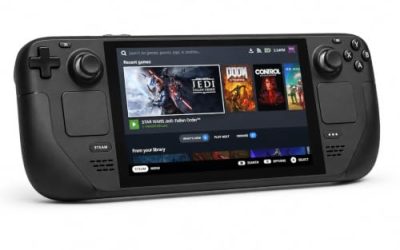
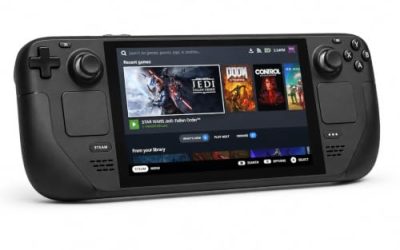
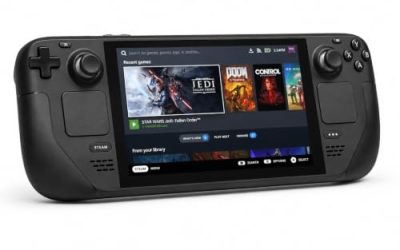
Valve Steam Deck OLED 512GB

The handheld the Verified badge was written for, and the badge here grades the native build rather than a Proton run. The published Linux minimum asks for almost nothing, so the Deck’s APU is never the bottleneck; the fit question is the grid interface, and Valve’s sheet marks the text legible and the default configuration performant.
Specs
- Display: 7.4-inch HDR OLED, 1280 by 800, up to 90 Hz
- Processor: AMD Zen 2 and RDNA 2 custom APU
- Memory: 16 GB LPDDR5
- Storage: 512 GB NVMe, plus a microSD slot
- Wireless: Wi-Fi 6E and Bluetooth
- Channel note: Valve sells the Deck mainly through its own store, so Amazon listings are third-party sellers
8BitDo Ultimate 2 Bluetooth Controller
The docked and desktop pad pick. The game’s own record lists full controller support, and this pad covers the couch case with modern sticks and triggers plus back buttons suited to quick inventory shuffles between fights.
Specs
- Connectivity: Bluetooth wireless and USB-C wired
- Joysticks: TMR electromagnetic, anti-drift design
- Triggers: Hall effect, with mode switching
- Extras: two remappable back buttons, motion control
- In the box: charging dock included
Xbox Wireless Controller, Carbon Black
The safest guest pad in PC gaming: Steam Input support is universal, the glyphs match what most games display, and it pairs over Bluetooth or its own wireless standard. Valve’s sheet lists gamepad as this game’s supported input class, so a standard pad is the input described.
- Connectivity: Xbox Wireless and Bluetooth
- Port: USB-C for wired play
- Controls: hybrid D-pad, dedicated Share button
- Power: AA batteries or optional rechargeable pack
Logitech G502 HERO
Backpack Battles is a game about dragging items around a grid, and at a desk a precise wired mouse is the natural tool for it. Eleven programmable buttons cover the confirm, cancel and rotate inputs a long arranging session repeats.
Specs
- HERO optical sensor, up to 25,600 DPI
- 11 programmable buttons
- Adjustable weight system
- Wired USB connection
- On-board memory profiles
Samsung T9 Portable SSD 2TB
For moving a Linux game library between machines, or keeping an offline backup of installers, a fast USB-C drive is the simple answer. The headline figure needs a Gen 2×2 host port; on a lesser port the drive runs at that ceiling.
Specs
- Capacity: 2 TB portable SSD
- Interface: USB 3.2 Gen 2×2, USB-C connector
- Maker-rated speeds: up to 2,000 MB per second read, 1,950 MB per second write
- Features: Dynamic Thermal Guard, maker-rated drop resistance
How to choose
Choose the Steam copy, because it is the only PC edition on sale and the one carrying the Linux depot. On a Linux desktop, install and launch with no compatibility tool forced: the native build is the default the record describes, and the distro names in the minimum spec are old enough that any current distribution clears them. Reach for Proton only as a diagnostic if your setup misbehaves, not as the plan. On Steam Deck, install and play; the Verified badge was earned on the native build, and the readable reports suggest at most a d-pad remap for backpack movement and a frame-rate cap for battery. A pad is the record’s stated input shape, while a mouse earns its place for long arranging sessions at a desk.
Who should skip
Skip this one if you want a DRM-free offline installer, because no GOG edition exists to buy. Skip it if a Deck badge only counts for you when it grades the current build: Valve’s test predates the 1.0 release, and no fresher test is on record. Skip it if you are on a Mac, where the record holds an icon asset and nothing else. And skip it if the asynchronous autobattler shape does not appeal, because no verdict changes what the game is.
FAQ
Is Backpack Battles native on Linux?
Yes. Steam flags the game for Windows and Linux, the Linux minimum requirements are genuinely populated, a dedicated Linux depot of about 342 MB ships on the public branch, and a LinuxClientIcon is registered. ProtonDB classifies it Native, and that heading agrees with the record.
Is Backpack Battles Steam Deck Verified?
Yes. Valve’s sheet gives the top category with all four checks passing, and the recommended runtime is listed as native, so the badge grades the Linux build. The test itself is dated April 2024 against an Early Access build, so it certifies the native line rather than the current branch.
Can I buy Backpack Battles on GOG?
No. The game’s natural product address on GOG resolves to the general games catalogue rather than a product page, and no product record exists. The Steam copy is the only PC edition on sale, and it is the edition carrying the Linux build.
Does Backpack Battles need Proton on Linux?
No. The native build is the default install the record describes. Proton appears in the game’s history because the earliest 2023 filings found the native build failing to launch; recent native filings report out-of-the-box runs, so Proton is a fallback diagnostic, not the route.
Final verdict
Backpack Battles is the clean case this catalogue rarely gets: a native Linux build confirmed at the flag, the spec sheet and the depot, with a registered Linux icon and a Deck Verified badge grading the native runtime itself. The paperwork has two honest blemishes, a Deck test predating the 1.0 release and a ProtonDB summary feed that could not be read today, and neither touches the ruling. Buy the Steam copy, install the native build, and arrange your backpack.
Product and ASIN Reference
| Product | ASIN |
|---|---|
| Valve Steam Deck OLED 512GB | B0CQ3RWQQZ |
| 8BitDo Ultimate 2 Bluetooth Controller | B0F194QFT2 |
| Xbox Wireless Controller, Carbon Black | B08DF248LD |
| Logitech G502 HERO | B07GBZ4Q68 |
| Samsung T9 Portable SSD 2TB | B0CHFS9K14 |