Our Short List of 3

- Display: 7.4-inch HDR OLED, 1280 by 800, up to 90 Hz
- Processor: AMD Zen 2 and RDNA 2 custom APU
- Memory: 16 GB LPDDR5
- Storage: 512 GB NVMe, plus a microSD slot

- Connectivity: Bluetooth wireless and USB-C wired
- Joysticks: TMR electromagnetic, anti-drift design
- Triggers: Hall effect, with mode switching
- Extras: two remappable back buttons, motion control

- Connectivity: Xbox Wireless and Bluetooth
- Port: USB-C for wired play
- Controls: hybrid D-pad, dedicated Share button
- Power: AA batteries or optional rechargeable pack
All 5 Picks at a Glance
| Product | Specs | Action |
|---|---|---|
| Valve Steam Deck OLED 512GB |
| Check price on Amazon |
| 8BitDo Ultimate 2 Bluetooth Controller |
| Check price on Amazon |
| Xbox Wireless Controller, Carbon Black |
| Check price on Amazon |
 Logitech G502 HERO |
| Check price on Amazon |
 Samsung T9 Portable SSD 2TB |
| Check price on Amazon |
Deep Rock Galactic: Survivor is the single-player auto-shooter spin-off from Funday Games, published by Ghost Ship Publishing and released in version 1.0 on 17 September 2025 after an Early Access run that began in February 2024. It is a separate game from the co-op Deep Rock Galactic, with its own Steam record, and this article reads only that record: app 2321470, judged layer by layer.
The record is unusually easy to read once you ignore one misleading heading. Steam sells a Windows build and nothing else, every add-on follows the same flag, and the community compatibility file is about as strong as a Windows-only game can earn. The one document that overstates the case is a badge whose test paperwork predates the 1.0 launch.
As an Amazon Associate, we earn from qualifying purchases.
Quick answer
No. Deep Rock Galactic: Survivor ships no native Linux build: Steam flags Windows only, its Linux requirements tab is an empty shell, and its single depot is a Windows Unity build. Linux players use Proton instead, where the record is strong: ProtonDB rates the game Platinum across 151 reports, and Valve rates it Steam Deck Verified.
What Steam’s record actually ships
Start with the platform flags, because everything else in this article is corroboration. The record for app 2321470 reads windows true, mac false, linux false. The Windows requirements tab is genuinely populated at the minimum tier: Windows 10, an Intel i5-4590 or similar processor, 8 GB of RAM, a GeForce GTX 1050 class graphics card and 2 GB of storage. The recommended tier repeats only the 64-bit operating system line. The Mac and Linux requirements fields, by contrast, are empty shells: each carries its Minimum and Recommended headings over blank lists, with no processor, memory or graphics entries at all. A populated Linux tab is what a native release looks like on this storefront; an empty shell is a template the publisher never filled in.
The delivery layer agrees. SteamDB’s depot census for the app lists one depot, 2321471, holding 3.47 GiB on disk with no operating-system split in its configuration. There is no second depot scoped to Linux, no shared depot and no Linux branch of the content. The registered store assets are clienticon, clienttga and icon only; no LinuxClientIcon is registered, and the osextended field is an empty string. SteamDB’s detected-technology list reads Unity Engine with its IL2CPP, Burst and Entities components plus a DirectStorage SDK entry, which is the fingerprint of a Windows Unity build. The game’s own record also lists controller support as full, a fact this article takes from that field alone.
The expansion shelf follows the same flag
The base record’s add-on array holds four entries, and each was read individually rather than sampled. The Knockout Expansion (5269530), the Heavy Duty Expansion (4395500), the After Hours Pack (3818560) and the Supporter Pack (2782850) all flag windows true, mac false and linux false. None of the four is a soundtrack or artbook app, so the familiar trap in which a music album carries the family’s only Linux flag has nothing to attach to here. Across the whole family of five records, the Linux-flag count is zero. If a native port ever arrives, it will have to change the base game’s record first; nothing further down the shelf is hiding one.
Two absences round out the record. There is no drm_notice on the base app and no third-party account notice, and SteamDB detects no anti-cheat technology in the build, which fits a single-player game. The anti-cheat tracker’s games file, read in full at 1,167 entries, holds no entry matched to this app’s store ID, and no Deep Rock entry of any kind; that is documentation silence, not a clearance. Nothing on the record stands between the Windows build and Proton except the compatibility layer itself.
ProtonDB: Platinum, with one heading that overstates it
ProtonDB’s summary record for the app is fully readable and unanimous: the settled tier is Platinum, the best-reported tier is Platinum and the trending tier is Platinum, across 151 reports with strong confidence. That is the profile of a game the current Proton builds simply run. The filing colour underneath is mostly out-of-the-box reports on recent Proton versions, with a minority of Steam Deck filings noting frame-rate dips when late-run enemy swarms fill the screen and interface text that some players find small. Those are handheld performance notes, not launch blockers.
One element of the ProtonDB game page misleads, and it is worth naming because it recurs across this catalogue. The page displays a “Natively Supports” heading above its requirements area. That heading is a false signal: it is generated by the populated-but-empty Linux requirements shell on the Steam record. Steam’s flags, the depot census and the icon registry all say Windows only, and this article follows Steam. If you arrived here because that heading suggested a native build exists, it does not.
The Deck badge predates version 1.0
Valve’s compatibility sheet for the app, read here through SteamDB’s republication of Valve’s data because Valve’s endpoint returned empty responses in this session, gives the game the top category: Verified. All four checks pass: the default controller configuration is fully functional, the game shows Steam Deck controller icons, interface text is legible, and the default graphics configuration performs well. SteamOS is separately rated Compatible. On its face, that is a clean handheld pass.
The paperwork underneath is old, and the article states that plainly. The test timestamp is 5 March 2024, against build 13573882, with a Proton 9.0-1 release candidate as the recommended runtime. That test ran during Early Access, weeks after the February 2024 early launch and more than eighteen months before the 1.0 release. The current public build is 26918014, dated 25 November 2026, so the badge grades a superseded Early Access build rather than the game on sale today. Treat the Verified badge as historical paperwork and the 151-report Platinum file, whose recent Deck filings describe the shipped game, as the fresher evidence. The two point the same way; only their dates differ.
There is no second storefront to complicate the choice. GOG’s own surfaces return no product record for Survivor: its embedded store search finds nothing, its product API search comes back empty, and the natural product address redirects to the general games catalogue. The Steam copy is the only PC edition.
Gear that fits a Proton run
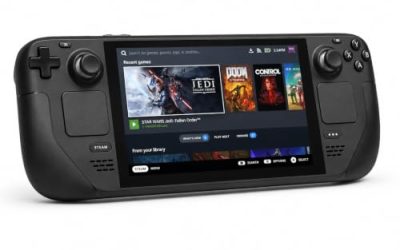
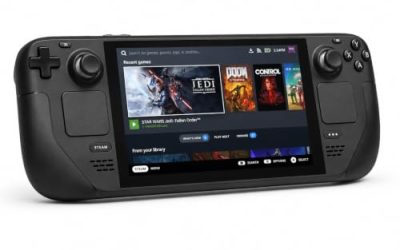
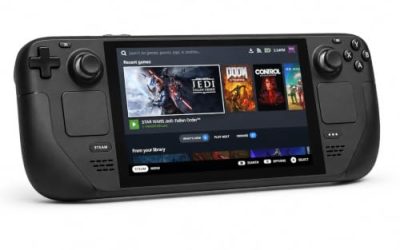
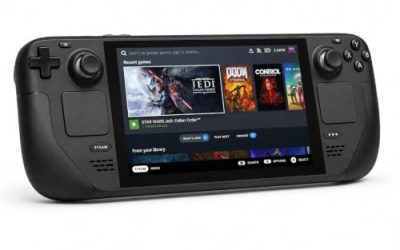
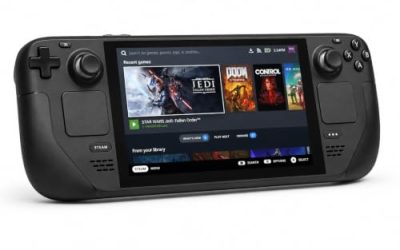
Valve Steam Deck OLED 512GB
- Display: 7.4-inch HDR OLED, 1280 by 800, up to 90 Hz
- Processor: AMD Zen 2 and RDNA 2 custom APU
- Memory: 16 GB LPDDR5
- Storage: 512 GB NVMe, plus a microSD slot
The handheld the Verified badge was written for. The game’s published requirements are a rounding error next to the Deck’s APU, and the current ProtonDB file shows the shipped 1.0 build running cleanly on the machine, despite the age of Valve’s test sheet.
8BitDo Ultimate 2 Bluetooth Controller
- Connectivity: Bluetooth wireless and USB-C wired
- Joysticks: TMR electromagnetic, anti-drift design
- Triggers: Hall effect, with mode switching
- Extras: two remappable back buttons, motion control
The docked and desktop pad pick. Steam lists full controller support for the game, and this pad covers the couch case with modern sticks and triggers plus back buttons for menu shortcuts.
Xbox Wireless Controller, Carbon Black
- Connectivity: Xbox Wireless and Bluetooth
- Port: USB-C for wired play
- Controls: hybrid D-pad, dedicated Share button
- Power: AA batteries or optional rechargeable pack
The safest guest pad in PC gaming: Steam Input support is universal, the glyphs match what most games display, and it pairs over Bluetooth or its own wireless standard. For a twin-stick auto-shooter built around a gamepad, it is the zero-configuration option.
Logitech G502 HERO
- HERO optical sensor, up to 25,600 DPI
- 11 programmable buttons
- Adjustable weight system
- Wired USB connection
Survivor’s runs are pad work, but the time between runs is menus, upgrade trees and loadout screens, and a precise wired mouse turns those into single clicks. Eleven programmable buttons cover the confirm, cancel and map inputs a long session repeats.
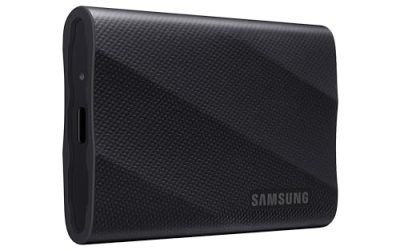
Samsung T9 Portable SSD 2TB
- Capacity: 2 TB portable SSD
- Interface: USB 3.2 Gen 2×2, USB-C connector
- Maker-rated speeds: up to 2,000 MB per second read, 1,950 MB per second write
- Features: Dynamic Thermal Guard, maker-rated drop resistance
For moving a Linux game library between a desktop and a laptop, or keeping an offline backup of installers, a fast USB-C drive is the simple answer. The headline figure needs a Gen 2×2 host port; on a lesser port the drive runs at that ceiling instead.
How to choose
Choose the Steam copy, because it is the only PC edition on sale and the exact build both records describe. On a desktop or laptop, install under Proton and leave the compatibility tool at its default; a unanimous Platinum file across 151 reports says current builds need no tinkering. On a Steam Deck, weight the recent ProtonDB filings over the Verified badge, whose test predates the 1.0 release; the filings agree the shipped game runs well, with occasional frame dips in the densest swarms. For input, the record lists full controller support, so a pad is the native shape of this game on every platform; a mouse earns its place only for the menu and upgrade screens between dives.
Who should skip
Skip this one if you are shopping for a native Linux release: Survivor is not one, and neither the empty Linux tab nor ProtonDB’s stray heading changes that. Skip it if you want a DRM-free offline installer, because no GOG edition exists to buy. Skip it if the co-op original is what you actually want to play with friends; this is a single-player spin-off by a different studio, and its record says nothing about the original’s status. And skip the handheld plan if dense-swarm frame dips on the Deck would spoil the run — that is the one recurring complaint in the current file.
FAQ
Is Deep Rock Galactic: Survivor native on Linux?
No. Steam’s record for app 2321470 flags Windows only, the Linux requirements field is an empty shell, and the single content depot is a Windows Unity build with no Linux-scoped depot beside it. All four expansions carry the same Windows-only flag.
How well does Deep Rock Galactic: Survivor run under Proton?
ProtonDB’s summary reads Platinum on the settled, best-reported and trending tiers, across 151 reports with strong confidence. Most filings describe out-of-the-box runs on current Proton versions; a minority of Deck filings note frame dips in dense late-run swarms and small interface text.
Is Deep Rock Galactic: Survivor Steam Deck Verified?
Yes, Valve’s sheet gives it the top category with all four checks passing, and SteamOS is separately rated Compatible. Read the date, though: the test was run in March 2024 against an Early Access build, well before the September 2025 1.0 launch, so the badge grades superseded code and the newer ProtonDB filings are the fresher source.
Can I buy Deep Rock Galactic: Survivor on GOG instead?
No. GOG’s own store search and product API return no record for the game, and its natural product address redirects to the general catalogue. The Steam copy is the only PC edition on sale.
Final verdict
Deep Rock Galactic: Survivor is a Windows-only release whose paper trail mostly tells the truth: flags, empty requirements shells, a single Windows depot and a Windows-only expansion shelf all agree, and the community file answers with a unanimous Platinum across a large report pool. Read two documents with care: ProtonDB’s stray “Natively Supports” heading, which the empty Linux tab manufactures out of nothing, and a Steam Deck Verified badge earned on an Early Access build the game left behind in 2025. Buy the Steam copy, play it under Proton, and let the current filings, not the old paperwork, set your expectations.
Product and ASIN Reference
| Product | ASIN |
|---|---|
| Valve Steam Deck OLED 512GB | B0CQ3RWQQZ |
| 8BitDo Ultimate 2 Bluetooth Controller | B0F194QFT2 |
| Xbox Wireless Controller, Carbon Black | B08DF248LD |
| Logitech G502 HERO | B07GBZ4Q68 |
| Samsung T9 Portable SSD 2TB | B0CHFS9K14 |