ITORAH is a 2D action platformer from developer Grimbart Tales, published by Assemble Entertainment and released on 21 March 2022. You play Itorah, the only human left in Nahucan, a world of masked beings threatened by a mysterious plague; the run mixes exploration, melee combat and traversal. Steam lists it under Action, Adventure and Indie, with full controller support.
The Linux question has a short answer and, unusually, a clean paper trail behind it. Steam’s record flags Linux false, the Linux requirements field is an empty shell, and the game’s single content depot is a Windows build. No stray flag in this record waits to mislead anyone: the family scan holds one soundtrack that does not flag Linux either. What Linux players get instead is a Proton route with a Platinum headline and a Playable rating on Steam Deck.
As an Amazon Associate, we earn from qualifying purchases.
Quick answer
No. ITORAH has no native Linux build. Steam flags Linux false, the Linux requirements field is an empty shell, and the only content depot is a Windows 64-bit build in the store package. Linux players run that build under Proton: ProtonDB’s headline is Platinum across four reports, and Valve rates the game Playable on Steam Deck.
The platform record, field by field
Steam’s record for app 1132910 starts with the flags: Windows true, Mac false, Linux false. The Windows requirements field is genuinely populated at both tiers: the minimum asks for Windows 8.1 or higher, a Core i3 1005G1 or Ryzen 3, 8 GB of RAM, a GTX 860 or Radeon RX 560 class card, DirectX 11 and 4 GB of storage; the recommended tier raises that to Windows 10, a Core i5 2400 or Ryzen 5, 16 GB of RAM and a GTX 1050 Ti or RX 580.
Against that, the Mac and Linux requirements fields are empty shells: Minimum and Recommended headings over empty lists, no hardware named at either tier. An empty shell under a false flag is paperwork, not a port. SteamDB reads the architecture field as 64-bit, matching the Windows build’s own line. Two gaps complete the record: Steam prints no DRM notice and no external account notice, so nothing names a launcher or an activation layer. Those are absences, stated as gaps rather than filled in.
One depot, and it is a Windows build
SteamDB’s depot table settles the delivery question. The game ships exactly one content depot, 1132911, named Itorah Content, configured for Windows 64-bit, at 3.84 GiB on disk. Its current manifest lists two executable files, 113 DLL files and a large set of FMOD audio banks: the signature of a Windows Unity build, with no Linux binary inside. The depot’s packages include the store package, sub 385105, billed as Store or CD Key. The public branch stands on build 20304338, dated 8 October 2025: the record is maintained and current, and it still holds the one Windows depot and nothing else.
The family scan: a soundtrack that flags nothing
The full DLC array holds exactly one app, read individually: the Itorah Soundtrack, app 1776740, a music product from the same developer and publisher. Its flags read Windows true, Mac false, Linux false, and its own Mac and Linux fields are the same empty shells as the game’s. The usual trap in this series, a soundtrack whose bare Linux flag gets mistaken for evidence about the game, cannot form here: the family’s only member does not flag Linux at all, and the not-native case rests on the game alone.
Anti-cheat, in three separate sources
Kept apart, the three sources all read negative. Steam names no anti-cheat anywhere on the record: no notice, no category and no requirement line mentions one, which fits a single-player-only game. SteamDB’s detected technologies are the Unity Engine, the FMOD SDK, the Mono SDK and the Resonance Audio SDK: engine, audio and runtime plumbing, none of it a protection layer. Are We Anti-Cheat Yet carries no entry for ITORAH: its 1,167-game dataset was searched by name and by app id 1132910 and returned nothing.
ProtonDB: a Platinum headline under a misleading label
One read failed this session and the article says so plainly: ProtonDB’s summary endpoint returned a page-not-found response, so no best-reported tier, trending tier or confidence figure is claimed anywhere here. What the game page itself states is a Platinum headline across four reports. The heading check was completed, and the stray-tag pattern fires: the page heads its requirements block “Natively Supports”, yet Steam’s record contradicts that on every layer, and all four reports beneath the heading were filed under named Proton versions from the 7.0 line. The article follows Steam, and names the contradiction rather than repeating the label.
The report texture, kept at report weight, is reassuring. One desktop report describes playing from start to finish on Proton 7.0-1 without a single issue. Two Steam Deck reports run under Proton 7.0 builds, and one notes the in-game text is small while judging it readable, matching Valve’s note below. Four reports is a thin file, so read the Platinum headline as a promising sample, not a settled verdict.
Steam Deck: Playable, certified on an older build
Valve’s own compatibility endpoint returned no usable record for this app in this session, so the verdict and its paperwork were read from SteamDB’s republication of Valve’s compatibility data. The category is Playable, and SteamOS is separately rated Compatible. Three published items pass outright: full functionality on the default controller configuration, Steam Deck controller icons shown, and good performance on the default graphics configuration. The single note item holding it at Playable is that some in-game text is small and may be difficult to read.
The test behind the badge is dated 6 August 2022, on build 8558143, with the recommended runtime listed as proton-stable, so the badge certifies the Windows build carried by Proton, not a native port. The branch has since moved to build 20304338, dated October 2025, so the paperwork predates the build the store serves today. Playable is Valve’s current published verdict; only the test’s age is worth knowing.
The GOG edition: real, and Windows only
A GOG edition of ITORAH genuinely exists, so the two-storefront question is worth ruling from GOG’s own records rather than its search results. GOG’s live product page carries the same masked-world description as Steam’s record, and its product data, product 2043095980, gives a release date of 21 March 2022 matching Steam’s exactly, pinning the identity. Its compatibility line reads Windows true, Mac false, Linux false, its “Works on” field names Windows alone, and the downloads hold a single Windows installer. GOG sells the same Windows build Steam does: DRM-free, but no Linux version on either shelf.
Gear for playing ITORAH under Proton
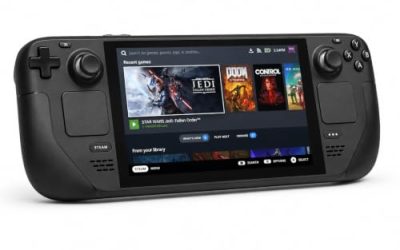
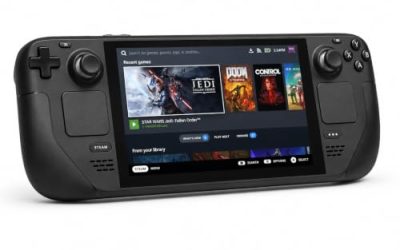
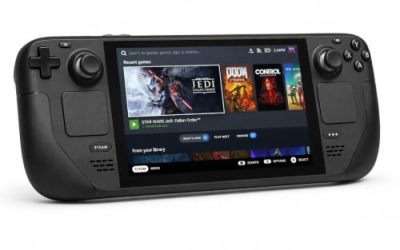
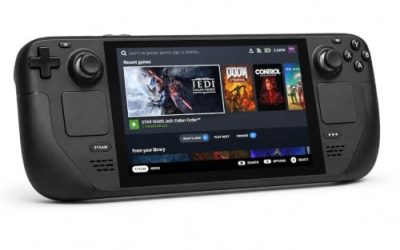
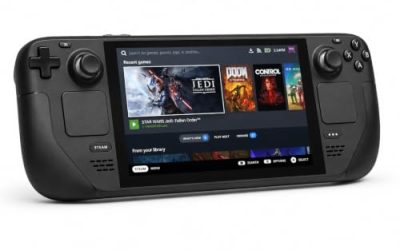
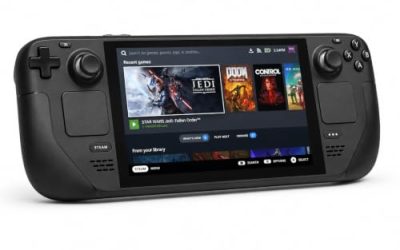
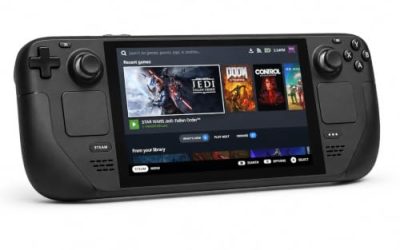
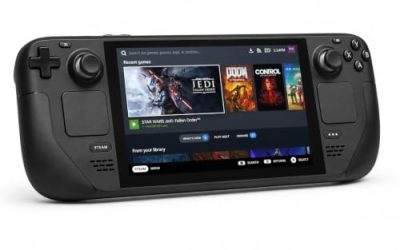
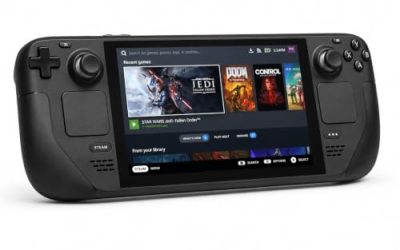
Valve Steam Deck OLED 512GB

The handheld Valve’s Playable badge describes. The game’s requirements sit far below the Deck’s APU, and the only caution on the test sheet is the small-text note, which the larger OLED panel does its part to soften.
Specs
- Display: 7.4-inch HDR OLED, 1280 by 800, up to 90 Hz
- Processor: AMD Zen 2 and RDNA 2 custom APU
- Memory: 16 GB LPDDR5
- Storage: 512 GB NVMe, plus a microSD slot
- Wireless: Wi-Fi 6E and Bluetooth
- Channel note: Valve sells the Deck mainly through its own store, so Amazon listings are third-party sellers
8BitDo Ultimate 2 Bluetooth Controller

The docked and desktop pad pick. Steam lists full controller support for ITORAH, and this pad covers the couch case with modern sticks and triggers plus back buttons.
Specs
- Connectivity: Bluetooth wireless and USB-C wired
- Joysticks: TMR electromagnetic, anti-drift design
- Triggers: Hall effect, with mode switching
- Extras: two remappable back buttons, motion control
- In the box: charging dock included
Xbox Wireless Controller, Carbon Black

The safest guest pad in PC gaming: Steam Input support is universal, the glyphs match what most games display, and it pairs over Bluetooth or its own wireless standard. On the handheld, Valve’s sheet confirms the game shows Deck icons on its built-in controls; an external pad is the docked alternative.
- Connectivity: Xbox Wireless and Bluetooth
- Port: USB-C for wired play
- Controls: hybrid D-pad, dedicated Share button
- Power: AA batteries or optional rechargeable pack
Logitech G502 HERO

ITORAH is a gamepad game, but desktop sessions still pass through launchers and file managers, and a precise wired mouse makes that surrounding work single clicks. Eleven programmable buttons cover the shortcuts a long session repeats.
Specs
- HERO optical sensor, up to 25,600 DPI
- 11 programmable buttons
- Adjustable weight system
- Wired USB connection
- On-board memory profiles
Samsung T9 Portable SSD 2TB

For moving a Linux game library between machines, or keeping an offline backup of installers, a fast USB-C drive is the simple answer. The headline figure needs a Gen 2×2 host port; on a lesser port the drive runs at that ceiling.
Specs
- Capacity: 2 TB portable SSD
- Interface: USB 3.2 Gen 2×2, USB-C connector
- Maker-rated speeds: up to 2,000 MB per second read, 1,950 MB per second write
- Features: Dynamic Thermal Guard, maker-rated drop resistance
How to choose
Choose either storefront on the terms that matter to you, because both sell the identical Windows build: Steam for the copy both compatibility records describe, GOG if a DRM-free installer matters more. On desktop or laptop, install, leave the compatibility tool at its default and play; the Platinum file and the start-to-finish report both come from ordinary Proton 7.0-line setups. On a Steam Deck, expect the Playable experience Valve describes, with small text as the one documented compromise. For input, stay with a gamepad: the record lists full controller support and nothing asks for a mouse.
Who should skip
Skip this one if you only buy native Linux builds: there is none here, on Steam or on GOG, and the record gives no sign of one arriving. Skip it if a four-report ProtonDB file feels too thin to trust. Skip the Deck plan if small in-game text is a hard problem for you, since that is the exact note Valve’s test attaches. And skip it if you want any multiplayer component: the record is single-player only.
FAQ
Is ITORAH native on Linux?
No. Steam flags Linux false, the Linux requirements field is an empty shell, and the game’s only content depot is a Windows 64-bit build in the store package. The GOG edition is Windows only as well.
Does the soundtrack’s listing change the Linux answer?
No, and here it cannot even raise the question: the Itorah Soundtrack, the only app in the game’s DLC array, flags Windows only. A soundtrack’s flags never describe the game in any case, but this family holds no stray Linux flag to misread.
How well does ITORAH run under Proton?
ProtonDB’s game page carries a Platinum headline across four reports, all filed under Proton 7.0-line builds, including one start-to-finish desktop run reported without a single issue. The pool is small and the summary tiers could not be read this session, so treat the headline as a good early signal, not a deep file.
Is ITORAH Steam Deck Verified?
No, it is one step below: Valve rates it Playable, with full functionality, Deck icons and good default performance, held back only by a note that some in-game text is small. The test dates from August 2022, on an older build than the branch serves now.
Final verdict
ITORAH is a Windows-only release whose record is unusually easy to read correctly: false flags on both side platforms, empty shells where ports would be documented, one Windows depot in the store package, and a soundtrack that flags nothing extra. The traps this series usually disarms simply are not set. What Linux players get is a workable Proton route with a Platinum headline on a thin four-report file, a Playable Deck badge whose only note is small text, and a GOG edition offering the same build without DRM. Buy either copy, run it under Proton, and go in knowing the badge paperwork dates from 2022.
Product and ASIN Reference
| Product | ASIN |
|---|---|
| Valve Steam Deck OLED 512GB | B0CQ3RWQQZ |
| 8BitDo Ultimate 2 Bluetooth Controller | B0F194QFT2 |
| Xbox Wireless Controller, Carbon Black | B08DF248LD |
| Logitech G502 HERO | B07GBZ4Q68 |
| Samsung T9 Portable SSD 2TB | B0CHFS9K14 |