Lost in Random is a dice-driven action-adventure from developers Zoink and Thunderful, published by Electronic Arts and released on 10 September 2021. Even, a young heroine, crosses the kingdom of Random with Dicey, a living die, in a gothic-fairy-tale world where a dice roll settles every citizen’s fate. Steam files it under Action, Adventure and Indie, and none of that filing includes a Linux build.
Two facts pull in opposite directions. The platform record is closed: one Windows build, an EA account wrapper printed on the store page, and no second storefront selling the game. The play record is open: the ProtonDB file sits at the top tier, and Valve has tested the game on Steam Deck. This piece keeps those records separate and rules only on what each one says.
As an Amazon Associate, we earn from qualifying purchases.
Quick answer
No. Lost in Random is not native: Steam flags Windows alone, the Linux field is an empty shell, and no Linux depot exists. The Windows build runs under Proton with a Platinum headline on ProtonDB across 24 reports, Valve rates it Playable on Steam Deck, and every route passes through an EA account sign-in.
The record, layer by layer
Steam’s appdetails record for app 1462570 flags the platforms as Windows true, Mac false, Linux false.
The Windows requirements field is genuinely populated at both tiers: at minimum Windows 10, an AMD FX 6100 or Intel i3 6300, 8 GB of RAM, a Radeon R9 270X or GeForce GTX 750 class card, DirectX 12 and 20 GB of storage. The Mac and Linux fields are empty shells: Minimum and Recommended headings printed over empty lists, text a skimming reader could mistake for support. There is nothing under either heading, and the flags above them read false.
The category list is short, single-player, achievements, full controller support and trading cards, and two absences matter. Steam Cloud is not listed, so saves live in the Proton prefix that made them; Family Sharing is not listed either, and SteamDB’s record adds that the publisher has marked this game ineligible for it.
One build in the box: the depots
SteamDB’s depot table holds one content depot, 1462571 at 8.80 GiB, and it sits in the store package, sub 514970, the package a buyer receives. Around it are six language depots under 200 KiB each and the Windows VC 2019 redistributable. One further depot, 3340991 at 257.58 MiB, is borrowed from another app and sits outside the store package. Totals: 9.06 GiB on disk overall, 9.05 GiB filtered to Windows alone. No Linux depot exists in any package, so no hidden native build waits behind the store flags. The public branch stands on build 10359962, updated 25 January 2023, where it has remained since.
The EA wrapper, in Steam’s own words
This record is not silent about third-party requirements. The account notice reads, in full: “EA Account”. The DRM notice is printed in full as well: “EA on-line activation and Origin client software installation and background use required.” Those lines are the practical story: an EA account, an on-line activation step, and EA’s client software in the background. Under Proton that wrapper has to work before the game starts, and it is what the report file below keeps returning to.
The family sweep is short: the record publishes no DLC array at all. The store package carries one extra app, 1582400, which SteamDB’s package listing types as DLC and names “Lost in Random – Key”. It has no public appdetails record, so no platform claim can be read from it; by name and placement it is an activation-key artefact, not playable content. The sequel, Lost in Random: The Eternal Die, app 2564520, is a separate game on its own record and plays no part in this verdict.
Anti-cheat and the launcher, three sources kept separate
Steam names no anti-cheat on this record, and its two notices, an account requirement and a DRM activation line, do not make one. SteamDB’s detected technologies are the Unity Engine, the EA App Launcher, the Autodesk FBX SDK, UnityBurst and UnityIL2CPP; the EA App Launcher entry is a launcher, not an anti-cheat, and it corroborates the store’s own notices. Are We Anti-Cheat Yet, its 1,167-game dataset searched by name and app id, carries no entry. The narrow conclusion: no anti-cheat is documented for this single-player title, and the documented gate is the EA account sign-in, not a kernel driver.
What ProtonDB’s file says
One evidence note: ProtonDB’s summary endpoint returned a page-not-found response on repeated attempts this session, so no tier split or confidence figure is claimed here. The game page states a Platinum headline across 24 reports, and that is the figure used.
The classification check was completed, and the stray-tag pattern fires: the page heads its requirements block “Natively Supports”, but Steam’s record contradicts the heading at every layer, and every report beneath it names a Proton version, from the 7.0 line through 10.0, Experimental and GE-Proton. This article follows Steam: the heading is a page artefact, not a native build.
The texture, kept at report weight, splits in two. The game draws praise: smooth performance, full completions, one Deck report noting that after the first EA sign-in, later sessions needed no fresh authorization. The friction is the launcher: blank EA App windows to wait through, a touch-driven first-launch sign-in on Deck, one reporter swapping Wayland for X11 before the launcher would start, and one report that could not boot the game at all because the EA App blocked it. A Platinum game, then, behind a temperamental gate.
Steam Deck: Playable, with a launcher asterisk
Valve’s own compatibility endpoint answered directly this session: the verdict is Playable, resolved category 2, with SteamOS separately Compatible. Four checks pass: the default controller configuration is fully functional, the game shows Steam Deck controller icons, interface text is legible, and the default graphics configuration performs well. The one caution item is the launcher, which may require the touchscreen or virtual keyboard or have difficult-to-read text. A further note on the sheet states that singleplayer gameplay requires an active Internet connection, and the configuration record agrees.
The paperwork comes through SteamDB’s republication of Valve’s data, disclosed rather than hidden: tested 14 January 2023, on build 9894889, with proton-experimental as the recommended runtime, so the badge certifies the Windows build under Proton. The branch has since moved one step, to build 10359962 of 25 January 2023, eleven days after the test. The paperwork therefore predates the current branch build, narrowly, a footnote rather than a staleness warning.
Gear that fits the record
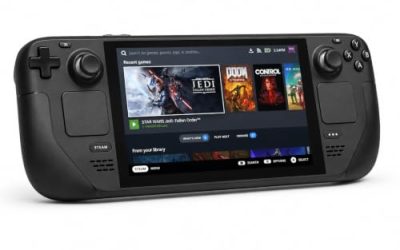
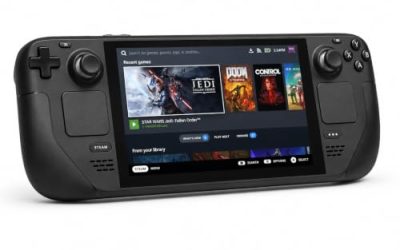
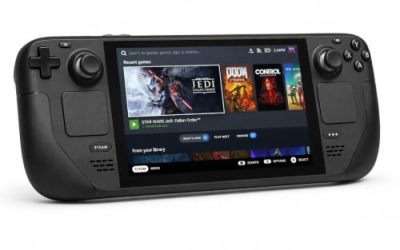
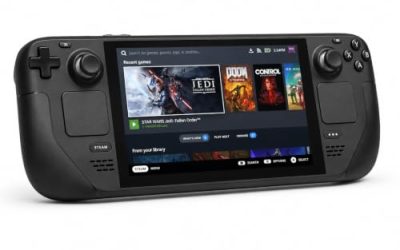
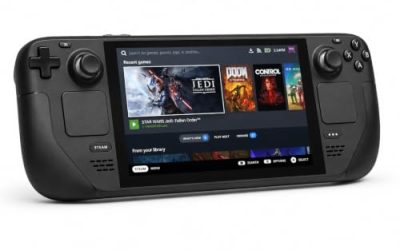
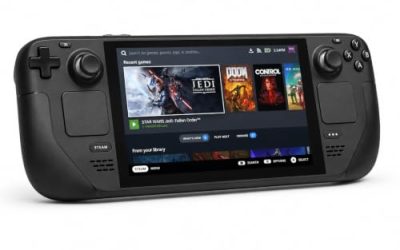
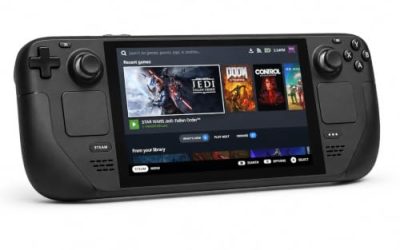
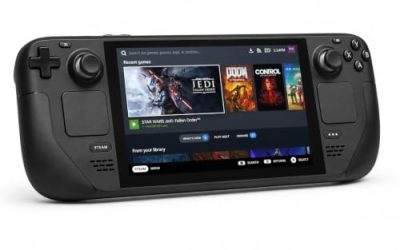
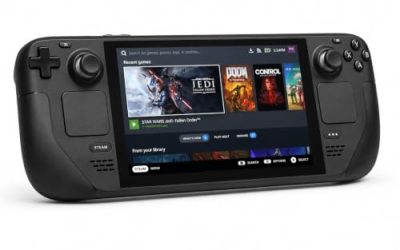
Valve Steam Deck OLED 512GB

The handheld the Playable badge was written for. Valve’s sheet passes the game on its default configuration, and the one caution, a launcher that may want the touchscreen, is a tool the Deck carries on its face.
Specs
- Display: 7.4-inch HDR OLED, 1280 by 800, up to 90 Hz
- Processor: AMD Zen 2 and RDNA 2 custom APU
- Memory: 16 GB LPDDR5
- Storage: 512 GB NVMe, plus a microSD slot
- Wireless: Wi-Fi 6E and Bluetooth
- Channel note: Valve sells the Deck mainly through its own store, so Amazon listings are third-party sellers
8BitDo Ultimate 2 Bluetooth Controller

The docked and desktop pad pick, covering the couch case with modern sticks and triggers plus back buttons.
Specs
- Connectivity: Bluetooth wireless and USB-C wired
- Joysticks: TMR electromagnetic, anti-drift design
- Triggers: Hall effect, with mode switching
- Extras: two remappable back buttons, motion control
- In the box: charging dock included
Xbox Wireless Controller, Carbon Black

The safest guest pad in PC gaming: Steam Input support is universal, the glyphs match what most games display, and it pairs over Bluetooth or its own wireless standard.
- Connectivity: Xbox Wireless and Bluetooth
- Port: USB-C for wired play
- Controls: hybrid D-pad, dedicated Share button
- Power: AA batteries or optional rechargeable pack
Logitech G502 HERO

At a desk, the EA launcher’s windows and the game’s menus are pointer work, and a precise wired mouse makes both quicker. Eleven programmable buttons cover the inputs a long session repeats.
Specs
- HERO optical sensor, up to 25,600 DPI
- 11 programmable buttons
- Adjustable weight system
- Wired USB connection
- On-board memory profiles
Samsung T9 Portable SSD 2TB

Steam lists no cloud saves for this game, so a moving library moves with its prefixes. A fast USB-C drive is the simple way to carry or back up that library.
Specs
- Capacity: 2 TB portable SSD
- Interface: USB 3.2 Gen 2×2, USB-C connector
- Maker-rated speeds: up to 2,000 MB per second read, 1,950 MB per second write
- Features: Dynamic Thermal Guard, maker-rated drop resistance
How to choose
There is only one copy to choose: the Steam edition is the only PC edition sold. The real choices concern the wrapper. With an EA account already held and linked, the first-launch sign-in reads in reports as a one-time step. On desktop, expect blank EA App windows at first launch and give them time; one reporter found the launcher blocked on Wayland where X11 worked. On Steam Deck, the Playable badge plus the launcher note means: install, launch while connected, and be ready to work the sign-in windows by touch.
Who should skip
Skip this one if an EA account is a hard line: the record prints the requirement, and no edition offers a route around it. Skip it if you play offline: Valve’s sheet states singleplayer requires an active internet connection. Skip it if you wanted a native build, a DRM-free installer or cloud saves that follow you between machines: the record offers none of the three. And skip it if a launcher needing patience on first run is more friction than the game is worth; the gate is part of the purchase.
FAQ
Is Lost in Random native on Linux?
No. Steam’s record for app 1462570 flags Windows only, the Linux requirements field is an empty shell with no text under its headings, and no Linux depot exists in any package. The ProtonDB page’s “Natively Supports” heading contradicts that record; it is not a build.
Why does a single-player game need an EA account?
Because the publisher’s wrapper requires it. Steam’s record prints an account notice reading “EA Account” and a DRM notice stating that EA on-line activation and Origin client software installation and background use are required. ProtonDB reports describe the sign-in as a first-launch step, after which later sessions opened without fresh authorization.
How well does Lost in Random run under Proton?
ProtonDB’s page states a Platinum headline across 24 reports, every one under a named Proton version. The texture is that the game runs smoothly while the EA launcher causes the friction: blank windows, a touch-driven sign-in on Deck, one report of the launcher blocking a boot entirely. The summary endpoint could not be read this session, so no tier split or confidence figure is claimed.
Is Lost in Random Steam Deck Verified?
No, one step below: Valve rates it Playable. The default configuration passes on controls, icons, legibility and performance; the caution is the launcher, which may need the touchscreen or virtual keyboard, and the sheet notes that singleplayer requires an internet connection. The test dates to January 2023 on proton-experimental, one build behind the current branch.
Final verdict
Lost in Random is a Windows-only EA release whose Linux story is decided less by its build than by its wrapper. The build question is closed at every layer: false flags, an empty-shell Linux field, one content depot in the store package and no Linux depot anywhere. What remains is a strong Proton file (Platinum across 24 reports, the game praised once players are through the gate), a Playable Deck badge whose only caution is the launcher, and an EA account requirement printed in full rather than discovered after purchase. Buy the Steam copy if the sign-in is acceptable, budget patience for the first launch, and ignore any page heading that calls this game native.
Product and ASIN Reference
| Product | ASIN |
|---|---|
| Valve Steam Deck OLED 512GB | B0CQ3RWQQZ |
| 8BitDo Ultimate 2 Bluetooth Controller | B0F194QFT2 |
| Xbox Wireless Controller, Carbon Black | B08DF248LD |
| Logitech G502 HERO | B07GBZ4Q68 |
| Samsung T9 Portable SSD 2TB | B0CHFS9K14 |