Figment is an action-adventure game from Bedtime Digital Games, released on 22 September 2017 and listed as both developed and published by the studio. It follows Dusty and his companion Piper through a hand-painted version of the human mind, mixing exploration, environmental puzzles and light melee combat. Steam files it under Action, Adventure, Casual and Indie, with single-player play, full controller support and cloud saves.
The Linux story has two halves that point in opposite directions. On the desktop side, Steam’s record is native at every layer a record can be checked: the platform flag, the requirements tab and the delivery depot all agree. On the handheld side, Valve’s Steam Deck sheet rates the game Unsupported, a verdict issued against an older build through a compatibility layer rather than against the native build itself.
As an Amazon Associate, we earn from qualifying purchases.
Quick answer
Yes. Figment is genuinely native on Linux. Steam flags Linux true, the Linux requirements tab is populated at both tiers, and a Linux depot of just over a gigabyte ships inside the store package every buyer receives. The catch sits elsewhere: Valve’s Steam Deck record rates the game Unsupported, from a December 2022 test of an older build under Proton, a label the community file does not back up.
The platform record, layer by layer
Start with the flags. Steam’s record for app 493540 reads Windows true, Mac true and Linux true, and unusually for this series, the paperwork behind the Linux flag is complete. The Linux requirements field is genuinely populated at the minimum tier (Ubuntu 16.04, an Intel Core i5 4670T or AMD FX 8370E, 8 GB of RAM, a GeForce GTX 480 class card, 3 GB of storage) and at the recommended tier (Ubuntu 16.04.3 LTS, a Core i5 2500 or FX 6120, the same RAM, a GTX 650 Ti class card). The Windows and Mac fields are populated at both tiers as well, so the Linux tab is no copied stub.
Two gaps are worth stating. The record carries no DRM notice and no external account notice, so nothing names a launcher or a protection layer. The paperwork also shows its age: the Linux tab names Ubuntu 16.04, from the year before the game shipped. That dates the text, not the build; the depot check below settles whether a build exists behind it.
The depot check: a Linux build in the store package
SteamDB’s depot table lists three content depots, one per platform. The Windows depot (493541) holds 777.19 MiB, the macOS depot (493543) holds 1006.98 MiB, and the Linux depot (493544), named the Figment Linux Main Depot, holds 1.01 GiB, the largest of the three. Together they account for the 2.76 GiB total size on disk.
Existence alone is not delivery, so the depot’s package list matters. Depot 493544 sits in the package named Figment with the billing type Store or CD Key (sub 112194), the package a purchase delivers, alongside beta-testing, reviewer and commercial-licence packages. A Linux buyer therefore receives the Linux depot with the game. The public branch stands on build 10863708, built 27 March 2023. SteamDB’s detected technologies are the Unity Engine, a game development kit SDK and the Mono SDK: engine plumbing, not a protection layer.
The family scan, and the soundtrack flag
The full DLC array holds exactly one app, read individually. The Figment Soundtrack (735330, type music, released 27 October 2017) flags all three platforms true while its own Linux requirements field is an empty list outright: the familiar soundtrack shape, a bare flag on an audio product. It is named so the family count is honest — one of one family apps flags Linux — and then set aside, because the game’s own flag, tab and depot settle the case without it. No demo sits in the array, and the sequel, Figment 2: Creed Valley, lends this verdict nothing.
Anti-cheat, in three separate sources
Figment is single-player, and the three sources agree by all saying nothing. Steam’s record names no anti-cheat and prints no DRM or account notice. SteamDB’s detected technologies are the Unity Engine, its development kit SDK and Mono, none of which is an anti-cheat system. Are We Anti-Cheat Yet carries no entry: its full dataset was searched by name and by app id 493540 and returned nothing. There is no anti-cheat story here.
What ProtonDB says
One read failed this session and is disclosed as a gap: ProtonDB’s summary endpoint returned its page-not-found response on repeated attempts, so no headline tier, best-reported tier, trending tier or confidence figure is claimed anywhere here. The game page itself read in full. It classifies Figment as Native, and its requirements block is headed “Natively Supports” — for once the heading agrees with Steam’s record on every layer, the clean-agreement outcome rather than the stray-tag pattern.
The page holds 44 reports. Their texture, kept at report weight, is mostly uneventful: many are filed as Native and describe complete runs, including several on Steam Deck hardware. The disagreements are specific. One reporter found the native build opened to a black screen on their setup while the Windows build under Proton ran perfectly. One Deck report openly questions the Unsupported listing, describing an out-of-the-box run at a steady frame rate. Another notes gamepad button icons missing from tutorial messages until a community Proton build was selected. The file supports the native verdict, without showing a flawless build.
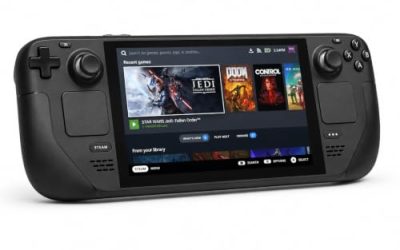
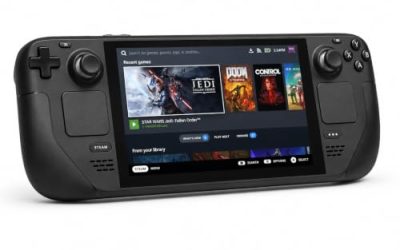
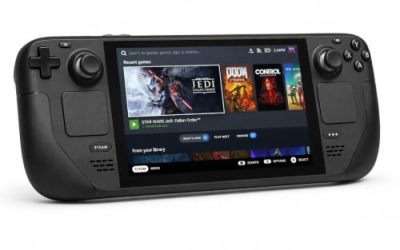
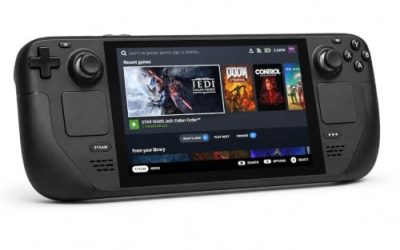
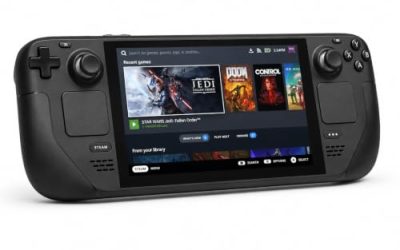
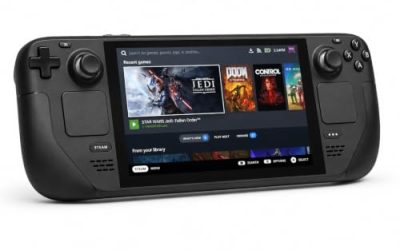
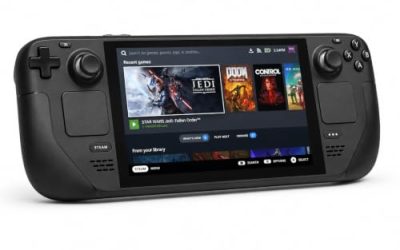
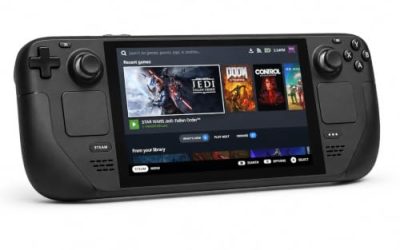
The Steam Deck problem
Valve’s compatibility record tells a colder story, read here through SteamDB’s republication of Valve’s compatibility data, disclosed rather than hidden. The category is Unsupported, SteamOS compatibility is likewise Unsupported, and the test sheet’s result token states that SteamOS does not support the game. The test is dated 3 December 2022, was run on build 4865414, and its recommended runtime is proton-7.0-5 — meaning the test carried the Windows build through Proton rather than examining the native Linux build in the same package. The sheet also flags small text.
Two comparisons frame how much weight that badge can carry. The tested build, 4865414, is older than the build the public branch now serves, 10863708 from March 2023, so the paperwork predates the current branch and no newer test has replaced it. And the community file points the other way: ProtonDB’s Deck reports describe the game installing and running without tinkering. The badge certifies a 2022 Proton test, not the native build a Linux player would launch. Because the official verdict is Unsupported, the hardware picks below are framed for desktop play.
Hardware for the desktop route
With the Deck badge off the table, the sensible setup is a desk: a keyboard for system-level remapping, a pad for the game itself, and fast portable storage for a travelling library.
Keychron V3

The keyboard pick for desktop sessions: a tenkeyless board with QMK and VIA support lets you remap keys at the keyboard level, across every Linux install.
Specs
- Tenkeyless layout with rotary knob
- QMK and VIA remapping support
- Hot-swappable K Pro Brown switches
- Wired USB-C connection
- Maker-rated 1,000 Hz polling
8BitDo Ultimate 2 Bluetooth Controller

The desktop pad pick, with modern sticks and triggers plus back buttons for menu shortcuts; Steam lists full controller support for the game.
Specs
- Connectivity: Bluetooth wireless and USB-C wired
- Joysticks: TMR electromagnetic, anti-drift design
- Triggers: Hall effect, with mode switching
- Extras: two remappable back buttons, motion control
- In the box: charging dock included
Xbox Wireless Controller, Carbon Black

The safest guest pad in PC gaming: Steam Input support is universal, the glyphs match what most games display, and it pairs over Bluetooth or its own wireless standard.
- Connectivity: Xbox Wireless and Bluetooth
- Port: USB-C for wired play
- Controls: hybrid D-pad, dedicated Share button
- Power: AA batteries or optional rechargeable pack
Logitech G502 HERO

Figment’s exploration is pointer-friendly at a desk, and a precise wired mouse turns menu trips into single clicks. Eleven programmable buttons cover the inputs a long session repeats.
Specs
- HERO optical sensor, up to 25,600 DPI
- 11 programmable buttons
- Adjustable weight system
- Wired USB connection
- On-board memory profiles
Samsung T9 Portable SSD 2TB

For moving a Linux game library between machines, or an offline backup of installers, a fast USB-C drive is the simple answer. The headline figure needs a Gen 2×2 host port; on a lesser port the drive runs at that ceiling.
Specs
- Capacity: 2 TB portable SSD
- Interface: USB 3.2 Gen 2×2, USB-C connector
- Maker-rated speeds: up to 2,000 MB per second read, 1,950 MB per second write
- Features: Dynamic Thermal Guard, maker-rated drop resistance
How to choose
On a desktop or laptop, storefront choice is unusually free for this series. The Steam copy is the build both compatibility records describe, and its Linux depot sits in the store package, so a purchase delivers the native build directly. A GOG edition also exists: GOG’s own live product page for Figment, verified against the game’s description as a musical action-adventure set in the human mind, gives its compatibility line as Windows, Linux and Mac OS X, so the GOG copy also lists a Linux build, with an offline installer route.
On the Deck, decide with your eyes open. The official badge says Unsupported, and that is Valve’s word on the record. The counter-evidence is a community file whose Deck reports describe clean runs, plus a badge resting on a 2022 test of an older build under Proton. Buying it for the handheld means trusting the reports over the badge. For input, a pad is the game’s native shape; add the keyboard for hardware-level remapping.
Who should skip
Skip the Deck plan if you only buy games carrying an official Verified or Playable badge; Valve’s record says Unsupported and has not been revisited since 2022. Skip it if you need a currently maintained build: the public branch last moved in March 2023 and the paperwork still names Ubuntu 16.04, so this is a finished, older port rather than a living one. Skip it if black-screen reports worry you: at least one ProtonDB reporter found the native version unusable on their machine and finished the game under Proton instead. And skip the soundtrack as evidence of anything; its flag sits over an empty field and describes an audio product.
FAQ
Is Figment native on Linux?
Yes. Steam flags Linux true, the Linux requirements field is populated at both tiers, and SteamDB lists a Linux main depot of 1.01 GiB inside the store package a purchase delivers. The flag, the tab and the depot agree.
Why is Figment Unsupported on Steam Deck if a native build exists?
Because Valve’s test never examined the native build. The sheet is dated 3 December 2022, covers an older build (4865414, against the current branch build 10863708), and names proton-7.0-5 as the recommended runtime, so the result describes the Windows build under Proton. Deck reports on ProtonDB describe the game running well, but Valve has not reissued the verdict.
Does the Figment Soundtrack’s Linux flag prove anything?
No. The soundtrack is a separate music app whose Linux requirements field is an empty list; its flag is a bare marker on an audio product. The game’s native case rests on its own record.
Can I buy Figment on GOG instead?
Yes. A GOG edition exists, and GOG’s live product page lists its compatibility as Windows, Linux and Mac OS X, so the GOG copy includes a Linux build too.
Final verdict
Figment is one of the rare split decisions in this catalogue. As a desktop Linux game it is genuinely, verifiably native: the flag is true, the requirements tab is finished at both tiers, the largest depot in the package is the Linux one, and ProtonDB’s Native classification agrees with Steam instead of contradicting it. As a Steam Deck game it carries Valve’s harshest label, Unsupported, earned by a 2022 test that ran an older Windows build through Proton. Buy it for a Linux desktop without hesitation; for the Deck, only if the community file persuades you more than the badge warns you.
Product and ASIN Reference
| Product | ASIN |
|---|---|
| Keychron V3 | B0B2DMMMG2 |
| 8BitDo Ultimate 2 Bluetooth Controller | B0F194QFT2 |
| Xbox Wireless Controller, Carbon Black | B08DF248LD |
| Logitech G502 HERO | B07GBZ4Q68 |
| Samsung T9 Portable SSD 2TB | B0CHFS9K14 |