REYNATIS, the FURYU Corporation action RPG published by NIS America and released on Steam on 27 September 2024, is sometimes assumed to have a quiet Linux port because so many Japanese RPGs of its size ship one. The Steam record says otherwise, and it says it at every layer a reader can check: the platform flags, the requirements tabs, the depot list, the icon registry and the whole eight-app DLC family all describe a Windows-only release with nothing underneath for Linux.
That does not make the game a dead end for Linux players. The same record carries full controller support and no DRM or account notices, and Valve has graded the Windows build on the Steam Deck with its top badge. This article walks the record layer by layer, separates the real signals from the empty fields that can imitate them, and states which evidence could not be read this session.
As an Amazon Associate, we earn from qualifying purchases.
Quick answer
REYNATIS has no native Linux build: Steam’s record flags Windows only, the Linux requirements field is an empty shell, and all eight DLC records repeat the same Windows-only flags. The practical route is Proton. Valve rates the Windows build Steam Deck Verified, tested in November 2024 under proton-stable, so desktop and handheld play both run through the compatibility layer.
The platform record, layer by layer
Start with the flags. Steam’s record for app 2738750 reads windows true, mac false, linux false. The Windows requirements tab underneath is genuinely populated, with a 64-bit Windows 10 or 11 system, 8 GB of RAM and a GTX 1060-class graphics card on the minimum side. The Mac and Linux requirements fields, by contrast, are empty shells: each one renders its Minimum and Recommended headings over a blank list, with no operating system, processor or storage line at all. A populated Linux tab is what a real port leaves behind; a heading over nothing is what a store page template leaves behind when no port exists.
The depot census agrees. SteamDB lists exactly one content depot for the base game, depot 2738751 at 11.33 GiB, and the total size when the package is filtered to Windows and English with no DLC is the same 11.33 GiB. There is no second depot carrying a Linux build, no shared depot and no Mac depot. The icon registry tells the same story in miniature: a client icon, a client tga and a general icon are registered, and no Linux client icon of any kind. The osextended field is an empty string. Detected technology is the Unity engine with CRIWARE and Mono support libraries, all Windows-side components. Together these layers leave no room for a hidden native build.
Eight DLC records, and the Art Book that proves nothing
The base record lists eight DLC apps, and each one was read individually rather than sampled. The two Wizard’s Gift packs, the Clear Bonus Early Unlock, the Another Color Costumes set, the Ultimate Wizard Items pack, the Marin and Sari Formal Wear costumes, the Radiant Wizart pack and the Art Book all flag windows true, mac false and linux false. The family count is zero Linux flags across nine records.
The Art Book, app 3129520, deserves a sentence of its own because art books and soundtracks are exactly the apps that sometimes carry stray Linux flags and make a family look Linux-friendly when the game is not. Here it does not: its own record is Windows-only, and SteamDB shows it delivered as an inner depot of about 178 MB inside the game’s package, alongside a smaller Mini Art Book depot. The whole product line is uniformly Windows-only.
Steam Deck: Verified, graded on an earlier build
Valve’s compatibility record gives REYNATIS its top category, Verified, with SteamOS separately marked Compatible. All four checks on the sheet pass: every function is accessible with the default controller configuration, the game shows Steam Deck controller icons, interface text is legible, and the default graphics configuration performs well. The configuration notes are equally clean, with no manual keyboard invocation, no non-controller launcher navigation, no small-text deduction and no internet requirement for setup or single-player. The game’s own record backs the input side of that sheet, listing full controller support.
Two precision points belong beside the badge. First, the test metadata, read here through SteamDB’s republication of Valve’s sheet, dates the test to 23 November 2024 against build 16006735 with proton-stable as the recommended runtime. Second, the public branch has moved since: its current build is 17672696, built in March 2025. The badge therefore grades a superseded build, not the exact code on sale today. That is a paperwork caveat rather than a warning sign, since the badge certifies the Windows build under Proton and the record around it has not changed shape, but readers who treat Verified as a test of today’s build should know it is a test of an earlier one.
The records that stay silent
Three absences round out the picture, and each needs stating precisely. The base record carries no DRM notice and no third-party account notice, and SteamDB names no anti-cheat for the app, which fits a single-player RPG. The AreWeAntiCheatYet database, read in full across its 1,167 entries, holds no entry matched to this app’s store ID, so there is no community anti-cheat verdict to import in either direction; for a game with no multiplayer and no anti-cheat on its record, that silence is expected rather than suspicious.
ProtonDB is the one gap in this session’s evidence. Its summary endpoint returned no data for this app, and it failed the same way for a control app, so the outage sits with the endpoint and not with the game. No settled, best-reported or trending tier is claimed anywhere in this article, and no report count is quoted. The ProtonDB game page itself could not be rendered either, so the familiar stray-heading check, where an empty Linux requirements shell makes the page appear to claim native support, could not be completed. The ruling here rests on Steam’s record, which is unambiguous, and readers who want the community tier should read it on ProtonDB directly rather than trust any second-hand figure.
One PC edition, and it is the Steam one
GOG does not sell REYNATIS. Its catalogue API returns a single unrelated fuzzy match for the name, its products search returns nothing, and the natural product address redirects to the general games catalogue. There is no GOG product record for this title, no Windows-only GOG edition and no Linux GOG edition. The Steam copy is the only PC edition on sale, and it is the build every record above describes.
Gear for the Proton route
Valve Steam Deck OLED 512GB

The handheld the Verified badge was written for. The game’s published requirements are a rounding error next to the Deck’s APU, and Valve’s own test sheet gives the Windows build a clean pass under proton-stable.
Specs
- Display: 7.4-inch HDR OLED, 1280 by 800, up to 90 Hz
- Processor: AMD Zen 2 and RDNA 2 custom APU
- Memory: 16 GB LPDDR5
- Storage: 512 GB NVMe, plus a microSD slot
- Wireless: Wi-Fi 6E and Bluetooth
- Channel note: Valve sells the Deck mainly through its own store, so Amazon listings are third-party sellers
8BitDo Ultimate 2 Bluetooth Controller
The docked and desktop pad pick. Steam lists full controller support for the game, and this pad covers the couch case with modern sticks and triggers plus back buttons for menu shortcuts.
Specs
- Connectivity: Bluetooth wireless and USB-C wired
- Joysticks: TMR electromagnetic, anti-drift design
- Triggers: Hall effect, with mode switching
- Extras: two remappable back buttons, motion control
- In the box: charging dock included
Xbox Wireless Controller, Carbon Black
The safest guest pad in PC gaming: Steam Input support is universal, the glyphs match what most games display, and it pairs over Bluetooth or its own wireless standard. On the handheld, the test sheet’s note applies: an external pad may need a manual Quick Access Menu switch before it takes over.
- Connectivity: Xbox Wireless and Bluetooth
- Port: USB-C for wired play
- Controls: hybrid D-pad, dedicated Share button
- Power: AA batteries or optional rechargeable pack
Logitech G502 HERO
REYNATIS is a pad-first game, but at a desk a precise wired mouse turns inventory and shop trips into single clicks. Eleven programmable buttons cover the confirm, cancel and camera inputs a long session repeats.
Specs
- HERO optical sensor, up to 25,600 DPI
- 11 programmable buttons
- Adjustable weight system
- Wired USB connection
- On-board memory profiles
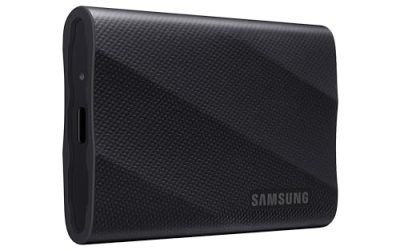
Samsung T9 Portable SSD 2TB
For moving a Linux game library between a desktop and a laptop, or keeping an offline backup of installers, a fast USB-C drive is the simple answer. The headline figure needs a Gen 2×2 host port; on a lesser port the drive runs at that ceiling.
Specs
- Capacity: 2 TB portable SSD
- Interface: USB 3.2 Gen 2×2, USB-C connector
- Maker-rated speeds: up to 2,000 MB per second read, 1,950 MB per second write
- Features: Dynamic Thermal Guard, maker-rated drop resistance
How to choose
Choose the Steam copy, because it is the only PC edition and the exact build the records describe. On a desktop or laptop, install it under Proton and start with the default compatibility tool; Valve’s sheet names proton-stable as the recommended runtime. On a Steam Deck, the Verified badge means no configuration work is expected: install, launch, and only visit controller settings if an external pad does not take over, the one manual step Valve’s notes describe. For input, the game’s own record lists full controller support, so a pad is the intended shape on every machine; a mouse earns its place only for long desktop menu sessions.
Who should skip
Skip this one if you are shopping for a native Linux RPG: REYNATIS is not one, and no layer of its record suggests a hidden port. Skip it if you want a DRM-free offline installer, because no GOG edition exists to buy. Skip it if a community tier is the evidence you trust most, because ProtonDB’s summary could not be read for this article and you would be buying on Valve’s sheet alone. And skip it if you need a verdict graded on the current build: the Verified test predates the March 2025 public build, so the paperwork is one step behind the game.
FAQ
Is REYNATIS native on Linux?
No. Steam’s record for app 2738750 flags Windows only, the Linux requirements field is an empty shell, the single content depot is the Windows delivery, and all eight DLC records repeat the same Windows-only flags.
How does REYNATIS run on Linux?
Through Proton. Valve’s Steam Deck sheet, which certifies the Windows build under the compatibility layer, passes all four checks with proton-stable as the recommended runtime. ProtonDB’s summary endpoint was unreachable for this session, so no community tier is quoted here; check the game’s ProtonDB page directly for the current figure.
Is REYNATIS Steam Deck Verified?
Yes. Valve’s record gives it the top category, Verified, with SteamOS marked Compatible, tested on 23 November 2024 against build 16006735. The current public build is newer, so the badge grades an earlier build of the same Windows release.
Can I buy REYNATIS on GOG instead?
No. GOG’s catalogue and product searches hold no record for the game, and its natural product address redirects to the general catalogue. The Steam copy is the only PC edition on sale.
Final verdict
REYNATIS is a clean, unambiguous Windows-only release: one platform flag set, one content depot, empty Mac and Linux requirement shells, no Linux client icon, and an eight-app DLC family without a single stray Linux flag, not even on the Art Book. What Linux players get instead is a tidy Proton route, a Steam Deck Verified badge with a clean check sheet, full controller support, and no DRM, account or anti-cheat layer in the way. Buy the Steam copy, run it under Proton, and treat any claim of a native build as a misreading of an empty field.
Product and ASIN Reference
| Product | ASIN |
|---|---|
| Valve Steam Deck OLED 512GB | B0CQ3RWQQZ |
| 8BitDo Ultimate 2 Bluetooth Controller | B0F194QFT2 |
| Xbox Wireless Controller, Carbon Black | B08DF248LD |
| Logitech G502 HERO | B07GBZ4Q68 |
| Samsung T9 Portable SSD 2TB | B0CHFS9K14 |