Our Short List of 3

- Display: 7.4-inch HDR OLED, 1280 by 800, up to 90 Hz
- Processor: AMD Zen 2 and RDNA 2 custom APU
- Memory: 16 GB LPDDR5
- Storage: 512 GB NVMe, plus a microSD slot

- Connectivity: Bluetooth wireless and USB-C wired
- Joysticks: TMR electromagnetic, anti-drift design
- Triggers: Hall effect, with mode switching
- Extras: two remappable back buttons, motion control

- Connectivity: Xbox Wireless and Bluetooth
- Port: USB-C for wired play
- Controls: hybrid D-pad, dedicated Share button
- Power: AA batteries or optional rechargeable pack
All 5 Picks at a Glance
| Product | Specs | Action |
|---|---|---|
| Valve Steam Deck OLED 512GB |
| Check price on Amazon |
| 8BitDo Ultimate 2 Bluetooth Controller |
| Check price on Amazon |
| Xbox Wireless Controller, Carbon Black |
| Check price on Amazon |
 Logitech G502 HERO |
| Check price on Amazon |
 Samsung T9 Portable SSD 2TB |
| Check price on Amazon |
Besiege is Spiderling Studios’ physics sandbox of medieval siege engines: you assemble a machine block by block, then watch it grind through castles and armies, or collapse in a heap of its own ambition. It left early access on 18 February 2020. One question keeps recurring in Linux circles: is the Linux version a real, maintained build, or a leftover flag from the early access years?
It is real, and this is one of the rare records where every layer says the same thing: the flags, the depots inside the package on sale, the launch entries, the published requirements and Valve’s own Steam Deck test configuration all point to a native build still being updated, its Linux depot refreshed in September 2026 in the same wave as the Windows one. This piece reads those layers one by one.
As an Amazon Associate, we earn from qualifying purchases.
Quick answer
Yes. Besiege is genuinely native on Linux. Steam flags all three platforms, the package on sale carries a Linux depot of roughly 6.5 GiB that was updated in September 2026 alongside the Windows build, and there are dedicated Linux launch entries and full Linux system requirements. Valve graded the native build itself on Steam Deck, where the game is Playable with input and text caveats.
Start with the flags, then look underneath
The store record flags Besiege for Windows, macOS and Linux, and the app data lists the same three systems. Flags alone prove little, so the depot list is where the answer lives. The single purchase package on sale contains three content depots: 346014 for Windows, 346015 for macOS and 346016, named the Besiege Linux Depot. Its public manifest weighs in at just under seven billion bytes, roughly 6.5 GiB, last updated on 21 September 2026, the same day as the Windows depot.
The launch configuration tells the same story: Besiege.exe for Windows, Besiege.app for macOS, and two Linux entries, a 32-bit Besiege.x86 and a 64-bit Besiege.x86_64. The Linux requirements tab is populated at both tiers, not left as an empty shell: the minimum names Ubuntu 12.04 or higher, a 2.2 GHz dual-core processor, 4 GB of memory, OpenGL 2.0 graphics and ALSA-compatible sound, and the recommended tier raises those figures across the board. The named Ubuntu release is old paperwork, but the fields are filled in. A dedicated Linux client icon is registered alongside the standard entries. The only thin spot is a registry footnote: the extended OS notes carry a macOS entry and nothing Linux-specific, a documentation gap rather than a delivery one.
The whole family carries the same flag
The base game has four add-on apps, each read on its own record. The two expansions, The Broken Beyond and The Splintered Sea, both flag Windows, macOS and Linux. So do the Supporter Pack and the Original Soundtrack, a music app. A soundtrack flagging Linux sometimes misleads family-level scans, because an album can carry a flag the game itself lacks. That trap does not apply here: the album’s flag sits beside four other records carrying it too, and the base game’s own depot settles the question anyway. A store search across the family surfaces no further Spiderling apps for this game.
What players report: a Native file with honest rough edges
ProtonDB’s summary reads Platinum on its settled, best-reported and trending tiers alike, across 36 reports, with good confidence. The game page classifies Besiege as Native and carries the “Natively Supports” heading, and for once that heading is simply correct. Many filings underneath describe native runs working out of the box.
The colour is not uniformly rosy. Several filings describe the native build misbehaving with certain user-interface mods, producing missing or discoloured effects; a long-session multiplayer filing reports occasional crashes, and one filer could not get the native build to launch at all. A minority respond by forcing a Proton build, stock or GE, and report that route running cleanly. One detailed filing describes uneven physics performance on some high-end hardware under both builds, and a Multiverse veteran notes the Linux build’s in-game hosting path does not join or host sessions the way the Windows build’s does. That is how a native build with a large modding scene behaves at its edges.
The Steam Deck sheet: Playable, and graded on the native build
Valve’s own compatibility record, read from the maker’s endpoint, resolves Besiege to category 2: Playable, with SteamOS at the same category. The detail that matters most sits in the test configuration, where the recommended runtime reads “native”: Valve graded the Linux build itself, not a Proton run of the Windows build. The default configuration passes its performance item outright. The four caveats are all input and text: the default controller configuration is not fully functional, controller glyphs may not match the device, text input does not automatically bring up the on-screen keyboard, and some interface text is not legible at Deck size.
Two qualifications belong with that badge. First, the paperwork is dated: Valve tested on 22 August 2022 against build 8787459, while the current public build is 25434581, so the sheet grades a superseded build and a retest could move the result either way. Second, the store record carries no controller-support field at all: no full or partial controller tier is claimed anywhere on it. For a keyboard-and-mouse-first builder, that sheet is the only input evidence on record.
Anti-cheat and account checks
There is little to report. The record carries no third-party DRM notice and no linked-account notice. The Are We Anti-Cheat Yet catalogue was read in full, all 1,167 entries, and holds no entry for this app by store ID or name: documentation silence, fitting a game whose multiplayer runs as player-arranged sessions rather than a protected matchmaking ladder.
The storefront ruling: Steam is the only shelf
GOG was ruled from GOG’s own surfaces, not from a search snippet. Its catalogue query for the title returns five other siege-themed games, among them Worms Forts: Under Siege and the Siege Survival: Gloria Victis pair, and no Besiege; the natural product address redirects to the general games catalogue. No GOG record exists, so there is no DRM-free Linux copy to weigh against the Steam one, and Steam is the only PC storefront selling the game.
Gear that fits the record
The gear follows the record’s shape: the handheld Valve graded, pads chosen with the remapping caveat in mind, a precise mouse for the editor, and fast storage for a Workshop-heavy library.
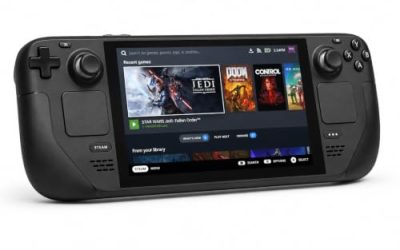
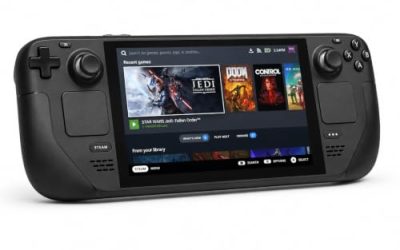
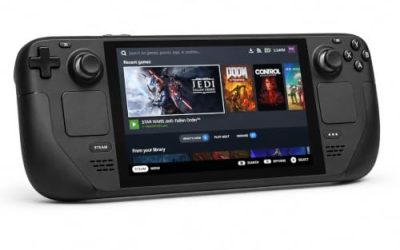
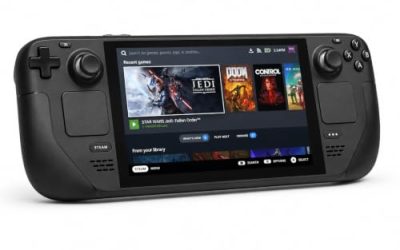
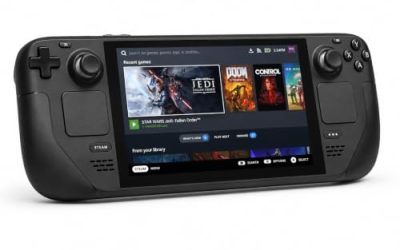
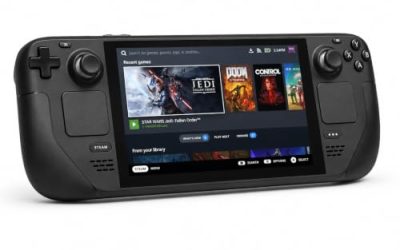
Valve Steam Deck OLED 512GB
- Display: 7.4-inch HDR OLED, 1280 by 800, up to 90 Hz
- Processor: AMD Zen 2 and RDNA 2 custom APU
- Memory: 16 GB LPDDR5
- Storage: 512 GB NVMe, plus a microSD slot
The handheld Valve’s test sheet was written on, running the native build itself. The badge is Playable, not Verified: performance passes, while text size and controller behaviour ask a little patience.
8BitDo Ultimate 2 Bluetooth Controller
- Connectivity: Bluetooth wireless and USB-C wired
- Joysticks: TMR electromagnetic, anti-drift design
- Triggers: Hall effect, with mode switching
- Extras: two remappable back buttons, motion control
The docked pad pick, chosen with open eyes: this game’s own Deck sheet says the default controller configuration is not fully functional, so a pad here means a Steam Input remapping project rather than plug-and-play. For driving a finished machine around, a good pad still earns its place.
Xbox Wireless Controller, Carbon Black
- Connectivity: Xbox Wireless and Bluetooth
- Port: USB-C for wired play
- Controls: hybrid D-pad, dedicated Share button
- Power: AA batteries or optional rechargeable pack
The standard guest pad: it pairs over Bluetooth or its own wireless standard, and Steam Input support is universal. On the handheld, the sheet’s note applies: an external pad may need a manual Quick Access Menu switch before it takes over.
Logitech G502 HERO
- HERO optical sensor, up to 25,600 DPI
- 11 programmable buttons
- Adjustable weight system
- Wired USB connection
The building editor is the heart of Besiege, and it is mouse work: placing blocks, setting wheel angles and wiring logic blocks rewards a precise, wired pointer. Eleven programmable buttons cover the rotate, confirm and camera inputs a long session repeats.
Samsung T9 Portable SSD 2TB
- Capacity: 2 TB portable SSD
- Interface: USB 3.2 Gen 2×2, USB-C connector
- Maker-rated speeds: up to 2,000 MB per second read, 1,950 MB per second write
- Features: Dynamic Thermal Guard, maker-rated drop resistance
A native install is the same files on a desktop and a laptop, so a fast portable drive is the easy way to carry a Steam library between the two. The headline figure needs a Gen 2×2 host port; on a lesser port the drive runs at that ceiling.
How to choose
Install the native build and leave the compatibility settings alone: that is the configuration Valve graded and the one most filings describe. Buy the Steam copy, the only PC edition on sale. If a heavily modded setup misbehaves natively, the community-documented fallback is forcing a recent stock Proton or GE-Proton build, which filings report running cleanly, at the cost of playing the Windows build instead. The expansions flag Linux exactly as the base game does, so they change nothing about the platform answer. On Deck, expect a Playable title: budget a few minutes for remapping and text size, and a docked mouse and keyboard is the comfortable way to build.
Who should skip
Skip Besiege if you want a set-and-forget Verified experience on Steam Deck: the badge is Playable, and its caveats are input-related, which matters more in a precision builder than in most genres. Choose the Proton route from day one, or skip it, if your Besiege life is heavily modded Multiverse play, since the filings’ native quirks around mods and hosting land exactly there. And skip it if you buy only from DRM-free storefronts, because no GOG edition exists to wait for.
FAQ
Is Besiege native on Linux?
Yes. The store flags all three platforms, the sold package contains a dedicated Linux depot of roughly 6.5 GiB updated in September 2026 alongside the Windows depot, the launch list carries Linux executables, the requirements are published in full, and a Linux client icon is registered. Every layer agrees.
Is Besiege Steam Deck Verified?
No, it is rated Playable. Valve tested the native build itself, as the test configuration names the native runtime, and performance passed. The badge is held back by input and text items: an incomplete default controller configuration, glyph mismatches, no automatic on-screen keyboard and some hard-to-read text. The test dates from August 2022, against a build the public branch has long since replaced.
Do the expansions and the soundtrack support Linux?
All four add-on apps, The Broken Beyond, The Splintered Sea, the Supporter Pack and the Original Soundtrack, flag Windows, macOS and Linux. The soundtrack’s flag is unremarkable here, because the base game it belongs to is natively supported in its own right.
Can I buy Besiege on GOG instead?
No. GOG’s catalogue holds no product record for Besiege: its catalogue query returns only other siege-themed titles, and the game’s natural product address redirects to the general catalogue. Steam is the only PC storefront selling the game.
Final verdict
Besiege is one of the cleanest native answers in this catalogue. The flags, the sold package’s depot, the launch entries, the requirements, the client icon and Valve’s own test runtime all agree, and the Linux depot is still updated in step with the Windows one. The honest caveats live at the edges: a Playable rather than Verified Deck badge graded on 2022 paperwork, and filings describing mod-related quirks for a minority of players, with a documented Proton fallback. For a Linux desktop player this is a straightforward recommendation; on Deck, buy it as the Playable title it is.
Product and ASIN Reference
| Product | ASIN |
|---|---|
| Valve Steam Deck OLED 512GB | B0CQ3RWQQZ |
| 8BitDo Ultimate 2 Bluetooth Controller | B0F194QFT2 |
| Xbox Wireless Controller, Carbon Black | B08DF248LD |
| Logitech G502 HERO | B07GBZ4Q68 |
| Samsung T9 Portable SSD 2TB | B0CHFS9K14 |