Moving Out 2, the co-op furniture-removal sequel from SMG Studio and Devm Games, published by Team17 and released on 15 August 2023, never received a native Linux build. Steam’s record is plain: the store flags the game for Windows alone, and both the Mac and Linux requirements fields are empty shells, headings with nothing under them. The delivery layer agrees: the single content depot is a Windows build, and the purchase package contains it and nothing else.
The one document that points the other way belongs to a different app: the soundtrack, which flags all three platforms. A scan that stops at flags can credit that Linux tick to the game itself. This piece reads each layer separately instead.
As an Amazon Associate, we earn from qualifying purchases.
Quick answer
Moving Out 2 is not native on Linux. Steam flags the game Windows only, its Linux requirements field is an empty shell, and the single content depot is a Windows build. The route is Proton: ProtonDB displays a Gold tier across six reports, and Valve rates the game Verified on Steam Deck. Buy the Steam copy.
The status at a glance
| Question | Answer from the record |
|---|---|
| Native Linux build | No — Steam flags read Windows only |
| Linux requirements field | Empty shell — headings over empty lists |
| Content depots | One, Windows only, 1.33 GiB |
| Add-on apps | DLC and art book agree; soundtrack flags all three |
| ProtonDB record | Gold displayed tier, six reports, heading disagrees |
| Steam Deck verdict | Verified, tested July 2023, paperwork predates current build |
| GOG edition | None found in GOG’s own product records |
What Steam’s own record says
Steam’s appdetails record for Moving Out 2 (app 1641700) lists the platforms as Windows true, Mac false, Linux false. Its name, developers and release date match the game exactly: SMG Studio and Devm Games, Team17, 15 August 2023.
The requirements fields sharpen the picture. The Windows tiers are genuinely written out: a 64-bit Windows 10 system with 4 GB of RAM at minimum, rising to 8 GB recommended. The Mac and Linux fields are empty shells: Minimum and Recommended headings over empty lists. That shape matters. It is not copied Windows text wearing a Linux label, and not a populated tab; it is the store page admitting, in its own formatting, that no second platform was ever specced.
The category list is the co-op shape the game is known for: single-player, co-op, online co-op, shared and split-screen play, cross-platform multiplayer, full controller support, Steam Cloud and Remote Play Together.
The depot layer: one build, one package
Store flags can be wrong in either direction, so the delivery layer decides. SteamDB’s depot table lists exactly one content depot: depot 1641701, configured for Windows, at 1.33 GiB. There is no Linux or Mac depot in any form. The public branch is current, serving build 20225089 since October 2025, so this is the product’s live shape, not a launch-era fossil. The package layer agrees: the store package a purchase delivers, sub 917351, contains the game app alone and lists depot 1641701 alone, so a purchase delivers the Windows build by construction. No Linux depot sits outside the package, stranded or otherwise.
The family sweep: the soundtrack is the only dissent
The game’s record lists a DLC array of exactly three apps, each read individually. The F.A.R.Tastic Four DLC (2410580) flags Windows true, Mac false, Linux false, with an empty-list Linux field: it agrees with the game. The Digital Artbook (2502500) flags the identical set, and its depot is Windows-configured. It agrees too.
The Soundtrack (2403460) is the dissent. As a music-type app it flags Windows, Mac and Linux all true, the only Linux tick in the family. Its depot table shows why that tick cannot carry the game: its two depots, a standard album depot and an HQ Audio depot, carry no operating-system configuration at all. They are audio files, delivered identically to every platform, and the flag describes the album, not a game build. A scanner that reads flags without opening the family will report this family as Linux-flagged; the game underneath ships one Windows depot.
Anti-cheat: three sources, three silences
Because this is an online co-op title, the anti-cheat question decides whether the Proton route is even open, so the three sources are reported separately. Steam’s record names no anti-cheat system, and carries neither a DRM notice nor an external-account notice. SteamDB’s detected-technology list reads as engine and audio plumbing only: Unity, FMOD, Resonance Audio, UnityBurst and UnityIL2CPP. The third source, the Are We Anti-Cheat Yet dataset, was searched in full by name and by app id and carries no entry for this game. Three silences, one reading: nothing stands between the Windows build and Proton.
The Proton file
ProtonDB’s summary endpoint did not answer for this title in this session, so the evidence here is page-level only, with no tier split or confidence claimed. The game page displays a Gold tier across six reports: a thin file, treated at that weight.
The page also carries the stray heading this series watches for: its requirements block is headed “Natively Supports:”, a label Steam’s record contradicts at every layer. The reports beneath it are all Proton filings, and the article follows Steam, not the heading. Their texture is encouraging with one wrinkle: the newest report describes a perfect out-of-the-box run on a current Proton, multiplayer included, and a Deck filing rates online multiplayer Excellent, while one desktop filing stepped back to an older Proton release with 32-bit Vulkan drivers, and launch-era filings describe a splash-screen fault a fullscreen launch option resolved.
The Steam Deck sheet
Valve rates Moving Out 2 Verified on Steam Deck, the top category, and SteamOS separately Compatible. One evidence note: the verdict and paperwork were read through SteamDB’s republication of Valve’s compatibility record, the fallback route used when Valve’s own endpoint does not answer cleanly.
All four Verified checks pass: the default controller configuration is fully functional, the game shows Steam Deck controller icons, in-game text is legible, and the default graphics configuration performs well. One note is not a deduction but matters here: the title does not default to external Bluetooth or USB controllers on Deck, and may require manually switching the active controller through the Quick Access Menu. For a couch co-op game built around extra pads, that switch is part of the setup. The recommended runtime is proton-8.0-3: the badge certifies the Windows build under Proton.
The paperwork, though, is old. Valve’s test dates to 28 July 2023, before the August launch, on build 11726345; the branch now serves build 20225089, from October 2025. The Verified grade remains the current store verdict; the paperwork’s age is recorded here as a supplement candidate for the factual Deck-paperwork list.
The storefront ruling
There is no second copy to weigh. GOG’s product API, catalogue search and embed search were all queried for this title, and for the series name more broadly, and every surface returned no product at all. No GOG product record exists whose identity could be verified, so no GOG edition is ruled to exist, and the Steam copy is the only PC edition.
Gear that fits the record
The gear below follows the record’s shape: the badged handheld, two pads for couch co-op, a desktop mouse, and library storage.
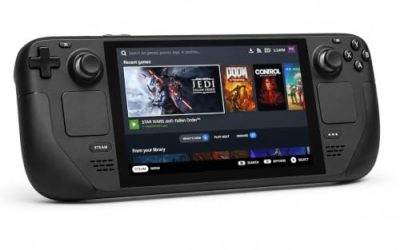
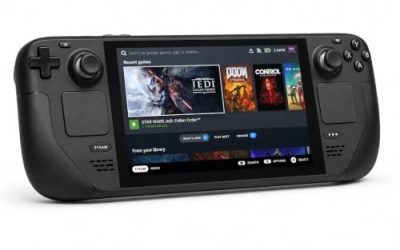
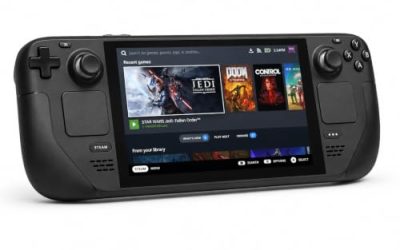
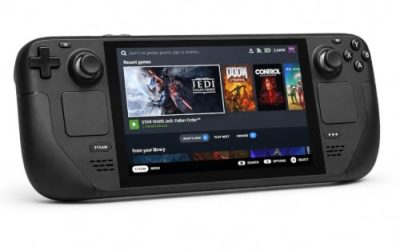
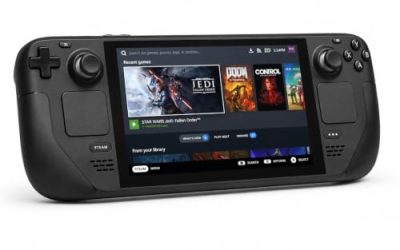
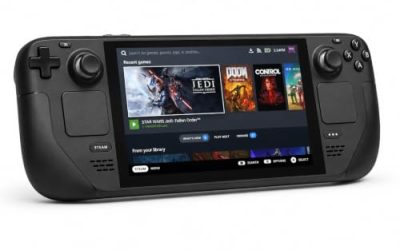
Valve Steam Deck OLED 512GB

The handheld the Verified badge was written for, and the game’s modest requirements sit far below its APU.
Specs
- Display: 7.4-inch HDR OLED, 1280 by 800, up to 90 Hz
- Processor: AMD Zen 2 and RDNA 2 custom APU
- Memory: 16 GB LPDDR5
- Storage: 512 GB NVMe, plus a microSD slot
- Wireless: Wi-Fi 6E and Bluetooth
- Channel note: Valve sells the Deck mainly through its own store, so Amazon listings are third-party sellers
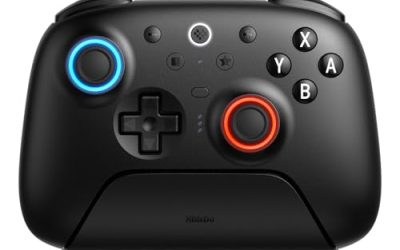
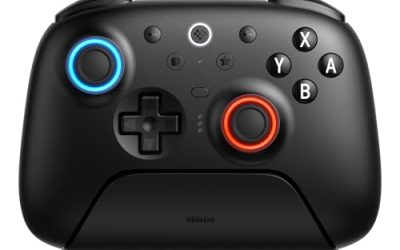
8BitDo Ultimate 2 Bluetooth Controller
The second-player pad for the couch. The game lists full controller support and shared-screen co-op, and this pad covers that case with modern sticks and triggers.
Specs
- Connectivity: Bluetooth wireless and USB-C wired
- Joysticks: TMR electromagnetic, anti-drift design
- Triggers: Hall effect, with mode switching
- Extras: two remappable back buttons, motion control
- In the box: charging dock included
Xbox Wireless Controller, Carbon Black
The safest guest pad in PC gaming: Steam Input support is universal, the glyphs match what most games display, and it pairs over Bluetooth or its own wireless standard. On the handheld, the sheet’s note applies: an external pad may need a manual Quick Access Menu switch first.
- Connectivity: Xbox Wireless and Bluetooth
- Port: USB-C for wired play
- Controls: hybrid D-pad, dedicated Share button
- Power: AA batteries or optional rechargeable pack
Logitech G502 HERO
At a Linux desk, a precise wired mouse covers the menu and lobby work between rounds, with eleven programmable buttons for the repeated inputs.
Specs
- HERO optical sensor, up to 25,600 DPI
- 11 programmable buttons
- Adjustable weight system
- Wired USB connection
- On-board memory profiles
Samsung T9 Portable SSD 2TB
For moving a Linux game library between machines, a fast USB-C drive is the simple answer. The headline figure needs a Gen 2×2 host port; on a lesser port the drive runs at that ceiling instead.
Specs
- Capacity: 2 TB portable SSD
- Interface: USB 3.2 Gen 2×2, USB-C connector
- Maker-rated speeds: up to 2,000 MB per second read, 1,950 MB per second write
- Features: Dynamic Thermal Guard, maker-rated drop resistance
How to choose
Choose the Steam copy, the only PC edition on sale and the exact build both records describe. On desktop or laptop, install under Proton and start with the default tool: the newest filings describe an out-of-the-box run, multiplayer included. Keep the documented fallbacks in mind rather than expecting them: an older Proton release helped one desktop filing, and a fullscreen launch option cleared a launch-era splash-screen fault. On Deck, the Verified badge means no configuration work is expected; the one planned step is the controller switch, since external pads do not take over by default and a co-op session needs them to.
Who should skip
Skip this one if you are shopping for a native Linux co-op game: this is not one, whatever the soundtrack’s flag suggests. Skip it if you want a DRM-free offline installer, because no GOG edition exists. Skip it if a six-report Proton file feels too thin to trust. And skip the Deck plan if your co-op setup depends on external pads connecting without the manual controller switch the sheet describes.
FAQ
Is Moving Out 2 native on Linux?
No. Steam flags the game Windows only, the Linux requirements field is an empty shell, and the single content depot is a Windows build. The family’s Linux flag belongs to the soundtrack app, whose depots are unconfigured audio files, not a game build.
How well does Moving Out 2 run under Proton?
ProtonDB displays a Gold tier across six reports. The newest filing describes a flawless out-of-the-box run including multiplayer, and a Deck filing rates online play Excellent. One desktop filing needed an older Proton release: favourable, but thin.
Is Moving Out 2 Steam Deck Verified?
Yes, with all four checks passing and proton-8.0-3 as the recommended runtime. The test paperwork dates to July 2023 and predates the current build, and external controllers may need a manual Quick Access Menu switch first.
Can I buy Moving Out 2 on GOG instead?
No GOG edition was found: GOG’s product API, catalogue search and embed search all return no product for this title. The Steam copy is the only PC edition.
Final verdict
Moving Out 2 is a Windows-only game whose family paperwork contains exactly one misleading tick, on the soundtrack. The game itself is unambiguous at every deciding layer: false flags on two platforms, empty-shell fields, a single Windows depot, and a package delivering that depot alone. Linux players are not locked out, though: no anti-cheat is named by any source, the Proton file displays Gold with a flawless recent filing, and the Verified badge covers the Deck, paperwork age noted. Buy the Steam copy and play it under Proton.
Product and ASIN Reference
| Product | ASIN |
|---|---|
| Valve Steam Deck OLED 512GB | B0CQ3RWQQZ |
| 8BitDo Ultimate 2 Bluetooth Controller | B0F194QFT2 |
| Xbox Wireless Controller, Carbon Black | B08DF248LD |
| Logitech G502 HERO | B07GBZ4Q68 |
| Samsung T9 Portable SSD 2TB | B0CHFS9K14 |