Rogue: Genesia is a survivors-like from solo developer Ouadi Huard, also named as publisher on the store record alongside Gamersky Games. It spent a long stretch in Early Access from September 2022 before its full release on 7 March 2025, and through all that churn it kept something most games in this genre never ship: a native Linux build still in the package sold today.
Steam records are full of stray Linux flags, fossil icons and empty requirement tabs that promise a port nobody delivered, so that claim gets tested hard here. Rogue: Genesia survives the sweep: flags, requirements, depot census and add-on family all point the same way, making this one of the cleaner native rulings in the catalogue.
As an Amazon Associate, we earn from qualifying purchases.
Quick answer
Rogue: Genesia is genuinely native on Linux: Steam’s record flags Linux, publishes full Linux requirements, and the sold package carries a dedicated Linux depot. Valve rates it Playable on Steam Deck, held back only by small text and non-Deck glyphs, and ProtonDB sits at Platinum across 19 reports. There is no Mac build and no GOG edition.
The record, layer by layer
Start with the platform flags. Steam’s record for app 2067920 flags Windows and Linux as true and Mac as false. That alone proves nothing, so the next layer is the requirements tabs. The Linux tab is genuinely populated in both tiers, not an empty shell: the minimum names an Intel i5-7200U, 8 GB of RAM, a GTX 770 or Radeon 8950 HD class graphics card and 500 MB of storage, and the recommended tier steps the processor, memory and graphics up from there, mirroring the Windows tab as Unity titles usually do.
The decisive layer is the depot census. The purchase package, sub 738851, holds three content depots: a Windows 64-bit depot at 3.12 GiB, a dedicated Linux 64-bit depot at 1.41 GiB, and a third depot registered for macOS that SteamDB marks unused, with no size recorded. A Linux depot of that size, inside the package a buyer actually receives, is a delivered build rather than paperwork, and the public branch is current, updated in April 2026, so the build is maintained rather than stranded at launch.
Three paperwork quirks that do not change the ruling
The first is that unused macOS depot. A registered depot is delivery metadata, not a build, and this one carries no size and no support anywhere else: the Mac flag reads false and the Mac requirements fields are empty shells holding only their headings. There is no Mac version to buy, whatever the depot list suggests.
The second sits inside the Linux requirements. The minimum tier closes with a note saying a DirectX 11 compatible GPU is required, copied across from the Windows tab of a game whose Linux build plainly does not run on DirectX; the recommended tier drops it. Harmless, but a reminder that requirements text is pasted between tabs by hand, which is why this site rules on depots rather than prose.
The third is an absence: the registered assets hold no dedicated Linux client icon in any form, even though the build is real. That inverts the fossil-icon case seen elsewhere in this catalogue, where an icon survives a withdrawn build. Here the build exists and the icon never did.
The add-on family: two pets, same flags
The record lists exactly two pieces of DLC, both read individually. Rogue: Genesia – Dog Pet arrived in May 2023 and Rogue: Genesia – Cat Pet followed in August 2023, both during Early Access. Each flags Windows true, Mac false and Linux true, matching the base game exactly, so the family’s Linux claim is consistent rather than inflated by an add-on. There is no soundtrack app here, so the familiar all-three-platforms audio trap has nothing to attach to.
Steam Deck: Playable, graded on an Early Access build
Valve’s own compatibility endpoint gives the game a resolved category of Playable, with SteamOS separately rated Compatible. Two checks pass: the default controller configuration is fully functional, and the default graphics configuration performs well. The deductions are presentational: some interface text is small and may be difficult to read, and the game sometimes shows mouse, keyboard or non-Deck icons instead of Deck glyphs. One further note: cross-platform saved games are not supported.
The paperwork behind the badge deserves two caveats. The test was run on 10 July 2024 against build 13489403, an Early Access build from the 0.9 line, long superseded, so the badge grades a copy predating the full release: a Deck supplement candidate in this project’s terms, since a fresh test could move the verdict. And the test configuration oddly names a Proton 9.0 release candidate as the recommended runtime even though a native build ships in the same package. Take the native build first; that line is leftover configuration, not advice. One related clarification from the game’s own record: Steam rates its controller support as partial, covering desktop pads and pointer-first menus, which sits comfortably beside Valve’s fully-functional finding on the handheld.
The ProtonDB file: Platinum, with one native-build warning
ProtonDB’s summary API returned a full read for this app, with the control app answering normally in the same session. The settled tier is Platinum, the best-reported tier is Platinum, the trending tier is Platinum, across 19 reports, with confidence rated good. The game’s page also carries the “Natively Supports:” heading, and for once it agrees with Steam’s record on every layer.
The report file mixes Native-classified filings with Proton filings, and it is not uniformly smooth. Desktop native reports are broadly positive, but one recent filing on Arch Linux with an NVIDIA card found the native build would not open, the logs pointing at a display-layer problem, and that reporter fell back to forcing Proton 9.0-4, where several other filings also land. Deck reports repeat two themes matching Valve’s deductions: card text small enough to strain reading, and late-game slowdowns when particle counts climb. None of that overturns the tier, but an NVIDIA desktop player should know the fallback exists.
On anti-cheat, the record is quiet in both directions: nothing on the game’s own record names one, it is single-player, and the Are We Anti Cheat Yet catalogue, all 1,167 entries, holds no entry for this title either way. Documentation silence, not a clearance.
Buying it: Steam is the only storefront
There is no second copy to weigh. The natural GOG product address redirects to the store’s general games catalogue rather than a product page, and GOG’s own embed search returns zero products for the title; a community wishlist entry would not change that, since a wishlist listing is not an edition for sale. The Steam copy is therefore the only PC edition, and the right one for Linux.
Gear that fits the record
The gear below follows the record’s shape: the handheld the badge was written for, two pads given the partial controller rating, a mouse for the card screens, and library storage.
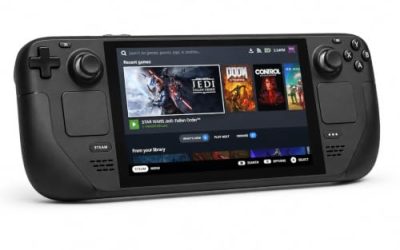
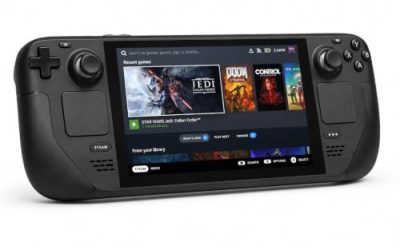
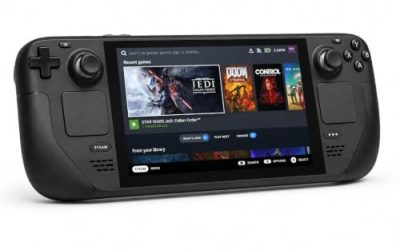
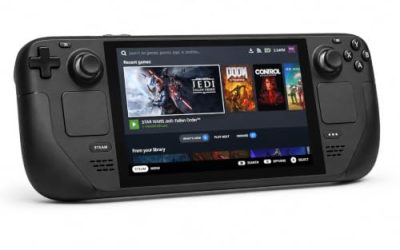
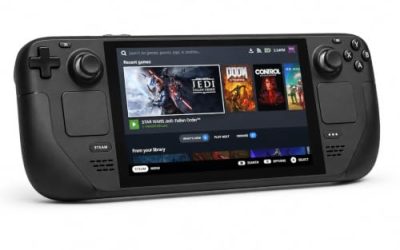
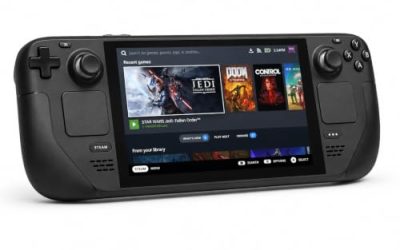
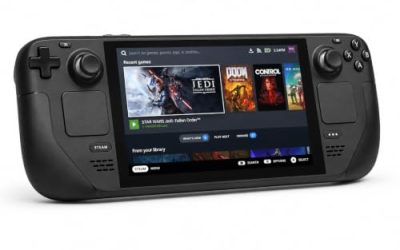
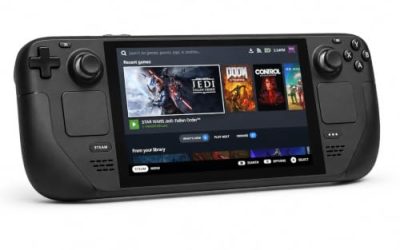
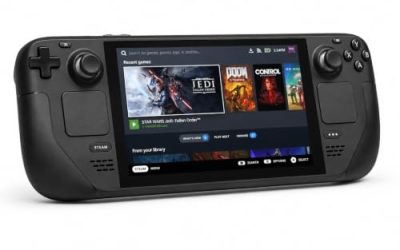
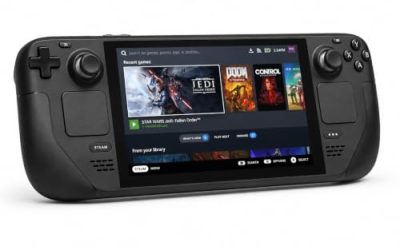
Valve Steam Deck OLED 512GB

The handheld the Playable badge was written for. The game’s requirements are a rounding error next to the Deck’s APU, and Valve’s sheet passes its default configuration on performance, flagging only text size and glyphs.
Specs
- Display: 7.4-inch HDR OLED, 1280 by 800, up to 90 Hz
- Processor: AMD Zen 2 and RDNA 2 custom APU
- Memory: 16 GB LPDDR5
- Storage: 512 GB NVMe, plus a microSD slot
- Wireless: Wi-Fi 6E and Bluetooth
- Channel note: Valve sells the Deck mainly through its own store, so Amazon listings are third-party sellers
8BitDo Ultimate 2 Bluetooth Controller
The docked and desktop pad pick. Steam rates this game’s controller support partial, so a pad with strong Steam Input behaviour covers the couch case.
Specs
- Connectivity: Bluetooth wireless and USB-C wired
- Joysticks: TMR electromagnetic, anti-drift design
- Triggers: Hall effect, with mode switching
- Extras: two remappable back buttons, motion control
- In the box: charging dock included
Xbox Wireless Controller, Carbon Black
The safest guest pad in PC gaming: Steam Input support is universal, the glyphs match what most games display, and it pairs over Bluetooth or its own wireless standard.
- Connectivity: Xbox Wireless and Bluetooth
- Port: USB-C for wired play
- Controls: hybrid D-pad, dedicated Share button
- Power: AA batteries or optional rechargeable pack
Logitech G502 HERO
The game’s card and upgrade screens are where its small text and pointer-first menus live, and a precise wired mouse turns those screens into single clicks.
Specs
- HERO optical sensor, up to 25,600 DPI
- 11 programmable buttons
- Adjustable weight system
- Wired USB connection
- On-board memory profiles
Samsung T9 Portable SSD 2TB
For moving a Linux game library between machines, or keeping an offline backup of installers, a fast USB-C drive is the simple answer. The headline figure needs a Gen 2×2 host port; on a lesser port the drive runs at that ceiling instead.
Specs
- Capacity: 2 TB portable SSD
- Interface: USB 3.2 Gen 2×2, USB-C connector
- Maker-rated speeds: up to 2,000 MB per second read, 1,950 MB per second write
- Features: Dynamic Thermal Guard, maker-rated drop resistance
How to choose
Choose the Steam copy, because it is the only PC edition on sale and the only one carrying the Linux build. On a Linux desktop, launch the native build first; the depot, the requirements and the Platinum file all say that route is intended. If the native build misbehaves on an NVIDIA setup, forcing a current Proton build is the documented workaround in the community file. On Steam Deck, expect to lean in for card text and to drop particle-heavy scenes to low settings. Buy the pet add-ons only for the cosmetics; they change nothing about platform support.
Who should skip
Skip this one if you are shopping for a Mac version, because none exists despite the stray depot on the record. Skip it if you need cross-platform cloud saves between a Deck and a desktop, because Valve’s sheet says they are not supported. Skip the Deck version if small interface text is a hard deal-breaker, since the badge’s deductions turn on exactly that. And skip it if a DRM-free installer is non-negotiable, because no GOG edition exists.
FAQ
Is Rogue: Genesia native on Linux?
Yes. Steam flags Linux on the record, publishes a full Linux requirements tab in both tiers, and the sold package contains a dedicated Linux 64-bit depot of 1.41 GiB beside the Windows depot. The two DLC add-ons carry the same Linux flag.
Why is the Steam Deck badge only Playable?
Valve’s test found the default controller configuration fully functional and the default graphics performant, but deducted for interface text that can be difficult to read and for prompts that sometimes show non-Deck icons instead of Deck glyphs. The test also dates from July 2024, on an Early Access build, so the badge grades an older copy.
Does Rogue: Genesia work on macOS?
No. The Mac flag is false, the Mac requirements fields are empty shells, and the one macOS depot on the record is marked unused with no size. Nothing in the sold package delivers a Mac build.
Can I buy Rogue: Genesia on GOG?
No. The game’s natural GOG address redirects to the general catalogue and GOG’s own search returns no product for it. Steam is the only storefront selling the game, and its package carries the native Linux build.
Final verdict
Rogue: Genesia is one of the straightforward ones. The native Linux build is real, delivered in the sold package, still maintained, and backed by a Platinum ProtonDB file whose heading claim actually matches the record. The caveats are small and specific: a Playable rather than Verified Deck badge graded on an Early Access build, small text on the handheld, a partial controller rating on desktop, one reported native-build failure on an NVIDIA desktop with a documented Proton fallback, and no Mac or GOG route. For Linux players who like the survivors-like shape, the Steam copy is an easy recommendation.
Product and ASIN Reference
| Product | ASIN |
|---|---|
| Valve Steam Deck OLED 512GB | B0CQ3RWQQZ |
| 8BitDo Ultimate 2 Bluetooth Controller | B0F194QFT2 |
| Xbox Wireless Controller, Carbon Black | B08DF248LD |
| Logitech G502 HERO | B07GBZ4Q68 |
| Samsung T9 Portable SSD 2TB | B0CHFS9K14 |