Master Detective Archives: RAIN CODE Plus is the PC “Plus” edition of Spike Chunsoft’s Switch mystery adventure, brought to Steam on July 17, 2024. Anyone hunting for a Linux version will find encouraging hints online, including a database page that appears to claim native support. Steam’s own record, read layer by layer, says otherwise: this is a Windows game that has never shipped a Linux build.
That is not the end of the story, because the Windows build travels unusually well: Valve awards it the strongest Steam Deck badge, and the community compatibility file sits at the top tier. No native port exists, and none is strictly needed. What follows reads the evidence as a careful buyer would, layer by layer.
As an Amazon Associate, we earn from qualifying purchases.
Quick answer
No. Master Detective Archives: RAIN CODE Plus ships no native Linux build: Steam’s record is Windows-only at every layer, from the platform flags to the single 49.58 GiB depot. It runs through Proton instead: ProtonDB settles it at Platinum across 10 reports, and Valve rates it Steam Deck Verified.
The record, exhibit by exhibit
Start with the flags. The record marks Windows true and both Mac and Linux false. The Windows requirements tab is genuinely filled in at both tiers: a Core i3-8350K or Ryzen 3 1300X, 8 GB of memory and a GeForce GTX 1050 Ti or Radeon RX 470 at minimum, rising to a Core i7-4790K or Ryzen 5 1600X, 16 GB and a GTX 1660 Super or RX 5600 XT recommended, with DirectX 12 and a 60 GB storage ask. The Mac and Linux tabs are empty shells: Minimum and Recommended headings over blank lists. A heading over an empty list is a leftover template, not a specification, and that empty shell generates the misleading “natively supports” heading on the game’s ProtonDB page, addressed below.
The delivery layer agrees. Content ships in exactly one depot, 2903951, configured for Windows and holding 49.58 GiB; the only other depots are the shared Windows redistributables. No Linux depot, no Mac depot, no shared depot. The launch configuration holds two entries, both Windows executables restricted to 64-bit Windows: the game itself, and an artbook viewer unlocked by one add-on. The icon registry holds a client icon, a client tga and a store icon, and no Linux client icon; the extended OS field is an empty string. Every layer points the same way.
Two smaller fields matter. The controller-support field reads full, backed by categories for full controller support, DualSense support and a gamepad-recommended tag, so pad play is the game’s native input shape. No DRM or linked-account notice appears on the record; SteamDB’s detected technologies are Unreal Engine and middleware SDKs with no anti-cheat named; and Are We Anti-Cheat Yet holds no entry for this app, documentation silence for a single-player game.
The two add-ons, read individually
The base record’s add-on array holds exactly two apps, both read on their own records rather than trusted from store-search labels, and the caution was justified. Noise of Neon is not a story chapter: its record types it as a music app, the game’s soundtrack album. The Book of Death is typed as downloadable content, and the launch configuration reveals it as a digital artbook: a 2.39 GiB inner depot inside the base package, opened through that second Windows launch entry. Neither is a story expansion.
The flags matter more than the descriptions. Both add-ons flag Windows true and Mac and Linux false, so the family’s Linux-flag count is zero of three records. That census protects the ruling in both directions: a soundtrack app flagging Linux true is a recurring false alarm in this catalogue, because platform-agnostic audio often carries every flag; this album does not. A family-wide store search surfaces nothing else.
What the Proton file says
ProtonDB’s summary is fully readable and unusually tidy: settled tier Platinum, best-reported Platinum, trending Platinum, across 10 reports with moderate confidence. Ten reports is a modest file: a strong signal, not a census. Filings describe mostly clean runs on stock Proton 9.0-series or Experimental builds, one finishing the game on a community build without issues. The recurring notes are minor: frame drops while shaders compile on a first run, settling once the cache is warm, and two settings, effects and background quality, that Deck owners lower to hold a stable frame rate. One filing’s DualSense glyph quirk, fixed through Steam Input, is a tinker note, not a record defect.
One part of the page must be corrected rather than repeated. Its “Natively Supports” heading is generated from the store record’s requirements fields, and here it is an artefact of the empty-shell Linux tab: the field exists, so the heading prints, though the field holds no specification. This article follows Steam’s record: the game runs on Linux through Proton, and by the community’s account it runs very well.
The Deck badge, and the build it graded
Valve’s sheet rates the game Verified, with SteamOS separately Compatible. All four checks pass: default controller configuration fully functional, Deck controller icons shown, interface text legible, default graphics configuration performing well. The sheet’s single note is that the game does not default to external Bluetooth or USB controllers, which may need a manual switch through the Quick Access Menu. The verdict and test metadata were read through SteamDB’s republication of Valve’s sheet, because Valve’s own endpoint returned garbled output in this session.
The dates deserve one caveat. Valve tested on August 7, 2024, against build 14378257, with the stable Proton branch as the recommended runtime; the public branch has since moved to build 16805879, built in December 2024. The badge grades a superseded build: a genuine Verified, earned three weeks after launch, but not re-earned on today’s code. Lean on the ProtonDB file, whose reports cover later builds.
The second-storefront ruling
There is no GOG edition of this game. That ruling comes from GOG’s own surfaces, not from a search box: the catalogue API, queried directly, returns a handful of unrelated detective titles for this game’s name and nothing else; the embedded store search returns zero products; and the natural product addresses for both the Plus name and the plain name redirect to the general games catalogue. Steam is the only PC storefront selling the game, and it sells the Windows build only.
Gear that fits the record
A gamepad-first adventure with a Verified badge and a 60 GB storage ask shapes the gear below.
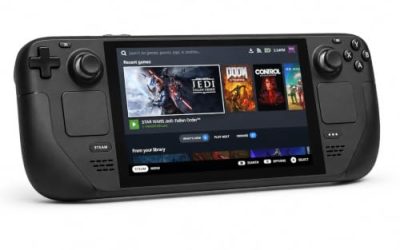
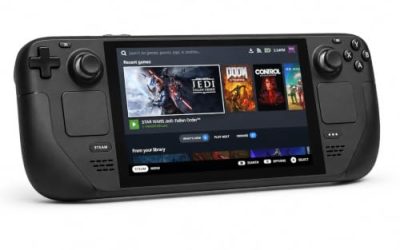
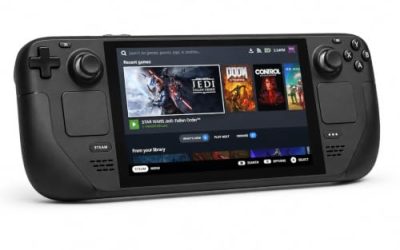
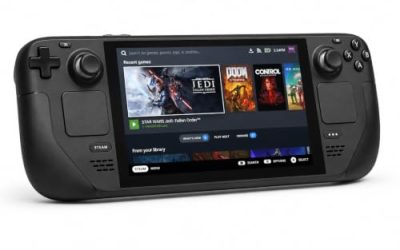
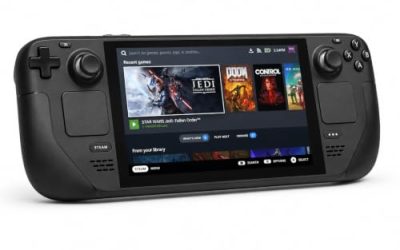
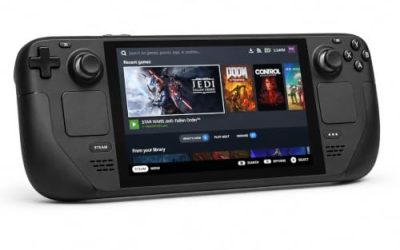
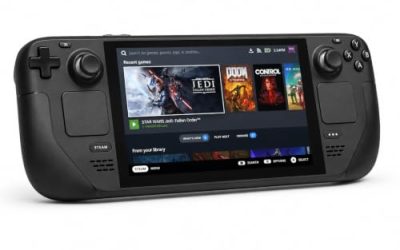
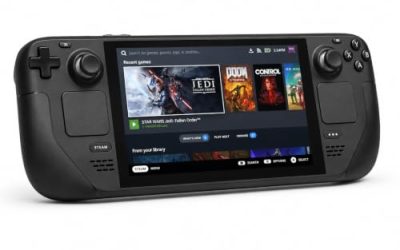
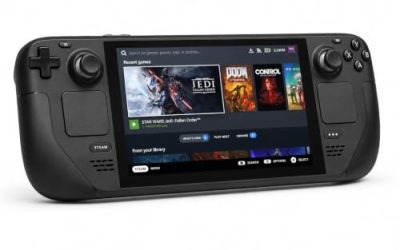
Valve Steam Deck OLED 512GB

The handheld the Verified badge was written for. Valve’s sheet passes the Windows build under the stable Proton branch, and the game’s requirements sit far below the Deck’s APU ceiling: the lowest-friction way to play it on a Linux-based system.
Specs
- Display: 7.4-inch HDR OLED, 1280 by 800, up to 90 Hz
- Processor: AMD Zen 2 and RDNA 2 custom APU
- Memory: 16 GB LPDDR5
- Storage: 512 GB NVMe, plus a microSD slot
- Wireless: Wi-Fi 6E and Bluetooth
- Channel note: Valve sells the Deck mainly through its own store, so Amazon listings are third-party sellers
8BitDo Ultimate 2 Bluetooth Controller
The docked and desktop pad pick. The game’s own record lists full controller support, and this pad covers the couch case with modern sticks, triggers and back buttons.
Specs
- Connectivity: Bluetooth wireless and USB-C wired
- Joysticks: TMR electromagnetic, anti-drift design
- Triggers: Hall effect, with mode switching
- Extras: two remappable back buttons, motion control
- In the box: charging dock included
Xbox Wireless Controller, Carbon Black
The safest guest pad in PC gaming: Steam Input support is universal, the glyphs match what most games display, and it pairs over Bluetooth or its own wireless standard. On the handheld, the sheet’s note applies: an external pad may need a manual Quick Access Menu switch before it takes over.
- Connectivity: Xbox Wireless and Bluetooth
- Port: USB-C for wired play
- Controls: hybrid D-pad, dedicated Share button
- Power: AA batteries or optional rechargeable pack
Logitech G502 HERO
A story adventure lives in its menus and dialogue choices, and at a desk a precise wired mouse turns case-file trips into single clicks. Eleven programmable buttons cover the confirm, cancel and camera inputs.
Specs
- HERO optical sensor, up to 25,600 DPI
- 11 programmable buttons
- Adjustable weight system
- Wired USB connection
- On-board memory profiles
Samsung T9 Portable SSD 2TB
For moving a Linux game library between machines, or keeping an offline backup of installers, a fast USB-C drive is the simple answer. The headline figure needs a Gen 2×2 host port; on a lesser port the drive runs at that ceiling instead.
Specs
- Capacity: 2 TB portable SSD
- Interface: USB 3.2 Gen 2×2, USB-C connector
- Maker-rated speeds: up to 2,000 MB per second read, 1,950 MB per second write
- Features: Dynamic Thermal Guard, maker-rated drop resistance
How to choose
Choose the Steam copy: it is the only PC edition on sale, and the exact build every record above describes. On a Linux desktop or laptop, install it and leave the compatibility tool at its default; the Platinum file was earned largely on stock Proton, and the one rough edge, first-run shader-compile stutter, fixes itself as the cache warms. On Steam Deck, install and play, and remember the one sheet note about switching a paired external controller active through the Quick Access Menu. Budget the 60 GB storage ask honestly: on a smaller handheld drive this is a deliberate install, not a filler. For input, follow the record: full controller support is the game’s native shape, and the mouse is a desktop convenience.
Who should skip
Skip this if a native Linux binary is a hard requirement: there is none, no second storefront sells one, and nothing hints at a port. Skip it if you are shopping for the add-ons as extra story: Noise of Neon is the soundtrack and The Book of Death is a digital artbook, and neither adds a chapter. Skip it on Deck if a badge grading today’s exact build is your standard, because the Verified on file grades the August 2024 build; the community file covers newer code, but Valve’s sheet is unrefreshed. And skip it if short, action-led sessions are your taste: this is a long, dialogue-driven mystery.
FAQ
Is RAIN CODE Plus native on Linux?
No. Steam’s record flags the game Windows-only, its Linux requirements tab is an empty shell, its single content depot is Windows-configured, both launch entries name Windows executables, and no Linux client icon is registered. The “Natively Supports” heading on its ProtonDB page is generated from that empty requirements field.
How well does RAIN CODE Plus run under Proton?
Very well, on the available evidence. ProtonDB settles the game at Platinum, with Platinum as both its best-reported and trending tier, across 10 reports at moderate confidence. Filings describe mostly clean runs on stock Proton, with shader-compile frame drops on a first run and two settings worth lowering on Steam Deck.
Is RAIN CODE Plus Steam Deck Verified?
Yes. Valve rates it Verified, with all four checks passing and one note about external controllers not taking over by default. The test ran on August 7, 2024 against build 14378257; the current build is 16805879, so the badge grades superseded code.
Can I buy RAIN CODE Plus on GOG instead?
No. GOG holds no product record for this game: its catalogue API returns only unrelated detective titles for the name, and the natural product addresses redirect to the general catalogue. Steam is the only PC storefront.
Final verdict
RAIN CODE Plus is a Windows-only release with an exemplary travel record. Every layer of Steam’s own data says no native Linux build exists, and the one loud hint otherwise traces back to an empty template field. What Linux players get instead is close to the best-case Proton outcome: a Platinum community file, a Verified Deck badge with a single controller note, and full controller support. Buy the Steam copy, install it under Proton, and the only mystery left is the one the game actually contains.
Product and ASIN Reference
| Product | ASIN |
|---|---|
| Valve Steam Deck OLED 512GB | B0CQ3RWQQZ |
| 8BitDo Ultimate 2 Bluetooth Controller | B0F194QFT2 |
| Xbox Wireless Controller, Carbon Black | B08DF248LD |
| Logitech G502 HERO | B07GBZ4Q68 |
| Samsung T9 Portable SSD 2TB | B0CHFS9K14 |