The Guild Gold Edition is the version of Europa 1400: The Guild that storefronts sell today: the 2002 dynasty simulator from 4HEAD Studios, reissued by THQ Nordic. It arrived on Steam on 9 September 2014, twelve years after the original release, and its platform record was written for a Windows-only game, never revised since.


This article reads that record layer by layer: the store flags, both purchase packages, the depots, the family, the ProtonDB file, Valve’s Steam Deck sheet and the GOG catalogue. The question is narrow — is there a native Linux build, and if not, what do the compatibility routes look like — and the record answers it plainly.
As an Amazon Associate, we earn from qualifying purchases.
Quick answer
No. The Guild Gold Edition has no native Linux build on any storefront: both Steam purchase packages read Windows only, every depot is Windows content, and GOG’s edition is Windows only too. Linux players run the Windows build through Proton, where ProtonDB shows a Gold headline across 13 reports, while Valve rates the game Unsupported on Steam Deck.
A 2002 game wearing a 2014 store page
Identity first, because this series invites confusion. App 39520 is The Guild Gold Edition, developed by 4HEAD Studios and published by THQ Nordic. SteamDB separates the dates cleanly: the original release is 18 November 2002, the Steam release 9 September 2014. The game’s own directory name still reads Europa 1400 The Guild – Gold Edition. This is the first game in the series — not The Guild II (app 39650), not Pirates of the European Seas and not Renaissance — and nothing here borrows the sequel’s record.
The store page presents a period piece. The Windows requirements field is genuinely populated: Windows 98 through 8, a Pentium III at 500 MHz, 128 MB of RAM and a 32 MB DirectX card. The Mac and Linux requirements fields, by contrast, are empty lists outright — not headings over blank space, just nothing. The category list names single-player, multi-player and family sharing, and SteamDB flags the app with NoServers: the original multiplayer infrastructure is gone. There is no drm_notice, no external account notice and no declared controller support.
The packages are the decisive layer
Store flags can be sloppy, so the verdict rests on the purchase packages, and Steam sells this game two ways. The standalone package, 49129, grants app 39520 alone, and packagedetails reads its platform mask as windows true, mac false, linux false. The second route is The Guild Collection, package 50718, bundling the Gold Edition with The Guild II, Pirates of the European Seas and The Guild II Renaissance; it repeats the identical mask, and the app’s own platform flags agree with both packages. Whichever way the game is bought on Steam, the licence delivers one platform.
The depot layer corroborates. SteamDB lists three depots: the main content depot at 305.96 MiB and two language depots, English at 772.11 MiB and German at 782.26 MiB, totalling 1.82 GiB. Every depot is configured for Windows. There is no Linux depot and no Mac depot — none emptied, none stranded, none left behind by a cancelled port. The icon set registers no LinuxClientIcon. The public branch stands on build 21188, built on 24 October 2012, and has not moved since.
The family, recovered from the Collection
The base record exposes no DLC field at all, so the family is recovered from the package layer and SteamDB’s associations. The Gold Edition carries no add-on apps of its own: no expansion, no demo and, importantly, no soundtrack or artbook app flying all-true platform flags — the trap that makes some neighbouring games look Linux-friendly in a careless scan cannot form here. Its family is the Collection shelf itself: The Guild II, Pirates of the European Seas (typed as its own game app rather than as DLC) and The Guild II Renaissance, each read individually in this project’s earlier sweep, each Windows only. Four games, four Windows-only records, zero dissent.
Anti-cheat is a three-source silence, reported as silence rather than as a ruling: Steam names none, SteamDB’s detection surfaces only the Miles Sound System SDK, and the AreWeAntiCheatYet catalogue, checked in full, carries no entry for this app.
Proton: a Gold headline with a stray heading
ProtonDB’s game page for app 39520 heads its requirements block “Natively Supports:”, and that heading is wrong. It is the stray-tag pattern this project has met many times: a template line that Steam’s record contradicts at every layer — flags, both packages and every depot all read Windows only. The article follows Steam.
The page’s headline tier is Gold, across 13 reports. One gap has to be disclosed: ProtonDB’s summary endpoint returned no record for this app in this session — it returned nothing for a control app either, so the endpoint itself was unavailable — so the best-reported and trending breakdowns and the confidence rating are not quoted here. Underneath the headline, the texture is a tinkering file. The recurring recipe is an old Proton branch, 4.11-13 above all, with reports describing occasional instability, a menu edge cut off on the right side (a flaw one reporter notes exists on Windows too) and colours slightly off. A Platinum filing says it runs better than on Windows; an older Borked filing says it does not start at all. The honest summary: Gold, workable on desktop with an older Proton branch as the fallback.
The Deck sheet says Unsupported — and it is current
Valve’s own verdict is the coldest line in the record. Read through SteamDB’s republication of Valve’s compatibility data, because the direct endpoint returned no usable response, the sheet rates the game Unsupported on Steam Deck, with SteamOS rated Unsupported alongside it. The single test is dated 26 March 2022 and graded build 21188.
That date would normally invite a staleness warning, but the paperwork is current by construction: build 21188 is still the public branch build today, frozen since October 2012, so Valve graded exactly the build on sale. The community filings underneath agree with the badge — Deck reports describe an opening cutscene that cannot be skipped and crashes after it. Desktop and Deck are different stories here: Gold at a desk, Unsupported in the hand, so the picks below are framed for a desktop.
GOG sells it too — the same Windows build
GOG carries the game, ruled from GOG’s own records rather than from any search result. The live product page resolves under the slug the_guild_gold_edition, and the product API record 1207658720 — identity-checked by exact title and slug — reads its content system compatibility as windows true, osx false, linux false. The catalogue API returns the same product with Windows as its only operating system. So the DRM-free route is genuinely this game, verified independently of The Guild II’s separate GOG product, but it sells the same Windows build: a GOG purchase changes the installer, not the platform.
Gear for a desktop playthrough
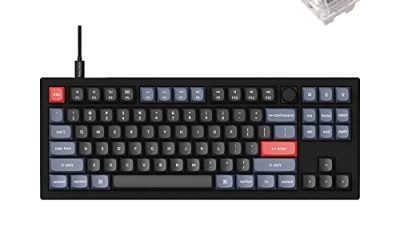
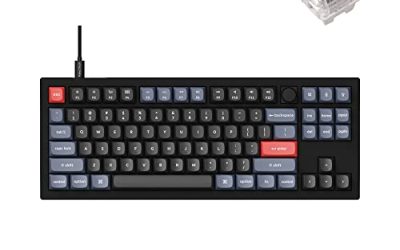
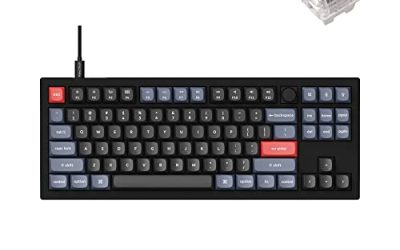
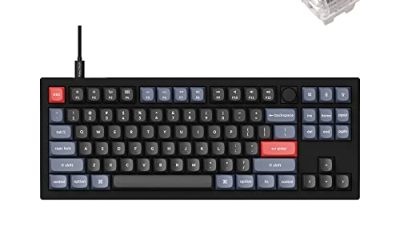
Keychron V3
The keyboard pick for desktop sessions: QMK and VIA remapping works at the keyboard level, so it survives every Linux install you plug the board into — exactly what a menu-dense game from 2002 rewards.
Specs
- Tenkeyless layout with rotary knob
- QMK and VIA remapping support
- Hot-swappable K Pro Brown switches
- Wired USB-C connection
- Maker-rated 1,000 Hz polling
Logitech G502 HERO
Ledgers, workshops and town maps: a precise wired mouse is the input this interface was drawn for. Eleven programmable buttons cover the confirm, cancel and camera inputs a long session repeats.
Specs
- HERO optical sensor, up to 25,600 DPI
- 11 programmable buttons
- Adjustable weight system
- Wired USB connection
- On-board memory profiles
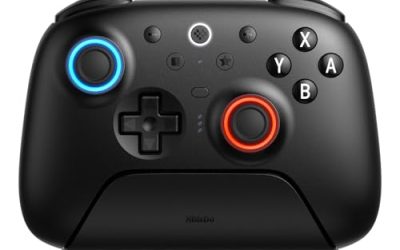
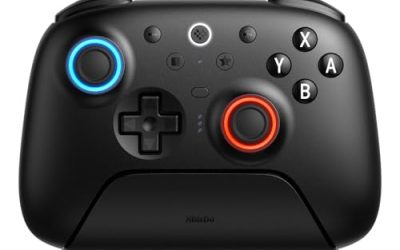
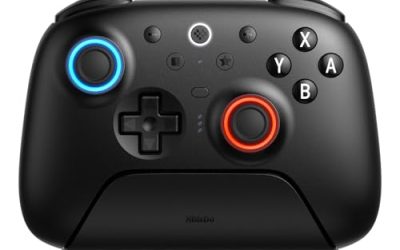
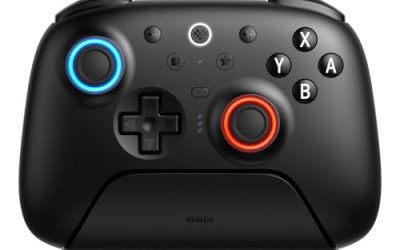
8BitDo Ultimate 2 Bluetooth Controller

The record declares no controller support for this game, so treat this pad as a Steam Input and wider-library pick rather than something the game recognises natively. For the rest of a strategy library it covers the couch case well.
Specs
- Connectivity: Bluetooth wireless and USB-C wired
- Joysticks: TMR electromagnetic, anti-drift design
- Triggers: Hall effect, with mode switching
- Extras: two remappable back buttons, motion control
- In the box: charging dock included
Xbox Wireless Controller, Carbon Black

The safest guest pad in PC gaming, with universal Steam Input support. As with the 8BitDo, its role here is the wider library — this game’s record promises a pad nothing.
- Connectivity: Xbox Wireless and Bluetooth
- Port: USB-C for wired play
- Controls: hybrid D-pad, dedicated Share button
- Power: AA batteries or optional rechargeable pack
Samsung T9 Portable SSD 2TB

For moving a game library between machines or backing up installers offline, a fast USB-C drive is the simple answer. The headline figure needs a Gen 2×2 host port; on a lesser port the drive runs at that ceiling.
Specs
- Capacity: 2 TB portable SSD
- Interface: USB 3.2 Gen 2×2, USB-C connector
- Maker-rated speeds: up to 2,000 MB per second read, 1,950 MB per second write
- Features: Dynamic Thermal Guard, maker-rated drop resistance
How to choose
Choose on content and storefront, not platform, because every route sells the same Windows build. The standalone Steam package is the clean buy for the first game alone, in the budget tier of any cart. The Guild Collection is the mid-range completionist route: four games, one licence mask, for a buyer who expects to continue into The Guild II and Renaissance. The GOG edition suits a buyer who values a DRM-free installer, at the cost of the same Proton step. The Linux setup is identical either way: install, let Steam apply the default compatibility tool, and keep the older 4.11-era Proton branch in mind as the fallback. Premium-tier money is better spent on the desk than on any storefront choice.
Who should skip
Skip this one if you are shopping for a native Linux strategy game: there is no Linux build on Steam, none on GOG, and no family member that changes that. Skip it if the Steam Deck is your machine — Valve’s Unsupported verdict grades the current build, and community filings describe a cutscene the game will not skip. Skip it for the multiplayer: the category list still names it, but the record flags the app as having no servers, so that side of the 2002 release is not on offer. And skip it if you want a modernised reissue: this is the 2002 game as it was, not a remaster.
FAQ
Is The Guild Gold Edition native on Linux?
No. Both Steam purchase packages read windows true, mac false, linux false on packagedetails, every depot is Windows content, and GOG’s product record is Windows only as well. There is no native build anywhere.
How does it run on Linux through Proton?
ProtonDB’s page carries a Gold headline across 13 reports. The recurring desktop recipe is an older Proton branch, 4.11-13 in particular, and the reported flaws are partly the game’s own age. The summary endpoint returned no data this session, so no best-reported breakdown is quoted here.
Is The Guild Gold Edition Steam Deck Verified?
No — Valve rates it Unsupported, from a test dated 26 March 2022. That paperwork is current rather than stale, because the tested build, 21188, is still the public branch build today. Community Deck filings describe an unskippable opening cutscene and crashes, matching the badge.
Does buying The Guild Collection change the platform picture?
No. The Collection bundles the Gold Edition with The Guild II, Pirates of the European Seas and Renaissance under the same windows true, mac false, linux false mask. Every family member was read individually; every one is Windows only.
Final verdict
The Guild Gold Edition on Linux is a closed question at the record level and an open one at the desk. Closed, because the evidence is unanimous and unusually tidy: two packages, three depots, one GOG product record and a frozen 2012 branch build all say Windows only, with no family dissent to argue with. Open, because the Proton route is real — a Gold headline built on old-branch tinkering, reproducible in minutes. Buy it as a Windows game that Proton carries, play it with a keyboard and mouse, and leave the Deck out of it.
Product and ASIN Reference
| Product | ASIN |
|---|---|
| Keychron V3 | B0B2DMMMG2 |
| Logitech G502 HERO | B07GBZ4Q68 |
| 8BitDo Ultimate 2 Bluetooth Controller | B0F194QFT2 |
| Xbox Wireless Controller, Carbon Black | B08DF248LD |
| Samsung T9 Portable SSD 2TB | B0CHFS9K14 |