The Guild II Renaissance is the standalone follow-up to THQ Nordic’s medieval dynasty simulator, built by Runeforge Game Studio and released on Steam on 28 July 2010. It reworks the base game’s economy, adds trades and offices, and is sold as its own game app rather than as an add-on — which is why it earns its own record check instead of inheriting the verdict from The Guild II.
The check below reads Renaissance on its own record: flags, packages, depots, family, ProtonDB file, Deck sheet and second storefront. No layer dissents. What differs from the base game’s story is the Deck sheet — Valve has published one, and it is not good news.
As an Amazon Associate, we earn from qualifying purchases.
Quick answer
No. The Guild II Renaissance is not native on Linux. Its own Steam record, all three purchase packages and the depot table are Windows only, and GOG sells the same Windows build. The working route is Proton: ProtonDB files it Gold with Platinum best-reported and trending tiers across 27 reports. Valve rates it Unsupported on Steam Deck.
A standalone app, not an expansion
The first thing the record settles is what kind of product this is. Steam types app 39680 as a game in its own right, with its own listing, packages and depot set. The record exposes no DLC field, and nothing points back at The Guild II as a required parent. Renaissance is a separate purchase from the base game (app 39650) and from Pirates of the European Seas (app 39660), and it is read that way throughout. A standalone app can in principle carry its own platform mask; this one does not use the freedom.
What the record shows
Start with the flags. Steam’s appdetails record lists windows true, mac false and linux false. The requirements fields follow the same split: the Windows field is genuinely populated with a period specification (Windows XP through 10, a 2 GHz processor, 512 MB of memory, a DirectX 9 card, 4 GB of storage), while the Mac and Linux fields are empty lists outright — no partial Linux tab, no placeholder text.
The purchase packages are the decisive layer, and all three repeat the mask. The standalone package grants Renaissance alone and reads windows true, mac false, linux false on packagedetails. The Guild Collection, the four-game package that also carries the Gold Edition, the base game and Pirates of the European Seas, reads the same. So does the commercial licence package. However the game is bought, the licence delivers one platform.
The depots confirm what the packages promise. SteamDB lists a content depot of 3.40 GiB plus German, French, Italian and Spanish language depots, and the Windows-and-English filtered total equals the content depot alone — every byte is Windows content, with no operating-system split anywhere. The only redistributable is a Windows shared-install package. There is no Linux depot, nothing emptied or stranded, and the registered icon set includes no Linux client icon. The public branch has stood on build 1130534 since May 2016; a newer beta branch for a community patch exists, but it is not the branch a buyer receives.
Two further absences shape the rest of this article. The record carries no DRM notice and no third-party account notice. It also declares no controller support — the store categories are single-player, Steam Cloud and Family Sharing — so the pads below are framed as Steam Input and wider-library picks. SteamDB flags the app as having no servers, so multiplayer is a historical feature.
The family around it
Because the record exposes no DLC array, the family was recovered from the package layer: the Collection’s membership is the map. Each member was read on its own record. The Guild Gold Edition (app 39520), the first game in the series, reads windows true, mac false and linux false. The Guild II (app 39650) reads the same, as does Pirates of the European Seas (app 39660). No member dissents, and no soundtrack or artbook app sits on any of these records to produce the misleading all-platforms flags that have trapped other families covered here. No native corner of this series hides in a bundle: the whole saga in one licence is four Windows builds.
Anti-cheat: three sources, all silent
Renaissance is a single-player game on its store page, and the anti-cheat picture matches. Steam names no anti-cheat in any notice or category. SteamDB’s detection surfaces only the FMOD and Lua software development kits — middleware, not anti-cheat. The AreWeAntiCheatYet index, checked in full, carries no entry for this app or any Guild title. That is silence on three sources, reported as silence: no anti-cheat ruling exists to make.
What ProtonDB says
ProtonDB holds a full summary file for this app, and it is a healthy one. The headline tier is Gold, the best-reported tier is Platinum and the trending tier is Platinum, across 27 reports, with confidence rated good. In plain terms, the community file expects the Windows build to run under Proton with at most minor work, and the recent trend beats the long-run average.
One check could not be completed this session: the ProtonDB game page renders through client-side scripting, so its requirements heading could not be read, and no claim is made here about a native-support heading. The figures above come from the data file itself, and the verdict follows Steam’s record regardless.
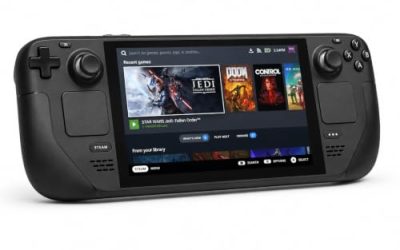
Steam Deck: Unsupported, on current paperwork
Valve has reviewed this game, which already separates it from its base game. Valve’s own compatibility record, read directly from the store’s endpoint, resolves to category Unsupported for the Deck, with the matching SteamOS result stating that SteamOS does not support the game. The sheet’s recommended runtime is Proton 7.0-1 and the supported input class is recorded as other — a mouse-and-keyboard game graded as one.
The paperwork is current, which is the unusual part. The single test is dated 23 March 2022 and was run against build 1130534 — still the public branch build today, unchanged since May 2016 — so the verdict grades exactly the build a buyer receives now. The game runs on a Linux desk and is rated unsupported on the handheld; both statements stand on their own evidence.
The GOG edition
GOG sells The Guild II Renaissance as its own product, verified on the store’s live product page and its product record rather than through catalogue search. The product’s system compatibility reads windows true, osx false and linux false, and the page’s works-on line names Windows alone. The DRM-free route exists — and delivers the same Windows build as Steam, with the same Proton step waiting. This reading was taken from Renaissance’s own GOG product, not carried over from the base game’s listing.
Gear for a Windows build on a Linux desk
Deck owners are out, so this is a desktop list: a keyboard and mouse for a menu-heavy simulation, pads for the wider library, and fast storage. The game declares no controller support, so both pads are Steam Input picks for the rest of a library, not for this title.
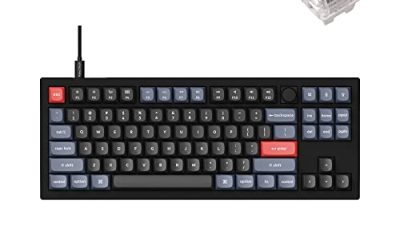
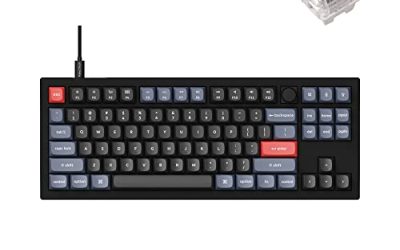
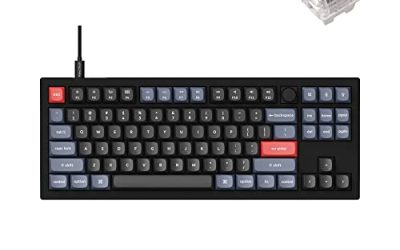
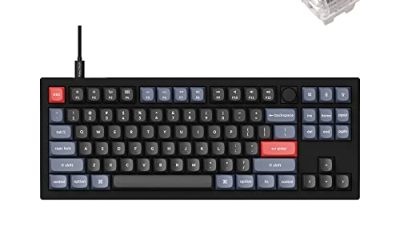
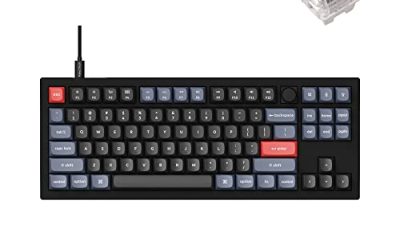
Keychron V3
The keyboard pick for desktop sessions: a tenkeyless board with QMK and VIA support lets you remap keys at the keyboard level, which keeps working across every Linux install you plug it into. A mid-range board for a strategy desk.
Specs
- Tenkeyless layout with rotary knob
- QMK and VIA remapping support
- Hot-swappable K Pro Brown switches
- Wired USB-C connection
- Maker-rated 1,000 Hz polling
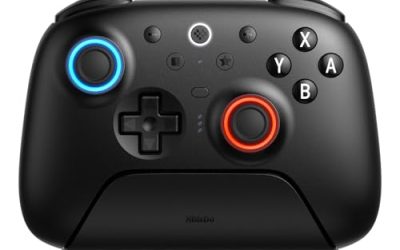
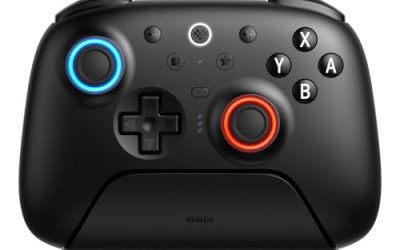
8BitDo Ultimate 2 Bluetooth Controller

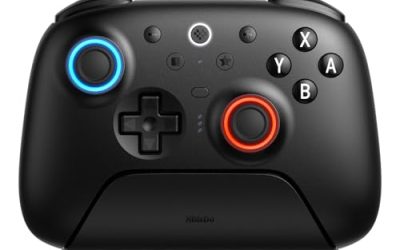
The desktop pad pick for the wider library. Renaissance itself is a mouse game, but a modern pad with back buttons covers the controller-friendly shelves of a Linux catalogue — a mid-range way to add one.
Specs
- Connectivity: Bluetooth wireless and USB-C wired
- Joysticks: TMR electromagnetic, anti-drift design
- Triggers: Hall effect, with mode switching
- Extras: two remappable back buttons, motion control
- In the box: charging dock included
Xbox Wireless Controller, Carbon Black
The safest guest pad in PC gaming: Steam Input support is universal, the glyphs match what most games display, and it pairs over Bluetooth or wireless. A mid-range staple for everything around this game.
- Connectivity: Xbox Wireless and Bluetooth
- Port: USB-C for wired play
- Controls: hybrid D-pad, dedicated Share button
- Power: AA batteries or optional rechargeable pack
Logitech G502 HERO
Renaissance is played through menus, ledgers and town maps, and a precise wired mouse is the single upgrade this game actually rewards. Eleven programmable buttons cover the confirm, cancel and camera inputs a long session repeats. A budget-friendly wired pick.
Specs
- HERO optical sensor, up to 25,600 DPI
- 11 programmable buttons
- Adjustable weight system
- Wired USB connection
- On-board memory profiles
Samsung T9 Portable SSD 2TB
For moving a Linux game library between machines, or keeping an offline backup of installers, a fast USB-C drive is the simple answer. The headline figure needs a Gen 2×2 host port; on a lesser port the drive runs at that ceiling. The premium pick of the five.
Specs
- Capacity: 2 TB portable SSD
- Interface: USB 3.2 Gen 2×2, USB-C connector
- Maker-rated speeds: up to 2,000 MB per second read, 1,950 MB per second write
- Features: Dynamic Thermal Guard, maker-rated drop resistance
How to choose
Choose on content, not platform, because every route sells the same build. The standalone Steam package is the clean buy for Renaissance alone; The Guild Collection is the completionist route that adds the first game, the base game and Pirates of the European Seas in one licence. The GOG edition suits a buyer who values a DRM-free installer, with the same Proton step waiting either way. Install under Proton and start with the default compatibility tool: the Gold headline with Platinum tiers across 27 reports says the community file expects it to run on a desktop. Keep the Deck out of the plan entirely.
Who should skip
Skip Renaissance if a native Linux build is a condition of purchase: there is none on Steam, none on GOG, and none anywhere in the four-game family. Skip it if the Steam Deck is your only machine — Valve rates it Unsupported on paperwork that still matches the current build. Skip it for the multiplayer: the record flags the app as having no servers. And skip it if you wanted an expansion for a base game you own: this is a separate purchase, not an add-on.
FAQ
Is The Guild II Renaissance native on Linux?
No. The app flags, all three purchase packages and the depot table are Windows only, the Linux requirements field is an empty list, and the GOG edition is Windows only too. Linux play means the Windows build under Proton.
Is Renaissance DLC for The Guild II?
No. Steam types it as its own game app with its own listing, packages and depots, and the record carries no DLC field or parent requirement. It is a standalone sequel, bundled with the base game only inside The Guild Collection.
Does it work on the Steam Deck?
Valve rates it Unsupported, tested in March 2022 against build 1130534 — still the public branch build today, so the paperwork is current. Desktop Proton is a different story: ProtonDB files the game Gold with Platinum best-reported and trending tiers.
Is the GOG version a different build?
No. GOG’s product record for Renaissance reads windows true, osx false and linux false, and the page names Windows as the only supported system. It is the same Windows build with a DRM-free installer.
Final verdict
The Guild II Renaissance is not native on Linux, and its record is one of the cleaner negative answers in this series: a standalone app whose flags, packages, depots and family all repeat the same Windows-only mask, matched by a Windows-only GOG edition. The desktop route is genuinely workable — a Gold ProtonDB headline with Platinum tiers across 27 reports is a strong community file — but the handheld route is closed by Valve’s Unsupported verdict, graded on the build still on sale. Buy it as a desktop Proton game, in the Collection if the saga is the goal.
Product and ASIN Reference
| Product | ASIN |
|---|---|
| Keychron V3 | B0B2DMMMG2 |
| 8BitDo Ultimate 2 Bluetooth Controller | B0F194QFT2 |
| Xbox Wireless Controller, Carbon Black | B08DF248LD |
| Logitech G502 HERO | B07GBZ4Q68 |
| Samsung T9 Portable SSD 2TB | B0CHFS9K14 |