The Guild II: Pirates of the European Seas is the seafaring expansion of 4HEAD Studios’ medieval life simulation, adding the Hanseatic coastal cities, naval trade and piracy to the base game’s dynasty simulation. It first shipped in May 2007 and reached Steam on 24 June 2010, the same day as the base game’s own Steam launch. One quirk of its paperwork matters before anything else: although the store copy calls it an addon, Steam’s record types app 39660 as a game in its own right, with its own listing and packages and no pointer back to the base app. It is read here exactly as typed, on its own record.


That framing decides how the Linux question has to be answered. There is no parent record to inherit a verdict from, so every layer of this app’s own file has to speak for itself: the flags, the purchase packages, the depots, the community compatibility file and Valve’s Deck sheet. They all point the same way: no native Linux build exists anywhere this game is sold.
As an Amazon Associate, we earn from qualifying purchases.
Quick answer
No. The Guild II: Pirates of the European Seas has no native Linux build on any storefront: Steam’s flags, all three purchase packages and the depot list are Windows-only, and GOG’s separate edition is Windows-only too. On Linux the route is Proton; ProtonDB rates it Silver from a thin file of four reports, and Valve rates it Unsupported on Steam Deck.
The flags and the fields
Steam’s platform flags for app 39660 read windows true, mac false, linux false, and the requirements fields match that shape. The Windows field is genuinely populated with period hardware: a 2 GHz processor, 512 MB of memory and a DirectX 9 capable graphics adapter with Pixelshader Model 1.1. The macOS and Linux requirements fields are empty lists outright — not shells with headings and no entries, just empty. There is no drm notice and no external account notice on the record. The record also declares no controller support of any kind: on its own paperwork, this is a mouse-and-keyboard game.
The packages are the decisive layer
Flags can be stale; the purchase packages are what a buyer’s licence actually delivers, and all three packages containing this app were read individually. The standalone package grants app 39660 alone and reads windows true, mac false, linux false. The bundle pairing Pirates with the base game grants apps 39650 and 39660 and repeats the mask. The Guild Collection, the four-app package adding The Guild Gold Edition and Renaissance, repeats it again. Whichever way the game is bought on Steam, the licence delivers one platform — and that unanimity across three separately maintained packages makes this the plainest shape of not native: no layer of the file dissents.
Depots, branches and the family
SteamDB’s depot list tells the same story in bytes. The content depot holds 2.86 GiB, joined by French, German, Italian and Spanish language depots, and filtered to Windows and English the total is exactly the content depot alone — every byte of the game is Windows content. No depot carries a Linux or macOS configuration, none is emptied or stranded, and the icon set registers no Linux client icon. The public branch stands on build 21209, built in October 2012 and untouched since, and SteamDB flags the record NoServers: the official multiplayer server infrastructure is gone, which the store categories confirm by listing Single-player alone.
The family sweep found no hidden members. The record exposes no DLC field at all, so the family was recovered from the package layer: The Guild Gold Edition (app 39520), the first game; The Guild II (app 39650), the base game; and The Guild II Renaissance (app 39680), the later standalone entry. Each reads windows true, mac false, linux false. No soundtrack or artbook app attaches to this record, so the familiar all-true trap — a music app flagging every platform and polluting scans — cannot form here. On anti-cheat, three sources are silent: Steam names none, SteamDB’s detection surfaces only the FMOD and Lua SDKs, and the AreWeAntiCheatYet catalogue has no entry for this app. That silence is reported as silence, not as a ruling.
ProtonDB: a Silver headline on a thin file
ProtonDB’s summary for this app was read in full. The headline tier is Silver, the best-reported tier is Platinum, the trending tier is Silver, and the confidence rating is low — because the whole file rests on four reports. That split is worth reading carefully: a Platinum best-reported tier says at least one filing got the game running to a high standard under Proton, while a Silver headline on the same small sample says the typical experience involves more friction, and with only four filings neither figure deserves much weight. One check could not be completed: the ProtonDB game page renders as a JavaScript shell to the fetch routes used here, so its requirements heading could not be read and this article makes no claim about it either way.
The Steam Deck sheet
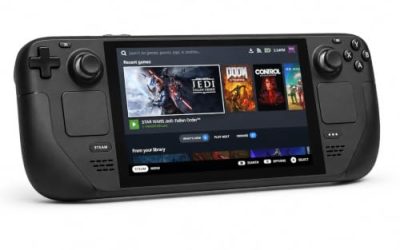
Valve rates this game Unsupported on Steam Deck, and SteamOS separately Unsupported. The verdict was read through SteamDB’s republication of Valve’s compatibility record for this app, the fallback route used when Valve’s own endpoint misbehaves. The paperwork, unusually, is current by construction: the single test dates to 2 June 2022 and graded build 21209, exactly the build the public branch still stands on today, frozen since October 2012 — the graded build is the build on sale, so the stamp is not stale paperwork. The sheet’s configuration notes the input as other rather than a gamepad, with proton-stable as the recommended runtime. The Deck picture is consistent: a desktop game Valve’s testing could not certify on the handheld.
The GOG copy
A second edition exists, and it was verified on its own record rather than assumed from the base game’s. GOG’s catalogue carries The Guild 2: Pirates of the European Seas as a separate product — a distinct entry from The Guild 2’s own GOG product — and its product record reads windows true, osx false, linux false, typed as a game just as Steam types it. So the DRM-free route exists for this expansion specifically, but it delivers the same Windows build. A Linux buyer is choosing between two Windows copies, and the same Proton step waits either way.
Gear for a desktop-only record
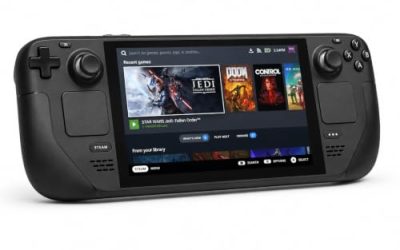
The gear below follows the record’s shape: no Deck pick, because Valve’s verdict is Unsupported; a keyboard and mouse lead, because the record declares no controller support; the two pads are Steam Input and wider-library picks for the rest of a collection, not inputs this game natively understands.
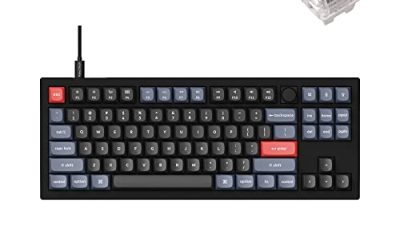
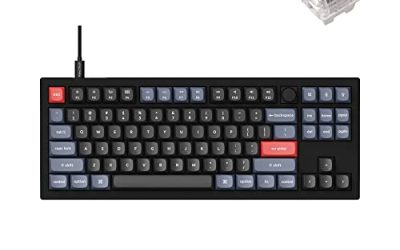
Keychron V3
The keyboard pick: a tenkeyless board with QMK and VIA support lets you remap keys at the keyboard level, which keeps working across every Linux install you plug it into.
Specs
- Tenkeyless layout with rotary knob
- QMK and VIA remapping support
- Hot-swappable K Pro Brown switches
- Wired USB-C connection
- Maker-rated 1,000 Hz polling
Logitech G502 HERO
Pirates is a game of ledgers, route maps and harbour menus, and a precise wired mouse is the primary input its record assumes. Eleven programmable buttons cover the confirm, cancel and camera inputs a trading session repeats.
Specs
- HERO optical sensor, up to 25,600 DPI
- 11 programmable buttons
- Adjustable weight system
- Wired USB connection
- On-board memory profiles
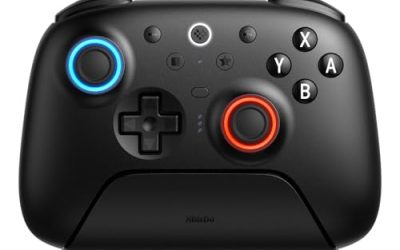
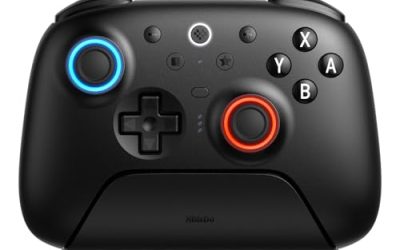
8BitDo Ultimate 2 Bluetooth Controller

The desktop pad pick for the wider library. This game’s record lists no controller support, so treat it as a Steam Input device for other titles on the same desk; it covers the couch case with modern sticks, triggers and back buttons.
Specs
- Connectivity: Bluetooth wireless and USB-C wired
- Joysticks: TMR electromagnetic, anti-drift design
- Triggers: Hall effect, with mode switching
- Extras: two remappable back buttons, motion control
- In the box: charging dock included
Xbox Wireless Controller, Carbon Black

The safest guest pad in PC gaming: Steam Input support is universal, and it pairs over Bluetooth or its own wireless standard. For this title it is a library pick only — the game itself wants a mouse and keyboard.
- Connectivity: Xbox Wireless and Bluetooth
- Port: USB-C for wired play
- Controls: hybrid D-pad, dedicated Share button
- Power: AA batteries or optional rechargeable pack
Samsung T9 Portable SSD 2TB

For moving a Linux game library between machines, or keeping an offline backup of installers, a fast USB-C drive is the simple answer. The headline figure needs a Gen 2×2 host port; on a lesser port the drive runs at that ceiling instead. This is the premium tier of the five picks; a budget build can stop at the keyboard and mouse.
Specs
- Capacity: 2 TB portable SSD
- Interface: USB 3.2 Gen 2×2, USB-C connector
- Maker-rated speeds: up to 2,000 MB per second read, 1,950 MB per second write
- Features: Dynamic Thermal Guard, maker-rated drop resistance
How to choose
Choose on storefront, not on platform, because every route sells the same Windows build. The Steam copy is the default pick: it is the build ProtonDB’s file describes, and Steam’s Proton tooling is the path of least resistance on a Linux desktop — install, leave the compatibility tool at its default, and expect a Silver-tier experience that may need patience. The GOG copy suits a buyer who values a DRM-free offline installer and is comfortable running it under Proton through a community launcher or as a non-Steam title. On hardware, spend on the desk first: the keyboard and mouse are the inputs this record assumes.
Who should skip
Skip this one if you are shopping for a native Linux Guild game: none of the four family records on Steam carries a Linux flag, and this expansion is no exception. Skip it if the Steam Deck is your only machine — Valve’s Unsupported verdict was graded on the exact build still on sale, so no newer version is waiting to change the answer. Skip it if a four-report ProtonDB file feels too thin to buy on; that caution is reasonable, and the base game’s record does not transfer to this separately sold app. And skip it for multiplayer: the NoServers flag means the official servers are gone.
FAQ
Is Pirates of the European Seas native on Linux?
No. Steam’s flags, all three purchase packages and the depot list are Windows-only, the macOS and Linux requirements fields are empty lists, and GOG’s separate edition is Windows-only as well. Linux play means running the Windows build under Proton.
Is it DLC for The Guild II, or its own game?
On the record, its own game. Steam types app 39660 as a game with its own listing and packages and no pointer to the base app, even though the store copy describes it as an addon. It is sold standalone, in a bundle with the base game, and inside The Guild Collection.
How well does it run under Proton?
ProtonDB’s full summary reads Silver on the headline and trending tiers with a Platinum best-reported tier, from four reports at low confidence. Read that as thin rather than settled: at least one filing ran it to a Platinum standard, the headline expects some friction, and the sample is too small to promise either.
Can I play it on Steam Deck?
Valve’s sheet says Unsupported for both Steam Deck and SteamOS, and the June 2022 test graded build 21209 — the same build the frozen public branch still ships. On the official record, plan on a desktop instead.
Final verdict
Pirates of the European Seas is a Windows-only game on every layer of its own record: flags, three packages, depots, family and the rival storefront all agree, and there is no trap layer — no soundtrack app, no stranded depot, no populated Linux field — arguing otherwise. For a Linux desktop player who already loves the base game, it remains a reasonable buy on the Steam copy, with Proton expectations set to Silver on a thin community file. For Deck-only players and native-build collectors, the record’s answer is a clear no.
Product and ASIN Reference
| Product | ASIN |
|---|---|
| Keychron V3 | B0B2DMMMG2 |
| Logitech G502 HERO | B07GBZ4Q68 |
| 8BitDo Ultimate 2 Bluetooth Controller | B0F194QFT2 |
| Xbox Wireless Controller, Carbon Black | B08DF248LD |
| Samsung T9 Portable SSD 2TB | B0CHFS9K14 |