Monument Valley is ustwo games’ perspective puzzle game, in which a silent princess crosses monuments whose staircases and walkways can be rotated and rebuilt into paths that only work from one viewing angle. It reached Steam on 12 July 2022, and because the series began on touch devices, Linux players ask whether the Steam release carries a native Linux build or only a Windows build Proton has to carry.
This article rules on the record as it stands today. Steam’s store data, the requirements tabs behind each flag, the depot table, the one extra app in the family, the community compatibility file, Valve’s Deck sheet and the GOG catalogue were each read directly, and every layer is reported as found, including where the paperwork and the delivered files disagree.
As an Amazon Associate, we earn from qualifying purchases.
Quick answer
No. Monument Valley has no native Linux build on Steam: the Linux flag is false, its Linux requirements tab is two headings over empty lists, and the only content depot is a Windows build. Linux players run that Windows build through Proton, where the community file stands at Platinum, and Valve rates the game Verified on Steam Deck.
What Steam’s record says
The store record for app 1927720 names the game Monument Valley, with ustwo games in both the developer and publisher fields, released 12 July 2022. Its platform flags read Windows true, Mac false and Linux false. The genres are Adventure, Casual, Indie and Strategy, and the categories include Single-player, Steam Achievements, Full controller support, Mouse Only Option, Playable without Timed Input, DualShock and DualSense support, Save Anytime, Steam Cloud and Family Sharing.
The requirements tabs tell three different stories. The Windows tab is genuinely populated: its minimum tier asks for Windows 7 (SP1+) 64-bit, an Intel Core i5, 8 GB of RAM, a GeForce GTX 460, DirectX version 11 and 1 GB of storage, while its recommended tier carries only the 64-bit line. The Linux tab is an empty shell: a Minimum heading and a Recommended heading, each over an empty list. Headings are not a port: a tab naming no operating system, no processor and no storage describes nothing a player could install.
The Mac tab is stranger still. Under a Mac flag that reads false, the field is populated at both tiers with a single line each, stating that the game requires an Apple processor. So the record holds Mac requirements text for a platform it does not flag, and empty Linux headings for another it does not flag. Neither field delivers anything; the depot table decides.
Two notice fields are simply absent: the record carries no DRM notice and no external account notice, so there is no third-party DRM statement and no account requirement to quote.
The depot table settles it
Behind the store page sits exactly one content depot: depot 1927721, configured for Windows, at 338.12 MiB. The app’s total size on disk is that same figure, to the byte. There is no Linux or macOS depot in the table, in any branch, so no Steam package can deliver a Linux build, and the populated Mac requirements line has no Mac build behind it either. The public branch stands on a build from October 2025, and it is a Windows build.
Two metadata fields complete the picture, and one dissents. The architecture field reads 64, matching the 64-bit Windows requirement. The extended OS field reads macosapplesilicon, a Mac packaging value matching the record’s Apple-processor line but not its depot table: no Mac files exist for it to describe. It is leftover packaging metadata, and this article rules on the depots over the metadata.
The family sweep: the only Linux flag belongs to the soundtrack
The game’s add-on array holds exactly one app, read individually rather than assumed. The Monument Valley Original Soundtrack, a music product released in August 2025, flags all three platforms true. Its own fields give the flag away: the Windows field lists storage figures only, and its Mac and Linux fields are empty lists outright. A bare all-platform flag on an audio product is the soundtrack trap in its classic form.
So the family’s Linux-flag count reads one of two, and the one flag belongs to the music, not the game. The native case was never available here, because the game’s own flag is false and its depot table is Windows-only; the soundtrack’s flag is named only so nobody buys on it. The record lists no demo, and the series’ sequels sit on their own records, with nothing here drawn from them.
Anti-cheat, in three separate answers
The three sources were kept separate, and all three come back negative. Steam’s record names no anti-cheat: the category list is single-player only, and neither notice field exists. The depot database’s detected technologies are the Unity Engine, the UnityBurst SDK and the UnityIL2CPP SDK: engine plumbing, not anti-cheat. The community anti-cheat tracker’s full dataset, searched by name and by app number, carries no entry for this game. There is no multiplayer here for an anti-cheat to guard.
The Proton file
With no native build, Proton is not the fallback for this game; it is the only route, and the community file for it is strong. The compatibility summary answered in full: headline Platinum, best-reported Platinum and trending Platinum, across 35 reports, with confidence rated strong.
One check could not be completed. The game’s community page returned no readable content this session through either route tried, so no classification heading from that page is claimed either way. The summary figures are complete; only the page’s own heading is missing, disclosed rather than papered over.
The Steam Deck sheet
Valve’s own compatibility record answered directly this session: resolved category three, Verified, all four Verified items passing, covering the default controller configuration, matching glyphs, legible text and a performant default graphics setup. SteamOS separately rates the game Compatible. Because the only build is the Windows build, the badge certifies that build under Proton.
The dated paperwork behind the badge comes from the depot database’s republication of Valve’s compatibility data, disclosed here as the source. The test is dated 18 April 2025, and the sheet names proton-9.0-4RC as the recommended runtime, confirming the badge describes the Windows build under a Proton release candidate, not any native build. One caution follows: the branch moved to a newer build in October 2025, so the test paperwork predates the build a buyer downloads today, even though the Verified rating stands as Valve’s current published verdict.
The storefront ruling
There is no GOG edition to fall back on. The game’s natural product address on GOG resolves to the store’s general games catalogue, how that storefront answers for titles it does not sell, and no product record could be read there. A Linux buyer has one storefront and one route: the Steam copy, run through Proton.
Gear that fits the record
The gear below follows the record’s shape: the handheld the badge was written for, two pads, a mouse for pointer-driven sessions, and library storage.
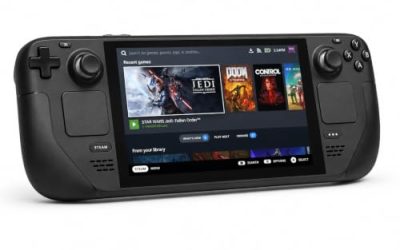
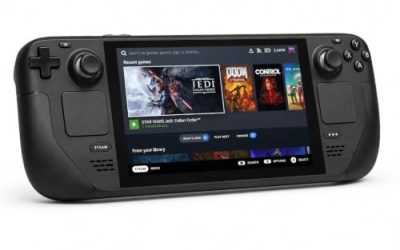
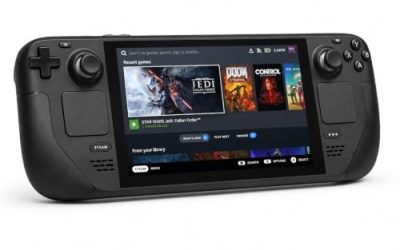
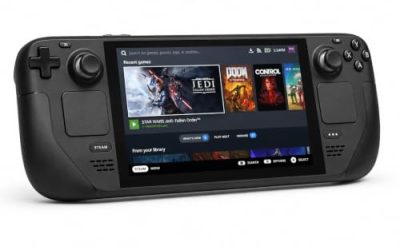
Valve Steam Deck OLED 512GB

The handheld the Verified badge was written for. Valve’s sheet passes the Windows build on all four checks, and the game’s requirements sit far below the Deck’s APU.
Specs
- Display: 7.4-inch HDR OLED, 1280 by 800, up to 90 Hz
- Processor: AMD Zen 2 and RDNA 2 custom APU
- Memory: 16 GB LPDDR5
- Storage: 512 GB NVMe, plus a microSD slot
- Wireless: Wi-Fi 6E and Bluetooth
- Channel note: Valve sells the Deck mainly through its own store, so Amazon listings are third-party sellers
8BitDo Ultimate 2 Bluetooth Controller

The docked and desktop pad pick. Steam lists full controller support, and this pad covers the couch case with modern sticks and triggers.
Specs
- Connectivity: Bluetooth wireless and USB-C wired
- Joysticks: TMR electromagnetic, anti-drift design
- Triggers: Hall effect, with mode switching
- Extras: two remappable back buttons, motion control
- In the box: charging dock included
Xbox Wireless Controller, Carbon Black

The safest guest pad in PC gaming: Steam Input support is universal, the glyphs match what most games display, and it pairs over Bluetooth or its own wireless standard.
- Connectivity: Xbox Wireless and Bluetooth
- Port: USB-C for wired play
- Controls: hybrid D-pad, dedicated Share button
- Power: AA batteries or optional rechargeable pack
Logitech G502 HERO

The record lists a Mouse Only Option, and a precise wired mouse suits a game built around dragging architecture into new shapes.
Specs
- HERO optical sensor, up to 25,600 DPI
- 11 programmable buttons
- Adjustable weight system
- Wired USB connection
- On-board memory profiles
Samsung T9 Portable SSD 2TB

For moving a Linux game library between machines or keeping an offline backup, a fast USB-C drive is the simple answer. The headline figure needs a Gen 2×2 host port; on a lesser port the drive runs at that ceiling.
Specs
- Capacity: 2 TB portable SSD
- Interface: USB 3.2 Gen 2×2, USB-C connector
- Maker-rated speeds: up to 2,000 MB per second read, 1,950 MB per second write
- Features: Dynamic Thermal Guard, maker-rated drop resistance
How to choose
Choose by the route, because there is only one. On a Linux desktop, install the Steam copy and let Proton run the Windows build; the Platinum file across 35 reports says that route is the community’s settled experience. On a Steam Deck, the Verified badge applies to that same build. Pick your control scheme from the record: full controller support and a mouse-only option are both listed, so a pad or a mouse is equally first-class. Buy the soundtrack, if at all, as music; its flags are not evidence about any build.
Who should skip
Skip this entirely if you only buy games with native Linux builds: the flag is false, the tab is an empty shell and the depot table is Windows-only. Skip the GOG hunt too, because there is no edition there. And skip the game itself if slow, deliberate spatial puzzles are not your shape of fun; the monuments ask for patience, not reflexes.
FAQ
Is Monument Valley native on Linux?
No. Steam flags Linux false, the Linux tab is two headings over empty lists, and the only content depot is a Windows build of 338.12 MiB. The Linux route is that build running through Proton.
How well does Monument Valley run under Proton?
The community summary stands at Platinum for its headline, best-reported and trending tiers across 35 reports, with confidence rated strong. The game page’s own classification heading could not be read this session, so none is claimed either way.
Is Monument Valley Steam Deck Verified?
Yes. Valve’s own record rates it Verified with all four checks passing, and SteamOS separately rates it Compatible. The badge certifies the Windows build under Proton; its test paperwork is dated April 2025 and the branch has moved since.
Does the soundtrack’s Linux flag mean the game has a Linux build?
No. The Original Soundtrack flags all three platforms while its Mac and Linux fields are empty lists outright: a bare flag on an audio product. The game’s own record is Windows-only at every layer that delivers files.
Final verdict
Monument Valley is not a native Linux game, and its record is unusually clear once the layers are separated: a false flag, an empty-shell Linux tab, a Mac requirements line with no Mac depot behind it, and one Windows depot doing all the delivery. What makes the Linux position comfortable anyway is everything around that missing build: a unanimous Platinum Proton file on 35 reports, a Verified Deck badge read directly from Valve, and no anti-cheat, DRM notice or account requirement in the record. Buy it on Steam, run it through Proton, and judge the soundtrack’s flags as paperwork.
Product and ASIN Reference
| Product | ASIN |
|---|---|
| Valve Steam Deck OLED 512GB | B0CQ3RWQQZ |
| 8BitDo Ultimate 2 Bluetooth Controller | B0F194QFT2 |
| Xbox Wireless Controller, Carbon Black | B08DF248LD |
| Logitech G502 HERO | B07GBZ4Q68 |
| Samsung T9 Portable SSD 2TB | B0CHFS9K14 |