Our Short List of 3

- Tenkeyless layout with rotary knob
- QMK and VIA remapping support
- Hot-swappable K Pro Brown switches
- Wired USB-C connection

- Connectivity: Bluetooth wireless and USB-C wired
- Joysticks: TMR electromagnetic, anti-drift design
- Triggers: Hall effect, with mode switching
- Extras: two remappable back buttons, motion control

- Connectivity: Xbox Wireless and Bluetooth
- Port: USB-C for wired play
- Controls: hybrid D-pad, dedicated Share button
- Power: AA batteries or optional rechargeable pack
All 5 Picks at a Glance
| Product | Specs | Action |
|---|---|---|
| Keychron V3 |
| Check price on Amazon |
| 8BitDo Ultimate 2 Bluetooth Controller |
| Check price on Amazon |
| Xbox Wireless Controller, Carbon Black |
| Check price on Amazon |
 Logitech G502 HERO |
| Check price on Amazon |
 Samsung T9 Portable SSD 2TB |
| Check price on Amazon |
Arizona Sunshine VR Remake is Vertigo Games’ ground-up 2024 rebuild of its 2016 VR zombie shooter, sold on Steam as its own app with its own record. Linux players face two questions that are easy to blur: whether a native Linux build exists, and whether the game can be played on Linux at all. The record answers the first flatly, and the second only through a headset, a desktop and Proton.
The short version is that Steam sells exactly one PC build of this game, a Windows VR build. There is no Linux depot, no Linux requirements tab with anything in it, and no second storefront edition. Steam Deck is not a fallback either: the game is VR only, and Valve rules that whole category out on the handheld. What remains is a real but narrow route — a Linux desktop, a PC VR headset and Proton — and the community file for that route is Platinum, though thin enough to deserve an asterisk.
As an Amazon Associate, we earn from qualifying purchases.
Quick answer
Arizona Sunshine VR Remake has no native Linux build. Steam’s record flags Windows alone, the only PC depot is a Windows build, and the Mac and Linux requirements fields are empty shells. On a Linux desktop the route is Proton through SteamVR: ProtonDB rates it Platinum, but on just seven reports, so treat that tier as thin evidence, not a settled verdict.
The record: one Windows VR build and nothing else
Start with the flags, because every other layer agrees with them. The store record for app 2897700 lists Windows as true and both Mac and Linux as false, with a 64-bit architecture note and an empty extended-OS string. The Windows requirements are genuinely filled in: Windows 10 64-bit, a Core i7-9700K or equivalent, 16 GB of RAM, an RTX 2070-class card with at least 8 GB of VRAM, DirectX 11 and an SSD. The Mac and Linux requirements fields are empty shells — headings with nothing under them.
The delivery data says the same thing. SteamDB’s depot table holds exactly two depots: a Windows content depot of about 38.4 GiB, and a second depot configured for Android, about 10.5 GiB, serving the standalone-headset side of the release. There is no Linux depot and no Mac depot, and the icon registry holds no Linux client icon. Taken together — flags, requirements, depots, icons — the ruling is not close: a Windows-only release, structural rather than a paperwork gap. One honest limit: the launch-entry list could not be surfaced this session, so the ruling rests on those four layers, which are unanimous.
The family paperwork is equally plain. The base record’s DLC field is absent — no DLC array at all — and the store’s second purchase option is an upgrade package for owners of the original game, not a content add-on. A store search on the series name surfaces eight apps, but the rest belong to other games: the 2016 original, now sold under a Legacy name with its own DLC apps, a separate sequel, and an unrelated tie-in pack. None of their platform data transfers. The Remake’s family Linux-flag count is 0 of 1: the one flag that exists is Windows.
Steam Deck: ruled out by category, not by performance
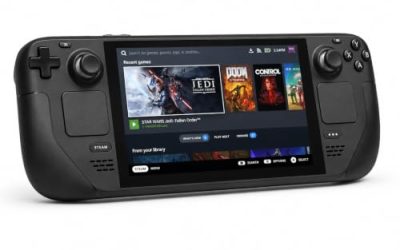
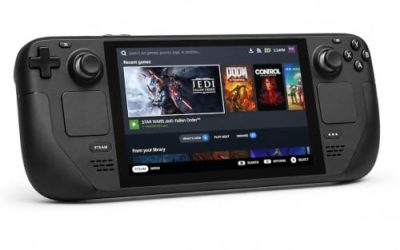
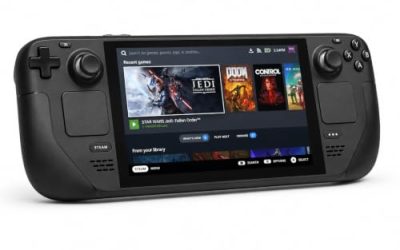
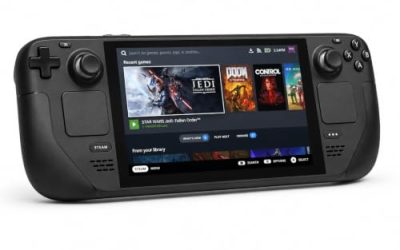
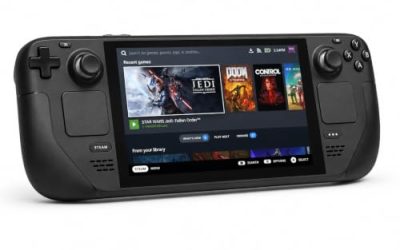
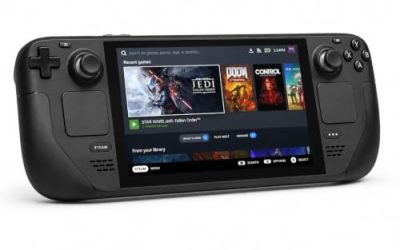
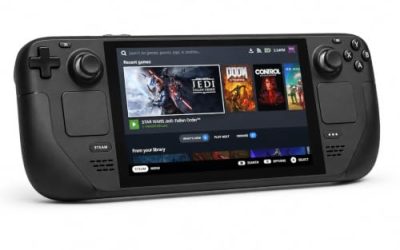
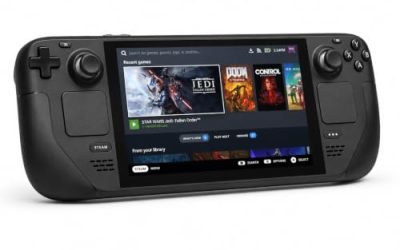
Valve’s own compatibility data gives the Deck answer in a single line: Steam Deck does not support VR games. The Deck category is Unsupported, the test sheet is dated 25 October 2024, and the tested-build field records no build at all — because no build was graded. This is the categorical shape of a VR ruling: Valve is not saying the game runs badly on the handheld, it is saying the handheld is the wrong device class for a title whose categories read VR Only and Tracked Controller Support. SteamOS compatibility is listed separately as Unknown, which changes nothing here.
There is a useful contrast one sheet over. Valve also publishes a compatibility sheet for its own VR hardware line, and there the same game is Verified: every check passes, tested in August 2026 against build 24311419 — the build on the public branch today. The Windows build itself is healthy on the VR hardware Valve grades; the Deck ruling is about the device, not the game.
Proton on a Linux desktop: Platinum, on seven reports
The desktop route is where the game genuinely opens up. ProtonDB’s summary reads Platinum at every level — settled, best-reported and trending tiers all agree — and the reports describe exactly the setups a Linux VR player would use: tethered headsets such as the Valve Index and Vive Pro, a Quest 3 driven through Steam Link, and one full campaign through the open-source Monado runtime. Co-op filings are positive too, with joining described as working flawlessly.
Two cautions belong beside that tier. First, the file is thin: seven reports in total, with ProtonDB’s own confidence marked low. A Platinum built on seven filings is a promising signal, not the settled verdict the same tier represents on a game with hundreds of reports. Second, the filings carry a practical warning: one detailed report found game events and sounds badly delayed through ALVR, where Steam Link worked properly with the stable SteamVR release. If you stream to a standalone headset from a Linux host, the streaming route matters more than the Proton build.
One more piece of ProtonDB paperwork needs naming. The game’s ProtonDB page carries a “Natively Supports” heading above its requirements display, generated from the empty Linux requirements shell on the Steam record. It contradicts the record it is drawn from; this article follows Steam.
Anti-cheat and account layers: silence on every field
For an online co-op game, the anti-cheat question is usually the deciding one. The store record carries no DRM notice and no account-linking notice. SteamDB’s detected-technology list names the Unity engine, the OpenVR and OpenXR runtimes and audio and telemetry SDKs — and no anti-cheat. The AreWeAntiCheatYet database, read in full, holds no entry for this app by store ID or by name. That is documentation silence on every layer: nothing presents an anti-cheat barrier, and the co-op filings above describe online play working under Proton. Silence is not a guarantee, but today no named anti-cheat stands between a Linux desktop and this game’s co-op.
How to choose your route
Everything starts with the headset, because the game has no flat-screen mode at all. The record’s Windows requirements name the supported families: Quest, Rift and Rift S, Valve Index, Windows Mixed Reality hardware such as the HP Reverb G2, and the HTC Vive line. On a Linux host, the filings point to two working shapes: a tethered headset through SteamVR, the path with the deepest coverage, or a standalone headset streamed from the PC — where the evidence favours Steam Link over ALVR. The Monado route also has a full-campaign filing behind it.
After the headset, the binding constraint is the graphics card. VR renders for two eyes at a high refresh target; the record’s floor is an RTX 2070-class card with 8 GB of VRAM, and on Linux you want headroom above it, since Proton and the VR runtime both take their share. Storage is third: the Windows depot alone is about 38 GiB and an SSD is required. The gear below is chosen for a desktop Linux VR desk — keyboard, pads for the rest of your library, and storage.
Gear for the Linux VR desktop
Keychron V3
- Tenkeyless layout with rotary knob
- QMK and VIA remapping support
- Hot-swappable K Pro Brown switches
- Wired USB-C connection
The keyboard pick for desktop sessions: QMK and VIA support lets you remap keys at the keyboard level, which keeps working across every Linux install you plug it into.
8BitDo Ultimate 2 Bluetooth Controller
- Connectivity: Bluetooth wireless and USB-C wired
- Joysticks: TMR electromagnetic, anti-drift design
- Triggers: Hall effect, with mode switching
- Extras: two remappable back buttons, motion control
The desktop pad pick for the flat games in your library — this game itself is tracked-controller only, so the pad serves everything else on the same desk.
Xbox Wireless Controller, Carbon Black
- Connectivity: Xbox Wireless and Bluetooth
- Port: USB-C for wired play
- Controls: hybrid D-pad, dedicated Share button
- Power: AA batteries or optional rechargeable pack
The safest guest pad in PC gaming: Steam Input support is universal, the glyphs match what most games display, and it needs no per-game setup on Linux.
Logitech G502 HERO
- HERO optical sensor, up to 25,600 DPI
- 11 programmable buttons
- Adjustable weight system
- Wired USB connection
A wired mouse for the desktop work around the headset: SteamVR menus and launch options are pointer work, and eleven programmable buttons cover the repeated inputs.
Samsung T9 Portable SSD 2TB
- Capacity: 2 TB portable SSD
- Interface: USB 3.2 Gen 2×2, USB-C connector
- Maker-rated speeds: up to 2,000 MB per second read, 1,950 MB per second write
- Features: Dynamic Thermal Guard, maker-rated drop resistance
For moving a Linux game library between machines, a fast USB-C drive is the simple answer. A library holding a 38 GiB VR title fills internal storage quickly; the headline figure needs a Gen 2×2 host port, and on a lesser port the drive runs at that ceiling.
Who should skip it
Skip this one if Steam Deck is your only gaming device — the exclusion is categorical and permanent for a VR-only title. Skip it if you own no headset and hoped for a hidden flat mode: there is none, on any platform. Skip it if your graphics card sits below the RTX 2070 class in the record’s own requirements, because VR under Proton on a marginal GPU is a poor first experience. And skip it if you need certainty rather than promise: the Platinum file rests on seven reports, and players who want a settled record should wait for it to thicken. Owners of the 2016 original should read the store page carefully — the Remake is a separate app from the Legacy edition, with an upgrade package offered to existing owners.
FAQ
Is Arizona Sunshine VR Remake native on Linux?
No. Steam’s record flags Windows alone, the only PC depot is a Windows build of about 38 GiB, and the Linux requirements field is an empty shell. The “Natively Supports” heading on the ProtonDB page is generated from that shell and describes no real build.
Can I play it on Steam Deck?
No. Valve’s Deck sheet reads Unsupported with a single reason: Steam Deck does not support VR games. No build was graded, because the ruling is about the device category. The same build is Verified on Valve’s VR hardware sheet, tested against the current public build.
How well does it run under Proton on a Linux desktop?
ProtonDB’s summary is Platinum on all three tiers — but from only seven reports, with confidence marked low. The filings describe working Index, Vive Pro and Quest 3 setups, a full campaign through Monado, and working co-op; one warns ALVR introduced heavy delays where Steam Link worked.
Is the Remake on GOG?
No. GOG’s catalogue and product records hold no edition of this game, and the natural product addresses redirect to the general games catalogue. Steam is the only PC storefront selling the Remake.
Final verdict
Arizona Sunshine VR Remake is a Windows-only VR release with no native Linux build, no Linux depot and no second storefront — and its Steam Deck ruling is the categorical VR exclusion, not a performance judgement. The honest good news sits on the desktop: ProtonDB’s file is Platinum across all three tiers, the filings cover the headsets and runtimes a Linux player would actually use, and no anti-cheat is named anywhere. Hold the tier at arm’s length — seven reports is a thin file — but if you already run PC VR from a Linux desktop, this is one of the clearer yeses a VR remake has produced. If the Deck was the plan, it was never in the running.
Product and ASIN Reference
| Product | ASIN |
|---|---|
| Keychron V3 | B0B2DMMMG2 |
| 8BitDo Ultimate 2 Bluetooth Controller | B0F194QFT2 |
| Xbox Wireless Controller, Carbon Black | B08DF248LD |
| Logitech G502 HERO | B07GBZ4Q68 |
| Samsung T9 Portable SSD 2TB | B0CHFS9K14 |