Outcast – A New Beginning is Appeal Studios’ sequel to the 1999 open-world adventure, published by THQ Nordic and released on Steam on 15 March 2024. Anyone scanning its Steam family for Linux support will find exactly one Linux flag — and it does not belong to the game. It belongs to the soundtrack album sold alongside it, and that flag surfaces in database scans as if a Linux port existed.
This status report reads the base game’s own record layer by layer — platform flags, requirements, depots, icons and add-on family. Once the album is separated from the game, the verdict is unambiguous: there is no native Linux build, and the Linux route is Proton, where the game holds a Gold rating and a Deck Playable badge that still grades the build on sale today.
As an Amazon Associate, we earn from qualifying purchases.
Quick answer
No. Outcast – A New Beginning has no native Linux build: Steam’s record flags Windows only, its Linux requirements are an empty shell, and its single content depot is one Windows package. The one Linux flag in the family belongs to the soundtrack album, not the game. On Linux the route is Proton: ProtonDB rates it Gold, and Valve rates it Playable on Steam Deck.
The soundtrack flag that is not a Linux build
Start with the trap, because it is the reason this article exists. The base record’s add-on array holds exactly one entry: the Outcast – A New Beginning Soundtrack, a separate music app whose own record flags Windows, Mac and Linux all true. A family-wide scan therefore reports a Linux-flag count of one out of two — and the one is an album of audio files, not a game build. Music apps carry platform flags so the store can deliver their files to buyers on each system; the flag describes the album’s listing.
The free demo app, outside the add-on array, flags Windows only. So the family breaks down as: game Windows-only, demo Windows-only, soundtrack flags everything. Rule on the family scan alone and a scanner will happily report Linux support that no Linux player can download — which is why the album is named here rather than quietly excluded.
What the base game’s record actually ships
The platform flags on the game’s own record read Windows true, Mac false, Linux false. The Windows requirements are genuinely populated at both tiers: a Ryzen 3 1300X or Core i3-7530K, 8 GB of memory and a GTX 980 Ti class card at minimum, rising to a Ryzen 5 5600X or Core i5-12400, 16 GB and an RTX 2070 Super class card recommended. The Mac and Linux requirements fields, by contrast, are empty shells — the standard headings printed over blank lists. A real port fills those fields; an unfilled template is what a Windows-only record looks like.
The depot census agrees. SteamDB’s depot table lists exactly one content depot of about 35 GB with no operating-system split, plus only the shared Windows redistributables (Visual C++ 2022 and DirectX June 2010). There is no Linux depot of any size and no Mac depot. The icon registry holds client icon, client tga, icon and logo entries — and no Linux client icon, the small entry a shipped Linux build normally registers. The extended OS string is an empty string. The record carries no DRM notice and no account notice, and the game is single-player: SteamDB’s detected-technology list names Unreal Engine and middleware with no anti-cheat entry, and the Are We Anti-Cheat Yet database holds no entry for this game by store ID or name. The launch-entry list did not surface in this session’s fetches, so no claim is made about it; the ruling rests on the other five layers, and they are unanimous.
ProtonDB: Gold, with one DX12 quirk and one stray heading
ProtonDB’s full summary reads Gold as the settled tier, Platinum as the best-reported tier and Gold as the trending tier, across 15 reports with good confidence. The desktop filings describe a game that broadly runs, and the recurring fault line is narrow: one detailed filing found that under DirectX 12 the frame rate could collapse into single digits after leaving the skills or inventory menus, while the DirectX 11 path behaved normally — a renderer choice, not a launch failure. Nothing in the file suggests a blocker.
One warning about the ProtonDB page itself: it carries a “Natively Supports” heading above the requirements summary. That heading is generated from the store record’s requirements fields, and here it flatly contradicts Steam’s own record, whose Linux field is an empty shell and whose flag reads false. Treat it as a formatting artefact, not evidence of a port; this article follows Steam’s record wherever the two disagree.
Steam Deck: Playable, and the badge still grades today’s build
Valve’s compatibility sheet rates the game Playable on Steam Deck, with SteamOS separately marked Compatible. The checks that pass are the important ones: all functionality is accessible with the default controller configuration, the game shows Steam Deck controller icons, and the default graphics configuration performs well. Two deductions keep it from Verified: some in-game text is small, and the game does not default to external Bluetooth or USB controllers, so a docked pad may need a manual switch through the Quick Access Menu. The record’s own controller field reads full support, matching Valve’s gamepad-first test configuration.
The paperwork has one unusual virtue. Valve tested the game on 14 June 2024 against build 14534830 — and the public branch’s current build ID is also 14534830, last updated days before that test. Most Deck badges grade a superseded build; this one still grades the exact build a buyer downloads today. Set that against the ProtonDB Deck filings, which are less cheerful: handheld reporters describe frame drops into the mid-twenties during firefights and tutorial videos that fail to play. Both can be true — Valve’s test passed its bar, while longer sessions expose limits the short test does not.
Buying it elsewhere: the GOG copy is the same Windows build
GOG does sell this game: its catalogue holds a product record for Outcast – A New Beginning, released there the same day as the Steam launch. Its system compatibility reads Windows true, Mac false, Linux false — a DRM-free copy of the same Windows build, not a separate port. A Linux buyer chooses between the Steam copy, the build both compatibility records above describe, and the GOG copy, which would run through a launcher setup neither record covers.
Gear that fits the record
The picks below follow the record’s shape: full controller support, a gamepad-first Deck test, and a 35 GB install.
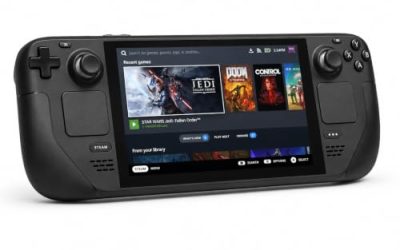
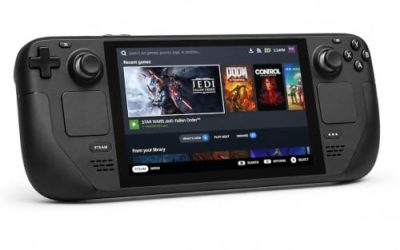
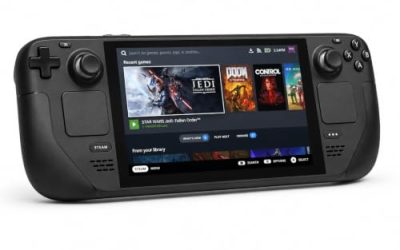
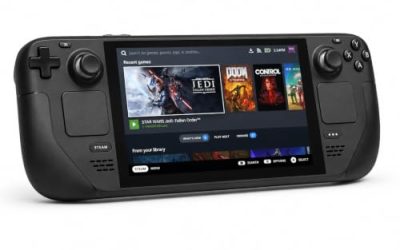
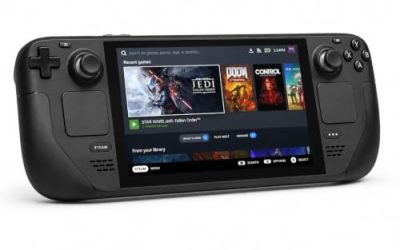
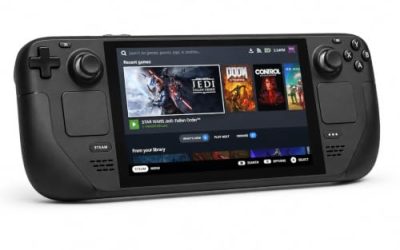
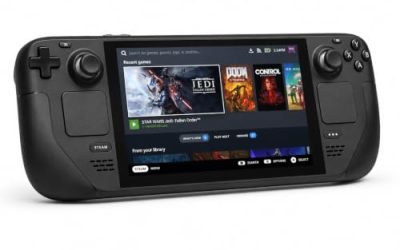
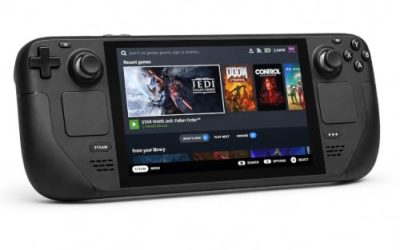
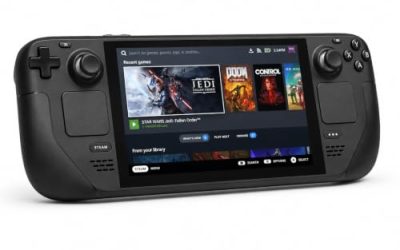
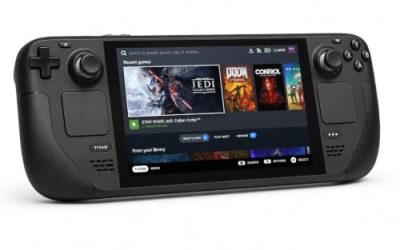
Valve Steam Deck OLED 512GB

The handheld Valve graded Playable against the current build. The test sheet confirms the default graphics configuration performs well; the caveats are the small text it flags and the slowdowns handheld reporters describe in big fights.
Specs
- Display: 7.4-inch HDR OLED, 1280 by 800, up to 90 Hz
- Processor: AMD Zen 2 and RDNA 2 custom APU
- Memory: 16 GB LPDDR5
- Storage: 512 GB NVMe, plus a microSD slot
- Wireless: Wi-Fi 6E and Bluetooth
- Channel note: Valve sells the Deck mainly through its own store, so Amazon listings are third-party sellers
8BitDo Ultimate 2 Bluetooth Controller
The docked and desktop pad pick. The record lists full controller support, so a pad is the game’s native input shape; this one adds modern sticks, triggers and back buttons for repeated menu work.
Specs
- Connectivity: Bluetooth wireless and USB-C wired
- Joysticks: TMR electromagnetic, anti-drift design
- Triggers: Hall effect, with mode switching
- Extras: two remappable back buttons, motion control
- In the box: charging dock included
Xbox Wireless Controller, Carbon Black
The safest guest pad in PC gaming: Steam Input support is universal, the glyphs match what most games display, and it pairs over Bluetooth or its own wireless standard. On the handheld, an external pad may need a manual Quick Access Menu switch before it takes over.
- Connectivity: Xbox Wireless and Bluetooth
- Port: USB-C for wired play
- Controls: hybrid D-pad, dedicated Share button
- Power: AA batteries or optional rechargeable pack
Logitech G502 HERO
An open-world adventure spends real time in inventory, skills and map screens, and at a desk a precise wired mouse turns those trips into single clicks. Eleven programmable buttons cover the confirm, cancel and camera inputs.
Specs
- HERO optical sensor, up to 25,600 DPI
- 11 programmable buttons
- Adjustable weight system
- Wired USB connection
- On-board memory profiles
Samsung T9 Portable SSD 2TB
For moving a Linux game library between machines, or keeping an offline backup of installers, a fast USB-C drive is the simple answer. The headline figure needs a Gen 2×2 host port; on a lesser port the drive runs at that ceiling instead.
Specs
- Capacity: 2 TB portable SSD
- Interface: USB 3.2 Gen 2×2, USB-C connector
- Maker-rated speeds: up to 2,000 MB per second read, 1,950 MB per second write
- Features: Dynamic Thermal Guard, maker-rated drop resistance
How to choose
Choose the Steam copy: it is the build Valve’s sheet and ProtonDB’s file both describe, with the Steam Cloud saves the record lists. On desktop, install under Proton with the default tool; if the frame rate collapses after leaving the menus, switch to the DirectX 11 path, the documented fix. On a Steam Deck, expect the Playable experience the badge promises — working controls and glyphs, small text, performance that dips in heavy scenes — rather than a Verified one. A pad is the native input shape.
Who should skip
Skip this one if you buy only native Linux ports: there is none here, and the soundtrack’s flag does not change that. Skip it on Deck if small text or mid-twenties frame rates in firefights would spoil the game for you — both are documented, not hypothetical. Skip the GOG copy if your plan depends on ProtonDB reports or Valve’s testing, since neither covers that edition’s route.
FAQ
Is there a native Linux version of Outcast – A New Beginning?
No. The base game’s Steam record flags Windows only, its Linux requirements field is an empty shell, its single content depot is one Windows package, and no Linux client icon is registered. The GOG edition is Windows-only too. On Linux, the game runs through Proton.
Why does the soundtrack show Linux support if the game does not?
Because the soundtrack is a separate music app with its own store record, and that record flags all three platforms so the store can deliver the audio files to buyers on each system. The flag describes the album’s listing; it is not a game build and does not transfer to the game. The base game’s own record is the authority, and it reads Windows only.
How well does it run under Proton?
ProtonDB settles on Gold from 15 reports with good confidence, Platinum best-reported. Desktop filings describe a broadly playable game; the one recurring fault is a frame-rate collapse after leaving menus under DirectX 12, which the DirectX 11 path avoids. On Steam Deck, Valve rates it Playable against the current build, while handheld filings report heavier slowdowns in firefights.
Is the Steam Deck badge still current?
Yes, which is rare. Valve tested build 14534830 on 14 June 2024, and the public branch still ships that build today, so the rating grades the exact build a buyer downloads. Its deductions are small text and external controllers not taking over by default.
Final verdict
Outcast – A New Beginning is a Windows game with an unusually honest paperwork trail and one loud exception: the soundtrack, whose all-platform flag is the family’s only Linux true and means nothing for the game itself. Everything the base game ships — flags, requirements, depot, icons — says Windows only, and the GOG copy repeats the verdict. What Linux players get is a solid Proton title: a Gold rating with a documented DirectX 11 workaround for its one quirk, and a Playable Deck badge that still grades the current build. Buy the Steam copy for that experience, and ignore any database that calls the album a port.
Product and ASIN Reference
| Product | ASIN |
|---|---|
| Valve Steam Deck OLED 512GB | B0CQ3RWQQZ |
| 8BitDo Ultimate 2 Bluetooth Controller | B0F194QFT2 |
| Xbox Wireless Controller, Carbon Black | B08DF248LD |
| Logitech G502 HERO | B07GBZ4Q68 |
| Samsung T9 Portable SSD 2TB | B0CHFS9K14 |