Our Short List of 3

- Display: 7.4-inch HDR OLED, 1280 by 800, up to 90 Hz
- Processor: AMD Zen 2 and RDNA 2 custom APU
- Memory: 16 GB LPDDR5
- Storage: 512 GB NVMe, plus a microSD slot

- Connectivity: Bluetooth wireless and USB-C wired
- Joysticks: TMR electromagnetic, anti-drift design
- Triggers: Hall effect, with mode switching
- Extras: two remappable back buttons, motion control

- Connectivity: Xbox Wireless and Bluetooth
- Port: USB-C for wired play
- Controls: hybrid D-pad, dedicated Share button
- Power: AA batteries or optional rechargeable pack
All 5 Picks at a Glance
| Product | Specs | Action |
|---|---|---|
| Valve Steam Deck OLED 512GB |
| Check price on Amazon |
| 8BitDo Ultimate 2 Bluetooth Controller |
| Check price on Amazon |
| Xbox Wireless Controller, Carbon Black |
| Check price on Amazon |
 Logitech G502 HERO |
| Check price on Amazon |
 Samsung T9 Portable SSD 2TB |
| Check price on Amazon |
Eidos-Montréal’s single-player adventure arrived on Steam on October 26, 2021, published by Eidos Interactive Corp., and it has only ever shipped in one PC shape: a Windows build. Anyone searching for a native Linux port is really asking two questions — whether a Linux build exists anywhere in the delivery data, and how well the Windows build behaves when Proton carries it. This article answers both from the store record itself, layer by layer.
The short version is that no Linux build exists on any readable layer, but the compatibility picture is strong: ProtonDB’s settled tier sits one step below the top with the top tier on both momentum measures, and Valve’s Steam Deck sheet is one of the rare sheets that grades the build the store still serves today.
As an Amazon Associate, we earn from qualifying purchases.
Quick answer
No. Marvel’s Guardians of the Galaxy ships no native Linux build: Steam’s record flags Windows only, and every delivery layer agrees. On Linux the game runs through Proton instead. ProtonDB settles it at Gold across 150 reports, with Platinum as both the best-reported and trending tier, and Valve rates the Steam Deck Playable against the current build.
What the Steam record actually sells
The platform flags are unambiguous: windows true, mac false, linux false. The requirements fields tell the same story in more detail. The Windows minimum is genuinely populated — Windows 10 64-bit Build 1903, a Ryzen 5 1400 or Core i5-4460, 8 GB of memory, a GeForce GTX 1060 6GB or Radeon RX 570, DirectX 12 and 80 GB of storage — and the recommended tier steps up to a Ryzen 5 1600 or Core i7-4790, 16 GB and a GTX 1660 Super or RX 590. The Mac and Linux requirements fields, by contrast, are empty shells: headings present, lists blank — the leftover template a record carries when no build was ever prepared for those systems.
The depot census backs the flags. The main content depot holds roughly 66 GB, joined by an executable depot, per-language depots and the shared Windows Visual C++ redistributable — and nothing else. There is no Linux or Mac depot of any size, and SteamDB’s size summary, filtered to Windows, accounts for essentially the whole install. The icon registry holds the standard client icons but no Linux client icon, and the record’s extended-OS field is an empty string. One layer could not be read this session: the launch-entry list did not surface, so no claim is made about launch entries either way. The ruling does not need it — every other layer points the same direction.
The add-on depots the store itself does not list
The base record carries no DLC array, and a store search on the game’s own title returns exactly one product: the game itself. The two other results are add-ons for a LEGO Marvel title, a different game entirely. So the readable family count is zero Linux flags out of one app, and no soundtrack listing sits in the store family to confuse the picture.
SteamDB’s depot table does name five add-on depots the store search never shows: Pre-Order Content, Deluxe Upgrade Content, a Digital Stores pack, the Sleek-Lord outfit and an OST-Artbook depot of about 343 MB. Each was read individually for this article, and every one returns no readable store record — package-side content, not live listings. No platform flags are claimed for them; they are named as an observation only. Nothing in that hidden layer changes the base game’s flags, and the soundtrack-shaped depot among them carries no readable Linux flag that could be mistaken for a build.
Denuvo, and the silence around it
The record names exactly one third-party layer, in its DRM notice, verbatim: “Denuvo Anti-tamper”. That is a DRM wrapper, framed here as DRM rather than anti-cheat — the distinction matters, because the game is single-player only and no anti-cheat system is named anywhere. SteamDB’s detected-technology list names only engine and middleware: an AMD GPU services SDK, Bink Video and two NVIDIA graphics SDKs. There is no account notice on the record, so no second login stands between a buyer and the game. The anti-cheat catalogue maintained by AreWeAntiCheatYet was read in full — 1,167 entries — and holds no entry for this game by store ID or by name, the expected shape for an offline title: documentation silence, stated as silence. The ProtonDB file below shows the wrapper has not acted as a wall under Proton.
ProtonDB: a Gold settlement with Platinum momentum
ProtonDB’s full summary reads settled Gold, best-reported Platinum, trending Platinum, across 150 reports, with confidence marked strong. The settled tier is the conservative figure — where the whole report history lands — while both momentum measures sit at the top tier, describing where recent filings on current Proton builds point. The honest fault line concerns specific corners rather than the Steam copy in general: one detailed recent filing describes a copy from a different storefront, launched through a third-party launcher, crashing on one particular new Intel graphics architecture after the intro videos. A hardware-and-storefront corner case, not the shape of the file for the Steam build.
One check could not be completed: ProtonDB’s game page would not render its summary header through the routes available this session, so the stray-heading check — whether the page carries a “Natively Supports” heading that Steam’s record contradicts — is not claimed in either direction. The figures above come from the summary data, read in full.
Steam Deck: Playable, and the paperwork is current
Valve’s own compatibility record resolves to Playable, and SteamOS separately to Compatible. The passing checks are the ones that matter for a pad-first adventure: the default controller configuration is fully functional, interface text is legible, and the default graphics configuration performs well. Two notes ride along: the game sometimes shows mouse, keyboard or non-Steam-Deck controller icons, and first-time setup requires an active internet connection — though the same sheet confirms single-player play itself does not. The record’s own controller field reads full support and its test configuration is gamepad-shaped, so the pad framing here rests on this game’s own record.
What makes this sheet unusual is its date arithmetic. Valve tested the game on August 16, 2025, against build 10413039, under the stable Proton runtime — and build 10413039 is still the public branch build the store serves today, unchanged since early 2023. Most Deck badges grade a superseded build and age quietly; this one grades the code a buyer downloads now, so the verdict can be taken at face value.
Is there a GOG edition?
No. GOG’s catalogue search returns only unrelated products, its products endpoint returns no record for the title, and the natural product address redirects to the general games catalogue. No GOG edition exists in any form. The Steam copy is the only PC edition, and it is the build both compatibility records above describe.
Gear that fits the record
The picks follow the record’s shape: the handheld Valve graded, two pads for docked and desktop play, a mouse for desk sessions, and fast storage for an 80 GB install.
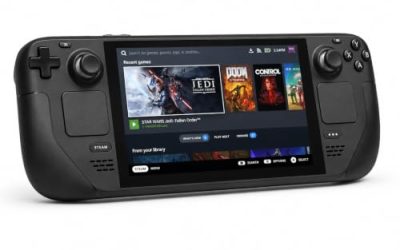
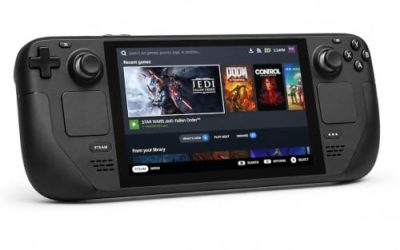
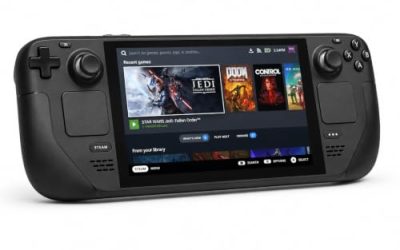
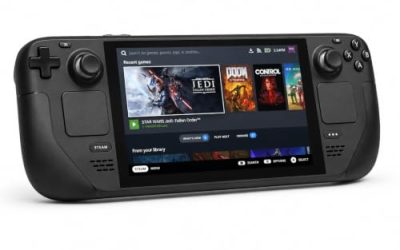
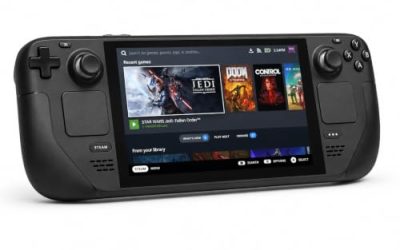
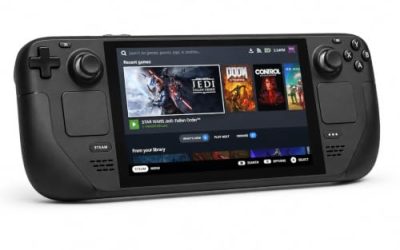
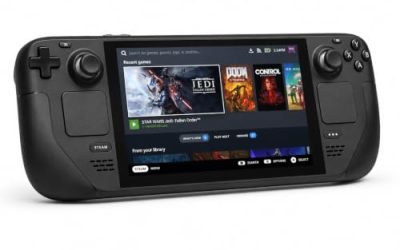
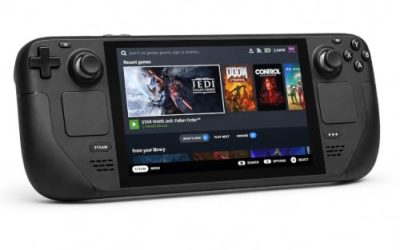
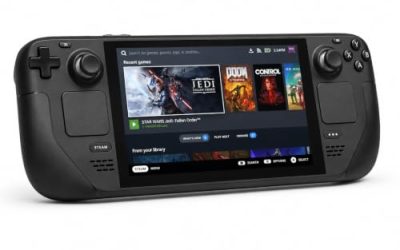
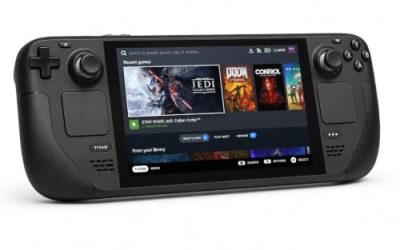
Valve Steam Deck OLED 512GB
- Display: 7.4-inch HDR OLED, 1280 by 800, up to 90 Hz
- Processor: AMD Zen 2 and RDNA 2 custom APU
- Memory: 16 GB LPDDR5
- Storage: 512 GB NVMe, plus a microSD slot
The handheld on Valve’s test sheet. The badge grades the current build, the default configuration is rated performant, and the game’s requirements sit inside what the APU offers — the only homework is a connected first-time setup.
8BitDo Ultimate 2 Bluetooth Controller
- Connectivity: Bluetooth wireless and USB-C wired
- Joysticks: TMR electromagnetic, anti-drift design
- Triggers: Hall effect, with mode switching
- Extras: two remappable back buttons, motion control
The docked pad pick. The record lists full controller support with a gamepad test configuration, and this pad covers the couch case with modern sticks, triggers and back buttons.
Xbox Wireless Controller, Carbon Black
- Connectivity: Xbox Wireless and Bluetooth
- Port: USB-C for wired play
- Controls: hybrid D-pad, dedicated Share button
- Power: AA batteries or optional rechargeable pack
The safe second pad: Steam Input support is universal, and the record’s categories name DualShock and DualSense support too, so most households already own something this game accepts. On the handheld, prompts may occasionally show non-Deck icons.
Logitech G502 HERO
- HERO optical sensor, up to 25,600 DPI
- 11 programmable buttons
- Adjustable weight system
- Wired USB connection
Combat belongs on a pad, but at a desk a precise wired mouse still earns its place for menus, settings dives and chapter selects. Eleven programmable buttons cover the confirm and cancel inputs those trips repeat.
Samsung T9 Portable SSD 2TB
- Capacity: 2 TB portable SSD
- Interface: USB 3.2 Gen 2×2, USB-C connector
- Maker-rated speeds: up to 2,000 MB per second read, 1,950 MB per second write
- Features: Dynamic Thermal Guard, maker-rated drop resistance
An 80 GB install adds up fast across a library. A quick USB-C drive keeps a Linux collection portable between desktop and laptop; the headline speed needs a Gen 2×2 host port, and on a lesser port the drive runs at that ceiling.
How to choose
Choose the Steam copy — it is the only PC edition that exists. On a Linux desktop or laptop, install under Proton and leave the compatibility tool at its default; a Gold settlement with Platinum on both momentum measures, across a strong-confidence file, says current builds handle the game without tinkering. Watch the storage line first: the record asks for 80 GB and the depot census agrees. On a Steam Deck, expect the Playable experience Valve describes — functional default controls, legible text, occasional non-Deck prompts, and a first-time setup that needs a connection. Play it with a pad on every platform; that is the input shape the record itself specifies.
Who should skip
Skip this one if a native Linux build is a hard requirement — none exists, and the empty Linux requirements shell is leftover paperwork, not a port in progress. Skip it if your only machine is a handheld and the Playable notes bother you: the glyph mismatches are cosmetic, but documented. Skip it if your Linux gaming runs through a different storefront’s copy on very new Intel graphics hardware, the one corner where detailed filings report real trouble. And skip it if Denuvo, named plainly on the record, is a personal deal-breaker regardless of how it behaves under Proton.
FAQ
Does Marvel’s Guardians of the Galaxy have a native Linux version?
No. Steam’s record flags Windows only, the Linux requirements field is an empty shell, and the depot census contains no Linux depot. On Linux the game runs through Proton.
How well does it run under Proton?
ProtonDB’s full summary settles at Gold across 150 reports with strong confidence, and both the best-reported and trending tiers read Platinum — recent filings on current builds are the strongest part of the file.
Is it playable on Steam Deck?
Yes — Valve rates it Playable, with SteamOS Compatible, and unusually the badge grades build 10413039, the same build the public branch still serves. Expect occasional non-Deck button prompts and a first-time setup that needs an internet connection.
Is there a GOG or DRM-free edition?
No. GOG’s own catalogue and product endpoints return no record for the game, and no other PC edition exists. The Steam copy carries the Denuvo Anti-tamper notice named on its record.
Final verdict
Marvel’s Guardians of the Galaxy is a Windows-only release with no native Linux build on any readable layer — flags, requirements, depots and icons all agree, and the hidden add-on depots change nothing. What it offers Linux players instead is an unusually well-documented Proton route: a Gold settlement with Platinum momentum on a strong 150-report file, and a Deck Playable sheet grading the build still being sold. Buy the Steam copy, play it on a pad, and keep 80 GB free.
Product and ASIN Reference
| Product | ASIN |
|---|---|
| Valve Steam Deck OLED 512GB | B0CQ3RWQQZ |
| 8BitDo Ultimate 2 Bluetooth Controller | B0F194QFT2 |
| Xbox Wireless Controller, Carbon Black | B08DF248LD |
| Logitech G502 HERO | B07GBZ4Q68 |
| Samsung T9 Portable SSD 2TB | B0CHFS9K14 |