Our Short List of 3

- Display: 7.4-inch HDR OLED, 1280 by 800, up to 90 Hz
- Processor: AMD Zen 2 and RDNA 2 custom APU
- Memory: 16 GB LPDDR5
- Storage: 512 GB NVMe, plus a microSD slot

- Connectivity: Bluetooth wireless and USB-C wired
- Joysticks: TMR electromagnetic, anti-drift design
- Triggers: Hall effect, with mode switching
- Extras: two remappable back buttons, motion control

- Connectivity: Xbox Wireless and Bluetooth
- Port: USB-C for wired play
- Controls: hybrid D-pad, dedicated Share button
- Power: AA batteries or optional rechargeable pack
All 5 Picks at a Glance
| Product | Specs | Action |
|---|---|---|
| Valve Steam Deck OLED 512GB |
| Check price on Amazon |
| 8BitDo Ultimate 2 Bluetooth Controller |
| Check price on Amazon |
| Xbox Wireless Controller, Carbon Black |
| Check price on Amazon |
 Logitech G502 HERO |
| Check price on Amazon |
 Samsung T9 Portable SSD 2TB |
| Check price on Amazon |
GUNDAM BREAKER 4, the Gunpla-building action game from CRAFTS & MEISTER and Bandai Namco Entertainment, launched on Steam on August 28, 2024 with exactly one platform on its record: Windows. No Linux build hides behind the store page, no Mac build either, and nothing in the delivery data suggests one was ever packaged. What the game does have is an unusually clean paper trail, and a community compatibility file at the top of ProtonDB’s scale.
So this status check reads the record layer by layer: what Steam ships, the sixteen-app add-on family read one record at a time, the anti-cheat paperwork across three sources, and the two verdicts a Linux player can act on — ProtonDB’s Platinum file and Valve’s Steam Deck sheet, which grades the game Playable on launch-week paperwork.
As an Amazon Associate, we earn from qualifying purchases.
Quick answer
GUNDAM BREAKER 4 is not native on Linux. Steam flags the game Windows only, its Linux requirements field is an empty shell, and all sixteen add-on apps flag Windows only too. The working route is Proton: ProtonDB rates the Windows build Platinum across 17 reports, and Valve rates it Playable on Steam Deck. Buy the Steam copy, the only PC edition.
What the Steam record actually ships
The platform flags on app 1672500 read windows true, mac false, linux false, and every layer underneath them agrees. The Windows requirements are genuinely populated at both tiers — the minimum names Windows 10, an Intel Core i5-2400 or AMD FX-6300, 8 GB of memory and a GTX 760 or Radeon RX 280 class card. The Mac and Linux requirements fields are empty shells: headings present, lists empty.
The depot census tells the same story in delivery terms. The sold package carries two content depots, about 10.98 GiB and 1.12 GiB, with no operating-system split, plus only the shared Windows redistributables. Total size on disk is about 12.10 GiB; there is no Linux or Mac depot of any size. The icon registry holds the standard clienticon, clienttga and icon entries and no Linux client icon, and the extended OS field is an empty string. One limit: the launch-entry list could not be surfaced this session, so this ruling rests on the flags, requirements, depot census and icon registry, which are unanimous. The record also carries no DRM or account notice.
Sixteen add-ons, read one by one
A family scan is where Windows-only games most often pick up a stray Linux flag, usually from a soundtrack. This family has no soundtrack app at all, and it still earned a full loop-read: all sixteen entries in the base record’s add-on array were opened individually. Every one is a content add-on, and every one flags Windows only.
The family breaks down as five story mission packs, four diorama packs plus their bundle set, a season pass, three builder and booster bundles, and two Breaker Booster currency packs. Sixteen records, sixteen Windows-only flags: the family Linux-flag count is 0 of 17 including the base game. No member of this family ships a Linux build, and no paperwork in the family pretends otherwise.
Anti-cheat: silence on every layer
GUNDAM BREAKER 4 is a multiplayer title with online co-op on its category list, so the anti-cheat question matters, and the honest answer is that no public layer names one. The store record carries no DRM notice and no external-account notice. SteamDB’s detected-technology list names the Unreal Engine and NVIDIA middleware and carries no anti-cheat entry. The Are We Anti-Cheat Yet database, read in full at 1,167 entries, holds no entry for this game by store ID or by name; its only Gundam Breaker entry covers New Gundam Breaker, a different, older game, and that verdict is not imported here.
What fills the gap is practice rather than paperwork: the ProtonDB file below includes filings describing online play working under Proton, one reporting multiplayer running well on Proton Experimental. The silence is reported as silence — nothing in the compatibility path is documented as blocked.
ProtonDB: Platinum, with a heading that overpromises
ProtonDB’s summary record is as strong as the scale allows: settled, best-reported and trending tiers are all Platinum, across 17 reports with good confidence. The filings describe out-of-the-box runs on current Proton versions; the recurring notes are a first-launch shader wait and frame-rate dips inside the Gunpla builder on part-heavy builds — a behaviour one filing points out also occurs on Windows. Deck filings report a solid 60 frames per second at native resolution.
One element of the ProtonDB game page does not survive contact with Steam’s record: it carries a “Natively Supports” heading above the requirements summary. That heading is generated from the store’s requirements fields, and every delivery layer contradicts it — Linux flag false, Linux requirements list empty, no Linux depot. The heading is wrong for this game; the Platinum tier describes the Windows build under Proton, not a native port.
Steam Deck: Playable, graded in launch week
Valve’s own compatibility record, read directly from Valve’s endpoint and matching SteamDB’s republication of the same sheet, resolves the game to Playable on Steam Deck, with SteamOS separately Compatible. Three checks pass outright: the default controller configuration is fully functional, the game shows Steam Deck glyphs, and the default graphics configuration performs well. The single deduction is the one the community file keeps repeating — some in-game text is small and may be difficult to read, with no text scaling option. External Bluetooth or USB controllers do not take over by default and may need a manual Quick Access Menu switch. The recommended runtime is proton-stable, and the test configuration is gamepad-first, matching the record’s own full controller support field.
The paperwork’s age is the caveat. Valve tested build 15079132 on August 30, 2024, two days after launch; the current public build is 17507191, from February 2025. The badge grades launch-week code, not today’s build, and the small-text deduction was never re-tested against later patches. Recent community Deck reports suggest the grade has aged well — but the Playable rating remains a rating of a superseded build.
The GOG shelf is empty
There is no second storefront to weigh. GOG’s catalogue query returns only unrelated products, its store search returns nothing for the title, and the natural product address redirects to the general catalogue. No GOG product record exists, so the Steam copy is the only PC edition on sale.
Gear that fits the record
The gear below follows the record’s shape: the handheld Valve tested, two pads for docked and desktop play, a mouse for long builder sessions, and library storage.
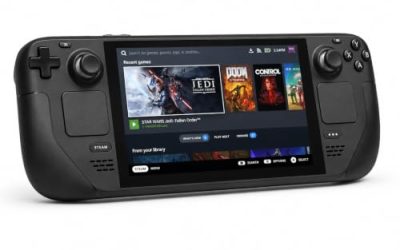
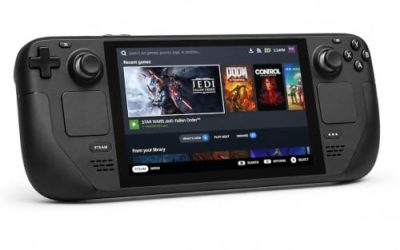
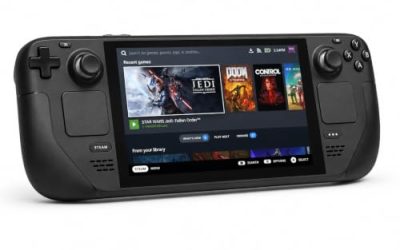
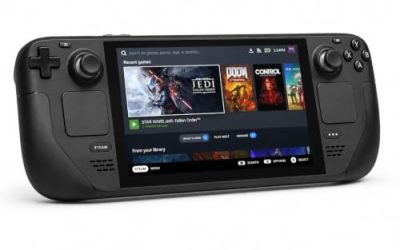
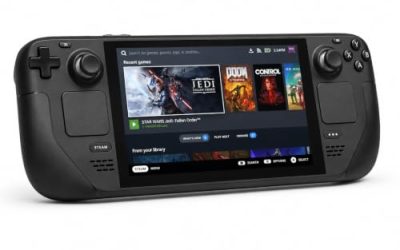
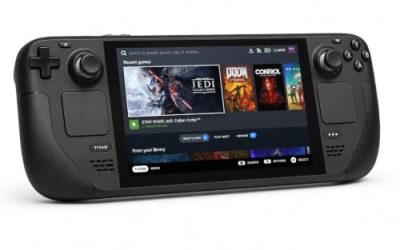
Valve Steam Deck OLED 512GB
- Display: 7.4-inch HDR OLED, 1280 by 800, up to 90 Hz
- Processor: AMD Zen 2 and RDNA 2 custom APU
- Memory: 16 GB LPDDR5
- Storage: 512 GB NVMe, plus a microSD slot
The handheld the Playable badge was written for. The game’s requirements sit far below the Deck’s APU, Valve’s sheet passes its performance check, and community reports describe native-resolution play at 60 frames per second.
8BitDo Ultimate 2 Bluetooth Controller
- Connectivity: Bluetooth wireless and USB-C wired
- Joysticks: TMR electromagnetic, anti-drift design
- Triggers: Hall effect, with mode switching
- Extras: two remappable back buttons, motion control
The docked and desktop pad pick. Steam lists full controller support, and this pad covers the couch case with modern sticks and triggers plus back buttons for menu shortcuts.
Xbox Wireless Controller, Carbon Black
- Connectivity: Xbox Wireless and Bluetooth
- Port: USB-C for wired play
- Controls: hybrid D-pad, dedicated Share button
- Power: AA batteries or optional rechargeable pack
The safest guest pad in PC gaming: Steam Input support is universal, the glyphs match what most games display, and it pairs over Bluetooth or its own wireless standard. On the handheld, the sheet’s note applies: an external pad may need a manual Quick Access Menu switch before it takes over.
Logitech G502 HERO
- HERO optical sensor, up to 25,600 DPI
- 11 programmable buttons
- Adjustable weight system
- Wired USB connection
The builder half of this game is menu and parts-list work, and at a desk a precise wired mouse turns long customisation sessions into single clicks. Eleven programmable buttons cover the confirm, cancel and camera inputs.
Samsung T9 Portable SSD 2TB
- Capacity: 2 TB portable SSD
- Interface: USB 3.2 Gen 2×2, USB-C connector
- Maker-rated speeds: up to 2,000 MB per second read, 1,950 MB per second write
- Features: Dynamic Thermal Guard, maker-rated drop resistance
For moving a Linux game library between machines, or keeping an offline backup of installers, a fast USB-C drive is the simple answer. The headline figure needs a Gen 2×2 host port; on a lesser port the drive runs at that ceiling.
How to choose
Choose the Steam copy, because it is the only PC edition on sale and the exact build both records describe. On a Linux desktop or laptop, install it under Proton and leave the compatibility tool at its default: a unanimous Platinum file says current builds need no tinkering beyond patience through the first shader compile. On Steam Deck, expect the Playable shape Valve describes — install, launch, play — with one caveat: the builder’s small text is the game’s known weak point on a handheld screen, and no setting enlarges it. For input, a pad is the native shape of this game on every platform. Add the mouse only if your hours go to the builder menus rather than the missions.
Who should skip
Skip this one if you are shopping for a native Linux Gundam game: this is not it, and the ProtonDB page’s native-support heading should not talk you into thinking otherwise. Skip it if small, unscalable interface text is a deal-breaker on a handheld — Valve’s sheet and the community file both flag exactly that. Skip it if you want a DRM-free offline installer, since no GOG edition exists. And skip it if you only buy Deck Verified titles on principle: this one is Playable, on launch-week paperwork.
FAQ
Is GUNDAM BREAKER 4 native on Linux?
No. Steam’s record for app 1672500 flags Windows only, the Linux requirements field is an empty list, and the depot census holds no Linux depot. All sixteen add-on apps flag Windows only too: the family count is 0 of 17.
How well does GUNDAM BREAKER 4 run under Proton?
ProtonDB’s summary reads Platinum on the settled, best-reported and trending tiers, across 17 reports with good confidence. Filings describe out-of-the-box runs, working online co-op and solid Deck performance; the recurring notes are a first-launch shader wait and builder slowdowns that also occur on Windows.
Is GUNDAM BREAKER 4 Steam Deck Verified?
No — Valve rates it Playable, one tier down. The default configuration is fully functional and performs well, but some in-game text is small and hard to read, and that single deduction costs the top badge. Valve tested a launch-week build in August 2024.
Does GUNDAM BREAKER 4 have anti-cheat that blocks Linux?
No layer names one. The store record carries no DRM or account notice, SteamDB’s technology list names no anti-cheat, and the Are We Anti-Cheat Yet database holds no entry for this app. ProtonDB filings describe online play working under Proton — the practical answer the records support.
Final verdict
GUNDAM BREAKER 4 is a Windows-only release whose records are unusually easy to trust: the flags, the empty requirements shells, the two-depot census and the sixteen-for-sixteen Windows-only add-on family all say the same thing, and the only document claiming native support is a generated ProtonDB heading its own data contradicts. What Linux players get instead is close to the best Proton outcome available — a unanimous Platinum community file, working online play in the filings, full controller support, and a Playable Deck badge whose only deduction is small text. Buy the Steam copy, play it under Proton, and read the builder menus on the biggest screen you have.
Product and ASIN Reference
| Product | ASIN |
|---|---|
| Valve Steam Deck OLED 512GB | B0CQ3RWQQZ |
| 8BitDo Ultimate 2 Bluetooth Controller | B0F194QFT2 |
| Xbox Wireless Controller, Carbon Black | B08DF248LD |
| Logitech G502 HERO | B07GBZ4Q68 |
| Samsung T9 Portable SSD 2TB | B0CHFS9K14 |