Cat Quest III, the seafaring action RPG from The Gentlebros and Kepler Interactive, reached Steam on August 8, 2024 with Windows and Mac flags on its store record and no Linux flag at all. That missing tick box is the whole question for Linux players, and the answer has two halves: no native build exists, yet the Windows build is among the best-documented Proton runs in its weight class.


The more interesting half is the platform that made the cut. The Mac flag here is not decorative paperwork: a full macOS depot ships inside the sold package, the Mac requirements are written at both tiers, and the delivery metadata names Apple Silicon outright. Reading Linux against a sibling that passes every delivery test makes the Linux verdict unusually clean.
As an Amazon Associate, we earn from qualifying purchases.
Quick answer
Cat Quest III has no native Linux build: Steam’s record flags Linux false, publishes no Linux requirements and ships no Linux depot. Linux players run the Windows build through Proton, which holds a Platinum tier, and the game is Steam Deck Verified. A native Mac build does ship in the same package.
What the store record actually sells
Start with the flags; everything else agrees with them. The base record for app 2305840 reads windows true, mac true, linux false. The Windows requirements are populated at both tiers: Windows 10, dual-core processor and 4 GB of memory minimum, quad-core and 8 GB recommended, DirectX 11 throughout. The Linux requirements field, by contrast, is an empty list: nothing for a native build to stand on.
The Mac requirements are the control case: macOS 15 or newer and an Apple M1 at minimum, an M1 Pro with 16 GB recommended. Publishers do not write two tiers of Apple Silicon requirements for a platform they never shipped. Beside the blank Linux field, the contrast tells on itself: one sibling got a real port with real paperwork, Linux got neither.
Two absences round out the record: no DRM notice and no account notice on the base app, while the controller field reads full support, which the gear section rests on. The co-op is local, shared and split screen, with Remote Play Together, so no online anti-cheat layer exists in the design.
Inside the download: two real builds, no third
The depot census settles what the flags suggest. The sold package holds exactly two content depots: depot 2305841, configured for Windows at 1.03 GiB, and depot 2305842, configured for macOS at 1.04 GiB. A macOS depot at full game size is a build, not a placeholder. The only other entries are the shared Windows VC 2022 redistributable and the artbook’s inner depot, covered below. There is no Linux depot of any size.
The delivery metadata backs the Mac depot up. The extended OS field reads macos64, macosapplesilicon and macosnotarized, the paperwork of a signed, notarized Apple Silicon build, with no Linux entry, and the icon registry holds the standard client icons and no Linux client icon. Linux appears in the delivery data only as a video dependency mapping routing a Windows codec component toward it: Proton plumbing, not a build.
One limit, stated plainly: the launch-entry list could not be surfaced this session, so no launch-entry claim is made either way. The ruling does not need it: every other layer points the same direction on both platforms.
The family around the game
The family is small, and its one add-on sharpens the picture. The add-on array holds a single entry, The World of Cat Quest Artbook, app 3126830, whose own record flags windows true, mac false and linux false; its content rides in a Windows-configured inner depot of about 265 MiB. The one piece of downloadable content ignores the Mac build the base game ships, an asymmetry Mac owners should note. A free demo, app 2921660, sits outside the array and flags Windows only as well. Counted on platform flags, the family’s Linux count is zero of three apps, and no soundtrack app exists to misread as support.
ProtonDB: Platinum reports, and a heading that overpromises
The full ProtonDB summary reads Platinum at every level: settled, best-reported and trending tiers all Platinum, across 15 reports with good confidence. Filings describe the Windows build running under Proton on desktop and Deck, mostly with nothing to report, and local co-op with generic pads filed as working. The exceptions are old and narrow: one early filing on aging hardware reported severe graphics artifacts under an older Proton build, one filing set a WineD3D launch option, and one Deck filing found the interface text small, noting the font size can be raised in the options.
The game page also carries the stray heading that follows this series: a banner announcing native support sits above the report list. Whatever generates it, most plausibly the populated Mac requirements, it does not describe Linux, and a Linux reader who takes it at face value would be misled. The tier underneath is real; the banner is not.
On anti-cheat the documentation is silent in a way that fits the game: SteamDB’s detected-technology list names the Unity engine and its libraries and no anti-cheat, and the Are We Anti-Cheat Yet catalogue, read in full at 1,167 entries, holds no entry for this app by store ID or name. For a local co-op game with no account requirement, that silence is the expected shape.
Steam Deck: Verified, on paperwork older than the game
Valve’s verdict is Verified, with SteamOS separately marked Compatible. All four checks pass: default controller configuration fully functional, Deck controller icons shown, interface text legible, default graphics configuration performant. The test configuration is gamepad-first, with no manual keyboard invocation or launcher navigation, and names proton-stable as the recommended runtime: the badge grades the Windows build under Proton, not a native port.
One disclosure and one caveat. Valve’s own compatibility endpoint returned an empty result set this session, so the sheet was read through SteamDB’s republication of Valve’s data. The caveat is the test date: the sheet was written on July 24, 2024, against build 15058021, a fortnight before launch, while the current public build is 20381748, shipped in October 2025. The badge is genuine, but the paperwork grades a pre-release build, so treat Verified as a launch-era judgement later reports have kept honest.
The other storefront: GOG sells it for Windows only
GOG does sell this game, but its edition answers the Linux question the same way. The catalogue carries Cat Quest III as product 1835386056, whose system compatibility reads windows true, osx false, linux false, and the artbook is sold there under its own record. So the GOG copy is a DRM-free Windows build only: no Linux build, and notably no Mac build either, which makes Steam the only place the genuine Mac port exists. Cat Quest I and II are separate catalogue records, outside this ruling.
Gear that fits the record
The record is gamepad-first with full controller support and a Deck Verified badge, so the gear below follows that shape.
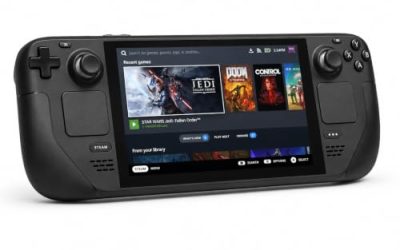
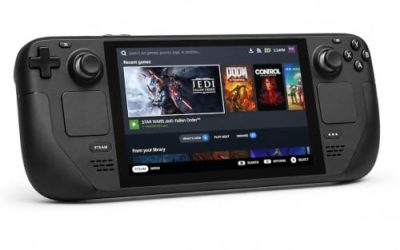
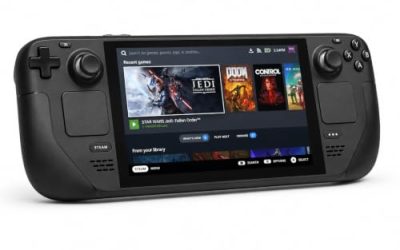
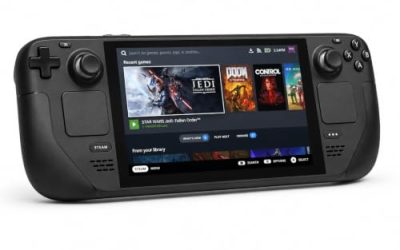
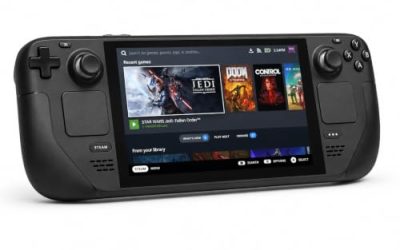
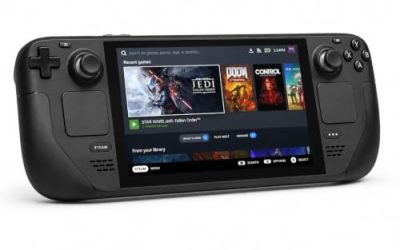
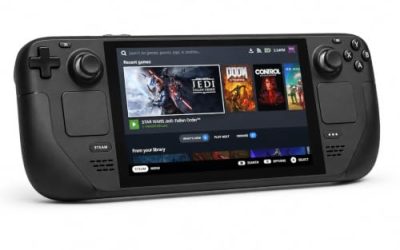
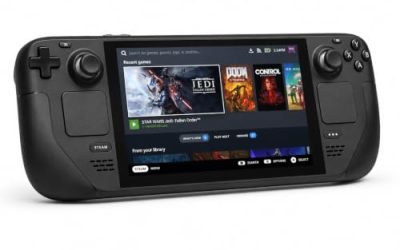
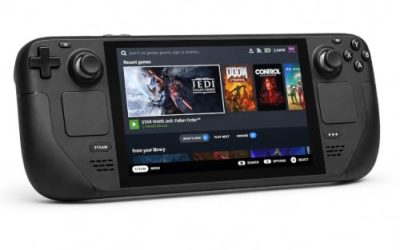
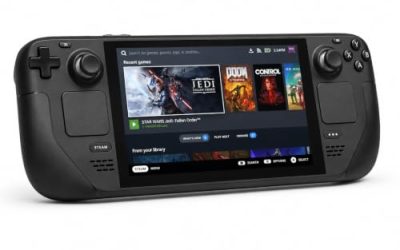
Valve Steam Deck OLED 512GB
The handheld the Verified badge was written for: the game’s requirements sit far below the Deck’s APU, and Valve’s sheet passes the build cleanly under proton-stable.
Specs
- Display: 7.4-inch HDR OLED, 1280 by 800, up to 90 Hz
- Processor: AMD Zen 2 and RDNA 2 custom APU
- Memory: 16 GB LPDDR5
- Storage: 512 GB NVMe, plus a microSD slot
- Wireless: Wi-Fi 6E and Bluetooth
- Channel note: Valve sells the Deck mainly through its own store, so Amazon listings are third-party sellers
8BitDo Ultimate 2 Bluetooth Controller
The couch co-op pick for the second seat, with modern sticks, triggers and back buttons.
Specs
- Connectivity: Bluetooth wireless and USB-C wired
- Joysticks: TMR electromagnetic, anti-drift design
- Triggers: Hall effect, with mode switching
- Extras: two remappable back buttons, motion control
- In the box: charging dock included
Xbox Wireless Controller, Carbon Black
The safest guest pad in PC gaming: Steam Input support is universal, and it pairs over Bluetooth or its own wireless standard.
- Connectivity: Xbox Wireless and Bluetooth
- Port: USB-C for wired play
- Controls: hybrid D-pad, dedicated Share button
- Power: AA batteries or optional rechargeable pack
Logitech G502 HERO
At a desk, a precise wired mouse turns menus, map and inventory screens into single clicks, and eleven programmable buttons cover the inputs a long session repeats.
Specs
- HERO optical sensor, up to 25,600 DPI
- 11 programmable buttons
- Adjustable weight system
- Wired USB connection
- On-board memory profiles
Samsung T9 Portable SSD 2TB
For moving a Linux game library between machines or keeping an offline backup, a fast USB-C drive is the simple answer. The headline figure needs a Gen 2×2 host port; on a lesser port the drive runs at that ceiling.
Specs
- Capacity: 2 TB portable SSD
- Interface: USB 3.2 Gen 2×2, USB-C connector
- Maker-rated speeds: up to 2,000 MB per second read, 1,950 MB per second write
- Features: Dynamic Thermal Guard, maker-rated drop resistance
How to choose
On Linux, buy the Steam copy and run the Windows build under Proton at its default setting; the Platinum file says that is the whole job. On Steam Deck, install and play: the Verified badge covers the default configuration, and the only filing-level adjustment is raising the interface font size if text feels small. On a Mac, Steam is again the right copy, the only edition carrying the native build. Choose GOG only if a DRM-free Windows copy matters more than the Mac build, and buy the artbook knowing it is a Windows-flagged extra on either storefront.
Who should skip
Skip this one if a native Linux build is a condition of purchase: none exists on any storefront, and nothing in the record suggests one is coming. Skip the GOG edition if you play on a Mac, since that copy drops the platform Steam genuinely supports. Deck purists should note what the badge means here: Verified grades the Windows build under Proton, on pre-release paperwork, not a Linux port. And if small handheld interface text is a hard problem, note the one recurring Deck complaint is exactly that, fixable in the options.
FAQ
Does Cat Quest III run natively on Linux?
No. Steam’s record flags Linux false, the Linux requirements field is empty, and the sold package contains Windows and macOS depots only. Linux sessions run the Windows build through Proton.
How well does it run under Proton?
Very well on the available evidence. The full ProtonDB summary settles at Platinum across 15 reports with good confidence, and the filings are mostly no-issue runs on desktop and Deck, with only old, narrow exceptions.
Is the Mac version real, or just a store flag?
Real. A macOS depot at full game size ships in the sold Steam package, the Mac requirements are populated at both tiers with Apple Silicon hardware, and the delivery metadata names macos64, Apple Silicon and notarization. Only the Steam edition carries it; GOG’s is Windows-only.
Does the Steam Deck Verified badge cover the current build?
Not directly. Valve tested build 15058021 in July 2024, before launch, while the current public build is 20381748 from October 2025. The badge is genuine and current reports describe the newer build running cleanly, but the sheet itself has not been refreshed.
Final verdict
Cat Quest III is a clean two-platform record: a Windows build that Proton runs at a Platinum standard, and a Mac build that proves genuine at every delivery layer. Linux is simply not the third platform: no flag, no requirements, no depot, no GOG edition, and the family around the game never ticks the box once. Linux players lose nothing in practice, because the Proton route is the rare case where the community file, the Deck badge and the filings all agree the game just works. Buy it on Steam, run it through Proton, and file the Mac port as the interesting footnote: the port exists, it is real, and it is not ours.
Product and ASIN Reference
| Product | ASIN |
|---|---|
| Valve Steam Deck OLED 512GB | B0CQ3RWQQZ |
| 8BitDo Ultimate 2 Bluetooth Controller | B0F194QFT2 |
| Xbox Wireless Controller, Carbon Black | B08DF248LD |
| Logitech G502 HERO | B07GBZ4Q68 |
| Samsung T9 Portable SSD 2TB | B0CHFS9K14 |