Heroes of Annihilated Empires is GSC Game World’s 2006 hybrid of real-time strategy and role-playing, built around enormous fantasy armies and a hero who levels through the campaign — the planned first chapter of a trilogy that never continued. For a Linux player the question is narrower: does any native build exist, and if not, how does the one Windows build behave under Proton?
The short version is that the record is one of the plainest in this catalogue. Steam’s flags, the purchase package, the requirements fields and the depot list all tell the same story, and Valve has never published a Steam Deck verdict for the game at all.
As an Amazon Associate, we earn from qualifying purchases.
Quick answer
Heroes of Annihilated Empires is not native on Linux: Steam’s record flags Windows alone, the single purchase package repeats that mask, and every depot is Windows content. The working route is Proton — ProtonDB rates the build Gold with a Platinum best-reported tier across 11 reports. Valve has published no Steam Deck verdict for this game.
The Steam record, layer by layer
Start with the app record itself. The platform flags read windows true, mac false, linux false. The Windows requirements field is genuinely populated with a period specification, while the Mac and Linux fields are empty lists outright. There is no drm notice and no external account notice. The categories are Single-player, Multi-player and Family Sharing, and the record carries a NoServers flag: the multiplayer listing survives, but the original server infrastructure does not.
The purchase layer is decisive, and it agrees completely. Steam sells exactly one package, package 212, whose packagedetails record repeats the same mask — windows true, mac false, linux false — while granting the base app alone. No bundled expansion or separate Linux licence hides inside the purchase. A purchase today delivers the Windows build and nothing else.
The depot layer settles what the flags claim. SteamDB lists two main content depots (4801 at 809.16 MiB and 4802 at 1.09 GiB), a small update depot, and language depots for French, German, Russian and Spanish — none with a Mac or Linux configuration. Filtered to Windows and English, the total is 1.88 GiB: the whole game, in Windows content alone. There is no Linux depot, emptied or stranded. The icon set registers clienticon, clienttga, icon, logo and logo_small — and no LinuxClientIcon.
Two period artefacts complete the picture. The record shows a CD key on launch, with a legacy key registration method tied to the local disk — 2006 licensing paperwork, not anti-cheat and not an account requirement. And it lists no controller support at all: the field is absent, and the package reads full gamepad false. This is a mouse-and-keyboard game on paper.
The family around the game
The base record exposes no DLC field at all, so the family is recovered from SteamDB’s associations. It is as small as a family can be: the only associated app is the demo, app 4810, typed as a demo with its fullgame pointer naming the base game, released days before the full release in November 2006. The demo repeats the same mask: Windows only.
That is the entire sweep. No expansion, soundtrack or artbook app is attached to this game, on or off any array — the sequels that would have filled those slots were never made. With no extras app, the familiar trap in which an all-platforms soundtrack makes a Windows-only family look supported cannot form here.
Anti-cheat can be dealt with briefly, because all three sources are silent and silence is all that can honestly be reported. Steam names no anti-cheat on the record. SteamDB’s detection finds only the Bink Video SDK. The AreWeAntiCheatYet database, checked in full across its 1,167 listed games, carries no entry for this app. Nothing here blocks Proton; equally, nothing here is a ruling.
The Proton file
With no native build in existence, the practical route is Proton, and the community file is encouraging without being deep. ProtonDB’s summary for app 4800 reads in full: headline tier Gold, best-reported tier Platinum, trending tier Platinum, across 11 reports, with moderate confidence. That describes a build that generally runs well through the compatibility layer. Eleven reports is a modest sample — enough to establish the shape of the experience, thin enough that an unusual hardware combination may still meet an unfiled edge case.
One check could not be completed this session and is disclosed rather than glossed over: the ProtonDB game page itself could not be read, so whether its requirements block carries the “Natively Supports:” heading found on so many Windows-only games’ pages is unverified here. No heading claim is made either way. The figures above come from the summary record, read in full.
Steam Deck: an empty sheet
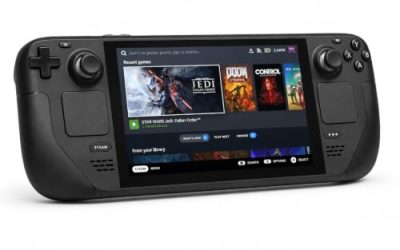
Valve’s own compatibility record for this app is empty. The store page’s embedded hardware-compatibility data for app 4800 reads resolved category 0 with no resolved items, for both the Steam Deck and SteamOS categories — category 0 is Valve’s untested state, not a failing grade. Valve’s compatibility endpoint returned empty and garbled responses on repeated reads, so the category was confirmed from the store page’s own record instead. No test date and no tested build exist, because no test has been published.
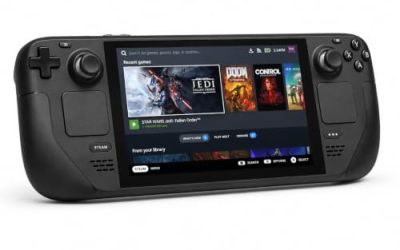
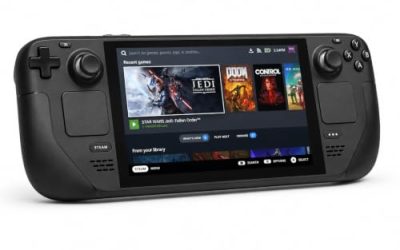
The public branch gives that emptiness a context: the public build is build 2680, built in May 2012 and untouched since — the same build that has been on sale for over a decade, so the missing verdict is a gap in Valve’s paperwork rather than a moving target. Community Proton filings describe the Windows build running on desktop hardware; they are not a Deck verdict, and this article claims none. Handheld buyers should treat the game as untested, full stop — and with no badge to lean on, the gear section below is framed for the desktop.
The second storefront
GOG sells this game, and the ruling rests on GOG’s own product record rather than on any search result — GOG’s search endpoints have a known blind spot and returned an empty set for this title even though the product exists. Three routes were used. The natural product address resolves to a live product page. The catalogue API returns the game under its exact title and slug, listing Windows as its only operating system. And the product API record, identity-checked by exact title and slug, reads content system compatibility windows true, osx false, linux false.
So a GOG edition exists, and it is the same Windows build in DRM-free form — a genuine alternative storefront, but not an alternative platform. No storefront sells a Linux build of this game, because none was ever released.
Gear for a desktop run
Since the record lists no controller support and Valve has published no Deck verdict, the honest setup here is a desk: a remappable keyboard, a precise mouse for directing very large armies, pads for the wider library, and fast portable storage.
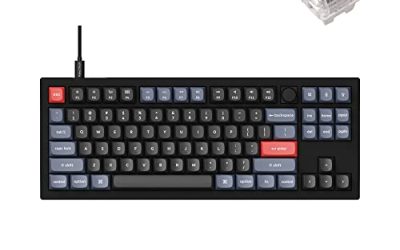
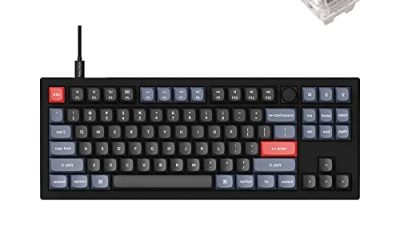
Keychron V3
The keyboard pick for desktop sessions: a tenkeyless board with QMK and VIA support lets you remap keys at the keyboard level, across every Linux install you plug it into.
Specs
- Tenkeyless layout with rotary knob
- QMK and VIA remapping support
- Hot-swappable K Pro Brown switches
- Wired USB-C connection
- Maker-rated 1,000 Hz polling
Logitech G502 HERO

This is a mouse-driven game: selecting formations, issuing move orders and working through hero abilities are all pointer work, and a wired mouse with spare buttons suits long campaign sessions.
Specs
- HERO optical sensor, up to 25,600 DPI
- 11 programmable buttons
- Adjustable weight system
- Wired USB connection
- On-board memory profiles
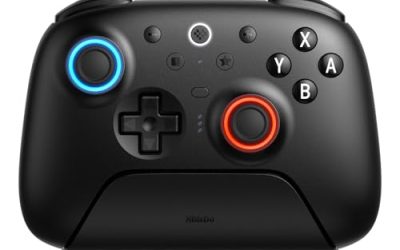
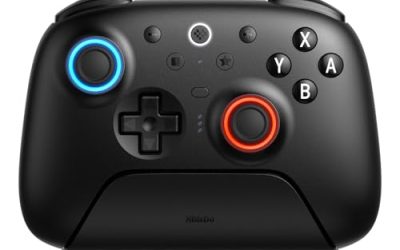
8BitDo Ultimate 2 Bluetooth Controller
Not for this game — its record lists no controller support — but for the rest of a Linux library, this is the docked pad pick.
Specs
- Connectivity: Bluetooth wireless and USB-C wired
- Joysticks: TMR electromagnetic, anti-drift design
- Triggers: Hall effect, with mode switching
- Extras: two remappable back buttons, motion control
- In the box: charging dock included
Xbox Wireless Controller, Carbon Black
The safest guest pad in PC gaming: Steam Input support is universal, and it pairs over Bluetooth or its own wireless standard. For this title it would work only through Steam Input translation, since the record promises no native pad support.
- Connectivity: Xbox Wireless and Bluetooth
- Port: USB-C for wired play
- Controls: hybrid D-pad, dedicated Share button
- Power: AA batteries or optional rechargeable pack
Samsung T9 Portable SSD 2TB
For moving a Linux game library between machines, or keeping an offline backup of installers, a fast USB-C drive is the simple answer. The headline figure needs a Gen 2×2 host port; on a lesser port the drive runs at that ceiling.
Specs
- Capacity: 2 TB portable SSD
- Interface: USB 3.2 Gen 2×2, USB-C connector
- Maker-rated speeds: up to 2,000 MB per second read, 1,950 MB per second write
- Features: Dynamic Thermal Guard, maker-rated drop resistance
How to choose
Choose the Steam copy for the simplest Linux route: it is the edition the ProtonDB file describes, and its Gold headline with a Platinum best-reported tier is the strongest compatibility evidence available for this game anywhere. Choose the GOG copy if you value a DRM-free offline installer and are content to run the identical Windows build through your own compatibility setup — just do not buy it expecting a Linux version, because its product record is explicit that none exists.
On hardware, spend first on the input you will actually use: this is a mouse-and-keyboard record, so a remappable keyboard and a multi-button mouse earn their place before any pad. Treat any pad purchase as a library purchase. And set the multiplayer expectation aside: the NoServers flag means campaign and skirmish play are the living product.
Who should skip
Skip this game if you only buy native Linux builds — there is none here, at any layer of the record, and no storefront sells one. Skip it if you need a Steam Deck verdict before buying: Valve’s sheet is empty, category 0, and desktop Proton success does not convert into a handheld guarantee. Skip it if you were hoping for the multiplayer scene the store categories gesture at; the NoServers flag closes that door. Finally, skip it if an 11-report community file feels too thin to trust — the evidence is consistent, but it is a small sample, and players who want a heavily filed Proton record will find more certainty elsewhere in the GSC catalogue.
FAQ
Is Heroes of Annihilated Empires native on Linux?
No. Steam’s flags read Windows only, the purchase package repeats that mask, the Linux requirements field is an empty list, and every content depot is Windows content. No Linux build exists anywhere.
How well does it run under Proton?
ProtonDB’s summary rates the Windows build Gold on its headline tier and Platinum on its best-reported and trending tiers, across 11 reports with moderate confidence — a build that generally runs well through Proton, on a modest but consistent sample.
Is it verified on Steam Deck?
No verdict exists. Valve’s compatibility record for this app reads category 0 — untested — with no test sheet, no tested build and no date. Community desktop filings are not a Deck verdict.
Does the GOG version run natively on Linux?
No. GOG’s product record lists Windows as its only system. The GOG edition is the same Windows build in DRM-free form — an alternative storefront, not an alternative platform.
Final verdict
Heroes of Annihilated Empires is not native on Linux, and its record is unusually easy to read: flags, package, requirements fields, depots and icons all say Windows only, the one associated app — the demo — agrees, and GOG’s identity-checked product record confirms no other storefront sells anything different. What the game does offer is a respectable Proton file: Gold headline, Platinum best-reported, 11 reports at moderate confidence. Buy it on Steam for the desktop, run it through Proton, and leave the Steam Deck out of the decision — Valve has published no verdict for this game, and the empty sheet is the fact a handheld buyer has to work with.
Product and ASIN Reference
| Product | ASIN |
|---|---|
| Keychron V3 | B0B2DMMMG2 |
| Logitech G502 HERO | B07GBZ4Q68 |
| 8BitDo Ultimate 2 Bluetooth Controller | B0F194QFT2 |
| Xbox Wireless Controller, Carbon Black | B08DF248LD |
| Samsung T9 Portable SSD 2TB | B0CHFS9K14 |