The Guild II, 4HEAD Studios’ medieval dynasty simulator, first reached players in October 2006 and arrived on Steam in June 2010 under THQ Nordic. It is the kind of catalogue title Linux players keep asking about, because the series never left the era when a Windows build was the only build a publisher bothered to ship. The store record answers the question without ambiguity, and it answers it the same way at every layer a buyer can check.
That consistency is what this article walks through. The flags, the three purchase packages, the depot table and the wider Guild family all repeat one mask, and the second storefront sells the same Windows build. What remains open is narrower: how the build behaves under Proton, and what a Steam Deck owner should make of a game Valve has never published a verdict for.
As an Amazon Associate, we earn from qualifying purchases.
Quick answer
No. The Guild II is not native on Linux: Steam’s flags, all three purchase packages and the depot table are Windows only, and the Linux requirements field is an empty list. The working route is Proton — ProtonDB rates the Windows build Gold across 12 reports — and Valve has published no Steam Deck verdict for the game.
The record, layer by layer
Start with the flags. Steam’s appdetails record for app 39650 lists windows true, mac false and linux false. The requirements fields match that split exactly: the Windows field is genuinely populated with a period specification (Windows XP or Vista, a 2 GHz processor, 512 MB of memory, a DirectX 9 card with Pixel Shader 1.1), while the Mac and Linux fields are empty lists outright. There is no Linux tab in partial form and no placeholder text waiting to be filled in.
The purchase packages are the decisive layer, and all three repeat the mask. The standalone package grants the base app alone and reads windows true, mac false, linux false on packagedetails. The bundle pairing the game with its Pirates of the European Seas expansion reads the same. So does The Guild Collection, the four-game package that adds the original Guild Gold Edition and The Guild II Renaissance. Whichever way the game is bought on Steam, the licence delivers one platform.
The depots settle what the packages promise. SteamDB lists a single content depot of 2.15 GiB plus four language depots, none carrying an operating-system split, and the Windows-filtered download total is the whole 2.15 GiB. There is no Linux depot, nothing emptied or stranded, and the registered icon set includes no Linux client icon. The public branch has stood on build 21208 since October 2012.
Two absences round out the picture. The record carries no DRM notice and no third-party account notice, and it declares no controller support at all, which matters for how the gear below is framed. SteamDB also flags the app as having no servers: the store categories list single-player alone, so the multiplayer side of this life simulator is a historical feature.
The family agrees
The base record exposes no DLC field at all, so the family was recovered from the package layer and SteamDB’s associations, and every member was read individually. Pirates of the European Seas (app 39660) is typed as its own game app rather than as DLC, from 4HEAD Studios, released the same day as the base game’s Steam launch; its flags read Windows only. The Guild II Renaissance (app 39680), the later standalone entry from Runeforge Game Studio, also reads Windows only. The Guild Gold Edition (app 39520), the first game, appears here only as a member of the Collection package, and it too is Windows only.
That gives a clean sweep: no member dissents, and no soundtrack or artbook app exists on or off the record to produce the misleading all-platforms flags that have trapped other families covered here.
What ProtonDB says
ProtonDB’s summary file for this app was read in full. The headline tier is Gold, the best-reported tier is Platinum and the trending tier is Platinum, across 12 reports with moderate confidence. That is a small but consistent file: the reports describe a 2006 Windows build that current Proton handles well, the normal shape for a DirectX 9 title of this weight.
One check could not be completed this session. ProtonDB’s game page renders through JavaScript on every fetch route available here, so whether its requirements block carries the “Natively Supports:” heading seen on so many Windows-only games could not be verified, and no claim is made about the heading either way. The figures above come from ProtonDB’s data feed, which read cleanly.
Anti-cheat, for completeness, is a three-source silence. Steam names none on the record, SteamDB’s detection finds only the FMOD and Lua software kits, and the AreWeAntiCheatYet catalogue, checked in full across its 1,167 entries, carries no entry for this app. Nothing here is presented as a ruling; there is no anti-cheat layer in the record to rule on.
The Steam Deck question
There is no verdict to report. Valve’s compatibility endpoint returned garbled responses and a redirect to the store front page on repeated reads, SteamDB’s record carries no Deck section, and the live store page shows no Deck badge or test notes. Three routes converge: this app sits in the untested category, and this article claims no Deck rating for it in either direction.
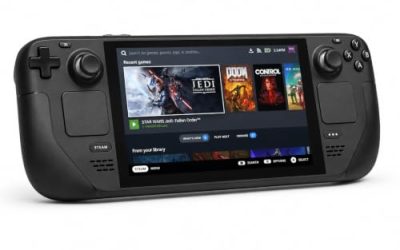
That absence deserves a plain reading. An untested 2006 title with a Gold Proton file is a reasonable experiment for a Deck owner, but nothing official stands behind it, and the record’s shape argues for a desk: no declared controller support, and a mouse-driven management interface designed for a monitor. Treat the Deck as an unproven extra, not a reason to buy.
The other storefront
GOG sells the game as The Guild 2, and the ruling here rests on GOG’s own product record, not on search results. The catalogue API returns the product under its exact title, the live product page resolves at its catalogue address, and the product API record for that entry (product 1207660743) reads windows true, osx false and linux false for its system compatibility. Identity was checked against the Steam record before ruling: same game, same series, a Windows build.
Two search-shaped traps sit around that ruling. GOG’s embed search returned no products for the title at all, and the roman-numeral address a buyer might guess redirects to the general catalogue; either route alone would have suggested no edition exists, and either would have been wrong. The edition exists — it is simply the same Windows build in DRM-free form, so GOG is an alternative storefront, not an alternative platform.
Gear for a desktop-only game
The record frames the gear: no native build, no Deck verdict, no declared controller support. A keyboard and mouse are the game’s native input shape; the two pads below are Steam Input and wider-library picks, not inputs this game claims.
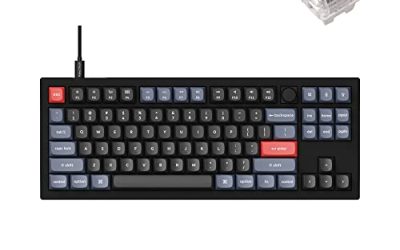
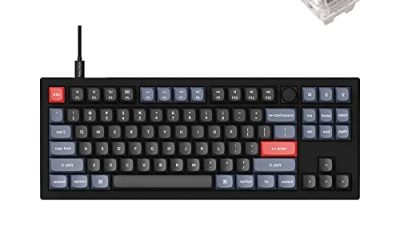
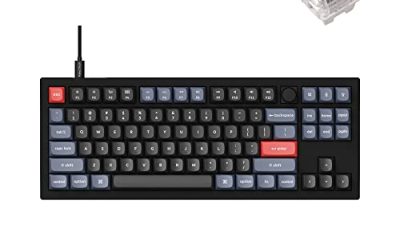
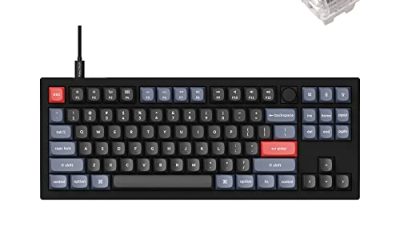
Keychron V3
The keyboard pick for desktop sessions: a tenkeyless board with QMK and VIA support lets you remap keys at the keyboard level, which keeps working across every Linux install.
Specs
- Tenkeyless layout with rotary knob
- QMK and VIA remapping support
- Hot-swappable K Pro Brown switches
- Wired USB-C connection
- Maker-rated 1,000 Hz polling
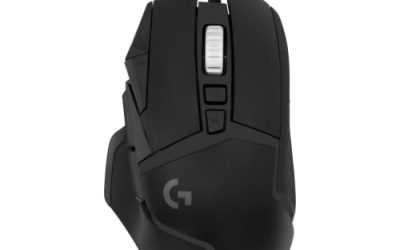
Logitech G502 HERO
The Guild II is played through panels, ledgers and context menus, and a precise wired mouse is the input the game was designed around. Eleven programmable buttons cover the confirm, cancel and camera inputs a long session repeats.
Specs
- HERO optical sensor, up to 25,600 DPI
- 11 programmable buttons
- Adjustable weight system
- Wired USB connection
- On-board memory profiles
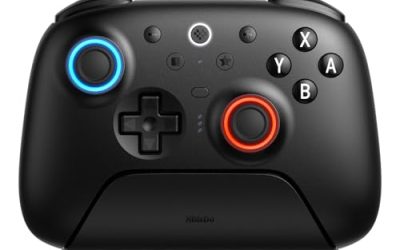
8BitDo Ultimate 2 Bluetooth Controller

The desktop pad pick for the wider library rather than for this title: the record declares no controller support, so on The Guild II itself any pad use runs through Steam Input mapping, while the pad earns its place on desktop games that do claim support.
Specs
- Connectivity: Bluetooth wireless and USB-C wired
- Joysticks: TMR electromagnetic, anti-drift design
- Triggers: Hall effect, with mode switching
- Extras: two remappable back buttons, motion control
- In the box: charging dock included
Xbox Wireless Controller, Carbon Black
The safest guest pad in PC gaming: Steam Input support is universal, the glyphs match what most games display, and it pairs over Bluetooth or its own wireless standard. For this game it is a Steam Input device only; its value lies in the rest of a desktop library.
- Connectivity: Xbox Wireless and Bluetooth
- Port: USB-C for wired play
- Controls: hybrid D-pad, dedicated Share button
- Power: AA batteries or optional rechargeable pack
Samsung T9 Portable SSD 2TB
For moving a Linux game library between machines, or keeping an offline backup of installers, a fast USB-C drive is the simple answer. The headline figure needs a Gen 2×2 host port; on a lesser port the drive runs at that ceiling.
Specs
- Capacity: 2 TB portable SSD
- Interface: USB 3.2 Gen 2×2, USB-C connector
- Maker-rated speeds: up to 2,000 MB per second read, 1,950 MB per second write
- Features: Dynamic Thermal Guard, maker-rated drop resistance
How to choose
Choose on content, not platform, because every route sells the same build. The standalone Steam package is the clean buy for the base game alone; the pairing with Pirates of the European Seas suits a buyer who knows they want the expansion content; The Guild Collection is the completionist route that adds the first game and Renaissance. The GOG edition is the pick for a buyer who values a DRM-free installer, with the same Proton step waiting on Linux either way. Install under Proton and start with the default compatibility tool: the Gold headline with Platinum best-reported and trending tiers says the current file expects the game to run.
Who should skip
Skip this one if you are shopping for a native Linux strategy game: there is no Linux build on any storefront, and neither expansion changes that. Skip it if an official Steam Deck verdict is a condition of purchase, because none exists. Skip it for the multiplayer: the record flags the app as having no servers and lists single-player alone, so the dynasty-versus-dynasty side of the original release is not on offer. And skip the pad-first setup: with no declared controller support, this is a keyboard-and-mouse game.
FAQ
Is The Guild II native on Linux?
No. Steam’s flags list Windows only, all three purchase packages repeat that mask, the Linux requirements field is an empty list, and no Linux depot exists. The GOG edition is Windows only too.
How well does The Guild II run under Proton?
ProtonDB’s full summary rates the Windows build Gold on its headline tier, with Platinum as both the best-reported and trending tiers, across 12 reports at moderate confidence. No anti-cheat or account layer stands in the way.
Can I play The Guild II on Steam Deck?
Valve has published no verdict for this app: its compatibility endpoint, SteamDB’s record and the store page all show no Deck category, so the game is officially untested. The Gold Proton file is encouraging background, but it is not a Deck rating.
Is Renaissance a separate purchase from The Guild II?
Yes. Renaissance is its own game app with its own record, as is Pirates of the European Seas; the base record carries no DLC array at all. The Guild Collection package bundles them together, and every member reads Windows only.
Final verdict
The Guild II on Linux is a Proton story with unusually tidy paperwork. The native question is closed at every layer — flags, three packages, depots and a unanimous family — and the GOG shelf holds the same Windows build rather than an escape route. The record leaves open only the handheld question, where Valve has never published a verdict. For a desktop player who wants a 2006 dynasty simulator with a Gold community file behind it, the Steam copy is the buy, with the Collection as the route to the whole series in one licence.
Product and ASIN Reference
| Product | ASIN |
|---|---|
| Keychron V3 | B0B2DMMMG2 |
| Logitech G502 HERO | B07GBZ4Q68 |
| 8BitDo Ultimate 2 Bluetooth Controller | B0F194QFT2 |
| Xbox Wireless Controller, Carbon Black | B08DF248LD |
| Samsung T9 Portable SSD 2TB | B0CHFS9K14 |