Our Short List of 3

- Display: 7.4-inch HDR OLED, 1280 by 800, up to 90 Hz
- Processor: AMD Zen 2 and RDNA 2 custom APU
- Memory: 16 GB LPDDR5
- Storage: 512 GB NVMe, plus a microSD slot

- Connectivity: Bluetooth wireless and USB-C wired
- Joysticks: TMR electromagnetic, anti-drift design
- Triggers: Hall effect, with mode switching
- Extras: two remappable back buttons, motion control

- Connectivity: Xbox Wireless and Bluetooth
- Port: USB-C for wired play
- Controls: hybrid D-pad, dedicated Share button
- Power: AA batteries or optional rechargeable pack
All 5 Picks at a Glance
| Product | Specs | Action |
|---|---|---|
| Valve Steam Deck OLED 512GB |
| Check price on Amazon |
| 8BitDo Ultimate 2 Bluetooth Controller |
| Check price on Amazon |
| Xbox Wireless Controller, Carbon Black |
| Check price on Amazon |
 Logitech G502 HERO |
| Check price on Amazon |
 Samsung T9 Portable SSD 2TB |
| Check price on Amazon |
The Bazaar is Tempo’s free-to-play strategy title, released on Steam on 13 August 2025. Its Steam record sells two desktop platforms, Windows and macOS. The Linux question is answered here from the record itself — flags, depots, requirements, icon registry, Deck sheet and ProtonDB file — not from any single badge.
The short answer is that there is no native Linux build, and the paperwork suggesting one does not survive inspection. Linux players get the Windows build through Proton, where the evidence is unusually strong: Valve rates the game Steam Deck Verified and ProtonDB settles it at Platinum. The route is Proton, but a well-documented Proton, not a leap of faith.
As an Amazon Associate, we earn from qualifying purchases.
Quick answer
The Bazaar has no native Linux build: Steam’s record flags Windows and macOS only, ships no Linux depot, and leaves its Linux requirements blank. Linux players run the Windows build through Proton, where the evidence is strong: Valve rates the game Steam Deck Verified and ProtonDB settles it at Platinum across 23 reports: the Proton route is the documented answer, not a workaround.
What the Steam record actually says
The store record for app 1617400 names the game, lists Tempo as developer and publisher, and confirms the free-to-play status: the free flag is set, the release date reads 13 August 2025 with no coming-soon marker, and the absence of a price block and package groups is the normal shape of a free app, not a delisting. The platform flags read windows true, mac true, linux false, and the delivery operating-system list names windows and macos at 64-bit, with no Linux entry.
The requirements fields split along the same line. The Windows fields are genuinely populated at both tiers (Windows 10 64-bit, a 2.4 GHz dual-core processor, 3 GB of memory, DirectX 11 graphics), and so are the macOS fields. The Linux field is an empty shell: a minimum heading over a blank list and a recommended heading over nothing. A heading is not a specification, and it is the only Linux text the store page carries.
Two notice fields matter. The record carries no DRM notice. It does carry an account notice, verbatim: “Tempo Games (Supports Linking to Steam Account)” — the game’s one account layer, a linking option to the publisher’s account system. The record carries no controller-support field either, so every input statement here rests on Valve’s Deck test sheet below.
The depot census, and the one genuine second build
SteamDB’s depot table for the sold package lists three content depots. Depot 1617402 is the Windows build at 5.83 GiB. Depots 1617401 and 1617403 are macOS builds at 5.93 GiB each, one tagged as the 64-bit macOS configuration. There is no Linux depot of any size, tagged or untagged. The extended operating-system data reads macos64 and macosapplesilicon, the macOS requirements carry real floors (Big Sur 11 or newer, 4 GB at minimum), and the registry holds a macOS icon bundle. On flags, depots, requirements and delivery data together, the Mac build is genuine.
The Linux side of the same registry holds one artefact: a registered Linux client icon, an image hash in the icon list despite no Linux depot, no Linux launch configuration and an empty requirements shell. An icon is store paperwork, not a program; it cannot be installed or launched. It is named here because a quick registry scan reads exactly this kind of leftover as a Linux version. The table’s remaining depots are inner content depots of a few dozen bytes each: entitlement markers that change no ruling above.
The DLC check
The base record’s downloadable-content array holds exactly one entry, app 5530900, named Upgrade The Bazaar. Read on its own record, it is a type-dlc content upgrade, released 12 November 2026, flagging windows and mac true and linux false — platform for platform, it matches its base game. The family Linux-flag count is therefore 0 of 2: neither the game nor its one upgrade claims Linux anywhere. No soundtrack app exists in this family, so the familiar trap, where a music app’s all-platform flag lends itself to a whole-family scan, cannot fire here.
Steam Deck: Verified, on a superseded build
Valve rates The Bazaar Verified on Steam Deck, its top category, and SteamOS separately as Compatible. Evidence note: Valve’s own endpoint returned an HTML page instead of its data sheet this session, so the verdict and paperwork were read through SteamDB’s republication of Valve’s sheet.
All four Verified checks pass: full functionality on the default controller configuration, Deck controller icons shown, legible interface text, and a default graphics configuration that performs well. One note rather than a deduction: singleplayer requires an active internet connection. The paperwork dates the test to 31 January 2026, against build 21688628, with proton-10.0-beta as the recommended runtime — Valve graded the Windows build under Proton. The current public branch stands at build 26592248 (11 November 2026), so the badge grades a superseded build. The verdict is real; its paperwork is ten months old.
ProtonDB: Platinum, and one heading that lies
The ProtonDB summary was read in full: settled, best-reported and trending tiers are all Platinum, across 23 reports, with confidence rated good. The filing colour is broadly consistent: most reports describe the game running on current Proton builds, a visible share of filers use custom Proton variants, connection drops appear occasionally online, and one older pointer-drag report was later resolved by its own author.
One element of the game page does contradict the record. The page carries a “Natively Supports” heading above the requirements summary. Steam’s record contradicts it on every layer: Linux flag false, no Linux depot, blank Linux requirements. The heading is generated from the store paperwork, including the empty-shell requirements field and the stray registered icon, and it is wrong. This article follows Steam’s record: The Bazaar is a Proton title on Linux, full stop.
Anti-cheat and the account layer
For an online free-to-play game, anti-cheat is usually the deciding question, so the layers are reported separately. The store record names no anti-cheat. SteamDB’s detected-technology list names engine and middleware (Unity, FMOD, Mono, Steamworks) and no anti-cheat. The AreWeAntiCheatYet database was read in full, all 1,167 entries, and holds no entry for this game by store ID or by name: documentation silence on that layer too. No layer names an anti-cheat, and the practical evidence agrees: the ProtonDB file and Valve’s sheet both describe the online game working through Proton, including a Deck filing describing the first-launch account sign-in completed on the handheld. The linking notice quoted earlier remains the one account fact; no layer describes it as a barrier to the Proton route.
The storefront ruling
There is no second PC edition to weigh: GOG’s catalogue returns only unrelated products, its product search returns nothing, and the natural GOG address redirects to the general catalogue. No GOG edition exists; the free Steam copy is the only PC edition.
Gear that fits the record
The gear below follows the record’s shape: the handheld, two pads, a mouse for pointer-driven desktop sessions, and library storage.
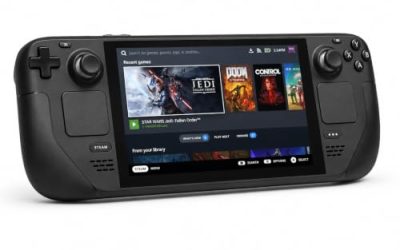
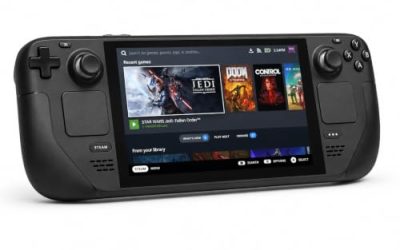
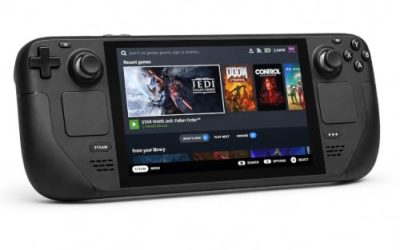
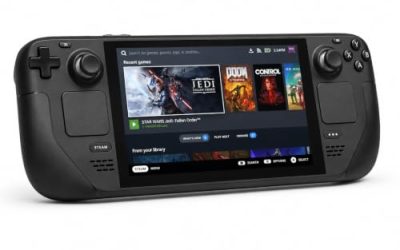
Valve Steam Deck OLED 512GB
- Display: 7.4-inch HDR OLED, 1280 by 800, up to 90 Hz
- Processor: AMD Zen 2 and RDNA 2 custom APU
- Memory: 16 GB LPDDR5
- Storage: 512 GB NVMe, plus a microSD slot
The handheld the Verified badge was written for: Valve’s sheet passes the Windows build under Proton, and the game’s requirements sit far below its hardware.
8BitDo Ultimate 2 Bluetooth Controller
- Connectivity: Bluetooth wireless and USB-C wired
- Joysticks: TMR electromagnetic, anti-drift design
- Triggers: Hall effect, with mode switching
- Extras: two remappable back buttons, motion control
The docked pad pick. The record assigns the game no controller category, but Valve’s sheet confirms the default controller configuration is fully functional.
Xbox Wireless Controller, Carbon Black
- Connectivity: Xbox Wireless and Bluetooth
- Port: USB-C for wired play
- Controls: hybrid D-pad, dedicated Share button
- Power: AA batteries or optional rechargeable pack
The safest guest pad in PC gaming: Steam Input is universal, the glyphs match what games display, and a standard pad is the shape Valve graded.
Logitech G502 HERO
- HERO optical sensor, up to 25,600 DPI
- 11 programmable buttons
- Adjustable weight system
- Wired USB connection
The interface is pointer-driven, so at a desk a precise wired mouse is the natural tool for long sessions.
Samsung T9 Portable SSD 2TB
- Capacity: 2 TB portable SSD
- Interface: USB 3.2 Gen 2×2, USB-C connector
- Maker-rated speeds: up to 2,000 MB per second read, 1,950 MB per second write
- Features: Dynamic Thermal Guard, maker-rated drop resistance
For moving a Linux game library between machines, or an offline backup of installers, a fast USB-C drive is the simple answer.
How to choose
Choose the Steam copy: it is the only PC edition, the exact build both records describe, and free to install. On a Linux desktop or laptop, install it and leave the compatibility tool at its default first: the Platinum file across 23 reports says current Proton builds handle the game, and most tinkering filers chose custom Proton variants rather than needing them. On Steam Deck, the Verified badge means no configuration work is expected; two paperwork notes apply: the badge graded an older build than the current one, and singleplayer requires an active internet connection. For input, follow the graded shape: a pad for docked and handheld play, a mouse at a desk.
Who should skip
Skip this one if a native Linux build is a condition rather than a preference: none exists or is promised anywhere in the record, and the stray icon and heading suggesting otherwise are paperwork, not a port. Skip it if your play happens offline, because Valve’s own sheet states that singleplayer requires an active internet connection. Skip it if a publisher account layer is itself a deal-breaker: the notice describes linking a Tempo Games account to Steam, and the first-launch sign-in appears in the Deck filings. Mac players can skip the whole question: their build is genuine.
FAQ
Is there a native Linux version of The Bazaar?
No. The record flags Linux false, the sold package contains no Linux depot, and the Linux requirements field is an empty heading. The registered Linux client icon is a leftover image registration, not a build, and ProtonDB’s “Natively Supports” heading is generated from that paperwork and is wrong.
How well does The Bazaar run on Linux through Proton?
ProtonDB settles it at Platinum (best-reported and trending tiers are Platinum too) across 23 reports with good confidence. Valve rates it Steam Deck Verified and SteamOS Compatible, though the badge was tested on an older build than the current branch.
Is the Mac version of The Bazaar a real build?
Yes. Two macOS depots of real size sit in the sold package, the macOS requirements are populated at both tiers, and the delivery data and icon registry agree. It is the genuine second build.
Do I need a Tempo Games account to play on Linux?
The record’s notice reads “Tempo Games (Supports Linking to Steam Account)”, an optional link to the publisher’s account system. A Deck filing describes completing the first-launch sign-in on the handheld, and no layer describes the account as blocking the Proton route.
Final verdict
The Bazaar on Linux is a clean Proton story wrapped in misleading paperwork. The record is unambiguous: Tempo ships Windows and a genuine macOS build; Linux is an unchecked flag, an empty shell and one stray icon. Against that stands a full Platinum file on ProtonDB and a Steam Deck Verified badge, with two honest caveats: the badge grades a superseded build, and even singleplayer needs an internet connection. Linux players can install the free Steam copy and play through Proton with confidence; they just should not believe the heading that calls it native.
Product and ASIN Reference
| Product | ASIN |
|---|---|
| Valve Steam Deck OLED 512GB | B0CQ3RWQQZ |
| 8BitDo Ultimate 2 Bluetooth Controller | B0F194QFT2 |
| Xbox Wireless Controller, Carbon Black | B08DF248LD |
| Logitech G502 HERO | B07GBZ4Q68 |
| Samsung T9 Portable SSD 2TB | B0CHFS9K14 |