Our Short List of 3

- Tenkeyless layout with rotary knob
- QMK and VIA remapping support
- Hot-swappable K Pro Brown switches
- Wired USB-C connection

- Connectivity: Bluetooth wireless and USB-C wired
- Joysticks: TMR electromagnetic, anti-drift design
- Triggers: Hall effect, with mode switching
- Extras: two remappable back buttons, motion control

- Connectivity: Xbox Wireless and Bluetooth
- Port: USB-C for wired play
- Controls: hybrid D-pad, dedicated Share button
- Power: AA batteries or optional rechargeable pack
All 5 Picks at a Glance
| Product | Specs | Action |
|---|---|---|
| Keychron V3 |
| Check price on Amazon |
| 8BitDo Ultimate 2 Bluetooth Controller |
| Check price on Amazon |
| Xbox Wireless Controller, Carbon Black |
| Check price on Amazon |
 Logitech G502 HERO |
| Check price on Amazon |
 Samsung T9 Portable SSD 2TB |
| Check price on Amazon |
Skydance’s BEHEMOTH is Skydance Interactive’s giant-slaying VR action game, published by Paramount Games and released on Steam on December 5, 2024. It is built around tracked motion controllers and some of the largest creatures ever put in a headset. Because it is a VR-only title, the Linux question splits in two: whether a native build exists, and whether the Windows build can be driven through Proton by a Linux VR stack.
This article reads Steam’s record end to end — flags, requirements, depots, icons and Valve’s Deck sheet — then cross-checks ProtonDB, the anti-cheat catalogue and GOG. The short version: no Linux build, a categorical no on Deck, and a handful of desktop VR reports through open-source runtimes.
As an Amazon Associate, we earn from qualifying purchases.
Quick answer
Skydance’s BEHEMOTH has no native Linux build: Steam’s record is Windows-only, its single depot carries no Linux split, and Valve marks it Unsupported on Steam Deck because the Deck does not support VR games. On a Linux desktop, three ProtonDB reports rate the Windows build Platinum under Proton with an open-source VR runtime, but that file is very thin.
What the Steam record says, layer by layer
The platform flags are the first layer, and they are unambiguous: Windows true, Mac false, Linux false. The requirements fields agree. The Windows tiers are genuinely populated — Windows 10, a Core i5-9600K or Ryzen 5 2600X floor with 16 GB of memory and an RTX 3060-class GPU, rising to 32 GB at the recommended tier, plus a VR support line naming OpenXR, Meta Quest 2 and 3, and Index. The Mac and Linux requirements fields, by contrast, are empty: headings with nothing under them, the shape of platforms never filled in because no build was planned for them.
The depot census is the decisive layer. The game ships exactly one content depot, numbered 1707991, holding about 47 GB with no operating-system split in its configuration. Beside it sit only the shared Windows redistributables — the Visual C++ 2022 and DirectX June 2010 packages. There is no Linux depot and no Mac depot. The icon registry tells the same story: the standard client icon, clienttga and icon entries, with no LinuxClientIcon registered, and the extended-OS field is an empty string. One gap is worth naming: the record’s launch-entry list could not be surfaced in this session, so this article makes no launch-entry claim; the ruling rests on the flags, depots, requirements and icons, and all four point the same way.
Input is the last layer. The record carries no gamepad controller-support field at all, which is normal for a title of this kind. What it carries instead are the VR categories: Tracked Controller Support, VR Only and VR Supported, with the controller families named as SteamVR and Oculus and the play area as seated and standing. Input framing therefore rests on those categories and on Valve’s Deck test configuration, not on a gamepad field that does not exist.
The family: one app, no DLC array
The base record’s DLC field is absent — there is no DLC array to read. A store family sweep surfaces no sibling apps: no expansion, no art book, no soundtrack app. The family Linux-flag count is 0 of 1, and the familiar soundtrack trap — an album flagging Linux true and lending the family a flag the game does not carry — cannot fire, because there is no album. One curiosity: the base app’s trailer list carries a trailer labelled “Rites of Wrath DLC”, but no separate DLC app exists, so any such content ships inside the base game’s single depot.
Steam Deck: a categorical no, not a performance grade
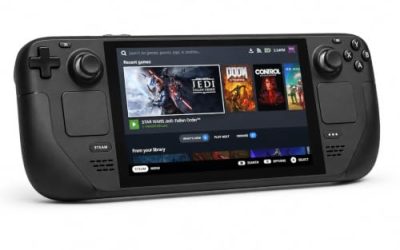
Valve’s sheet for this app reads Unsupported, and the reason printed on it is the categorical one: “Steam Deck does not support VR games.” That matters because it is not a judgement about this build’s performance — no build was graded at all. The sheet’s tested-build field reads “No build”, the test date is December 25, 2024, and the SteamOS compatibility line reads Unknown. A sourcing note: Valve’s own compatibility endpoint returned an empty response in this session, so the verdict, date and configuration above are read from SteamDB’s republication of Valve’s sheet.
The practical consequence is simple. No Proton version or launch option turns a VR-only game into a Deck game, because the barrier is the form factor itself: the Deck has no headset and no tracked controllers. The sheet’s test configuration lists the supported input as “other” — its way of pointing at the VR hardware the game actually needs.
ProtonDB: Platinum on a file of three reports
The ProtonDB summary was read in full. The settled tier is Platinum, the best-reported tier is Platinum and the trending tier is Platinum — but the file behind those labels holds exactly three reports, and ProtonDB’s own confidence rating is low. That thinness deserves the same prominence as the tier: three reports is an anecdote with a label, not a settled verdict, and a single new filing could move it.
The filing colour is still informative, because all three reports describe the same route. Each runs the Windows build under a GE-Proton release on a Linux desktop, driving the headset through an open-source VR stack — Monado, WiVRn and Envision recur — rather than through SteamVR. The tinker steps are launch options that hand the container access to the OpenXR runtime, of the PRESSURE_VESSEL_IMPORT_OPENXR_1_RUNTIMES=1 form. One filing notes a menu-button problem under Monado; another reports only very rare visual glitches.
One heading check completes the picture. The game’s ProtonDB page carries the stray “Natively Supports:” heading above its requirements display. It is wrong here: Steam’s record flags Linux false, ships no Linux depot and publishes empty Linux requirements, so the heading does not agree with the store record. This article follows Steam.
Anti-cheat and account layers: silence on every shelf
Some Windows games block Proton through an anti-cheat never enabled for it, so the layers are worth checking one by one. On the record itself, there is no DRM notice and no third-party account notice. SteamDB’s detected-technology list names the expected VR and engine stack — Unreal Engine, the OpenXR SDK, the Oculus XR plugin, Wwise — and no anti-cheat. The AreWeAntiCheatYet catalogue, read in full at its root file of 1,167 entries, holds no entry for this app by store ID or by name. The honest summary is documentation silence on every layer, and the three ProtonDB filings mention no anti-cheat obstacle — which fits a single-player VR title with no competitive surface to protect.
GOG: no edition to fall back on
GOG was ruled from its own surfaces rather than from search emptiness. The natural product address for this title redirects to GOG’s general games catalogue, the catalogue query returns only unrelated products, and the store’s filtered games endpoint returns zero results for the name. No GOG product record exists, so there is no DRM-free edition: Steam’s Windows build is the only PC edition.
Gear for the Linux VR desktop
BEHEMOTH itself is played in a headset with tracked controllers; none of the gear below replaces that. What it serves is the Linux gaming desktop that hosts the VR setup — the machine you configure runtimes on and play the flat-screen half of your catalogue with.
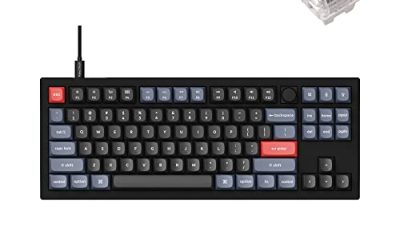
Keychron V3
- Tenkeyless layout with rotary knob
- QMK and VIA remapping support
- Hot-swappable K Pro Brown switches
- Wired USB-C connection
The keyboard pick for that desktop: QMK and VIA remapping works at the keyboard level, across every Linux install — handy when your VR configuration lives in text files and terminal windows.
8BitDo Ultimate 2 Bluetooth Controller
- Connectivity: Bluetooth wireless and USB-C wired
- Joysticks: TMR electromagnetic, anti-drift design
- Triggers: Hall effect, with mode switching
- Extras: two remappable back buttons, motion control
The desktop pad pick for the flat-screen side of the library — the games you play at the desk while the headset charges.
Xbox Wireless Controller, Carbon Black
- Connectivity: Xbox Wireless and Bluetooth
- Port: USB-C for wired play
- Controls: hybrid D-pad, dedicated Share button
- Power: AA batteries or optional rechargeable pack
The safest guest pad in PC gaming: Steam Input support is universal, glyphs match what most games display, and it pairs over Bluetooth or wireless.
Logitech G502 HERO
- HERO optical sensor, up to 25,600 DPI
- 11 programmable buttons
- Adjustable weight system
- Wired USB connection
For the desktop work around VR — editing runtime configs and the mouse-driven games in the library — a precise wired mouse gets used daily.
Samsung T9 Portable SSD 2TB
- Capacity: 2 TB portable SSD
- Interface: USB 3.2 Gen 2×2, USB-C connector
- Maker-rated speeds: up to 2,000 MB per second read, 1,950 MB per second write
- Features: Dynamic Thermal Guard, maker-rated drop resistance
A single BEHEMOTH install runs to about 47 GB, and VR libraries grow quickly. A fast USB-C drive moves installs between machines or keeps an offline backup; the headline figure needs a Gen 2×2 host port, and on a lesser port the drive runs at that ceiling.
How to choose
Choose your route by hardware first. If your only machine is a Steam Deck, there is no route: the ruling is categorical. If you own a PC VR headset and a Linux desktop, the ProtonDB route is the documented one — a GE-Proton release, an open-source runtime such as Monado or WiVRn, and the launch options that expose the OpenXR runtime to the container — with the caveat that the entire evidence base is three reports. If you own the headset but run Windows, that remains the path of least resistance. In every case, budget for the install size: the single depot is about 47 GB.
Who should skip
Skip this game on Linux if you are looking for a native build, a Deck game, or a GOG edition — none of the three exists. Skip it, for now, if your VR setup depends on SteamVR for Linux, because the reports that exist describe the open-source runtime route instead. And skip the Platinum label as a reason to buy on its own: three reports at low confidence is a promising signal, not a guarantee.
FAQ
Is Skydance’s BEHEMOTH native on Linux?
No. Steam’s record flags Linux false, the Linux requirements field is empty, the single content depot carries no Linux split, and no LinuxClientIcon is registered. The “Natively Supports:” heading on the ProtonDB page does not agree with that record and should be ignored.
Can BEHEMOTH run on Linux at all?
On a desktop with a PC VR headset, there is a documented route: three ProtonDB reports rate the Windows build Platinum under GE-Proton, driving the headset through open-source runtimes such as Monado or WiVRn with launch options that import the OpenXR runtime. The file is three reports deep at low confidence, so treat it as a promising lead rather than a settled result.
Does BEHEMOTH work on Steam Deck?
No. Valve’s sheet marks it Unsupported with the categorical note that the Steam Deck does not support VR games. No build was graded, so this is not a performance verdict a future Proton release could overturn; the Deck simply has no VR role.
Is there a GOG version of BEHEMOTH?
No. GOG’s own surfaces hold no product record for the game — the natural product address redirects to the general catalogue and the store’s endpoints return no match. Steam’s Windows build is the only PC edition.
Final verdict
Skydance’s BEHEMOTH is a Windows VR game with no Linux build, no DLC family, no anti-cheat named on any layer, and no GOG edition. The Steam Deck answer is the shortest one in this series: a categorical Unsupported, because the Deck does not support VR games. The desktop answer is more interesting — a Platinum tier resting on just three reports, all describing the same GE-Proton and open-source-runtime route. If you already own the headset and the desktop, that route is worth trying; if you are buying for Linux alone, wait for the report file to grow before treating Platinum as settled.
Product and ASIN Reference
| Product | ASIN |
|---|---|
| Keychron V3 | B0B2DMMMG2 |
| 8BitDo Ultimate 2 Bluetooth Controller | B0F194QFT2 |
| Xbox Wireless Controller, Carbon Black | B08DF248LD |
| Logitech G502 HERO | B07GBZ4Q68 |
| Samsung T9 Portable SSD 2TB | B0CHFS9K14 |