Bread & Fred is the co-op climbing platformer from SandCastles Studio, released on 23 May 2023 and published by Infogrames under the Atari umbrella. Two penguins, roped together, time their jumps, cling to walls and swing across gaps up a snowy summit, and every fall is shared. It supports solo play, local and online co-op and Remote Play Together, with full controller support.


The Linux question has a short answer and a long paper trail. Steam’s record flags the game for Windows and Mac only, and nothing in the delivery layers underneath contradicts it. Yet the side records point the other way: a depot configuration string naming Linux, a registered Linux client icon, three Linux-flagging soundtrack apps, and a ProtonDB requirements heading claiming native support. Every one of those signals is paperwork. The build was never ported.
As an Amazon Associate, we earn from qualifying purchases.
Quick answer
No. Bread & Fred has no native Linux build: Steam’s record flags Windows and Mac only, the Linux requirements field is an empty list, and the purchase package delivers no Linux depot. Linux players use Proton, where 26 ProtonDB reports hold a Gold tier, and the Steam Deck badge is Playable.
What Steam’s record says
Steam’s appdetails record for Bread & Fred (app 1607680) lists the platforms as Windows true, Mac true, Linux false. The Mac field is not a shell: it carries genuine platform-specific text — OS X 10.9 or later, an Intel or Apple Silicon processor, 2 GB of memory, 1500 MB of storage.
The Linux requirements field is an empty list outright. There is no Linux tab in any form, not even the hollow kind where headings sit over blank lists. A reader browsing the page finds Windows requirements (Windows 7, a dual-core processor at 2.4 GHz, 2 GB of memory, 1500 MB of storage) and Mac requirements, and nothing else. The port simply does not exist.
The depot, the icon and the purchase package
The depot table holds this record’s one genuinely confusing artefact. SteamDB lists two content depots. Depot 1607682 is configured for macOS and holds 951.66 MiB. Depot 1607681, at 985.46 MiB, carries a configuration string that reads Windows and Linux together, and a reader who stops there could believe a Linux build ships inside it.
The string is a configuration label, not a delivery promise, and every layer that decides what a buyer receives says otherwise. The store record flags Linux false, the Linux requirements field is empty, and the purchase package settles it: package 570180, the standard purchase, grants the game app alone, and Steam’s packagedetails record for it reads Windows true, Mac true, Linux false. A normal purchase delivers the Windows and Mac builds.
The app configuration also registers a LinuxClientIcon asset under its own hash — storefront furniture, not a build, and set aside like the depot string.
The family: three soundtracks that flag Linux
The game’s DLC array holds exactly three apps, all of them music: the Bread & Fred Soundtrack (app 2448160), the Super Duper Ultra Redux Mixtape (app 2448120) and The 8-Bit Editions (app 2610670), released across June and September 2023. Each flags all three platforms true, Linux included. Read at face value, the family page suggests broad, Linux-friendly platform support.
That is the classic soundtrack trap in its fullest form: three false signals from one family. Music apps carry audio files that play anywhere; their platform flags describe the files, not a game build. The article rules from the game itself, whose flag is false. Outside the array, the free demo (app 1763200) flags Windows only and agrees with the game exactly — the one family member describing an actual game build is the one that matches.
Anti-cheat and the online modes
Three sources cover the anti-cheat question, kept separate here. Steam’s record names no anti-cheat: no DRM notice and no external account notice on the store data. SteamDB’s detected-technology list is engine and middleware plumbing — Unity, the Epic Online Services SDK, FMOD, Mono, SteamworksNET — with no anti-cheat technology detected. Are We Anti-Cheat Yet carries no entry for app 1607680; its only name match, BrainBread 2, is a different game whose ruling must not be read across.
The Epic Online Services entry is the networking layer underneath the online co-op, not a cheat-enforcement system, however often readers misread it as one. Linux players joining online sessions through Proton face the ordinary Proton question — does the Windows build run well — not an anti-cheat gate.
ProtonDB: Gold reports under a stray heading
ProtonDB’s summary record was read in full: 26 reports, a Gold tier overall, Platinum as both the best-reported and trending tier, at strong confidence. Recent filings run the game out of the box on current Proton builds, and local multiplayer is repeatedly rated Excellent — the mode this game is built around. The weaker notes cluster where the design is most demanding: online play draws mixed verdicts, including one Weak rating tied to jump precision and partner lag, one report of Windows saves not transferring, and one Remote Play Together partner stuck on a loading screen. Kept at report weight, the Proton route works well locally and unevenly online.
The page carries one outright error. ProtonDB heads the game’s requirements block with a claim of native support, which Steam’s record contradicts at every layer: false flag, empty Linux field, a purchase package delivering no Linux build. That is the stray-tag pattern this series keeps meeting on ProtonDB pages. The article follows Steam: the Gold tier describes the Windows build under Proton — a good result on those terms, but not evidence of a native port.
Steam Deck: Playable, on launch-era paperwork
Valve’s compatibility record, read here through SteamDB’s republication of Valve’s test data, grades the game Playable on Steam Deck, with SteamOS separately rated Compatible. The passing items are the substance: all functionality is accessible under the default controller configuration, in-game text is legible, and the default graphics configuration performs well. The deductions are presentational: occasional mouse, keyboard or non-Steam-Deck controller icons, and a native resolution the game supports but does not set by default. The sheet’s recommended runtime is Proton 8.0-2 — the badge certifies the Windows build under Proton.
The paperwork is old. Valve tested on 1 June 2023, days after launch, against build 11318161; the public branch now serves build 22868668 from April 2026 — so the sheet joins the factual Deck-paperwork supplement candidates. The Playable grade is current; the build underneath it has moved on.
The GOG edition is a Windows copy
A GOG edition exists; its product page was read directly and identity-checked against the Steam record — same game, same Infogrames copyright line. GOG’s product record for the edition (product 1089321138) lists system compatibility as Windows true, Mac false, Linux false. The DRM-free copy is a Windows copy — GOG does not carry even the Mac build, let alone a Linux one.
That closes the last side door: no storefront sells a native Linux build of this game, because none was made. A Linux player who prefers GOG’s offline installer buys the same Windows build the Proton reports describe.
Gear that fits the record
The gear below follows the record’s shape: the Playable handheld, pads for the couch co-op the game is built around, and storage for the wider library.
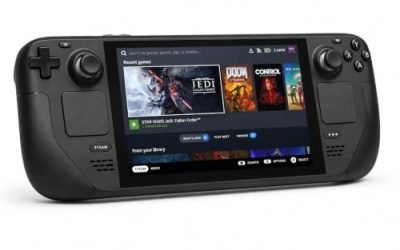
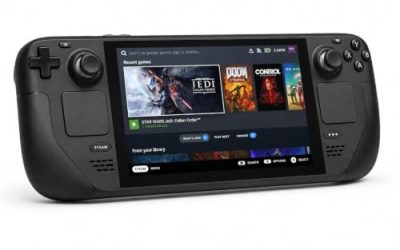
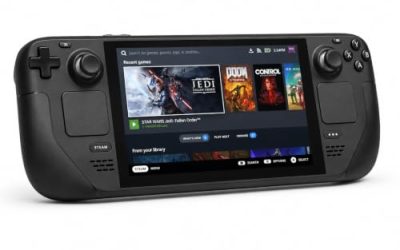
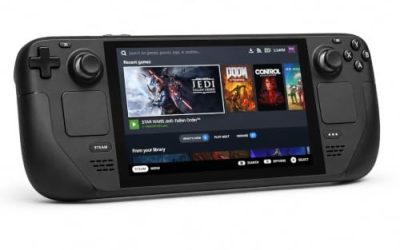
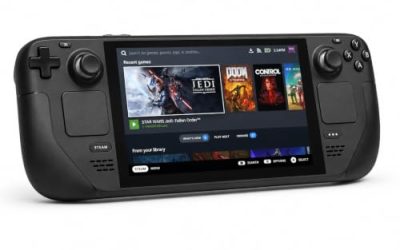
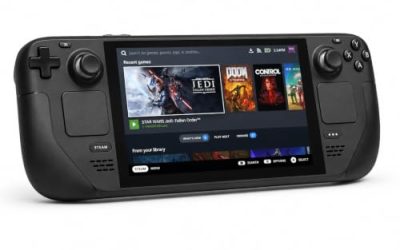
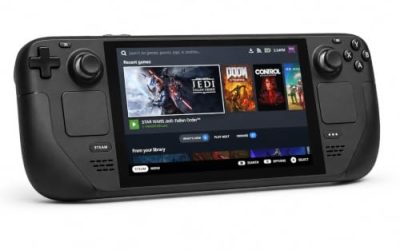
Valve Steam Deck OLED 512GB
The handheld this game’s Playable badge was written for: functionality, legibility and default performance all pass, with icon and resolution quirks as the only deductions.
Specs
- Display: 7.4-inch HDR OLED, 1280 by 800, up to 90 Hz
- Processor: AMD Zen 2 and RDNA 2 custom APU
- Memory: 16 GB LPDDR5
- Storage: 512 GB NVMe, plus a microSD slot
- Wireless: Wi-Fi 6E and Bluetooth
- Channel note: Valve sells the Deck mainly through its own store, so Amazon listings are third-party sellers
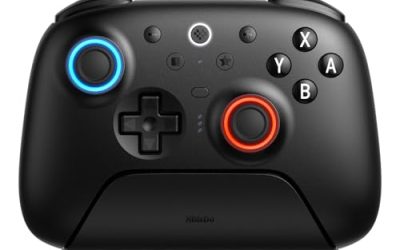
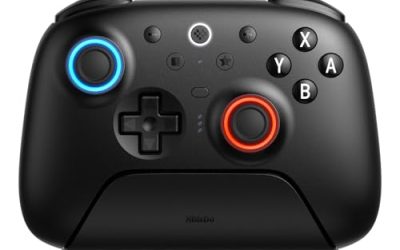
8BitDo Ultimate 2 Bluetooth Controller
The docked and desktop pad pick, covering the couch case with modern sticks, triggers and back buttons.
Specs
- Connectivity: Bluetooth wireless and USB-C wired
- Joysticks: TMR electromagnetic, anti-drift design
- Triggers: Hall effect, with mode switching
- Extras: two remappable back buttons, motion control
- In the box: charging dock included
Xbox Wireless Controller, Carbon Black

The second-player pad for the roped-together climb, where the penguins share every jump and a reliable spare is co-op equipment.
- Connectivity: Xbox Wireless and Bluetooth
- Port: USB-C for wired play
- Controls: hybrid D-pad, dedicated Share button
- Power: AA batteries or optional rechargeable pack
Logitech G502 HERO

A wired mouse for the desktop side, where menus and settings are quicker with a precise pointer than a pad.
Specs
- HERO optical sensor, up to 25,600 DPI
- 11 programmable buttons
- Adjustable weight system
- Wired USB connection
- On-board memory profiles
Samsung T9 Portable SSD 2TB

The game asks for 1500 MB, so this drive serves the wider library: fast portable storage for moving installs between machines.
Specs
- Capacity: 2 TB portable SSD
- Interface: USB 3.2 Gen 2×2, USB-C connector
- Maker-rated speeds: up to 2,000 MB per second read, 1,950 MB per second write
- Features: Dynamic Thermal Guard, maker-rated drop resistance
How to choose
Choose the Steam copy for the edition both compatibility records describe: the build Valve graded and the ProtonDB reports cover, installed under Proton at its default setting. Choose the GOG copy only if a DRM-free offline installer matters more than Steam’s integration; it is the same Windows build. On a Steam Deck, expect the Playable experience Valve describes: full functionality and legible text, with a possible manual resolution setting and the occasional wrong controller icon.
Who should skip
Skip this one if you want a native Linux platformer: despite the depot string, icon, soundtrack flags and ProtonDB heading, no native build exists. Skip it if your co-op is exclusively online and precision matters — the online filings are the weakest part of the Proton file. Skip the GOG edition if you hoped it hides a Linux build other stores lack — it is Windows only. And skip it if you need Deck games to set their own resolution and show the right glyphs without exception; Valve’s sheet flags both quirks.
FAQ
Is Bread & Fred native on Linux?
No. Steam flags the game for Windows and Mac only, the Linux requirements field is an empty list, and the purchase package delivers no Linux build. The Linux signals around the record — a depot configuration string, a client icon, three soundtrack flags and a ProtonDB heading — are paperwork artefacts, not a port.
How well does Bread & Fred run under Proton?
Well. ProtonDB holds 26 reports at a Gold tier overall, Platinum as both the best-reported and trending tier, at strong confidence. Local multiplayer is repeatedly rated Excellent; online play and saves draw the mixed notes.
Is Bread & Fred Steam Deck Verified?
No — it is graded Playable, one step below Verified, with SteamOS rated Compatible. Valve’s sheet passes functionality, text legibility and default performance, and deducts for occasional non-Deck controller icons and a native resolution the game does not set by default. The test dates from June 2023, against a launch-era build.
Does the GOG version of Bread & Fred run on Linux?
Not natively. A GOG edition exists, but GOG’s product record lists it as Windows only — no Linux build, and not even the Mac build Steam sells. The GOG copy is a Windows installer run through the same compatibility layers as the Steam copy.
Final verdict
Bread & Fred on Linux is a Proton story wearing several convincing native costumes. The decisive layers — the platform flag, the empty Linux requirements field and a purchase package delivering Windows and Mac only — agree no Linux build was ever shipped, and the depot string, icon, soundtrack flags and ProtonDB heading do not outweigh them. What Linux players get is respectable: a Gold-rated Proton route, excellent local co-op reports, a Playable Deck badge, and no anti-cheat gate. Buy it as a Windows game that runs well under Proton — on Steam for the graded build, on GOG for the offline installer — and it will not disappoint. Buy it expecting a native port and it will.
Product and ASIN Reference
| Product | ASIN |
|---|---|
| Valve Steam Deck OLED 512GB | B0CQ3RWQQZ |
| 8BitDo Ultimate 2 Bluetooth Controller | B0F194QFT2 |
| Xbox Wireless Controller, Carbon Black | B08DF248LD |
| Logitech G502 HERO | B07GBZ4Q68 |
| Samsung T9 Portable SSD 2TB | B0CHFS9K14 |