RX 9070 XT Graphics Card Review 2026: Performance, Value, and Who Should Buy
The AMD Radeon RX 9070 XT is one of the most discussed graphics cards of the current generation. It is built on AMD’s RDNA 4 architecture and aimed at 1440p gaming, with a strong value argument against NVIDIA’s cards in the same price range. This review explains what the card is good at, where it trades off against the competition, and which buyers should choose it. It also covers the practical points that matter after the purchase: drivers, power, cooling, and upscaling support.
Card specifications and prices vary by manufacturer. Board partners ship the RX 9070 XT with different coolers, clock settings, and power limits, so two cards with the same name can perform differently. The live product card below shows the model currently listed, and the guidance in this article applies to the RX 9070 XT as a family rather than to one specific board.

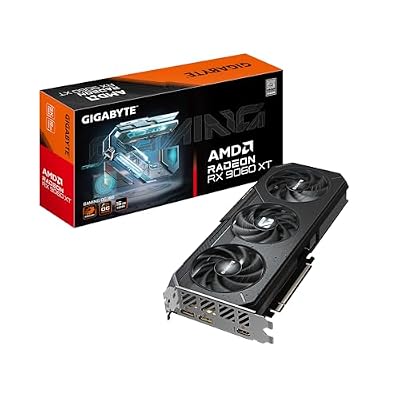
GIGABYTE Radeon RX 9070 XT Gaming OC 16G Graphics Card, PCIe 5.0, 16GB GDDR6, GV-R9070XTGAMING OC-16GD Video Card
What the RX 9070 XT Brings to a Gaming PC
The RX 9070 XT is positioned as a high-performance card for 1440p gaming at high settings. Its RDNA 4 design is AMD’s current approach to raster performance and ray tracing, and it supports FSR upscaling, which is AMD’s answer to NVIDIA’s DLSS. Support for FSR is now common across modern games, so the upscaling gap is smaller than it was a few years ago. Ray tracing performance is improved over the previous generation, but NVIDIA cards in the same tier still tend to lead in heavy ray-traced workloads, so expect that gap to show up in titles that push path tracing.
The card uses a large amount of GDDR6 video memory, which helps with high-resolution textures and games that cache a lot of assets. That memory is a practical advantage for 1440p, where texture-heavy titles can push smaller cards into trouble. If you plan to keep the card for several years, the memory capacity gives you more room than a card with a smaller pool.
Real-World Gaming: Where the Card Excels
In rasterized gaming at 1440p, the RX 9070 XT is designed to run most titles at high settings with strong frame rates. Competitive shooters run very well, and open-world games benefit from the memory headroom. The card is a good match for a 1440p monitor with a high refresh rate, because it can push frames consistently without needing aggressive upscaling in many games.
Where it trails is heavy ray tracing. In games that rely on full path tracing or heavy ray-traced effects, NVIDIA’s comparable cards often hold a lead. If ray tracing is your priority, check independent benchmarks for the specific games you play. Our comparison of RX 9070 versus RTX 5070 lays out where each card wins, and the deeper look at RDNA 4 versus Blackwell explains the architectural reasons behind those differences.
Comparison Table: RX 9070 XT Against the Alternatives
The table compares the RX 9070 XT with the most relevant GPU classes. Price tiers are relative. The live cards show current pricing, and independent benchmarks should be checked before purchase.
| Graphics card | Architecture | Best use | Ray tracing strength | Relative price tier |
|---|---|---|---|---|
| RX 9070 XT | AMD RDNA 4 | 1440p high settings, raster-heavy gaming | Improved, behind NVIDIA in heavy ray tracing | Mid to high |
| RX 9070 | AMD RDNA 4 | 1440p at slightly lower settings | Improved, behind NVIDIA in heavy ray tracing | Mid |
| RTX 5070 Ti class | NVIDIA Blackwell | 1440p high settings with strong ray tracing | Stronger in heavy ray tracing | High |
| RTX 5070 class | NVIDIA Blackwell | 1440p with DLSS, streaming | Strong with DLSS | Mid |
Power, Cooling, and Case Fit
The RX 9070 XT draws substantial power under load, so plan a power supply with enough headroom and quality connectors. A reputable unit in the 750W to 850W range is a common choice for a build with this card and a modern processor, but confirm the requirement from the board partner’s listing and the power supply’s own rating. Our guide to the best 850W gaming PSUs for 2026 explains how to match a unit to the card and the rest of the system.
Cooler design differs across board partners. Check the card’s length, thickness, and number of slots against your case before you buy. Check airflow as well. A card that runs cool and quiet in a well-ventilated case may run hot in a restrictive one. If you are deciding how to cool the rest of the build, our comparison of air versus AIO cooling covers the trade-offs for the processor, and the case guide NZXT H7 Flow review shows how one airflow-focused case handles a high-power GPU.
Drivers, Software, and Long-Term Ownership
AMD’s driver software has improved steadily, and the RX 9070 XT benefits from ongoing support for its architecture. Install the latest driver from AMD’s site or the official software, and keep it updated for new game releases. Check that your monitor supports FreeSync if you want variable refresh rate, since that feature works with many AMD cards and most modern monitors.
Long-term value comes from memory, upscaling support, and driver maturity. The memory capacity helps the card age well in texture-heavy games, and FSR support continues to expand across titles. Consider how you will use the card in two or three years. If you expect to play ray-traced titles heavily, the NVIDIA route may hold up better. If raster performance and memory are the priority, the RX 9070 XT is a strong choice.
Alternatives Worth Considering
The cards in the list above represent different board partner designs and price points of the same GPU family, so compare cooler size, power limits, and warranty terms as well as the headline price. If the RX 9070 XT is above your budget, the RX 9070 gives a similar experience at slightly lower settings. If ray tracing is central to your choice, look at the RTX 5070 Ti class. The product card below shows one board partner model you can compare directly.

Sapphire 11348-03-20G Pulse AMD Radeon™ RX 9070 XT Gaming Graphics Card with 16GB GDDR6, AMD RDNA 4


As an Amazon Associate we earn from qualifying purchases. Product prices and availability are accurate as of the date/time indicated.
For a wider view of GPU tiers and how they map to resolution and budget, read our guide to the best gaming graphics cards and the AMD versus NVIDIA buyers guide for 2026.
Who Should Buy the RX 9070 XT, and Who Should Skip It
Buy the RX 9070 XT if you game mainly at 1440p, play raster-heavy titles, want generous video memory, and prefer AMD’s ecosystem or pricing. It suits a builder who wants strong performance without the premium of the highest NVIDIA tier.
Skip it if ray tracing and path tracing are your main priorities, if you rely heavily on DLSS-specific features in the games you play, or if you need the strongest possible streaming encoder. In those cases an NVIDIA card in the same budget may serve you better. For a broader look at the choice, see our note on the best GPU for 1440p gaming.
Buying Checklist
Before you buy, confirm the board partner model, check the card’s dimensions against your case, confirm the power supply and connectors, compare warranty terms, and read at least two independent reviews that test the games you play. Check the live product card above for current pricing. If you are building a new system around the card, the guide to building a gaming PC in 2026 covers compatibility checks in order.
If you are weighing the card against a different tier, read our graphics card hierarchy and best GPU for gaming guides alongside the listing below.
Frequently Asked Questions
Is the RX 9070 XT good for 1440p gaming?
Yes. It is designed for 1440p at high settings, and it handles most current raster-heavy games well. Demanding ray-traced titles may need upscaling or lower ray tracing settings.
Does the RX 9070 XT support DLSS?
No. It uses AMD’s FSR upscaling. DLSS is an NVIDIA technology, so games that only support DLSS will not run it on this card.
Is the RX 9070 XT better than an RTX 5070?
It depends on the workload. The RX 9070 XT is generally strong in raster gaming and offers more memory headroom at its price tier. NVIDIA cards often lead in ray tracing and in DLSS-supported titles. Compare benchmarks for your games before choosing.
What power supply do I need for this card?
Check the board partner’s recommendation, and choose a quality unit with headroom above the combined system load. A 750W to 850W power supply is a common choice, but confirm for your specific card and processor.
The RX 9070 XT is a capable 1440p card with a strong value case, especially for raster-heavy gaming and for buyers who want generous memory. Confirm the board partner model, check fit and power, and use the live cards above to compare current pricing before you commit.