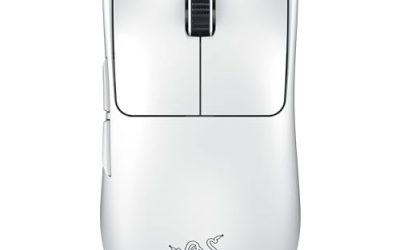
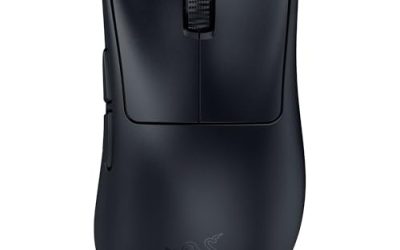
Yes, the Razer DeathAdder Essential is still worth buying in 2026 if you want the classic DeathAdder shape at a budget price and play casually or at a modest competitive level. Its true 6,400 DPI optical sensor, 96 g ergonomic right-handed shell and 10 million-click mechanical switches cover everyday gaming well, but the single-colour green LED, lack of onboard memory and dated sensor fall short of what you get by spending more. Buy it for the shape and the price, not for cutting-edge specs.


This review is for three kinds of buyers: budget gamers who want a reliable first gaming mouse, palm and claw grippers with medium to large hands who like the DeathAdder shape, and shoppers choosing between the Essential and four wired alternatives listed on Amazon. Every product below was picked from Amazon titles and listing specs, with the Essential first and the alternatives judged on sensor, weight, buttons and lighting.
Quick Picks
As an Amazon Associate we earn from qualifying purchases
| Product | Best for | Key spec from title |
|---|---|---|
| Razer DeathAdder Essential | Budget palm-grip gaming | True 6,400 DPI optical sensor, 96 g, green LED |
| Logitech G203 LIGHTSYNC | Small hands and RGB on a budget | 8,000 DPI sensor, 85 g, LIGHTSYNC RGB |
| SteelSeries Rival 3 | Light claw or fingertip grip | TrueMove Core 8,500 CPI sensor, 77 g, Prism RGB |
| Logitech G502 HERO | Button-heavy games and productivity | HERO 25K sensor, 11 buttons, 121 g adjustable |
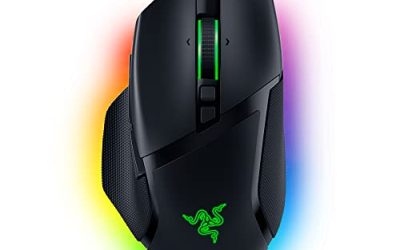
| Razer Basilisk V3 | The step-up Razer with a thumb rest | Focus+ 26,000 DPI sensor, 101 g, 11 Chroma zones |
How to Choose
Read the sensor ceiling honestly
The Essential tops out at 6,400 DPI with 220 IPS tracking and 30 G acceleration, and its default stage is 1600 DPI. Most players use 400 to 1600 DPI, so the ceiling rarely matters in real play, but it is modest by 2026 standards. The G203 reaches 8,000 DPI and the Rival 3 reaches 8,500 CPI, while the G502 HERO and Basilisk V3 reach 25,600 and 26,000 DPI. Do not rank mice by DPI alone. A higher ceiling does not make a mouse better for you, but it does mark where the Essential sits in the range.
Match the shell to your hand and grip
The Essential is an ergonomic right-handed mouse, 127 mm long with a 61.7 mm grip width, and it suits palm and claw grips for medium to large hands. It is not a fingertip mouse and not for left-handed users. The G203 is a small ambidextrous egg for small to medium hands, the Rival 3 is a symmetrical shell that suits claw and fingertip grips, and the G502 HERO and Basilisk V3 are large ergonomic shells with thumb support. Hand size decides comfort more than any spec on the box.
Count buttons and check where settings live
The Essential has five programmable buttons and no onboard memory, so DPI and button settings live in Razer Synapse 3 and do not travel to another PC. Synapse 3 runs on Windows only, which matters if you also use a Mac. The G203 has six buttons and onboard memory, the Rival 3 has six buttons with settings in SteelSeries Engine, and the G502 HERO has eleven buttons with five stored profiles while the Basilisk V3 has ten plus one buttons with hybrid onboard and cloud storage. More buttons suit MMO play and productivity shortcuts.
Weigh the mouse and the lighting trade-off
The Essential weighs 96 g with a braided 2.1 m cable, which is mid-pack here: the Rival 3 is 77 g, the G203 is 85 g, the Basilisk V3 is 101 g and the G502 HERO starts at 121 g and adjusts to 139 g with its five 3.6 g weights. Lighter mice suit fast flicks, heavier mice suit steady aim. Lighting is the clearest budget cut: the Essential has a single green LED only, while every alternative has full RGB. If you care about matching a setup, the Essential cannot do it.
The 5 Best Options
Razer DeathAdder Essential
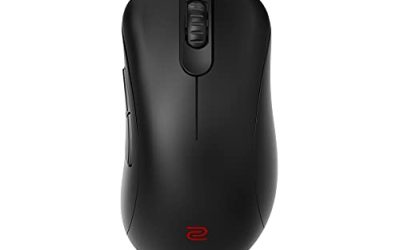
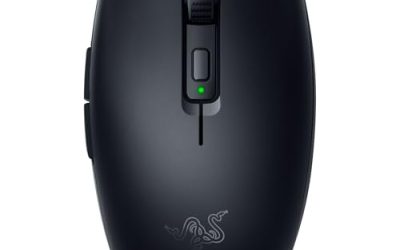
The DeathAdder Essential is the budget wired mouse for players who want the classic DeathAdder shape without paying for a newer model. Its ergonomic right-handed shell, 96 g weight and 10 million-click mechanical switches make it a comfortable daily driver for palm and claw grips, and the 6,400 DPI optical sensor handles casual and mid-level competitive play. You give up RGB, onboard memory and a modern sensor, but you keep the shape that made the DeathAdder famous.
- Specs:
- True 6,400 DPI optical sensor, 220 IPS, 30 G acceleration
- DPI stages: 400, 800, 1600 (default), 3200, 6400
- Razer Mechanical Mouse Switches, 10 million-click lifecycle
- 5 independently programmable Hyperesponse buttons
- 1000 Hz Ultrapolling, single-colour green LED only
- 127 mm long, 61.7 mm grip width, 42.7 mm high, 96 g
- 2.1 m braided cable, USB-A, wired only
- Razer Synapse 3 (Windows), no onboard memory, 2-year warranty
- Best for: Budget palm-grip gamers who want the DeathAdder shape at the lowest price.
- Watch out for: No ASIN is live-confirmed, so check live availability before ordering; the Amazon title claims rubber side grips, but a verified-buyer answer says the sides are hard plastic and only the scroll wheel is rubber.
Logitech G203 LIGHTSYNC
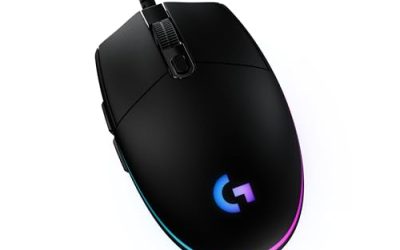
The Logitech G203 LIGHTSYNC is the lighter, smaller alternative for players who want RGB and onboard memory in a budget mouse. Its 8,000 DPI sensor, six programmable buttons and 85 g ambidextrous egg shape suit small to medium hands, and LIGHTSYNC RGB covers the rear band and logo in 16.8 million colours. The trade-off is the shell size and a sensor that can spin out on very fast swipes, so it suits controlled aim more than wild flicks.
- Specs:
- Gaming-grade optical sensor, 200 to 8,000 DPI in 50 CPI steps
- 6 programmable buttons, metal spring button tensioning
- LIGHTSYNC RGB, 16.8 million colours, 3-zone rear band plus logo
- Onboard memory, wired USB, 2.1 m rubber cable
- 116.6 x 62.15 x 38.2 mm, 85 g, 2-year warranty
- Best for: Small to medium hands that want RGB and onboard memory on a budget.
- Watch out for: Check live availability before ordering; the sensor is a step down from the older G203 Prodigy, and the G102 is a different international twin, so use this ASIN only.
SteelSeries Rival 3
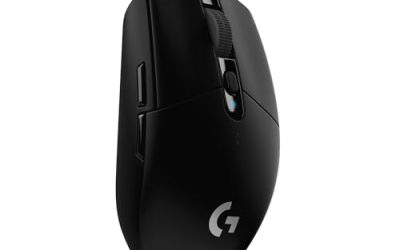
The SteelSeries Rival 3 is the lightest mouse in this group and the natural pick for claw and fingertip grips. Its TrueMove Core sensor reaches 8,500 CPI, its split-trigger buttons use mechanical switches rated for 60 million clicks, and Prism RGB covers three zones. At 77 g with a symmetrical shell it moves fast, though the symmetrical shape gives less palm support than the ergonomic mice here, and its availability on Amazon has been inconsistent.
- Specs:
- TrueMove Core optical sensor, 100 to 8,500 CPI in 100 CPI steps
- 300 IPS, 35 G acceleration, 1000 Hz polling
- 6 programmable buttons, split-trigger main buttons
- Mechanical switches rated 60 million clicks
- Prism RGB, 3 independently controlled zones
- Wired 1.8 m rubber cable, 120.6 x 67 x 37.9 mm, 77 g
- SteelSeries Engine software
- Best for: Claw and fingertip players who want the lightest mouse in the group.
- Watch out for: Availability is conflicting, so check the live listing first and be ready to drop it; the Rival 3 Gen 2 is a different newer mouse, so use this ASIN only.
Logitech G502 HERO

The Logitech G502 HERO is the heavyweight option for players who want many buttons and a tunable feel. Its HERO 25K sensor reaches 25,600 DPI, its dual-mode scroll wheel switches between notched and free-spin, and its five 3.6 g weights let you tune the 121 g base weight up to 139 g. Eleven programmable buttons suit MMO play and productivity shortcuts, but the large shell and extra weight make it a poor pick for small hands or fast flick aiming.
- Specs:
- HERO 25K optical sensor, 100 to 25,600 DPI in 50 DPI steps
- Max acceleration over 40 G, max speed over 400 IPS
- 11 programmable buttons, dual-mode hyper-fast scroll wheel
- Adjustable weight system: five 3.6 g weights, 18 g total
- LIGHTSYNC RGB, 16.8 million colours, onboard memory, 5 profiles
- Metal spring button tensioning, PTFE feet, 1000 Hz report rate
- Wired USB, 2.1 m braided cable, 132 x 75 x 40 mm, 121 g base weight
- 2-year warranty
- Best for: MMO players and productivity users who want many buttons and adjustable weight.
- Watch out for: Check live availability before ordering; owner forums report double-click failures on some older units, and the G502 X and the wireless Lightspeed model are different models, so use this ASIN only.
Razer Basilisk V3

The Razer Basilisk V3 is the step-up Razer for players who like the DeathAdder family feel but want a stronger sensor, optical switches and real RGB. Its Focus+ sensor reaches 26,000 DPI, its HyperScroll tilt wheel switches between notched and free-spin modes, and its eleven Chroma RGB zones cover the underglow, logo and wheel. The thumb rest and sniper button add control, but at 101 g it is heavier than the Essential and the extra buttons need a learning curve.
- Specs:
- Focus+ 26,000 DPI optical sensor, 99.6 percent resolution accuracy
- 650 IPS, 50 G acceleration
- 10+1 independently programmable buttons, underside profile switch
- 4-way HyperScroll tilt wheel, notched and free-spin modes
- Razer Optical Mouse Switches Gen-2, 0.2 ms actuation, 70 million clicks
- 11 Chroma RGB lighting zones
- Hybrid on-board plus cloud storage, 4+1 profiles
- Injection-molded rubber grips, Razer Speedflex cable 1.8 m
- 130 x 60 x 42.5 mm, 101 g excluding cable, 2-year warranty
- Razer Synapse 3
- Best for: Razer fans who want a real step up from the Essential in sensor, switches and lighting.
- Watch out for: Check live availability before ordering; the Basilisk V3 35K and V3 Pro are different models, and the wired V3 is wired only despite one review wrongly listing it as wireless.
Which One Fits Your Situation
You want the DeathAdder shape on the smallest budget
Pick the DeathAdder Essential. It gives you the ergonomic right-handed shell, the 96 g weight and the 6,400 DPI sensor at the lowest price in this group. Accept the green LED only, the lack of onboard memory and the dated sensor, and you get a reliable mouse that does the job for casual and mid-level play.
You have small hands or want RGB cheaply
Pick the Logitech G203 LIGHTSYNC. Its 85 g ambidextrous egg shape fits small to medium hands, its LIGHTSYNC RGB covers the rear band and logo, and its onboard memory keeps your settings on the mouse. It is the cheapest RGB mouse in this review. Keep your swipes controlled, since the sensor can spin out on very fast flicks.
You play fast shooters with a claw or fingertip grip
Pick the SteelSeries Rival 3. At 77 g it is the lightest mouse here, its symmetrical shell suits claw and fingertip grips, and its 60 million-click switches outlast the Essential by a wide margin. The Prism RGB lighting adds colour without adding weight, and the split-trigger buttons give a crisp, consistent click. Check the live listing first, since its Amazon availability has been inconsistent.
You want many buttons or the strongest sensor
Pick the Logitech G502 HERO for eleven buttons and a tunable weight system, or the Razer Basilisk V3 for the Focus+ sensor, optical switches and HyperScroll wheel. Both cost more than the Essential, but they give you the features the budget mouse cuts: a modern sensor, real RGB and settings that travel with the mouse.
Common Mistakes
- Buying the Essential expecting RGB: it has a single green LED only, with no colour choice in Synapse.
- Assuming settings travel with the mouse: the Essential has no onboard memory, so DPI and button settings stay on the PC where Synapse 3 runs.
- Mixing up DeathAdder models: the V2, V3 and V4 have different sensors, weights, switches and polling rates, so never use their specs or ASINs for the Essential.
- Chasing the 6,400 DPI ceiling: the default stage is 1600 DPI and most players use 400 to 1600, so higher DPI is not better aim.
- Trusting Amazon listing fields blindly: the listing wrongly calls the Essential ambidextrous and claims it needs a battery, so use Razer specs instead.
Frequently Asked Questions
Is the DeathAdder Essential good for gaming in 2026?
Yes, for budget and casual play. The shape, 96 g weight and 10 million-click switches still hold up, and the 6,400 DPI sensor covers everyday gaming. It is dated next to the V3 and V4, so competitive players who want a modern sensor and lighter build should look at the alternatives in this review instead.
What is the difference between the DeathAdder Essential and the DeathAdder V3?
The V3 has a Focus Pro 30K sensor at 26,000 DPI, 8,000 Hz polling, a 59 g weight and optical switches rated for 90 million clicks. The Essential has a 6,400 DPI sensor, 1000 Hz polling, a 96 g weight and mechanical switches rated for 10 million clicks. They share the family name and shape, not the hardware.
Does the DeathAdder Essential have RGB?
No. It has a single-colour green LED only, and Synapse 3 lets you turn it on or off, nothing more. If you want colour lighting, the G203, Rival 3, G502 HERO and Basilisk V3 in this review all have full RGB, with the Basilisk V3 offering eleven Chroma zones.
Does the DeathAdder Essential work on a Mac?
Basic plug-and-play works on a Mac, but Razer Synapse 3 is Windows only, so you cannot change DPI stages or rebind buttons without a Windows PC. There is also no onboard memory, so any settings you change on Windows do not travel with the mouse to another computer.