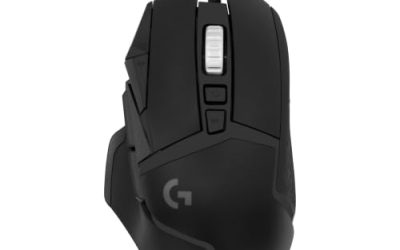
Killing Floor 3 throws wave after wave of Zeds at you and your squad, and the pace rarely lets up. Between sprinting between objectives and snapping to fast-moving targets at close range, your mouse does more work in a single match than it does in most shooters. A sluggish sensor or a heavy shell will show up fast when the horde closes in.


The right mouse for this game is light, precise, and comfortable enough for long sessions. A high polling rate keeps your aim feeling connected to your hand, a strong sensor holds tracking steady during fast flicks, and a long battery life means a wireless pick will not quit midway through a wave. The five mice below cover those bases in different ways.
As an Amazon Associate, we earn from qualifying purchases.
Table of Contents
- Quick Answer
- Razer Viper V3 Pro Wireless (White)
- Corsair Sabre v2 PRO Ultralight Wireless
- Razer Cobra Pro Wireless
- Razer Orochi V2 (Quartz Pink)
- ASUS ROG Keris II Origin Wireless (White)
- How to Choose a Mouse for Killing Floor 3
- Who Should Skip These Mice
- Frequently Asked Questions
- Final Verdict
- Product and ASIN Reference
Quick Answer
The Razer Viper V3 Pro in white is the best overall pick for Killing Floor 3, thanks to its 55-gram body, 35,000 DPI sensor, and 8,000 Hz polling. Players who want the lightest option should look at the 36-gram Corsair Sabre v2 PRO Ultralight. The Razer Cobra Pro adds RGB lighting and long battery life, while the Orochi V2 suits smaller hands and tight budgets.
Razer Viper V3 Pro Wireless (White)
The Viper V3 Pro is the flagship pick in this roundup, earning that spot with low weight and top-tier tracking hardware. At 55 grams in white, long flicks and fast turns feel effortless, which matters when Zeds appear from several directions at once. The symmetrical shape suits claw and fingertip grips.
Its Focus Pro 35K Optical Sensor Gen-2 reaches 35,000 DPI with 1-DPI step adjustments for fine sensitivity tuning. Razer HyperPolling pushes the wireless polling rate up to 8,000 Hz over the included dongle, keeping input latency low when every frame of a fast push counts. Eight programmable buttons cover weapon swaps, grenades, and perk abilities. Battery life runs up to 95 hours at 1,000 Hz, and the mouse also works wired over USB Type-C.
Specs
- Sensor: Focus Pro 35K Optical Sensor Gen-2, up to 35,000 DPI
- Polling rate: Up to 8,000 Hz with HyperPolling wireless dongle
- Weight: 55 grams (white)
- Buttons: 8 programmable buttons
- Battery life: Up to 95 hours at 1,000 Hz
- Grouping: Premium
Corsair Sabre v2 PRO Ultralight Wireless
If the Viper V3 Pro is light, the Sabre v2 PRO Ultralight is lighter still. At 36 grams, it is one of the lightest wireless gaming mice available, and that weight disappears in the hand during the constant small corrections that tracking a moving horde requires.
The CORSAIR MARKSMAN S sensor reaches 33,000 DPI and tracks at up to 750 IPS with 50G acceleration. The 8,000 Hz hyper-polling rate matches the best in this roundup, and battery life runs up to 70 hours of 2.4 GHz wireless play. Corsair includes grip tape and spare mouse skates in the box.
Specs
- Sensor: CORSAIR MARKSMAN S optical sensor, up to 33,000 DPI
- Polling rate: Up to 8,000 Hz
- Weight: 36 grams
- Battery life: Up to 70 hours of 2.4 GHz wireless play
- Grouping: Premium
Razer Cobra Pro Wireless
The Cobra Pro is the most feature-packed mouse in this roundup, suiting players who want one mouse for gaming and everything else. Its 11-zone Chroma RGB lighting with underglow adds a glow to your desk setup. The ambidextrous shape is compact and balanced, which makes it easy to control during close-quarters fights.
The Focus Pro 30K optical sensor reaches 30,000 DPI for precise tracking, and Gen-3 optical switches give the main clicks a crisp, consistent feel. Battery life is a strong point: up to 100 hours on HyperSpeed wireless, or up to 170 hours over Bluetooth. It connects three ways, over 2.4 GHz wireless, Bluetooth, or a wired USB Type-C cable.
Specs
- Sensor: Focus Pro 30K optical sensor, up to 30,000 DPI
- Polling rate: 1,000 Hz out of the box; up to 4,000 Hz with a separate HyperPolling dongle
- Weight: 77 grams
- Buttons: Programmable buttons for weapon and perk binds
- Battery life: Up to 100 hours on HyperSpeed wireless; up to 170 hours on Bluetooth
- Lighting: 11-zone Chroma RGB with underglow
- Grouping: Premium
Razer Orochi V2 (Quartz Pink)

The Orochi V2 is the compact, long-lasting option in this roundup, and the easiest pick to recommend for smaller hands or for players who game on a laptop. The slim body measures about 108 mm long and 60 mm wide, and it weighs under 60 grams without its battery, so it is easy to flick and easy to carry. The Quartz Pink finish stands out on a desk full of black peripherals.
Its Razer 5G Advanced optical sensor reaches 18,000 DPI with 450 IPS tracking and 40G acceleration, which is plenty for horde combat at the sensitivities most players use. The mouse runs on a single AA or AAA battery, and battery life reaches up to 950 hours on Bluetooth or up to 425 hours on HyperSpeed wireless.
Specs
- Sensor: Razer 5G Advanced optical sensor, up to 18,000 DPI
- Polling rate: Up to 1,000 Hz
- Weight: Under 60 grams without battery
- Tracking: Up to 450 IPS and 40G acceleration
- Battery life: Up to 950 hours on Bluetooth; up to 425 hours on HyperSpeed Wireless
- Battery type: Single AA or AAA battery
- Switches: 2nd-generation mechanical switches, rated for up to 60 million clicks
- Grouping: Budget
ASUS ROG Keris II Origin Wireless (White)

The Keris II Origin brings an ergonomic right-handed shape to this roundup, suiting palm and claw players who find symmetrical mice tiring over long sessions. At 65 grams, it stays light while offering more support under the palm than the flatter esports shapes. Its ROG AimPoint Pro optical sensor reaches 42,000 DPI and tracks at up to 750 IPS with 50G acceleration. The polling rate reaches up to 8,000 Hz with the ROG Polling Rate Booster, and battery life runs up to 127 hours on 2.4 GHz wireless with the lighting off. The swappable switch design is a standout: the mouse ships with ROG Micro Switches II rated for a 100-million-click lifespan, and the included clip lets you swap in compatible switches to change the click feel.
Specs
- Sensor: ROG AimPoint Pro optical sensor, up to 42,000 DPI
- Polling rate: Up to 8,000 Hz with ROG Polling Rate Booster
- Weight: 65 grams
- Tracking: Up to 750 IPS and 50G acceleration
- Buttons: 7 buttons, 6 programmable
- Battery life: Up to 127 hours on 2.4 GHz wireless with lighting off
- Switches: ROG Micro Switches II, rated for up to 100 million clicks; swappable design
- Grouping: Premium
How to Choose a Mouse for Killing Floor 3
Start with weight and shape, because those two factors shape every flick and every long session. Mice under 60 grams feel fast and reduce fatigue during extended waves, while a 65 to 77 gram mouse can feel more planted if you prefer a heavier hand. Match the shape to your grip: symmetrical mice suit claw and fingertip players, while an ergonomic right-handed shape supports the palm during long co-op nights.
Next, look at the sensor and polling rate. Any modern optical sensor with at least 18,000 DPI and 1,000 Hz polling will track well in Killing Floor 3, and higher polling rates up to 8,000 Hz make movement feel slightly more connected. Battery life decides how much hassle a wireless mouse adds to your routine: a mouse with 70 or more hours of wireless play will last through a week of sessions. Finally, count the buttons you actually use. Two well-placed side buttons cover most players for weapon swaps and perk abilities.
Who Should Skip These Mice
Players who mainly play slow, turn-based, or strategy games will not get much from an ultralight 8,000 Hz mouse. The same goes for players who need many programmable buttons for MMOs, since none of these mice carries a side grid of twelve or more buttons. Small-handed players should skip the larger ergonomic shapes and look at the Orochi V2 first, while players with very large hands may find the compact Orochi V2 cramped.
Frequently Asked Questions
What DPI should I use for Killing Floor 3?
Most players do well with a sensor setting between 800 and 1,600 DPI combined with a comfortable in-game sensitivity, since that range gives fine control for tracking Zeds at mid-range. Higher DPI settings up to 3,200 can work with a low in-game sensitivity, but the exact numbers matter less than finding a setting you can aim with consistently.
Is a wireless mouse good enough for Killing Floor 3?
Yes. Modern 2.4 GHz wireless mice with 1,000 Hz or higher polling feel as responsive as wired mice in normal play, and all five mice in this roundup offer a wired mode as well. Keep the receiver close to the mouse and the battery charged, and you will not notice a delay during horde combat.
Do I need an 8,000 Hz polling rate for Killing Floor 3?
No, it is not required. A 1,000 Hz polling rate is smooth and responsive for co-op horde play, and the difference from 8,000 Hz is subtle on most monitors. Higher polling rates are a nice bonus on a high refresh rate display, but they also drain the battery faster.
Which mouse is best for small hands in Killing Floor 3?
The Razer Orochi V2 is the best fit for small hands in this roundup, thanks to its compact 108 mm body and under-60-gram weight. The Viper V3 Pro is the next best option if you want a flagship sensor in a slim symmetrical shell.
Final Verdict
The Razer Viper V3 Pro in white is the best mouse for Killing Floor 3 for most players. It pairs a 55-gram body with a 35,000 DPI sensor, 8,000 Hz polling, and a 95-hour battery. If you want the lightest mouse possible, the 36-gram Corsair Sabre v2 PRO Ultralight is the pick, and if you want RGB lighting with very long battery life, the Razer Cobra Pro is the most feature-rich option.
Players on a tighter budget or with smaller hands should start with the Razer Orochi V2, which delivers solid tracking and remarkable battery life in a compact body. The ASUS ROG Keris II Origin rounds out the list for players who prefer an ergonomic shape and swappable switches.
Product and ASIN Reference
| Product | ASIN |
|---|---|
| Razer Viper V3 Pro Wireless (White) | B0CW25XR5S |
| Corsair Sabre v2 PRO Ultralight Wireless | B0FKJ2J2R8 |
| Razer Cobra Pro Wireless | B0C51934VF |
| Razer Orochi V2 (Quartz Pink) | B0BFJSFS7V |
| ASUS ROG Keris II Origin Wireless (White) | B0FJDBF24T |