Affiliate disclosure: As an Amazon Associate we earn from qualifying purchases. This post contains affiliate links — if you buy through them we may earn a small commission at no extra cost to you. This never affects our recommendations.
As an Amazon Associate we earn from qualifying purchases at no extra cost to you.




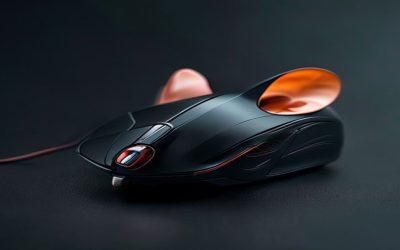
Every millisecond counts in competitive gaming, and mouse weight is one of the few hardware variables you can feel immediately. A heavy mouse forces your arm and wrist to work harder across long sessions, introducing micro-fatigue that compounds into slower reaction times and less precise flicks. The shift toward sub-60g mice over the past few years is not marketing hype — it reflects a real ergonomic and mechanical advantage. Less mass means less inertia, faster directional changes, and reduced strain during marathon ranked sessions. The catch: shaving grams usually means shaving material, and thinner shells can feel hollow, buttons can feel mushy, and scroll wheels can rattle. The best lightweight gaming mice of 2026 have largely solved these problems. Here are the five you should actually consider.
In a hurry? See the top-rated Lightweight Gaming Mouse deals available right now:
🛒 Check Lightweight Gaming Mouse Prices on Amazon →🛒 Best Price Today on Amazon
Prime members get fast, free shipping on everything above, plus member-only deals. New members get a 30-day free trial — cancel anytime.
Start 30-Day Prime Free Trial →See Today’s Amazon DealsThe 5 Best Lightweight Gaming Mice in 2026
Logitech G Pro X Superlight 2
The G Pro X Superlight 2 has become the default recommendation for competitive FPS players for good reason. It sits at exactly 60 grams — the upper boundary of this category — but it uses that budget wisely. The shell feels solid rather than hollow, the primary clicks have a crisp, consistent pre-travel with a satisfying snap, and the right and left buttons are symmetrical enough for most grip styles despite being a right-handed design.
The HERO 25K sensor is among the most respected in the industry. It tracks up to 25,600 DPI with zero smoothing, filtering, or hardware acceleration at any sensitivity setting. Real-world performance matches the spec sheet: zero pixel skipping, excellent angle snapping control at lower DPI ranges, and consistent lift-off distance that stays predictable across hard and soft pads. If you play at 400–800 DPI like most competitive players, the HERO 25K delivers clean, raw input data every time.
Wireless performance runs on Lightspeed at 1ms polling, matching wired latency in every practical test. Battery life sits around 95 hours at 1ms polling, one of the longest in this weight class. The mouse uses a single AA battery hidden under a magnetic cover, which adds a touch of weight but maintains balance without a counterweight system.
Pros: Best-in-class click feel, excellent build quality, rock-solid sensor, long battery life.
Cons: Pricier than most competitors, no onboard memory for DPI profiles without software, scroll wheel could use more tactile steps.
Razer Viper V3 Pro
The Razer Viper V3 Pro comes in at 54 grams and is the most aerodynamically refined mouse on this list. Razer abandoned the ambidextrous layout of its predecessors in favor of a right-handed shell with a more aggressive arch, and the result is a mouse that fits palm and claw grips particularly well for medium-to-large hands. The side buttons have improved significantly over the V2 generation — they click cleanly without wobble, a historic weak point for Razer’s lighter mice.
The Focus Pro 35K sensor is the headliner. Razer’s top-spec sensor resolves up to 35,000 DPI and includes on-board intelligence for surface calibration, tilt rejection, and asymmetric cut-off control. In practice, tracking is indistinguishable from the HERO 25K at competitive sensitivities. Where Focus Pro edges ahead is at very high lift-off speeds — the tilt rejection keeps tracking accurate when you pick up the mouse aggressively and re-plant, a move common in low-sensitivity players who run out of pad space.
HyperSpeed Wireless operates at 4K polling when paired with a compatible Razer dongle and PC, making it one of the few sub-60g wireless mice to offer polling rates above 1000Hz. Battery life is approximately 80 hours at standard 1K polling, dropping to around 55 hours at 4K. The trade-off is real but manageable for tournament players who charge nightly.
Pros: Exceptional sensor, 4K polling wireless support, refined right-hand ergonomics, improved side buttons.

Cons: 4K polling requires Razer ecosystem buy-in, slightly higher price, shape may not suit small hands.
Pulsar X2
At 52 grams, the Pulsar X2 is the most accessible sub-55g mouse on this list in terms of both price and availability. Pulsar offers it in both wired and wireless configurations, and the wireless version adds only a few grams over the wired — a feat that smaller manufacturers rarely pull off cleanly. The ambidextrous shell works for right- and left-handed players and accommodates fingertip and claw grips especially well. Palm grip users with large hands may find the hump sits too far back.
The PAW3395 sensor used in the X2 is a PixArt flagship that has earned wide trust across competitive peripherals. It tracks up to 26,000 DPI with no angle snapping or acceleration by default. Consistency is the word that best describes the PAW3395 — it behaves the same at 400 DPI as it does at 3,200, and surface compatibility is broad enough that you will not need to calibrate for most gaming pads. Lift-off distance is short and configurable via Pulsar’s Fusion software.
The clicks deserve specific mention. Pulsar uses Kailh GM 8.0 switches on the primary buttons, which deliver a snappier, lighter actuation than the optical switches found on some competitors. This suits players who tap-click frequently or rely on rapid double-clicks. The trade-off is that lighter switches can register unintended clicks under very aggressive button mashing — something to consider if you play genres that demand sustained button holding over rapid tapping.
Pros: Best weight-to-price ratio in the category, genuine ambidextrous fit, reliable PAW3395 sensor, available wired or wireless.
Cons: Shell flex is noticeable under a firm grip, software feature set is more limited than Logitech or Razer.
Finalmouse Starlight-12
The Finalmouse Starlight-12 sits at 42 grams and is in a different weight class from everything else on this list. It is the lightest wireless gaming mouse you can buy from a mainstream performance-focused brand, and the weight reduction is immediately noticeable when you pick it up. The magnesium alloy shell feels exotic — nothing else in your setup will match it for raw lightness. For players who have never used a sub-50g mouse, the Starlight-12 is a genuinely jarring experience.
The Finalsensor is Finalmouse’s proprietary implementation, and it performs admirably — consistent tracking, minimal jitter, and predictable lift-off. It does not publish a raw DPI spec in the same way PixArt or Logitech do, which frustrates data-oriented buyers, but in practice the sensor competes with PAW3395-class hardware at competitive sensitivities. Where Finalmouse focuses its engineering is on the overall system: the wireless connection is tight and low-latency, and the software footprint is intentionally minimal.
The honest caveat: the Starlight-12 is not without compromise. At 42 grams, the shell requires a different grip approach — you cannot death-grip it without distorting the clicks. The primary buttons are among the most sensitive on this list, which is a positive for rapid inputs but a negative if you rest fingers lightly on buttons between actions. The limited availability and premium pricing also make it the hardest to recommend broadly. But for fingertip-grip players in fast-paced titles like CS2, Valorant, or Apex, the weight advantage is real and meaningful.

Pros: Lightest mouse on this list by a significant margin, premium magnesium build, tight wireless performance.
Cons: Very limited availability, highest price, sensitive buttons require grip adjustment, no DPI spec transparency.
Endgame Gear XM2we
The Endgame Gear XM2we lands at 63 grams — technically just over the 60g threshold, but it earns its place here as the best budget entry point for players who want wireless performance without spending flagship money. The right-handed shape is conservative and versatile, fitting most hand sizes in palm and claw configurations without the learning curve of more aggressive ergonomic designs. Build quality is better than its price suggests: no noticeable shell flex, well-seated side buttons, and a scroll wheel with clear, defined steps.
The PAW3370 sensor is one generation behind the PAW3395 but remains a capable, trustworthy performer. It maxes out at 19,000 DPI — well above anything a competitive player would use — and delivers accurate, smooth tracking at low sensitivities. The main practical difference from the 3395 is a slightly higher floor for lift-off distance and marginally less surface flexibility, neither of which will matter for most setups. For players stepping up from a wired budget mouse, the XM2we’s sensor will feel like a significant upgrade.
Wireless range and latency are solid for the price. Endgame Gear’s 2.4GHz implementation does not match Logitech’s Lightspeed or Razer’s HyperSpeed in engineering sophistication, but connection drops are not a real-world concern in standard desktop distances. Battery life is approximately 70 hours, competitive for the category. At its street price, the XM2we undercuts every other mouse on this list by a meaningful margin while delivering wireless freedom and a reliable sensor — a combination that is genuinely rare.
Pros: Best value wireless option, reliable PAW3370 sensor, versatile ergonomics, solid build for the price.
Cons: Slightly over 60g, older sensor generation, 2.4GHz implementation is not class-leading, fewer software features.
Comparison Table
| Mouse | Weight | Sensor | Max DPI | Connection | Price Tier |
|---|---|---|---|---|---|
| Logitech G Pro X Superlight 2 | 60g | HERO 25K | 25,600 | Wireless (Lightspeed) | Premium |
| Razer Viper V3 Pro | 54g | Focus Pro 35K | 35,000 | Wireless (HyperSpeed) | Premium |
| Pulsar X2 | 52g | PAW3395 | 26,000 | Wired / Wireless | Mid |
| Finalmouse Starlight-12 | 42g | Finalsensor | N/A | Wireless | Ultra-Premium |
| Endgame Gear XM2we | 63g | PAW3370 | 19,000 | Wireless | Budget |
How to Choose the Best Lightweight Gaming Mouse
Weight is a spectrum, not a binary. The difference between 42g and 63g is significant over hours of play, but the difference between 52g and 60g is far smaller than specs suggest. If you have never used a sub-60g mouse before, start at the 55–60g range before committing to an ultra-light build. Grip re-learning takes time, and a mouse you cannot hold comfortably is worse than a slightly heavier one that feels natural.
Grip style determines shape compatibility more than any other factor. Palm grip players need a defined hump and enough length to support the full hand — the XM2we and G Pro X Superlight 2 serve this group well. Claw grip players have the widest compatibility and will find most mice on this list workable. Fingertip grip players benefit most from shorter, flatter profiles and will likely prefer the Pulsar X2 or Finalmouse Starlight-12.

Do not chase DPI numbers. The gap between 19,000 DPI (PAW3370) and 35,000 DPI (Focus Pro 35K) is meaningless in practice — no competitive player runs above 3,200 DPI, and most use 400–1,600. What matters is sensor consistency at your actual sensitivity, lift-off predictability, and whether the sensor introduces smoothing or acceleration. Every sensor on this list passes that bar.
Wireless versus wired in 2026. Modern 2.4GHz wireless implementations from Logitech and Razer are genuinely indistinguishable from wired in latency tests. The only remaining argument for wired is eliminating battery management from your routine. If you compete at a level where forgetting to charge your mouse would be catastrophic, go wired. For everyone else, wireless removes one source of desk clutter and gives you cleaner mouse movement without cable drag.
Click feel is subjective but matters. Optical switches (found in some Razer models) eliminate double-click failures over time but can feel slightly different to players used to mechanical switches. Kailh and Omron mechanical switches are lighter, snappier, and more familiar. If you test-grip mice at a retail store, focus on how the primary buttons feel under rapid, light taps rather than slow deliberate presses — that is closer to how you will actually use them.
Budget allocation. Spending more buys better wireless technology, tighter tolerances, and more durable switches — not meaningfully better sensors above a certain tier. The PAW3370 in the XM2we is a legitimate competitive sensor. If your budget is limited, the XM2we is not a compromise pick — it is a smart one.
Final Verdict
For most competitive players, the Razer Viper V3 Pro is the best lightweight gaming mouse in 2026. The combination of 54g weight, a top-tier sensor, 4K polling wireless capability, and improved ergonomics addresses every meaningful category. It is not cheap, but it delivers at every level of play.
If you want the absolute best click feel and the most polished overall package, the Logitech G Pro X Superlight 2 remains a legitimate alternative that many professionals still prefer. The 6-gram weight difference over the Viper V3 Pro is barely perceptible, and Logitech’s build consistency is hard to argue with.
For players on a budget, the Endgame Gear XM2we punches well above its price. Yes, it sits at 63 grams. No, you will not notice 3 grams. The wireless freedom and solid sensor make it the right choice when price is a constraint.
If you are a fingertip-grip player who wants to explore what a truly ultra-light mouse feels like and can accept limited availability and a premium price, the Finalmouse Starlight-12 is the one to try. At 42 grams, it redefines what wireless mice can weigh.
The Pulsar X2 fills the mid-range gap cleanly — better specs than the XM2we, more accessible than the premium flagships, and genuinely ambidextrous. Left-handed players in particular have few better options in this weight class.
Weight reduction in gaming mice has reached a point where every mouse on this list is competitive at the highest levels. The decision now comes down to feel, fit, and budget — not whether a lighter mouse will actually improve your aim. It will. The question is which one fits your hand.
Frequently Asked Questions
What counts as a lightweight gaming mouse?
A lightweight gaming mouse generally weighs under 60-65 grams, with ultralight models below 50. The reduced weight makes flicks and tracking faster and less tiring during long sessions.
Are lightweight mice better for gaming?
For fast-paced and competitive games, yes. The lower weight reduces fatigue and lets you aim more quickly. Grip comfort and sensor quality still matter alongside weight.
Do lightweight mice sacrifice features?
Some shed extra buttons, RGB, or use minimalist shells to cut weight, but many modern lightweight mice keep quality sensors and switches. You rarely sacrifice core performance.
Lightweight wired or wireless mouse?
Wireless lightweight mice remove the cable weight and drag entirely and now match wired performance. A wired lightweight mouse is a cheaper option if you do not mind a cable.
Related Articles
Looking for more on this topic? Browse the hand-picked guides below — each one applies the same scoring rubric used in this review.
Ready to decide? Our #1 pick for 2026 is the Mouse.
Live price & availability on Amazon.