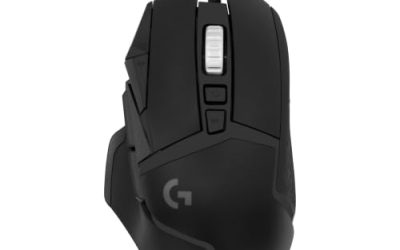
Oxygen Not Included asks a lot from your mouse. Every session is a long stretch of clicking, dragging, and zooming across a sprawling asteroid base. You place tiles one square at a time, route pipes and wires through tight corridors, and sweep the camera across rooms full of duplicants.


A good mouse for this game is not about the biggest sensitivity number on the box. It is about a shape that stays comfortable through a long colony session, a sensor that lands the cursor on a single tile, and enough buttons to put overlays and camera controls within easy reach.
As an Amazon Associate, we earn from qualifying purchases.
Quick Answer
For most Oxygen Not Included players, the HyperX Pulsefire Haste Wireless is the best all-round pick, pairing a light 61-gram body with a precise sensor and a battery that lasts up to 100 hours. Budget players should start with the wired SteelSeries Rival 3, while the Razer Naga V2 Pro suits players who want a full grid of thumb buttons for hotkeys.
SteelSeries Rival 3
The SteelSeries Rival 3 is the simplest mouse in this lineup, and that simplicity is why it works so well here. It is a wired mouse with a comfortable right-handed shape, six programmable buttons, and a sensor that tracks cleanly at the low sensitivities most base builders prefer. Its TrueMove Core optical sensor reaches up to 8,500 CPI, more than enough for a game where the cursor moves across a two-dimensional base rather than flicking between targets. It tracks at up to 300 inches per second with 35G acceleration, so fast sweeps across a large colony stay smooth. At 77 grams it is light enough to move all day without wearing out your wrist.
Specs
- Sensor: SteelSeries TrueMove Core optical, up to 8,500 CPI
- Tracking: 300 IPS, 35G acceleration, 1000Hz polling rate
- Buttons: 6 programmable buttons, split trigger design
- Switches: Mechanical switches rated for 60 million clicks
- Weight: 77 grams
- Cable: 1.8-meter rubber cable
- Lighting: 3-zone Prism RGB
- Tier: budget
HyperX Pulsefire Haste Wireless
The HyperX Pulsefire Haste Wireless is the best all-round mouse for Oxygen Not Included, and the reason is balance. It weighs just 61 grams, runs for up to 100 hours on a single charge, and its Pixart PAW3335 sensor tracks precisely up to 16,000 DPI. The honeycomb shell keeps the weight down and keeps your palm cooler during long play sessions. Six programmable buttons cover the essentials, and the two main buttons use TTC Golden micro dustproof switches for a clean, tactile click. A 2.4GHz wireless connection delivers a 1ms report rate, and the detachable HyperFlex USB-C cable lets you keep playing while the battery charges.
Specs
- Sensor: Pixart PAW3335 optical, up to 16,000 DPI
- Tracking: 450 IPS, 40G acceleration, 1000Hz polling rate
- Buttons: 6 programmable buttons
- Switches: TTC Golden micro dustproof switches
- Weight: 61 grams
- Battery: Up to 100 hours, rechargeable lithium polymer, USB-C charging
- Connection: 2.4GHz wireless with 1ms report rate, wired mode via HyperFlex cable
- Lighting: RGB scroll wheel, customizable in HyperX NGENUITY
- Tier: mid-range
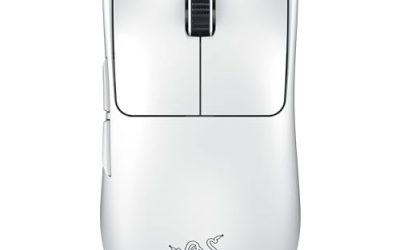
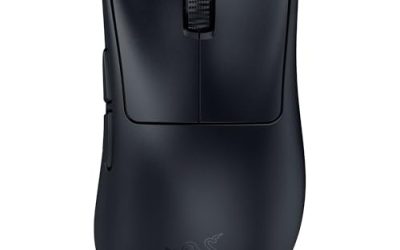
Razer Viper V2 Pro Black
The Razer Viper V2 Pro is the lightest mouse on this list at 58 grams, and that featherweight body suits the constant camera work Oxygen Not Included demands. Panning across a tall base and zooming in to place a single vent feel quick and effortless, and the symmetrical shape suits both palm and fingertip grips.
Its Focus Pro 30K optical sensor tracks up to 30,000 DPI with flawless precision, and the real benefit for this game is control at low sensitivity: small, deliberate movements land exactly where you aim. Razer Optical Mouse Switches Gen-3 are rated for a 90-million-click lifecycle and remove the risk of double-clicking when issuing rapid build commands. Battery life runs up to 90 hours, and on-mouse DPI controls let you switch between five sensitivity stages without opening any software.
Specs
- Sensor: Razer Focus Pro 30K optical, up to 30,000 DPI
- Tracking: 750 IPS, 70G acceleration, 1000Hz polling rate
- Buttons: 5 programmable buttons plus on-mouse DPI controls
- Switches: Razer Optical Mouse Switches Gen-3, rated for 90 million clicks
- Weight: 58 grams
- Battery: Up to 90 hours, rechargeable, USB-C charging
- Connection: Razer HyperSpeed Wireless, wired mode via USB-C cable
- Shape: Symmetrical, ambidextrous design
- Tier: premium
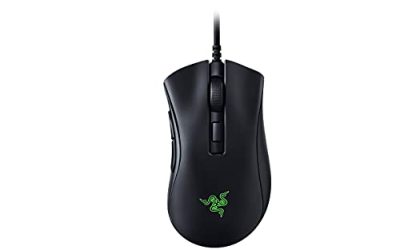
Razer Orochi V2 Quartz Pink

The Razer Orochi V2 is the smallest mouse in this lineup, and its compact shape suits players with smaller hands or crowded desks. It weighs under 60 grams before the battery is installed, and its short, low body makes it easy to lift and reposition during long sessions.
Its 5G Advanced 18K DPI optical sensor tracks up to 18,000 DPI, far more sensitivity than this game needs, so it tracks cleanly at the low settings most players actually use. The mouse connects over Bluetooth or Razer HyperSpeed Wireless, and battery life is remarkable: up to 950 hours on Bluetooth and up to 425 hours on HyperSpeed from a single AA or AAA battery. Six programmable buttons cover the basics, and the second-generation mechanical switches give the clicks a crisp, satisfying feel.
Specs
- Sensor: Razer 5G Advanced 18K DPI optical, up to 18,000 DPI
- Tracking: 450 IPS, 40G acceleration, 1000Hz polling rate
- Buttons: 6 programmable buttons
- Switches: 2nd-generation Razer mechanical mouse switches
- Weight: Under 60 grams without battery
- Battery: Up to 950 hours on Bluetooth, up to 425 hours on HyperSpeed, one AA or AAA battery
- Connection: Bluetooth and Razer HyperSpeed Wireless
- Color: Quartz Pink
- Tier: mid-range
Razer Naga V2 Pro

The Razer Naga V2 Pro is the most button-heavy mouse on this list. It ships with three swappable side plates that give you 2, 6, or 12 thumb buttons, for a total of up to 19 programmable buttons plus the scroll wheel. Map the 12-button plate to overlays, camera controls, and build-menu shortcuts, and you can run most of the game without moving your left hand off the keyboard.
The Focus Pro 30K optical sensor tracks up to 30,000 DPI with 750 IPS and 70G acceleration, so cursor control stays precise during fast sweeps across a large base. The HyperScroll Pro wheel switches between a tactile, notched mode and a free-spin mode for long lists of build options. Battery life runs up to 150 hours on HyperSpeed Wireless and up to 300 hours on Bluetooth. At 134 grams with the 12-button plate attached, it is the heaviest mouse here, and that weight is the trade-off for the buttons.
Specs
- Sensor: Razer Focus Pro 30K optical, up to 30,000 DPI
- Tracking: 750 IPS, 70G acceleration, 1000Hz polling rate
- Buttons: Up to 19 programmable buttons plus scroll wheel, 3 swappable side plates with 2, 6, or 12 thumb buttons
- Switches: Razer Optical Mouse Switches Gen-3, rated for 90 million clicks
- Weight: 134 grams with 12-button side plate
- Battery: Up to 150 hours on HyperSpeed Wireless, up to 300 hours on Bluetooth
- Connection: Razer HyperSpeed Wireless, Bluetooth, wired USB-C
- Scroll wheel: HyperScroll Pro with tactile and free-spin modes
- Tier: premium
How to choose
Start with your grip and your desk. Oxygen Not Included rewards small, precise movements, so a mouse that fits your hand matters more than any specification on the box. Palm-grip players will be comfortable with the larger shapes of the Rival 3 and the Naga V2 Pro, while fingertip players will prefer the lighter, smaller bodies of the Viper V2 Pro and the Orochi V2.
Next, think about weight. Long sessions punish heavy mice, and a mouse under 65 grams, like the Viper V2 Pro or the Pulsefire Haste Wireless, keeps your wrist fresher across a long colony build, while a heavier mouse like the Naga V2 Pro trades that comfort for a full grid of thumb buttons.
Then count the buttons you will actually use. Most players need only the two main buttons, a scroll wheel, and one or two side buttons for overlays and camera controls, and all five mice here cover that. The extra buttons on the Naga V2 Pro only pay off if you enjoy building a personal hotkey layout and sticking with it. Finally, choose wired or wireless based on your desk, not on latency.
Who should skip
Skip the Razer Naga V2 Pro if you have small hands or dislike heavy mice, because its 134-gram body will feel bulky during long sessions, and its extra thumb buttons only help if you commit to using them. Skip the Razer Orochi V2 if you have large hands, because its compact body can cause cramping over a long evening of play. Skip the Razer Viper V2 Pro if you want a lot of programmable buttons, because its five buttons cover the basics and little more. Skip the HyperX Pulsefire Haste Wireless if you dislike open honeycomb shells, since dust can collect in the cutouts. Skip the SteelSeries Rival 3 if you want a wireless setup, because it is wired only.
Frequently Asked Questions
Do I need a high-DPI mouse for Oxygen Not Included?
No. This game is played at low sensitivity, so sensor quality matters more than the maximum DPI number. A mouse that tracks cleanly at 800 or 1600 DPI will serve you better than a high-DPI mouse with poor low-speed control.
Is a wireless mouse good enough for this game?
Yes. Oxygen Not Included is not a reaction-time shooter, so the small latency differences between wired and wireless mice do not affect play. The wireless mice here use 2.4GHz connections with a 1ms report rate, and their batteries last for weeks between charges.
How many buttons do I need?
Most players need five or six buttons: two main clicks, a scroll wheel, and one or two side buttons for overlays, pause, and camera controls. The Naga V2 Pro adds a full thumb grid for players who want to bind every overlay and shortcut to the mouse, but that many buttons is a preference, not a requirement.
Does mouse weight matter for a slow strategy game?
Yes, more than most players expect. Sessions often run for hours, and a light mouse reduces wrist fatigue over that time. Mice under 65 grams, like the Viper V2 Pro and the Pulsefire Haste Wireless, stay comfortable far longer than heavier models.
Final verdict
The best mouse for Oxygen Not Included is the HyperX Pulsefire Haste Wireless, because it balances the three things this game rewards most: a light body that stays comfortable for hours, a precise sensor that lands the cursor where you aim, and a battery that lasts up to 100 hours between charges. Players on a budget should buy the SteelSeries Rival 3. Players who want the lightest possible mouse should pick the Razer Viper V2 Pro, players with small hands should look at the Razer Orochi V2, and players who live by hotkeys should choose the Razer Naga V2 Pro. Whichever you pick, a mouse that fits your hand will do more for your colony than any specification on the box.
Product and ASIN Reference
| Product | ASIN |
|---|---|
| SteelSeries Rival 3 | B08176SM7C |
| HyperX Pulsefire Haste Wireless | B09TLCRGMN |
| Razer Viper V2 Pro Black | B09VCR969M |
| Razer Orochi V2 Quartz Pink | B0BFJSFS7V |
| Razer Naga V2 Pro | B0BGJTLFN5 |