

The NEEWER Microphone Arm Stand Suspension Scissor is one of the most accessible entry points into a proper desk-mounted microphone setup. It is a classic scissor-style boom arm — twin sprung steel sections that fold in and out to cover the area around the desk — paired with a desk clamp that fits the typical sub-2-inch desk lip. With pricing around $25, it is the natural first purchase for a streamer or podcaster who has been using a tabletop tripod and wants to get the mic up and off the desk. This NEEWER Microphone Arm review covers the specifications, build, reach, mic compatibility and value.

NEEWER Microphone Arm Stand, Suspension Scissor Boom Mic Desk Mount, MS006



As an Amazon Associate we earn from qualifying purchases. Product prices and availability are accurate as of the date/time indicated.
🛒 Best Price Today on Amazon
Prime members get fast, free shipping on everything above, plus member-only deals. New members get a 30-day free trial — cancel anytime.
As an Amazon Associate we earn from qualifying purchases.




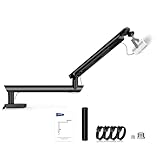

NEEWER Microphone Arm Suspension Scissor at a Glance
| Specification | Detail |
|---|---|
| Arm type | Scissor-style spring boom (twin-section) |
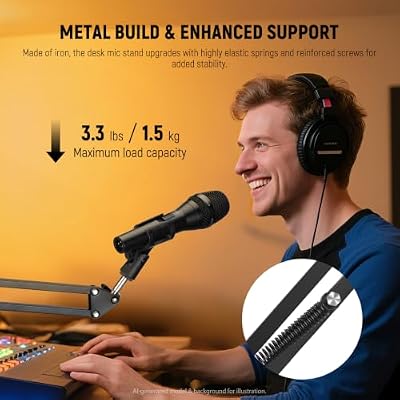
| Load capacity | Light-to-medium mics; suits the typical USB and small XLR class up to roughly 1.5 lb |
| Mic compatibility | Most USB and XLR mics via 5/8-inch and 3/8-inch threaded screws |
| Mount type | C-clamp; desk lip up to about 2 inches |
| Reach | Horizontal extension around 30 inches; vertical reach around 30 inches |
| Cable management | External hook-and-loop wraps along the arms |
| Construction | Steel scissor arms with plastic joints and end caps |
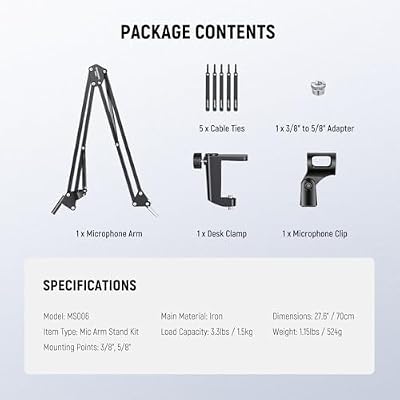
| Included accessories | Desk clamp, mic mount screws, cable wraps |
| Approx price | Around $25 |
Build Quality & Materials
The NEEWER scissor arm is built around a pair of sprung steel scissor sections — the classic radio-broadcast design that has been around for decades. The metal arms carry the load, while the pivot joints and end caps are plastic. For a budget arm at around $25, that mix is honest: the structural elements are metal where it matters, and the plastic at the joints keeps cost and weight down. Out of the box the finish is matte black and tidy, with the sprung sections offering enough tension to hold a typical USB microphone in any reasonable position.
The desk clamp is the weakest part of the assembly and the area where the budget price shows. It works well on typical desks with a flat underside, but on thicker or curved desk edges the clamp can struggle. Hand-tighten it firmly during installation and re-check after the first few hours of use — scissor arms move every time you adjust the mic, and a clamp that is fractionally loose at install will wander further with each adjustment. Inside the price tier the build is appropriate, but it is built to a budget rather than to a premium standard.
Reach & Adjustability
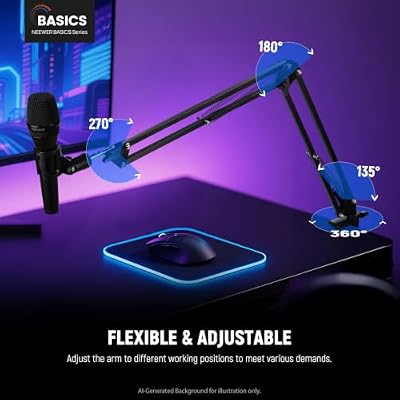
For a budget scissor arm the reach is genuinely useful. The twin spring sections fold to position the microphone anywhere within roughly a 30-inch radius of the clamp, with comparable vertical adjustment, which is plenty for the typical desk where the user sits 18 to 24 inches from the mic. The arm folds back close to the clamp when not in use, and extends to bring the mic in front of the face when streaming or recording. The full sweep means the mic can be parked out of the way and pulled into position only when needed.
Adjustability is via the sprung scissor mechanism rather than friction joints — you push the arm where you want it and the springs hold it there. That is fast and intuitive in use, but it does have a characteristic side-effect: scissor arms are louder than spring-and-damping designs, with a faint creak or twang during fast movement. If you adjust the mic mid-stream the noise will be picked up. Move the arm slowly between segments or during breaks rather than mid-take, and the design works well for the price.
Cable Management
Cable management on this arm is external rather than channelled. NEEWER supplies hook-and-loop wraps that secure the mic cable along the outside of the scissor arms, which keeps the cable tidy and routed but does not hide it. For a USB mic the single USB cable is straightforward to wrap; for an XLR mic with a separate XLR cable plus a phantom-power cable from an interface, plan the routing carefully so cables are not stressed at the pivot points.
Leave a small amount of slack at each joint so the springs can fully extend or fold without pulling on the cable, and route the cable down behind the desk in a single tidy run. Done well the result is neat enough for a streaming desk, and the external routing has the upside of being easy to service if a cable needs replacing later. Pair the arm with a tidy best gaming desks setup and the overall look is clean.
Mic Compatibility — Blue Yeti / HyperX / Shure
This arm is best matched to lighter microphones — small USB condensers, the popular HyperX QuadCast and SoloCast, the Shure MV7 family with its modest weight, and most lightweight XLR dynamics. With the supplied 5/8-inch and 3/8-inch threaded screws it will fit virtually any mic in that class. For the Blue Yeti, however, you need to think carefully: a Blue Yeti plus its shock mount can reach roughly 3.4 lb total, which is at the upper edge of what a budget scissor arm is happy to carry. It can be done, but the springs sag noticeably and the arm needs to be adjusted to a position where the springs do not have to fight gravity continuously.
If you own a Blue Yeti specifically, one of the heavier-duty arms in this guide is the safer recommendation. For a HyperX QuadCast, a Shure MV7, a Rode NT-USB Mini or one of the many lighter USB mics in the best USB microphones category, the NEEWER scissor arm is well sized and the budget price genuinely makes sense. See our best streaming microphones guide for mic recommendations that pair naturally with a scissor arm.
Installation & Setup
Installation is one of the genuine strengths of this arm. The desk clamp ships pre-assembled — slide the jaw under the rear edge of the desk, position the clamp where the arm will sit, and tighten the bolt by hand until firm. The arm then drops into the clamp socket. The mic mount is supplied with both 5/8-inch and 3/8-inch threaded screws, so you simply pick the size your microphone uses and thread the mount on. Total setup time is ten to fifteen minutes for one person.
The clamp is the part to check carefully. It is designed for desks with a flat underside and a lip of roughly 2 inches or less, which covers most gaming and office desks. Thicker desks, curved-edge desks or desks with a thick reinforcing rail will not work well — measure the desk before purchase. If the clamp feels loose after install, you can add a thin rubber pad between the clamp jaws and the desk surface for additional grip, which is a common upgrade for budget scissor arms.
Verdict
The NEEWER Microphone Arm Suspension Scissor is the right buy for a specific user: a streamer or podcaster moving from a tabletop tripod to a desk-mounted arm for the first time, running a light or medium-weight microphone, and looking to spend around $25 rather than $100. Inside that envelope it delivers what it should — broad mic compatibility, useful reach, simple installation and a clean enough appearance for a streaming desk.
It is not the right buy for users with heavy mics like the Blue Yeti, users who adjust the mic frequently mid-stream (the scissor creak will be picked up), or users who want the quietest possible damping. For those buyers, look further down the list at the spring-and-damping arms. For the budget setup with a light USB mic, however, the NEEWER scissor arm is one of the most sensible streaming purchases at the price. Combine it with a webcam from our best streaming webcams guide and the rest of our best streaming gear recommendations for a complete streaming desk.
Frequently Asked Questions
Will this arm hold a Blue Yeti?
It can be done, but the Blue Yeti at roughly 3.4 lb assembled is at the upper edge of what this budget scissor arm carries comfortably. The springs will sag noticeably and the arm must be positioned so the springs are not fighting gravity. For a Blue Yeti specifically, a heavier-duty arm is the safer recommendation.
What microphones does this arm fit?
It fits virtually any USB or XLR microphone via the supplied 5/8-inch and 3/8-inch threaded screws. It is best matched to lighter mics such as the HyperX QuadCast, Shure MV7, Rode NT-USB Mini and most lightweight USB condensers.
How thick a desk does the clamp fit?
The clamp fits a desk lip up to roughly 2 inches thick, which covers most gaming and office desks. Thicker desks, curved-edge desks or desks with a reinforcing rail will not work well — measure the desk before purchase.
Is a scissor arm noisier than a spring-and-damping arm?
Yes. Scissor arms have a characteristic faint creak or twang during fast movement that a microphone will pick up. Move the arm between takes rather than mid-take, and the design works well for the price.
More Boom Arm Reviews
- NEEWER Boom Scissor Mic Arm with Screws Review
- NEEWER Low Profile Mic Arm with Damping 360° Review
- InnoGear Boom Arm for Blue Yeti and HyperX QuadCast Review
- RØDE PSA1+ Professional Studio Arm Review (Black)
- RØDE PSA1+ Professional Studio Arm Review (White)
- RØDE PSA1 Professional Studio Arm Review (Original)
- InnoGear Heavy Duty Mic Stand for Blue Yeti with Pop Filter Review
- TONOR Microphone Arm Stand with Pop Filter Review
Affiliate Disclosure: As an Amazon Associate, we earn from qualifying purchases. If you click a link and make a purchase, we may earn a small commission at no extra cost to you. Prices and availability are accurate as of publication and may change.
Ready to decide? Our #1 pick for 2026 is the Arm type.
Live price & availability on Amazon.


