Mortal Sin is a first-person melee roguelike from solo developer Nikola Todorovic that spent two years in Early Access before its full release on 29 August 2025. Linux players searching for it meet a confusing picture: ProtonDB’s page carries a native-support heading, the game is Steam Deck Verified, and one member of its own Steam family flags Linux outright. This article reads the primary records — Steam’s flags, requirements, depots and assets, Valve’s Deck sheet, the ProtonDB summary and GOG’s product record — and separates what is sold from what the paperwork suggests.
The short version: there is no native Linux build of Mortal Sin to buy anywhere. Linux players instead get a Windows build with an unusually strong compatibility file — Platinum on ProtonDB, Verified on Steam Deck. The family’s one Linux flag belongs to the soundtrack, and it buys audio files, not a port.
As an Amazon Associate, we earn from qualifying purchases.
Quick answer
No. Mortal Sin is not native on Linux: Steam’s record flags Windows only, its Linux and Mac requirements fields are empty, and its single content depot is the Windows build. The Windows copy is Deck Verified and rated Platinum on ProtonDB from nine reports, so Linux and Steam Deck players run it through Proton. GOG sells the same Windows build only.
The record, layer by layer
Start with the platform flags on the game’s own Steam record: Windows true, Mac false, Linux false. The requirements tabs agree — the Windows tab is genuinely populated in both tiers (minimum: Windows 7, Core i5-2500K, 8 GB RAM, GeForce GTX 670; recommended: Windows 10, Core i5-6600K, GTX 1060; 3 GB storage either way), while the Mac and Linux requirements fields are absent entirely. The fields simply do not exist.
The depot census settles what the flags suggest. The game ships exactly one content depot, 1494811 “Mortal Sin Content” at 3.32 GiB, inside the single store purchase package — no Linux depot, no Mac depot, no shared depot, no ghost depot in reserve. SteamDB detects a Unity build with the Mono runtime, and the registered assets are clienticon, clienttga, icon, logo and logo_small: no LinuxClientIcon in any form, so neither the fossil-icon shape nor the inverse-icon case arises. Every layer points the same way. The record also lists full controller support, which matters for the Deck section below.
One timeline note belongs here, because this game is often assumed to still be in Early Access. It is not. SteamDB shows an Early Access release on 15 March 2023 and a full release on 29 August 2025; the store record confirms that date with coming soon set to false, and the public branch reached a new build in November 2026.
The family’s only Linux flag sells music
The record lists exactly one DLC app, read individually: app 2493860, the Mortal Sin Soundtrack, type music, released in July 2023. Its flags read Windows true, Mac true and Linux true — all three, beside a base game that flags Windows alone. That is the soundtrack all-true trap in textbook form: a flag-counting scan would report Mortal Sin as a Windows, Mac and Linux title, when the only cross-platform member is a folder of audio files.
The trap matters because it is the family’s sole Linux flag. Nothing else in the record claims Linux at all. If a summary or search snippet tells you Mortal Sin supports Linux natively, the soundtrack’s flag set is almost certainly where that claim was manufactured.
The Deck sheet is real, and it is old
Valve’s own compatibility endpoint answers directly: resolved category 3, Verified. All four checks pass — the default controller configuration is fully functional, the game shows Steam Deck controller icons, interface text is legible, and the default graphics configuration performs well. SteamOS separately resolves to Compatible. The sheet names proton-stable as the recommended runtime, which independently confirms the ruling above: Valve graded the Windows build under Proton, because there is no other build to grade.
The paperwork’s date is the caveat. The test metadata, read through SteamDB’s republication of Valve’s sheet and disclosed as such, records a test on 23 August 2023 against build 11988859 — an Early Access build, tested two years before the 1.0 release; the public branch now serves a far later build from November 2026. The badge has never been re-earned against the finished game, which makes this a supplement candidate in the usual sense: genuine verdict, stale test. Community evidence since release, covered next, fills the gap.
The Proton file
ProtonDB’s summary API returned a full read, with control app 570 answering normally alongside it: settled tier Platinum, best-reported Platinum, trending Platinum, nine reports, confidence moderate. A Platinum headline on nine reports is a strong per-report signal with a thin base — every filer ran the game at the top tier, but one bad configuration could move a sample this small.
The report text supports the tier. Recent filings on current Proton run out of the box with no tinkering steps. One Steam Deck filer describes slowdowns into the forty-frame range in busy scenes, and reports holding sixty by lowering the render resolution to 960 by 600 with sharpening — a practical note for Deck owners, since the stylised look tolerates the drop well. An older GE-Proton filing records one crash in roughly six hours that a switch of compatibility tool resolved. Every report is a Proton run of the Windows copy.
The heading check was completed, and it is wrong. ProtonDB’s game page carries the stray “Natively Supports:” heading above its requirements block, the recurring paperwork error this series tracks. Steam’s record contradicts it on flags, requirements, depots and assets alike, and ProtonDB’s own Platinum classification describes Proton performance, not a port. This article follows Steam, and names the heading so readers who land on that page first are not misled.
On anti-cheat, the record is quiet in a way that fits a single-player game: none is named on the Steam record, the category list is single-player only, and the AWACY database at the AreWeAntiCheatYet project — read in full, 1,167 entries — holds no entry for Mortal Sin in either direction. That is documentation silence, not a clearance; there is no multiplayer surface to guard.
The other storefront
GOG sells Mortal Sin. The ruling rests on GOG’s own product API record, not on search results: product 1163819466, whose content system compatibility reads Windows true, OSX false, Linux false. The GOG edition, which arrived on that storefront in November 2025, is a DRM-free copy of the same Windows build — a legitimate reason to prefer it for archival purposes, and no help at all if you wanted a native Linux version.
Gear that fits the record
The gear below follows the record’s shape: the handheld the badge was written for, two pads, a mouse for desktop sessions, and library storage.
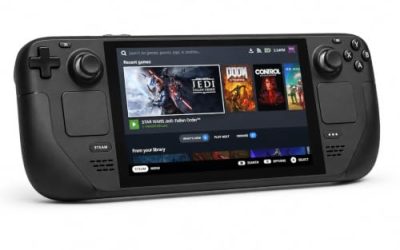
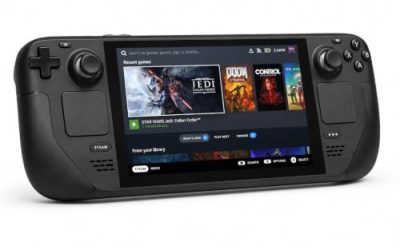
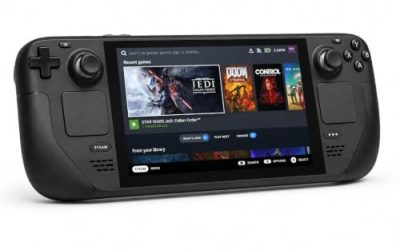
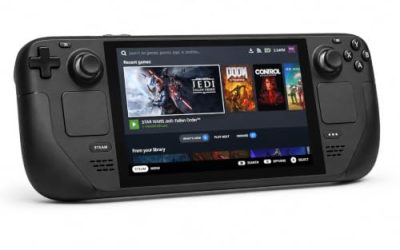
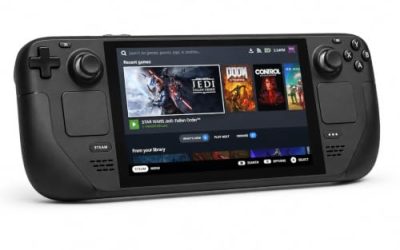
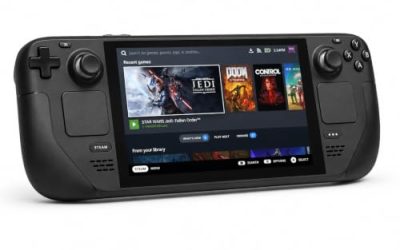
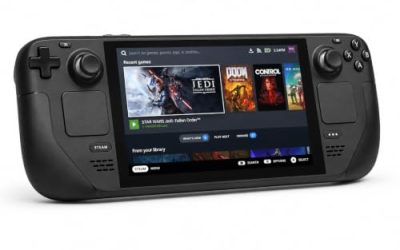
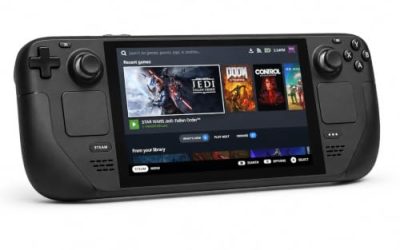
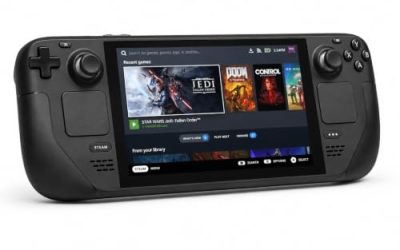
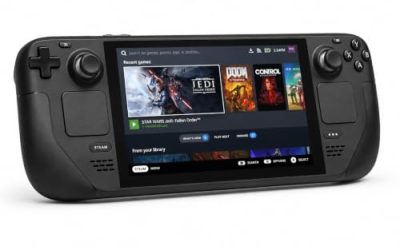
Valve Steam Deck OLED 512GB

The handheld the Verified badge was written for. The game’s published requirements are a rounding error next to the Deck’s APU, and Valve’s test sheet gives the Windows build a clean pass under proton-stable.
Specs
- Display: 7.4-inch HDR OLED, 1280 by 800, up to 90 Hz
- Processor: AMD Zen 2 and RDNA 2 custom APU
- Memory: 16 GB LPDDR5
- Storage: 512 GB NVMe, plus a microSD slot
- Wireless: Wi-Fi 6E and Bluetooth
- Channel note: Valve sells the Deck mainly through its own store, so Amazon listings are third-party sellers
8BitDo Ultimate 2 Bluetooth Controller
The docked and desktop pad pick. Steam lists full controller support for the game, and this pad covers the couch case with modern sticks and triggers plus back buttons.
Specs
- Connectivity: Bluetooth wireless and USB-C wired
- Joysticks: TMR electromagnetic, anti-drift design
- Triggers: Hall effect, with mode switching
- Extras: two remappable back buttons, motion control
- In the box: charging dock included
Xbox Wireless Controller, Carbon Black
The safest guest pad in PC gaming: Steam Input support is universal, the glyphs match what most games display, and it pairs over Bluetooth or wireless.
- Connectivity: Xbox Wireless and Bluetooth
- Port: USB-C for wired play
- Controls: hybrid D-pad, dedicated Share button
- Power: AA batteries or optional rechargeable pack
Logitech G502 HERO
Mortal Sin is played first-person, and at a desk a precise wired mouse is the natural aim and camera tool between pad sessions. Eleven programmable buttons cover the inputs a long run repeats.
Specs
- HERO optical sensor, up to 25,600 DPI
- 11 programmable buttons
- Adjustable weight system
- Wired USB connection
- On-board memory profiles
Samsung T9 Portable SSD 2TB
For moving a Linux game library between machines or backing up installers, a fast USB-C drive is the simple answer. The headline figure needs a Gen 2×2 host port; on a lesser port the drive runs at that ceiling.
Specs
- Capacity: 2 TB portable SSD
- Interface: USB 3.2 Gen 2×2, USB-C connector
- Maker-rated speeds: up to 2,000 MB per second read, 1,950 MB per second write
- Features: Dynamic Thermal Guard, maker-rated drop resistance
How to choose
Choose the Steam copy if you play on a Steam Deck or want the tested route: it is the build behind both the Verified sheet and the ProtonDB file, and it installs and launches under the default compatibility tool with no tinkering reported. On a Linux desktop, the same copy under Proton is the whole story — set the compatibility tool if your library does not default to it, and leave the launch options empty. Choose the GOG copy only if a DRM-free Windows installer is worth more to you than the Deck paperwork; same build, same Proton requirement. For input, the record lists full controller support, so a pad is a complete way to play. No edition changes the platform answer.
Who should skip
Skip this purchase if a native Linux build is a hard requirement: none exists, none is registered in reserve, and the paperwork gives no signal of one arriving. Skip it if you distrust small samples — nine ProtonDB reports is a thin base, and the Deck badge was earned by an Early Access build in 2023, so the cautious buyer leans on community filings more than on Valve’s sheet. And skip the soundtrack’s flags as buying evidence entirely: they describe an audio product, and treating them as a port announcement is exactly the error this article exists to correct.
FAQ
Is Mortal Sin native on Linux?
No. Steam flags the game Windows only, the Linux requirements field is absent, and the sole content depot is the Windows build. The family’s only Linux flag sits on the soundtrack app, which ships audio files. Linux play happens through Proton, where the game holds a Platinum tier.
Is Mortal Sin still in Early Access?
No. It entered Early Access in March 2023 and reached full release on 29 August 2025. The store record shows that date with coming soon set to false, and the public branch has kept receiving new builds since launch.
Is Mortal Sin Steam Deck Verified?
Yes. Valve’s endpoint resolves the game to Verified with all four checks passing, and SteamOS to Compatible. The underlying test is dated August 2023 against an Early Access build, so the badge predates the finished game; post-release ProtonDB filings from Deck owners report the current build running well, with heavy scenes benefiting from a lower render resolution.
Does GOG sell a Linux version of Mortal Sin?
No. GOG’s product record reads Windows true and Linux false. The GOG edition is the same Windows build in DRM-free form; it changes the licensing, not the platform support.
Final verdict
Mortal Sin is a Windows-only release whose Linux story is written entirely by compatibility layers — and on the current evidence, written well. Steam’s record is unambiguous at every layer: one platform flag, absent Mac and Linux fields, one Windows depot, no Linux asset of any kind. Against that, the Proton file is Platinum across nine reports and the Deck sheet is Verified, albeit on 2023 paperwork. Buy the Steam copy for the tested route, expect Proton to do the work, and ignore any summary that calls the game native.
Product and ASIN Reference
| Product | ASIN |
|---|---|
| Valve Steam Deck OLED 512GB | B0CQ3RWQQZ |
| 8BitDo Ultimate 2 Bluetooth Controller | B0F194QFT2 |
| Xbox Wireless Controller, Carbon Black | B08DF248LD |
| Logitech G502 HERO | B07GBZ4Q68 |
| Samsung T9 Portable SSD 2TB | B0CHFS9K14 |