

- Top Pick: Logitech G Pro Flight Rudder Pedals
- Best Value: Logitech G USB PRO Flight Rudder Pedals
- Premium Choice: Logitech Wired G PRO Flight Rudder Pedals (Renewed)
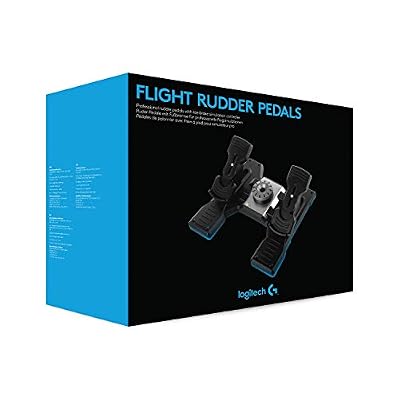
The Logitech G PRO Flight Rudder Pedals complete the G PRO ecosystem alongside the Yoke System, and they are the consumer-tier pedals that most directly resemble general aviation rudder pedals. Heavy, self-centring, with toe brakes and adjustable damping, they are the natural pedal partner for the G PRO Yoke and a serious alternative to Thrustmaster’s TFRP for the PC sim pilot. This Logitech G PRO Flight Rudder Pedals review covers the design, mechanism, compatibility and value at around $400.

Logitech G Pro Flight Rudder Pedals



As an Amazon Associate we earn from qualifying purchases. Product prices and availability are accurate as of the date/time indicated.
🛒 Best Price Today on Amazon
Prime members get fast, free shipping on everything above, plus member-only deals. New members get a 30-day free trial — cancel anytime.
As an Amazon Associate we earn from qualifying purchases.




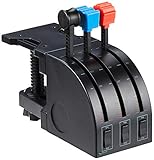
Logitech G PRO Flight Rudder Pedals at a Glance
| Component | Specification |
|---|---|
| Type | Rudder pedals — pivot design with toe brakes |
| Compatibility | PC (Windows) — USB |
| Buttons / axes | 3 axes (rudder + 2 toe brakes); no buttons |
| Hall-effect sensors | No — uses standard sensors with weighted self-centring |
| Hat switches | None — pedals are axis-only |
| Throttle / pedals included | Pedals only — yoke and throttle sold separately |
| Detachable parts | Pedals are fixed to a metal-and-steel chassis |
| Connection | Wired USB |
| Approx price | around $400 |
Build Quality & Realism
The G PRO Pedals are heavy — the chassis is full metal, the pedals themselves are die-cast and the action is weighted with a sprung centring mechanism that returns to neutral firmly. The unit is built to a standard that more closely resembles training-organisation simulator pedals than budget consumer pedals, and the weight (over 6kg) means it stays put on the floor without needing to be screwed down.
Each pedal has a sprung toe brake on the top surface that tilts forward to deliver independent left and right braking input. The travel is positive and progressive, perfect for differential braking during taxi and on the landing roll. There is adjustable damping on the rudder mechanism, accessed via a small dial under the chassis, which allows the pilot to tune the resistance from light to firm. The pedals are a serious piece of equipment and the build quality justifies the higher price compared with the Thrustmaster TFRP.
Compatibility & Platforms
The G PRO Pedals are a PC product, connecting over USB and recognised as a standard HID device. Microsoft Flight Simulator recognises them on connection and provides default rudder and toe-brake mappings; X-Plane, DCS World, IL-2 and the rest of the catalogue all work via their joystick dialogs. There is no console support — the pedals are firmly PC-focused.
Logitech G HUB provides additional configuration on Windows. Within the G PRO ecosystem the pedals naturally pair with the G PRO Yoke and throttle quadrant for a complete civilian sim setup. The pedals are also a strong alternative to the Thrustmaster TFRP for pilots who prefer pivot-style pedals to the TFRP’s sliding rails. For more on pedal options at different tiers, see our best rudder pedals article.
Sim Programs / Game Support
Microsoft Flight Simulator is the natural home of the G PRO Pedals. The heavy, weighted action gives precise rudder coordination for crosswind landings and taxi steering, and the toe brakes are essential for differential braking — particularly on tail-draggers and twin-engine aircraft. X-Plane similarly recognises the pedals and assigns rudder and toe brakes by default.
In combat simulators the pedals are equally at home — DCS World tail-dragger aircraft like the P-51D, Spitfire and Bf 109 benefit hugely from genuine toe-brake input, and the heavier, weighted action suits combat manoeuvring. IL-2 Sturmovik and Falcon BMS work with the same setup. For pilots building out a complete sim setup, our best flight sim cockpits guide covers the chair and cockpit furniture that accommodate full yoke-and-pedals rigs.
What’s in the Box
The G PRO Pedals ship as a complete pedals unit on a single chassis, with the pedals pre-installed, a permanent USB cable and a printed manual. The chassis includes screw holes for permanent mounting to a flight rig or cockpit frame; the rubber pads on the underside provide enough grip on most floor surfaces to hold position in casual use thanks to the unit’s substantial weight.
What is not included is anything else — these are pedals only, and a complete civilian sim setup requires a yoke (such as the G PRO Yoke) and a throttle quadrant. Within the G PRO ecosystem all three products are designed to work together.
Who It’s For
The G PRO Pedals are for the PC sim pilot who wants serious-grade rudder pedals in a yoke-based civilian setup. They are the natural partner for the G PRO Yoke, and the weighted, sprung action with toe brakes is closer to general aviation pedal realism than budget pivot pedals. They are also a sensible upgrade for any pilot moving from a stick-twist rudder or budget pedals to genuinely premium hardware, and the build quality is robust enough to justify the long-term keep that the price implies.
They are less suited to budget buyers, who can step in at half the price with the Thrustmaster TFRP for a different but capable pedal solution; to console players, since they are PC-only and console pedal support is minimal; or to pilots with very limited desk-and-floor space, since the substantial chassis needs clear space in front of the chair to allow full rudder travel. For the civilian PC sim pilot building a long-term setup, especially in combination with the G PRO Yoke, they are an easy recommendation and a sensible final piece of the rig.
Pros and Cons
Pros: Full-metal chassis and die-cast pedals — the closest a consumer pedal product gets to professional training simulator hardware; weighted self-centring rudder action; adjustable damping dial under the chassis for tunable resistance; sprung progressive toe brakes for independent left/right braking; over 6kg of weight keeps the unit stable on the floor; broad PC sim software support; mounting screw holes for permanent rig installation.
Cons: Premium price at around $400 — the most expensive pedals in the consumer category; no Hall-effect sensors; PC-only with no console certification; substantial footprint requires clear floor space in front of the chair; permanent USB cable; no buttons or hats; heavy enough to be inconvenient if moved between rooms; only worthwhile if you have a permanent sim setup.
Verdict
The Logitech G PRO Flight Rudder Pedals are the upper-tier consumer pedals that finish the G PRO civilian sim ecosystem. At around $400 they deliver a full-metal chassis, weighted self-centring action, adjustable damping and progressive toe brakes — the closest a consumer pedal product comes to professional training simulator hardware. They are not cheap, but the build justifies the price, and for the serious MSFS or X-Plane civilian pilot they are the natural pedals choice.
Frequently Asked Questions
Do the G PRO Flight Rudder Pedals have toe brakes?
Yes. Each pedal has a sprung, progressive toe brake on the top surface for independent left and right braking input — essential for differential braking on the landing roll and tail-dragger taxi.
Are the G PRO Pedals compatible with Xbox or PlayStation?
No. The G PRO Pedals are a PC-only product. Console third-party pedal support is very limited.
Do the G PRO Pedals work with the G PRO Yoke?
Yes — they are the canonical pedals pairing within the G PRO civilian sim ecosystem. Both connect to the PC as independent USB devices and game profiles recognise them together.
Can the damping on the G PRO Pedals be adjusted?
Yes. A small dial under the chassis adjusts the rudder damping, allowing the pilot to tune resistance from light to firm action.
More Flight Stick & Sim Controller Reviews
- MAYFLASH F300 Arcade Fight Stick Review: Multi-Platform Budget Stick
- 8BitDo Arcade Stick Review: Wireless Switch and PC Fight Stick
- Thrustmaster T16000M FCS HOTAS Review: Hall-Effect Joystick + Throttle
- Thrustmaster T-Flight Hotas X Review: Budget HOTAS for PS3 and PC
- Thrustmaster T-Flight Hotas One Review: Xbox-Certified Flight Stick
- Thrustmaster TFRP Flight Rudder Pedals Review: Sliding-Rail Sim Pedals
- Thrustmaster HOTAS Warthog Review: Metal A-10C Replica Flight Stick
- Thrustmaster TCA Sidestick Airbus Edition Review: Civilian Airliner Sidestick
Affiliate Disclosure: As an Amazon Associate, we earn from qualifying purchases. If you click a link and make a purchase, we may earn a small commission at no extra cost to you. Prices and availability are accurate as of publication and may change.
Related Articles
Looking for more on this topic? Browse the hand-picked guides below — each one applies the same scoring rubric used in this review.


