Kingdom Rush Vengeance, Ironhide Game Studio’s 2020 tower defense entry where you command the dark army, never received a native Linux build. Steam’s record is split cleanly down the middle: the Windows and Mac flags are set, the Linux flag is false, and the Mac leg is real on every layer — a populated requirements tab and a full-size macOS depot. The Linux leg has nothing. Its requirements field is not an empty shell but an absent field, an empty list with no tab in any form.
So the Linux question becomes a Proton question, and there the news is good. The community compatibility file sits at the top tier, Valve has tested the Windows build on Steam Deck and awarded its strongest badge, and the game’s modest hardware demands leave headroom to spare. This piece reads the record layer by layer: flags, requirements, depots, add-ons, the Deck test sheet, the ProtonDB file and the second-storefront ruling.
As an Amazon Associate, we earn from qualifying purchases.
Quick answer
Kingdom Rush Vengeance has no native Linux build: Steam’s record is Windows and Mac only, with an empty Linux requirements field and no Linux depot. On Linux it runs through Proton, where ProtonDB rates it Platinum across 18 reports, and Valve rates the Windows build Steam Deck Verified, tested in February 2022.
What Steam’s record actually sells
The platform flags read windows true, mac true, linux false, and the requirements tabs back the two set flags with real content. The Windows minimum asks for Windows 7, a dual-core processor, 4 GB of RAM, an OpenGL 3.0 graphics solution with 512 MB of video memory and 2 GB of storage; the recommended tier moves to Windows 10, 8 GB of RAM and 1 GB of video memory. The Mac tab is populated in both tiers too, from macOS 10.10 up to a recommended 10.14, and SteamDB’s record adds the markers of a maintained Apple build: 64-bit and Apple Silicon delivery with the notarized flag set.
The depot census settles the question the flags open. Steam delivers exactly three content depots: a Windows 32-bit depot at 1.32 GiB, a Windows 64-bit depot at 1.33 GiB and a macOS depot at 1.36 GiB, beside the usual Visual C++ redistributables. A fourth depot is registered as Unused, with no size — leftover paperwork with no operating system attached, not a Linux build in hiding. There is no Linux depot in any form: no dedicated depot, no shared depot, no ghost.
The registered store assets tell the same story by omission. The record carries a client icon, a client tga and an icon, and nothing else — no Linux client icon in any form, so neither the fossil case (an icon with no build behind it) nor the inverse case (a build with no icon) arises. One more silence matters: the record carries no controller-support field and no controller category at all, so anything said about gamepad play here comes from Valve’s Deck test sheet, not the store page.
The two campaign add-ons
The base record lists two downloadable content apps, each read on its own record. The Hammerhold Campaign arrived in December 2023 and the Pirate Kings Campaign followed in September 2024. Both flag windows true, mac true and linux false — an exact match with the base game, so the add-ons change nothing about the platform picture. The family also exposes no soundtrack app, so the trap of a music app flagging all three platforms beside a two-platform base cannot fire here. Across the whole family, the Linux flag count is zero.
Steam Deck: Verified, on paperwork from 2022
Valve’s own compatibility endpoint rates the game Verified, the strongest of its Deck categories. All four checks pass: the default controller configuration is fully functional, the game shows Steam Deck controller glyphs, the interface text is legible, and the default graphics configuration performs well. SteamOS is separately rated Compatible. That verdict was read directly from Valve’s endpoint.
The test metadata behind the badge, read through SteamDB’s republication of Valve’s sheet, dates from an older copy of the game. Valve tested on 3 February 2022 against build 5727607, with proton-stable as the recommended runtime, no manual keyboard invocation and the small-text flag at zero. The current public build is 22944017, dated April 2026, so the badge grades a build the game left behind years ago — the supplement-candidate shape: genuine paperwork, superseded build. The sheet records the input shape honestly, too: supported input is classed as other and the primary-player slot flag reads zero, so an external pad may need a manual switch before it takes over. In practice this is a pointer game, and the Deck’s trackpad is the pointer.
ProtonDB: Platinum under a heading that overclaims
The ProtonDB summary record was read in full: the settled tier is Platinum, the best-reported tier is Platinum, the trending tier is Platinum, across 18 reports, with confidence rated good. That is about as settled as a community file gets, and it describes the Windows build under Proton — the only way this game exists on Linux.
One warning belongs here: the game’s ProtonDB page carries the stray heading claiming it natively supports Linux, with a minimum-requirements panel beneath it. Steam’s record contradicts that heading on every layer — the false flag, the absent requirements field, the depot census with no Linux entry — so the heading is wrong, and this article follows Steam. The reports underneath it are the real evidence, and they are strong: the newest filing, a Steam Deck report on Proton 10.0-3, says everything worked really well, with the single caveat that the text is small but readable. Valve’s sheet graded the text legible; the honest summary is that it passes the legibility bar while still feeling small to some players. An earlier Deck filing makes the input point directly: it plays great if you are comfortable with the trackpad as a mouse, and everything on screen is small. The file’s failures are old — launch-era filings from 2020 describe a rough first patch in which only one early Proton build would start the game, and one multi-monitor setup was unplayable — and no recent report repeats them.
Gear that fits the record
The gear below follows the record’s shape: the handheld the badge was written for, two pads for docked play, a mouse for the pointer work this game is built around, and library storage.
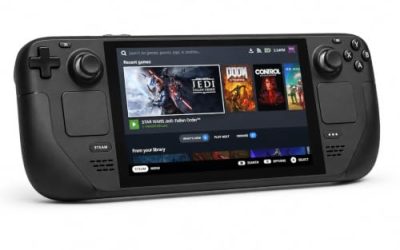
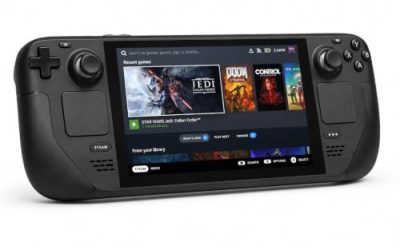
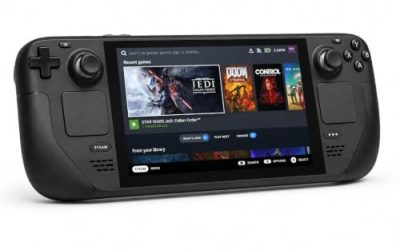
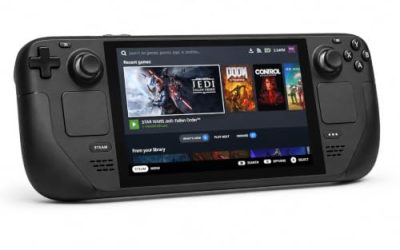
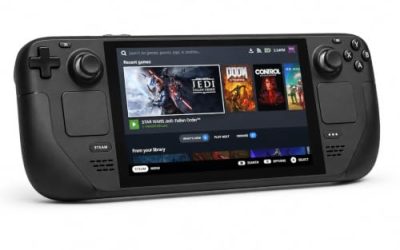
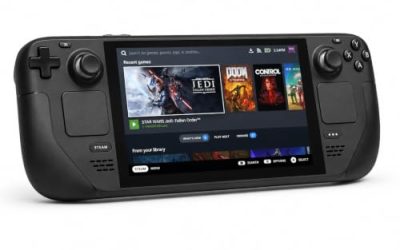
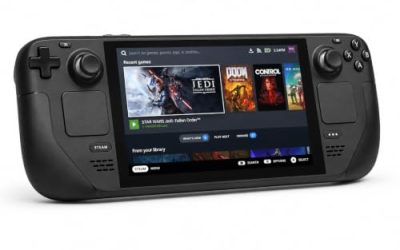
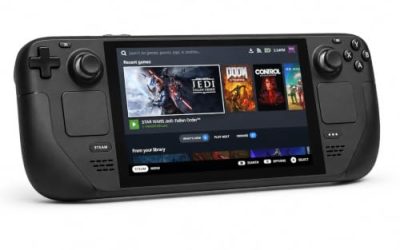
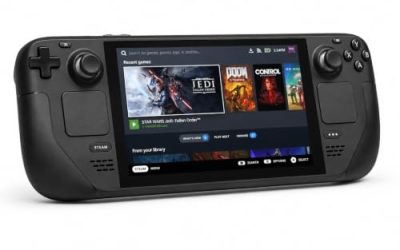
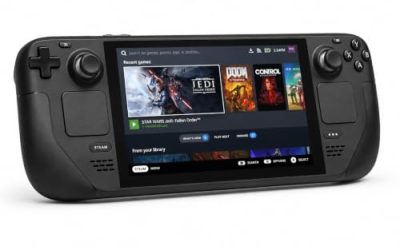
Valve Steam Deck OLED 512GB

The handheld the Verified badge was written for. The game’s published requirements are a rounding error next to the Deck’s APU, and Valve’s own test sheet gives the Windows build a clean pass under proton-stable.
Specs
- Display: 7.4-inch HDR OLED, 1280 by 800, up to 90 Hz
- Processor: AMD Zen 2 and RDNA 2 custom APU
- Memory: 16 GB LPDDR5
- Storage: 512 GB NVMe, plus a microSD slot
- Wireless: Wi-Fi 6E and Bluetooth
- Channel note: Valve sells the Deck mainly through its own store, so Amazon listings are third-party sellers
8BitDo Ultimate 2 Bluetooth Controller
The docked and desktop pad pick. The game’s own record names no controller rating, so pad play runs through Steam Input and the Deck’s default configuration rather than a native pad mode. This pad covers the couch case with modern sticks, triggers and back buttons.
Specs
- Connectivity: Bluetooth wireless and USB-C wired
- Joysticks: TMR electromagnetic, anti-drift design
- Triggers: Hall effect, with mode switching
- Extras: two remappable back buttons, motion control
- In the box: charging dock included
Xbox Wireless Controller, Carbon Black
The safest guest pad in PC gaming: Steam Input support is universal, the glyphs match what most games display, and it pairs over Bluetooth or its own wireless standard. On the handheld, the test sheet’s note applies: an external pad may need a manual Quick Access Menu switch before it takes over.
- Connectivity: Xbox Wireless and Bluetooth
- Port: USB-C for wired play
- Controls: hybrid D-pad, dedicated Share button
- Power: AA batteries or optional rechargeable pack
Logitech G502 HERO
Tower defense is pointer work — placing towers, targeting abilities, sweeping the map — and at a desk a precise wired mouse is this game’s natural instrument. Eleven programmable buttons cover the confirm, cancel and ability inputs a long session repeats.
Specs
- HERO optical sensor, up to 25,600 DPI
- 11 programmable buttons
- Adjustable weight system
- Wired USB connection
- On-board memory profiles
Samsung T9 Portable SSD 2TB
For moving a Linux game library between machines, or keeping an offline backup of installers, a fast USB-C drive is the simple answer. The headline figure needs a Gen 2×2 host port; on a lesser port the drive runs at that ceiling instead.
Specs
- Capacity: 2 TB portable SSD
- Interface: USB 3.2 Gen 2×2, USB-C connector
- Maker-rated speeds: up to 2,000 MB per second read, 1,950 MB per second write
- Features: Dynamic Thermal Guard, maker-rated drop resistance
How to choose
Choose the Steam copy: it is the fullest edition on sale, the only storefront copy carrying the Mac build and both campaign add-ons, and the exact build both compatibility records describe. On a Linux desktop or laptop, install it and leave the compatibility tool at its default; proton-stable is the runtime Valve’s own sheet names, and a Platinum file with a Platinum trending tier says current builds need no tinkering. On a Steam Deck, the Verified badge means the expected experience is install and launch: point with the trackpad, and only visit controller settings if you pair an external pad, which may need the manual switch the test sheet’s slot flag implies. For input generally, follow the game’s own shape — a mouse at a desk, the trackpad on the handheld, a pad only for docked play through Steam Input.
Who should skip
Skip this one if you buy native Linux builds only. No Linux copy exists, none is promised anywhere on the record, and the studio demonstrably ships a second platform when it chooses to — the Mac port is real and maintained — so the missing Linux build reads as a decision, not an oversight waiting to be corrected. Skip it, too, if pointer-driven play on a handheld puts you off: the Deck experience is trackpad work with a small interface. And if your library lives on GOG, note that its copy is Windows only before buying it for a Mac.
FAQ
Is Kingdom Rush Vengeance native on Linux?
No. Steam flags the game for Windows and Mac only, the Linux requirements field is an absent empty list, and the depot census contains Windows and macOS depots with no Linux entry. The Mac build is native; the Linux build does not exist.
How well does it run under Proton?
Very well on current builds: Platinum across 18 reports with good confidence, and the newest filings describe out-of-the-box play. The failure reports date from the 2020 launch window and are not repeated.
Is Kingdom Rush Vengeance Steam Deck Verified?
Yes. Valve’s endpoint rates it Verified with all four checks passing, tested in February 2022 against build 5727607 under proton-stable. The paperwork predates the current build, but recent Deck filings on current Proton versions describe the same clean experience.
Can I buy it on GOG instead?
Yes, but only as a Windows copy. GOG’s own product record for the game lists Windows as its sole supported system — it does not carry even the Mac build — and no storefront sells a Linux edition.
Final verdict
Kingdom Rush Vengeance is not a native Linux game, and the record leaves no room for doubt: false flag, absent requirements, no depot, and two add-ons that repeat the same answer. What it offers instead is the strongest consolation available — a Platinum Proton file that has held its tier for years and a Deck Verified badge, albeit one graded on a 2022 build. On Linux or on the Deck, the Steam copy under Proton is a safe buy; just do not mistake the Mac port, or a stray heading on a compatibility page, for a Linux build that was never made.
Product and ASIN Reference
| Product | ASIN |
|---|---|
| Valve Steam Deck OLED 512GB | B0CQ3RWQQZ |
| 8BitDo Ultimate 2 Bluetooth Controller | B0F194QFT2 |
| Xbox Wireless Controller, Carbon Black | B08DF248LD |
| Logitech G502 HERO | B07GBZ4Q68 |
| Samsung T9 Portable SSD 2TB | B0CHFS9K14 |