The safest gift for a retro game collector is something that improves the games they already own — a video upscaler, proper RGB or component cables, shelving, cart-cleaning supplies, a controller adapter or a save-battery kit. Games duplicate, region-lock and disappoint. Accessories almost never do, and they get used the same week.
- Display and Video: The Gift That Improves Every Game They Own
- Storage, Shelving and Cleaning: Boring, Always Welcome
- FPGA and Modern Retro Hardware vs Cheap Mini Consoles
- Controllers and Adapters for Original Hardware
- Save-Battery Kits and the Tools to Do the Job
- Reproduction Cartridges, Fakes and Why a Gift Receipt Matters
- What Not to Buy: Pre-Loaded ROM Consoles and Stuffed SD Cards
- Budget Tiers: What to Get for What You Can Spend
- Books and Art: The Safe Non-Duplicating Gift
- How to Ask Without Spoiling It
- Frequently Asked Questions


Retro collecting is easy to buy wrong for. Your recipient has spent years learning which cable, which console revision and which region suits their setup, and none of that is visible from outside.
Quick answer: Our top pick in 2026 is the Video cables, upscalers, AV switches — our #1 rated choice. See the full ranked comparison, alternatives and buying advice below.
Display and Video: The Gift That Improves Every Game They Own
Old consoles output 240p and 480i over analogue connections, and modern TVs handle that badly: soft image, heavy input lag, sometimes no signal. Fixing the video chain improves every cartridge on the shelf at once.
- Better cables. The cheapest real upgrade: RGB SCART for European and modded consoles, component (YPbPr) for GameCube, PS2, Wii, Xbox and Dreamcast, S-Video as a fallback. A shielded cable from a known maker is night-and-day against the composite lead from the box. Confirm the region first — a SCART cable is useless with no SCART input in the house.
- A line doubler or scaler. The OSSC and the RetroTINK family convert 240p and 480i to a clean digital signal with almost no added lag. Expensive, genuinely wanted, and the thing people keep putting off buying for themselves. If you are unsure which tier fits, read up on how an HDMI upscaler changes an old console’s picture first.
- CRT accessories. The tube is not the gift — a good one is heavy and best chosen in person. Buy the supporting cast instead: a BNC or component breakout, a degaussing coil, an AV switch, a stand rated for the weight. The latency gap between CRTs and flat panels is real.
Storage, Shelving and Cleaning: Boring, Always Welcome
Collections outgrow their furniture. This is the least glamorous and most reliably appreciated category in the hobby, and it cannot be duplicated: cube shelving rated for real weight, acid-free box protectors sized to the console, plastic cases for loose carts, dust covers.
Cleaning supplies are the sleeper hit — 99% isopropyl alcohol, lint-free swabs, soft brushes and contact cleaner for edge connectors and controller ports. Two warnings worth passing on: the old “rub the contacts with an eraser” trick strips gold plating off a cartridge, and 70% drugstore alcohol carries water and additives you do not want inside a console.
UV protection is what collectors rarely buy themselves. Sunlight fades cartridge labels and permanently yellows old plastic, so UV-filtering film for a display case is preservation disguised as furniture.
FPGA and Modern Retro Hardware vs Cheap Mini Consoles
There is a wide quality gap in “plays old games” hardware, and price does not always signal it. At the top sit FPGA systems, which reimplement the original chips in reconfigurable logic rather than emulating them in software. Analogue’s consoles and handhelds and the open MiSTer project (a DE10-Nano board plus add-ons) are the two main routes: they take original cartridges, behave like real hardware and output cleanly to a modern display. They are also expensive, often sold out, and in MiSTer’s case a project rather than a product — ideal for a tinkerer, frustrating for someone who wanted to plug in and play.
The middle ground is software emulation on hardware they already own, which usually means gifting accessories: a good pad, a case, a fast microSD card. It pairs with our retro console coverage, and if their emulation lives on a desktop, what matters in a retro-focused PC build beats another boxed game.
At the bottom sit generic “mini console” boxes advertising thousands of built-in games — cheap ARM boards running dated emulator builds with poor controllers and illegally bundled ROMs. Officially licensed mini consoles from the original platform holders are legitimate; the anonymous handheld with “10,000 games” on the box is not.
Controllers and Adapters for Original Hardware
Original controllers age badly: membranes harden, N64-era sticks wear to mush, old cables break internally. Replacements are safe because collectors rarely have enough working pads for four-player games.
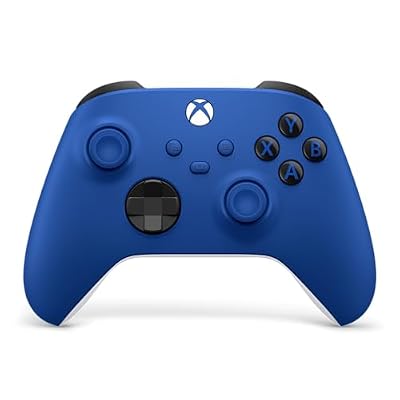
- New pads for old consoles. Licensed modern controllers are widely available, often with wireless receivers that plug into the original port. Check the console revision — receivers are model-specific.
- Adapters going the other way. Hardware that lets original controllers speak USB, so a genuine pad works with a PC or handheld. A quality adapter for original gamepads is what makes emulation feel right, and it is the easiest fix for anyone running their library on a Linux gaming setup.
Save-Battery Kits and the Tools to Do the Job
Many cartridge-era games store saves in SRAM backed by a coin cell, and those cells are decades past their rated life. When one dies the save goes with it — for someone with a long-running RPG file, that is the loss they actually fear.
This gift is a kit, not an item: coin cells with solder tabs, a security bit set (Nintendo uses proprietary 3.8 mm and 4.5 mm gamebit screws plus tri-wing on handhelds), a temperature-controlled iron, flux and a spudger. Include the safety note: never solder directly to a bare coin cell, which can vent or rupture. If they have never soldered, buy the no-skill parts and leave the iron out.
Reproduction Cartridges, Fakes and Why a Gift Receipt Matters
Counterfeiting is worse than most gift-buyers expect. Reproduction cartridges — a flash chip and a printed label in a shell — sell openly, and some sellers pass them off as originals at original prices. The tells (label print quality, wrong screw type, a PCB that does not match the era) are not things a non-collector spots in a photo.
So buy from a seller with a real return policy and hand the receipt over with the gift. A collector would rather exchange a duplicate than politely shelve it, and a gift receipt is not rude in a hobby where “do you have this already?” is the hardest question to answer.
Safe, Risky and Avoid — At a Glance
| Gift | Verdict | Why |
|---|---|---|
| Video cables, upscalers, AV switches | Safe | Improves every game they own; almost never duplicated |
| Shelving, box protectors, dust covers | Safe | Collections always outgrow storage |
| Cleaning kit, contact cleaner, security bits | Safe | Consumable and universally useful |
| Books, art prints, official soundtracks | Safe | No region or compatibility trap |
| Controllers and USB adapters | Safe | Nobody has enough working pads — check console revision |
| FPGA consoles and handhelds | Risky | Excellent but pricey, often out of stock, opinions run strong |
| Individual games | Risky | Duplication and region lock; include a gift receipt |
| CRT televisions and monitors | Risky | Heavy, condition-dependent, best chosen in person |
| Reproduction carts sold as originals | Avoid | Counterfeit; wrong value and often unreliable saves |
| Consoles pre-loaded with thousands of games | Avoid | Unlawful ROM distribution plus poor hardware |
| SD cards “stuffed” with game files | Avoid | Same problem; empty cards and flash carts are fine |
What Not to Buy: Pre-Loaded ROM Consoles and Stuffed SD Cards
Be direct about this one. Handhelds advertised with thousands of built-in games, and microSD cards sold “pre-loaded”, distribute copyrighted game files without permission. That is unlawful, and a bad gift besides: the sets are scraped, mislabelled and badly configured.
The hardware category is not the problem. Flash cartridges sold empty are legitimate, as are blank SD cards and the emulators themselves. The line is the pre-loaded library. Buy the empty device and let its owner fill it from their own collection; our notes on choosing an emulation handheld cover what to look for.
Budget Tiers: What to Get for What You Can Spend
| Budget | Best options | What to skip at this level |
|---|---|---|
| Under $25 | Cleaning kit, 99% IPA and swabs, gamebit/tri-wing bit set, tabbed coin cells, cart cases | Cheap no-name cables — often worse than what they replace |
| $25–$75 | Quality RGB SCART or component cable, AV switch, box protectors, a licensed controller, an art book | Bargain “4-in-1” adapters with no listed compatibility |
| $75–$200 | Wireless receiver and pad bundle, entry-level scaler, shelving, soldering station, multi-console adapter | Individual rare games — duplication risk peaks here |
| $200+ | High-end upscaler, FPGA console or handheld, display case, a full MiSTer kit for a tinkerer | Anything you have not confirmed they lack; ask a third party first |
Books and Art: The Safe Non-Duplicating Gift
If you know nothing about their setup, this is the fallback that still feels considered. Platform histories, studio art books, official soundtrack vinyl and licensed prints dodge every trap here: no region coding, no compatibility, no revision to check, and duplicates are easy to spot on a visible shelf. They pair well too — a book about a console plus a cable that makes it look right beats either alone, which helps during holiday shopping when the expensive items are out of stock anyway.
How to Ask Without Spoiling It
- Which consoles are hooked up right now, and to what? This gives you region, connection type and whether a scaler is even useful.
- Is anything broken or annoying? Dead saves, a drifting stick, a shelf at capacity — collectors list these unprompted.
- Do they solder? Decides whether a repair kit is a gift or a chore.
Ask a partner or a friend in the same hobby if you can. Anyone building a dedicated retro game room keeps a running list of gaps, and access to that list beats any guess.
Frequently Asked Questions
Is it ever safe to buy a retro collector an actual game?
Yes, with two conditions. Buy from a seller with a genuine return policy and include the gift receipt, because duplication is the most common failure mode and region lock is the second. If you can find out which console revision and which region they play on, your odds improve sharply. Sealed or graded games are the riskiest purchase of all, since condition grading and authenticity are specialist judgements that are hard to verify from a listing photo.
Are reproduction cartridges illegal to buy as a gift?
The situation is mixed. A reproduction sold honestly as a reproduction — often a fan translation or a homebrew title never released in your region — occupies a legal grey area, and some collectors buy them knowingly. A reproduction sold as an original is straightforward fraud, and you would be paying original-cartridge prices for a modern flash board. As a gift, skip both: the recipient may have strong views, and you cannot easily tell which one you are holding.
What is the difference between FPGA hardware and a cheap mini console?
An FPGA system reimplements the original console’s logic in reconfigurable silicon, so timing and behaviour match the real hardware closely, and it typically accepts original cartridges. A cheap mini console runs software emulation on a low-cost ARM board, usually with dated emulator builds, poor controllers and illegally bundled ROMs. The price difference reflects a genuine engineering gap, not marketing. Officially licensed mini consoles from the original platform holders sit between the two and are legitimate.
Do I need to know their console’s region before buying accessories?
For anything touching video or power, yes. PAL and NTSC consoles differ in output standard, refresh rate and connector conventions — RGB SCART is common in Europe and rare in North America, while component cables are the usual route on NTSC systems. Power supplies differ by region too, and the wrong one can damage hardware. Cleaning supplies, shelving, tool kits, books and most controllers are region-neutral and safe to buy without asking.
Is a save-battery replacement kit too intimidating as a gift?
Only if the recipient has never soldered. For anyone who has, it is one of the most appreciated gifts in the hobby, because dying batteries are a real and ongoing loss to a collection. If you are unsure, buy the parts that need no skill — a security bit set, tabbed coin cells and a spudger — and leave the soldering iron out. Never include bare coin cells intended for soldering, since soldering directly to an untabbed cell risks venting or rupture.
Ready to decide? Our #1 pick for 2026 is the Video cables, upscalers, AV switches.
Live price & availability on Amazon.