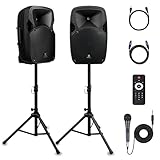
- Top Pick: INSIGNIA 75" Class F50 Series LED 4K UHD Smart Fire TV, Voice Remote with Alexa, Stream Live TV Without Cable
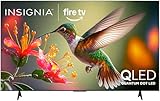
- Best Value: INSIGNIA 75-inch Class QF Series LED 4K UHD QLED Smart Fire TV with Alexa Voice Remote (NS75-UQFL26)
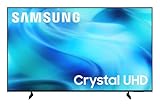
- Premium Choice: Samsung 75-Inch Class M70H Series, Mini LED, 4K, Smart TV, 2026 Model
Best 75-Inch Smart TVs for Every Room
The best 75 inch smart TV depends on your room more than its brand: choose a high-brightness Mini-LED for daylight, an OLED for controlled lighting and movie contrast, and a fast 120Hz model with HDMI 2.1 for gaming.
Quick recommendations by room and priority
| Room or use | Recommended model | Panel and brightness fit | Best viewing distance | Why choose it |
|---|---|---|---|---|
| Bright living room | Samsung QN90D 75-inch | Mini-LED LCD; high sustained brightness and anti-glare coating | 7.5–12.5 feet | Strong daytime visibility, wide viewing angles, 4K/144Hz gaming support |
| Movie room or dim lounge | Sony BRAVIA 9 75-inch | Mini-LED LCD; precise local dimming and very high HDR brightness | 7.5–12.5 feet | Excellent HDR impact, upscaling, and cinematic motion processing |
| Dark room with wide seating | LG OLED evo C4 77-inch | OLED; pixel-level black control, no LCD backlight blooming | 7.5–12.5 feet | Outstanding contrast, viewing angles, and four HDMI 2.1 inputs |
| Value-focused family room | TCL QM8 75-inch | Mini-LED QLED LCD; bright HDR performance | 7.5–13 feet | Large-screen brightness and gaming features at a lower typical price |
| Console gaming priority | Hisense U8N 75-inch | Mini-LED QLED LCD; high brightness and local dimming | 7.5–12.5 feet | 4K/144Hz support, VRR, and a strong feature-to-price balance |
How to choose the right 75-inch TV
1. Match the panel to your lighting
Mini-LED LCD televisions are the safer choice for a sunny living room. Their powerful backlights can overcome window reflections, and local dimming gives HDR highlights far more impact than a basic edge-lit LCD. The Samsung QN90D, Sony BRAVIA 9, TCL QM8, and Hisense U8N all belong in this category.
As an Amazon Associate we earn from qualifying purchases at no extra cost to you.


OLED remains the better choice when you watch primarily at night. Each pixel switches off independently, producing exceptionally deep blacks without the halos that can appear around subtitles or stars on an LCD. The LG C4 is especially suitable for a dedicated movie room or a lounge where the lights can be controlled.
OLED screens can still look excellent in daylight, but direct sunlight is less forgiving, and static content such as a news ticker or game HUD should not remain on screen for many hours at maximum brightness. Modern OLED televisions include protective features, but sensible varied use is still advisable.
2. Use viewing distance, not room size alone
A 75-inch 4K screen is most comfortable for many people at roughly 7.5 to 12.5 feet. At about 8 feet, it feels immersive without requiring excessive eye movement. At 10–12 feet, the large panel helps preserve visible detail that would be lost on a smaller television.
There is no need to sit extremely far away to hide a 4K image’s pixels. If your sofa is only 6 feet from the wall, a 75-inch model may feel overwhelming for regular television, although it can be excellent for films and games. If the main seat is more than 13 feet away, consider an 85-inch model instead unless the budget or wall limits you.
3. Treat refresh rate as a gaming specification
For films and most broadcast television, 120Hz is not essential. For PlayStation 5 and Xbox Series X gaming, it enables compatible games to run at up to 120 frames per second, making camera movement and aiming feel smoother. PC gamers should look for a 4K panel with at least 120Hz; models such as the QN90D, LG C4, TCL QM8, and Hisense U8N can be particularly attractive for this use.
Samsung’s 4K/144Hz capability is useful with a gaming PC, but it does not make console games exceed their normal 120Hz ceiling. Sony’s BRAVIA 9 is a strong cinematic display with gaming support, though buyers should check the exact input layout and supported refresh modes before assuming every HDMI port has identical capabilities.
4. Check HDR support and real room brightness
All of these recommendations support HDR10. Dolby Vision is more relevant if your streaming services, UHD Blu-ray player, or games use it. Sony BRAVIA 9, LG C4, TCL QM8, and Hisense U8N support Dolby Vision, while Samsung televisions generally use HDR10, HDR10+, and related Samsung formats instead.
HDR format is only half the story. A television also needs enough brightness and contrast to make HDR visible. In a bright room, prioritize Mini-LED models. In a dark room, OLED’s black level can make HDR look more dimensional even if its full-screen brightness is lower than a premium Mini-LED.
Head-to-head: which recommendation fits you?
Samsung QN90D: best for a bright, multipurpose living room
The QN90D combines Mini-LED backlighting with a matte-style anti-reflection treatment and wide-angle viewing technology. That makes it a practical choice when people sit around the room rather than directly in front of the screen. Its 4K/144Hz PC support, variable refresh rate, and low-latency gaming mode also suit a room shared between streaming, sports, and games.
Choose it when sunlight and reflections are bigger problems than absolute movie-room black levels. Samsung’s lack of Dolby Vision matters less if you mainly stream services using HDR10 or HDR10+.
Sony BRAVIA 9: best for premium HDR and TV upscaling
The BRAVIA 9 is a high-end Mini-LED LCD designed for strong contrast without giving up the brightness needed for daytime HDR. Sony’s image processing is particularly useful with lower-resolution broadcasts, older films, and compressed streaming video. Its motion handling can also appeal to sports viewers who prefer a natural-looking image rather than an aggressively sharpened presentation.
It is a better fit than OLED if the room has windows or if you regularly watch during the day. It is usually priced in the premium range, often above $2,000 for a 75-inch model depending on promotions and inventory.
LG OLED evo C4: best for dark-room contrast and serious gaming
The 77-inch C4 is slightly larger than a nominal 75-inch television, but it is one of the closest OLED choices for this screen-size class. Its self-lit pixels deliver perfect black levels, wide viewing angles, and fast pixel response. Four HDMI 2.1 inputs make it convenient for a gaming PC and multiple consoles, with 4K/120Hz, VRR, and automatic low-latency features.
Place it where you can control reflections. For a family room with a bright window opposite the screen, a Mini-LED model will usually be less frustrating. Typical market pricing commonly falls around $1,800–$2,800 for the 77-inch class, depending on the sales cycle.
TCL QM8: best value for a bright big-screen setup
The QM8 uses Mini-LED and quantum-dot technology to deliver high brightness, strong HDR punch, and effective local dimming at a usually lower price than flagship models. It is a good option for a large family room where the television needs to handle sports in daylight and games in the evening.
Picture processing, off-angle consistency, and factory calibration may be less refined than on the most expensive Sony or Samsung sets. That trade-off is worthwhile when screen size and brightness matter more than having the most polished upscaling. Depending on the year and promotion, a 75-inch QM8 commonly sits around $900–$1,500.
Hisense U8N: best feature-to-price gaming option
The U8N offers Mini-LED contrast, strong brightness, Dolby Vision, and gaming features including a high-refresh mode and VRR. It is a compelling choice for a gamer who wants HDR impact without paying flagship-TV prices.
Use a separate soundbar or receiver if possible: large-screen televisions are thin, and built-in speakers rarely create the bass or width that action games and films deserve. Typical pricing for the 75-inch class often lands around $1,000–$1,600.
A practical bandwidth check for 4K gaming
Uncompressed 4K at 120Hz contains 3,840 × 2,160 × 120 = 995,328,000 pixels per second. At 24 bits per pixel, that is about 23.9 gigabits per second before blanking intervals, HDR signaling, and transmission overhead. This is why a television advertised for 4K/120Hz gaming needs HDMI 2.1 rather than relying on older HDMI 2.0 inputs, which are generally limited to 4K/60Hz.
For a gaming setup, connect the console or PC directly to a full-bandwidth HDMI 2.1 port, use an Ultra High Speed HDMI cable, then enable Game Mode and VRR. If the screen falls back to 4K/60Hz, check the cable, the specific HDMI port, the console’s 120Hz setting, and the graphics card’s output mode before blaming the television.
Recommended setup settings
- Daylight living room: use Standard or a calibrated bright mode, set local dimming to High, and enable the television’s light sensor only if brightness changes are not distracting.
- Movie room: use Filmmaker, Cinema, or equivalent; set color temperature to Warm; disable motion smoothing first, then add a low custom motion setting only if film judder bothers you.
- Gaming: enable Game Mode, VRR, and ALLM. Start with HDR tone mapping set to the console’s recommended or HGiG-style option, then adjust the console’s HDR calibration screens.
- Sports: use a moderate motion setting rather than the maximum value. Excessive interpolation can create halos around players and make camera pans look artificial.
Bottom line
Buy the Samsung QN90D for a bright, shared living room; the Sony BRAVIA 9 for premium HDR and upscaling; the LG C4 for dark-room films and multi-device gaming; the TCL QM8 for value; and the Hisense U8N for a bright, gaming-focused setup. Before ordering, measure the sofa-to-screen distance, count your HDMI 2.1 devices, and identify whether reflections or black-level performance is the bigger problem.
Ready to decide? Our #1 pick for 2026 is the Bright living room.
Live price & availability on Amazon.