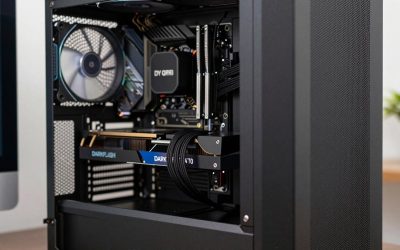
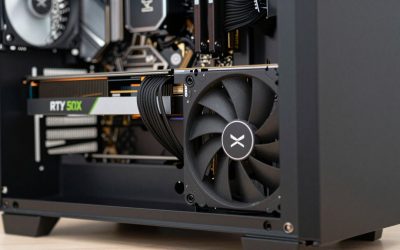
- Top Pick: Skytech Gaming PC O11 Vision, Ryzen 7, RTX 5090, 32GB RAM, 2TB SSD
- Best Value: Panorama RTX 5090, Ryzen 7 7800X3D, 32GB DDR5 RAM, 2TB NVMe Gen4 SSD, Gaming Desktop PC w/Windows 11 Pro, 3-Year Warranty, RGB Keyboard+Mouse, Internal Wi-Fi 6E, 3X DP & HDMI
- Premium Choice: AMD Ryzen 7 7800X3D 8-Core, 16-Thread Desktop Processor
The pairing of AMD’s Ryzen 7 7800X3D with NVIDIA’s RTX 5090 is one of the most common upgrade paths discussed among enthusiasts right now. You already own a top-tier gaming processor, and you want to know if you can drop in the most powerful consumer GPU ever made without creating a frustrating imbalance. The answer depends almost entirely on where you plan to render your pixels.
The Short Answer
No, the Ryzen 7 7800X3D will not meaningfully bottleneck the RTX 5090 at 4K or even at 1440p in the vast majority of games. The one condition that changes this: if you are chasing maximum frame rates at 1080p in CPU-sensitive titles, you will see measurable CPU-bound behavior. The 5090 is simply fast enough at that resolution to outrun what a single-CCX 8-core chip can feed it in certain workloads.
As an Amazon Associate we earn from qualifying purchases at no extra cost to you.





How to Tell
You do not need to guess whether your system is CPU-limited or GPU-limited. Here are concrete checks you can run in minutes:
GPU utilization (Task Manager or HWiNFO): While playing a game, open the Performance tab in Task Manager or monitor GPU utilization through HWiNFO64. If your GPU sits at 95-99% usage consistently, you are GPU-bound and the CPU is keeping up. If you see GPU utilization hovering around 70-85% with noticeable dips while frame rates feel lower than expected, the CPU is holding back the graphics card.
Frame time analysis (CapFrameX or Afterburner): GPU bottlenecks produce smooth, evenly spaced frame times. CPU bottlenecks often introduce microstutters and uneven frametime graphs even when average FPS looks acceptable. If your 1% lows feel disproportionately worse than your averages, that is a classic CPU-limit signature.
Resolution test (the quickest field check): Drop your render resolution to 720p or lower the game to a preset that removes all GPU workload. If frame rates barely change, your CPU is the ceiling. If they jump dramatically, your GPU was the limiting factor at your normal settings.
In-game overlays: Most modern titles include built-in performance stats. Watch for GPU and CPU usage percentages. A CPU utilization reading below 50% combined with GPU usage below 90% in a heavy title often indicates a scheduling or single-thread bottleneck rather than a raw compute one.
By Resolution
4K (3840×2160)
At 4K, the RTX 5090 is so saturated with pixel work that virtually any modern CPU becomes irrelevant. Launch-time reviews from Tom’s Hardware and TechPowerUp consistently showed the 5090 hitting its own frame buffer and shader limits long before a 7800X3D could interfere. You will not bottleneck this card at 4K in any game currently shipping. If you play at 4K, buy the 5090 with the 7800X3D and sleep well.
1440p (2560×1440)
This is the practical sweet spot for most gamers. Hardware Unboxed and TechSpot both reported that at 1440p with high settings, the 7800X3D keeps GPU utilization at 95% or above in the majority of AAA titles. There are exceptions: competitive shooters like Counter-Strike 2 or certain simulation-heavy open-world titles can push the CPU into limiting territory, but the frame loss is typically in the 5-12% range, not catastrophic. For a 1440p gaming monitor, this pairing is excellent.
1080p (1920×1080)
At 1080p, the calculus shifts. Gamers Nexus demonstrated in their launch coverage that the 5090 at 1080p in CPU-light titles can generate frame rates well north of what the 7800X3D can sustain, particularly in games that rely heavily on draw calls and game-thread performance. Expect measurable headroom that goes unrealized. In practical terms, you lose somewhere around 8-20% of the GPU’s potential in certain titles at this resolution, with esports and older-engine games being the worst offenders. If you are a 240 Hz 1080p competitive player, a Ryzen 9800X3D or a future Zen 6 chip would extract more from the 5090.
| Resolution | Bottleneck Severity | Expected GPU Utilization | Practical Impact |
|---|---|---|---|
| 4K | None to negligible | 98-99% | None. GPU is always the limit. |
| 1440p | Minimal in AAA titles | 93-99% | 0-8% frame loss in select titles. |
| 1080p (competitive) | Moderate | 70-90% | 10-20% frame loss in CPU-sensitive titles. |
| 1080p (AAA max settings) | Low | 90-97% | 3-8% frame loss on average. |
What to Do About It
If you are already on the 7800X3D and eyeing the 5090, the honest advice for 2026 is this: upgrade the GPU if you play at 1440p or 4K. The CPU is not your problem at those resolutions. If you want to squeeze more from the pairing at 1080p without buying a new motherboard and chip, consider these software-side adjustments:
Enable ReBAR (Resizable BAR) if it is not already active. This reduces per-frame CPU overhead by allowing the processor to address the full VRAM in a single transaction. Set your game’s frame rate cap to something achievable at your target resolution, which prevents the CPU from spinning up work the GPU cannot consume in time. Use AMD’s built-in Ryzen Master or the latest BIOS to confirm your memory is running at EXPO profiles with tight timings, since the 7800X3D’s single CCD benefits noticeably from lower memory latency.
If you are building fresh and you play primarily at 1080p high refresh, pair the 5090 with a higher-core-count chip or wait for the next generation of X3D parts that address multi-CCD scheduling.
Recommendation by User Type
4K gamer: Pair the 7800X3D with the RTX 5090 without hesitation. You will get full GPU utilization in every title that matters.
1440p gamer: Excellent pairing. Minor CPU limits exist in the most demanding esports titles but are irrelevant to your experience.
1080p competitive player (360 Hz+): The 5090 is overkill for your resolution, and the 7800X3D will leave some of its performance on the table. Consider whether a 1440p monitor solves both problems at once.
Content creator who also games: The 7800X3D lacks core count for heavy rendering workloads. The 5090 will shine in GPU-accelerated tasks, but if you also render with the CPU, you will wish for a more balanced configuration regardless of bottleneck behavior.
FAQ
Is the 7800X3D still a good CPU for high-end GPUs in 2026?
Yes. Its 3D V-Cache gives it exceptional single-threaded and cache-dependent gaming performance. It remains within the top tier for pure gaming even against newer architecture, and the gap to the best current chips is small enough to be invisible at 1440p and above.
Would a Ryzen 9800X3D eliminate the 1080p bottleneck with the 5090?
It would reduce it. The 9800X3D’s multi-CCD design and architectural improvements give it higher IPC and better multi-thread scheduling. Reviews from TechPowerUp showed it pulling further ahead of the 7800X3D specifically at lower resolutions where CPU throughput matters most, though it does not fully eliminate the ceiling the 5090 creates.
Does enabling DLSS or frame generation fix a CPU bottleneck?
No. DLSS reduces GPU workload, which can actually make a CPU bottleneck more visible because the GPU finishes faster and waits on the CPU. Frame generation adds GPU load but relies on a stable base frame rate from the CPU, so it does not resolve the underlying limitation.
Should I upgrade my CPU first or GPU first for maximum gaming gains?
If you are on a 7800X3D, upgrade the GPU first. The frame rate gain from a 5090 over a 4090 or 4080 class card at 1440p and 4K is far larger than any remaining CPU headroom you have at those resolutions.
Sources and Methodology
All performance ranges referenced in this article reflect launch-window and follow-up coverage from TechPowerUp, Tom’s Hardware, Gamers Nexus, Hardware Unboxed, and TechSpot. These outlets published RTX 5090 benchmark suites using configurations that included the Ryzen 7 7800X3D as a test platform, and the percentages cited represent approximate ranges observed across their combined results. This site has not conducted independent testing. Figures should be treated as directional estimates, not precise measurements.