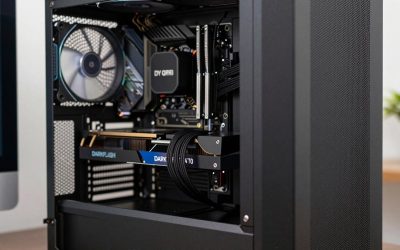
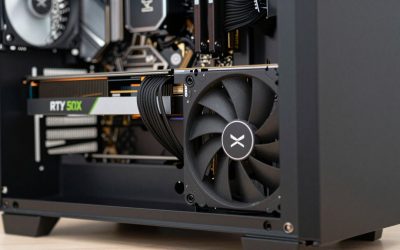
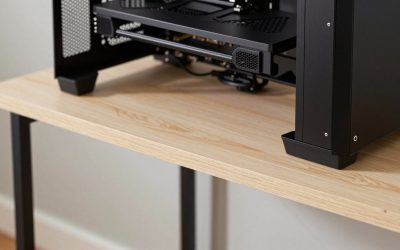
- Top Pick: Thermaltake LCGS Quartz i1460 Gaming Desktop (Intel Core™ i5-14400F, ToughRam DDR4 3600Mhz 16GB RGB Memory, NVIDIA GeForce® RTX 5060, 1TB NVMe M.2, WiFi, Windows 11) S2QT-B760-560-LCS
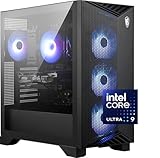
- Best Value: KOTIN Prebuilt Gaming PC Ryzen 7 9700X 16GB DDR5 RTX 5060 Ti 8GB 1TB SSD
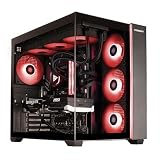
- Premium Choice: KOTIN Prebuilt Gaming PC RTX 5070 12GB, Ryzen 7 9700X, 32GB DDR5, 1TB SSD
Building a PC from parts still has its fans, but in 2026 buying a prebuilt gaming PC makes more sense than it has in years. The RTX 50-series is now widely available in complete systems, so you no longer have to chase a GPU at inflated prices or gamble on stock. A prebuilt lands assembled, stress-tested, and covered by a single warranty, which means one phone number to call if anything goes wrong instead of finger-pointing between component makers. For most buyers that trade-off — a small premium in exchange for zero build hassle and guaranteed compatibility — is well worth it, especially when integrators pass along bulk pricing on cases, cooling, and power supplies.
This guide is the hub for our entire prebuilt cluster. Below you will find the products we currently rate best, followed by how to shop by the three things that actually decide your purchase: your GPU tier, your target resolution, and your budget. Each section links out to a dedicated deep-dive guide with tested picks, so use this page to narrow your shortlist, then follow the link that matches your situation to compare specific machines side by side.
As an Amazon Associate we earn from qualifying purchases at no extra cost to you.





🎮 Get More From Your Setup — Free
Prime Gaming gives you free PC games every month, in-game loot, and a free Twitch channel sub — plus fast free shipping on all the rigs above. New members get a 30-day free trial.
Watch: Best Prebuilt Gaming PC 2026 — Video Review
How to Choose a Prebuilt Gaming PC in 2026
- Match the GPU to your resolution: The graphics card is the single biggest factor in gaming performance. An RTX 5060 or 5060 Ti is built for 1080p and entry 1440p; the RTX 5070 and 5070 Ti own high-refresh 1440p; the RTX 5080 and 5090 are the cards you buy for smooth 4K. Buy for the monitor you actually play on, not the spec sheet.
- Keep the CPU balanced: A mid-tier GPU paired with a weak CPU (or a flagship GPU bottlenecked by a budget chip) wastes money. Aim for a current Ryzen 7 / Core i5-i7 class processor so the CPU feeds the GPU without holding back frame rates in competitive titles.
- Get enough RAM and fast storage: 16GB is the floor in 2026; 32GB is the comfortable target for modern games and multitasking. Insist on an NVMe SSD (1TB minimum) as the boot and game drive — a slow SATA or hard-drive-only system will feel dated on day one.
- Check cooling and the power supply: Higher GPU tiers run hotter and draw more watts. Look for adequate case airflow (or an AIO liquid cooler on 5080/5090 rigs) and a quality 80 Plus PSU with headroom, not a bargain unit running at its limit.
- Weigh warranty and upgrade path: A 1–3 year warranty and standard, non-proprietary parts mean you can add storage, RAM, or a bigger GPU down the line. Systems using off-the-shelf ATX components age far more gracefully than locked-down proprietary designs.
Best Prebuilt Gaming PC by GPU
The fastest way to shop is by graphics card, since it sets both your performance ceiling and your price. Here is how the RTX 50-series stack breaks down, with a dedicated guide for each tier:
- prebuilt PCs with the RTX 5060 — best for 1080p high-refresh and budget-minded 1440p, like the ~$990 Thermaltake LCGS Quartz.
- RTX 5060 Ti prebuilts — the value 1440p entry point; the KOTIN RTX 5060 Ti near $1400 is a good example.
- RTX 5070 prebuilt gaming PCs — the sweet-spot card for high-refresh 1440p, seen in the KOTIN and STORMCRAFT builds around $1900 and the CyberPowerPC RTX 5070 near $1586.
- RTX 5070 Ti builds — for buyers who want 1440p maxed out and entry-level 4K headroom.
- RTX 5080 prebuilts — serious 4K gaming, such as the Alienware Aurora RTX 5080 around $2964 or the MSI Aegis R2 near $2555.
- RTX 5090 flagship rigs — no-compromise 4K and beyond, like the ~$6300 Skytech Legacy 4.
Best Prebuilt Gaming PC by Resolution
If you already know the monitor you are gaming on, shop by resolution instead. For the most popular target, our roundup of the best 1440p prebuilt gaming PCs covers everything from value builds to high-refresh machines, and if you have settled on the sweet-spot card, the dedicated 1440p RTX 5070 build guide zeroes in on the best pairing for 1440p at 144Hz and above. Ready to move up to Ultra HD? Our guide to the best 4K prebuilt gaming PCs lays out which GPU tiers can actually deliver smooth 60fps-plus at 3840×2160.
Best Prebuilt Gaming PC by Use Case
Not everyone is only gaming. If you go live, our picks for a prebuilt PC for streaming prioritize CPU core count and NVENC-capable GPUs so you can play and encode without dropping frames. Creators who cut footage between sessions should read our guide to the best prebuilt PC for video editing, where extra RAM, fast storage, and strong multi-core performance matter as much as raw gaming FPS.
Best Prebuilt Gaming PC by Budget
Budget usually decides the shortlist, so it helps to anchor on three price bands. Entry systems in the $800–1200 range (RTX 5060 class, like the Thermaltake LCGS Quartz) handle 1080p and light 1440p. The $1500–2000 sweet spot is where most buyers should land: an RTX 5070 machine here delivers excellent high-refresh 1440p, and our list of the best RTX 5070 prebuilt under $1500 shows how far a tight budget can stretch. Not sure whether to save money or spend up a tier? Our RTX 5070 vs RTX 5060 Ti comparison breaks down exactly what the extra outlay buys you. Above $2500 you reach the 4K and enthusiast tier — RTX 5080 systems for smooth Ultra HD and RTX 5090 flagships for maximum-everything performance.
Frequently Asked Questions
Are prebuilt gaming PCs worth it in 2026?
Yes, for most buyers. With RTX 50-series cards now shipping in complete systems, prebuilts offer guaranteed stock, assembled-and-tested reliability, and a single warranty covering the whole machine. The build premium over DIY is modest, and integrators often offset it with bulk pricing on cases, cooling, and power supplies — so unless you specifically enjoy building, a prebuilt is the smarter path.
What GPU do I need for 1440p vs 4K?
For high-refresh 1440p, an RTX 5070 (or RTX 5060 Ti on a budget) hits the sweet spot. For 4K, step up to an RTX 5080 for smooth 60fps-plus with high settings, or an RTX 5090 if you want maximum frame rates and full ray tracing. The RTX 5070 Ti bridges the gap, handling 1440p maxed out with entry-level 4K capability.
How much should I spend?
Plan on $800–1200 for a capable 1080p/entry-1440p build, $1500–2000 for the high-refresh 1440p sweet spot most gamers should target, and $2500 or more for 4K and enthusiast rigs. Spend where it counts — the GPU and a balanced CPU — rather than paying for RGB or storage you can add cheaply later.
Can I upgrade a prebuilt later?
Usually, yes — as long as it uses standard ATX components and a quality power supply with headroom. RAM and storage are the easiest upgrades, and a roomy case with a good PSU lets you drop in a bigger GPU down the road. Avoid systems with proprietary motherboards or undersized power supplies if future upgrades matter to you.
Final Verdict
For entry-level buyers, the ~$990 Thermaltake LCGS Quartz delivers strong RTX 5060 gaming without stretching the budget. For the 1440p sweet spot, an RTX 5070 machine such as the CyberPowerPC build near $1586 or the KOTIN/STORMCRAFT systems around $1900 gives you high-refresh performance that will stay relevant for years. And for 4K enthusiasts, the Alienware Aurora RTX 5080 (~$2964) is our smart-money pick for smooth Ultra HD, while the ~$6300 Skytech Legacy 4 RTX 5090 is the no-compromise flagship for anyone who simply wants the fastest gaming PC money can buy. Whatever your tier, follow the matching guide above to compare the exact machines we recommend.