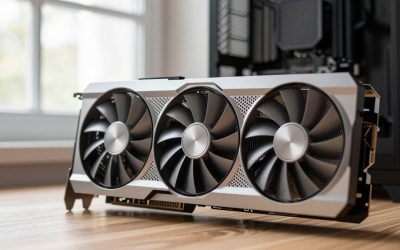
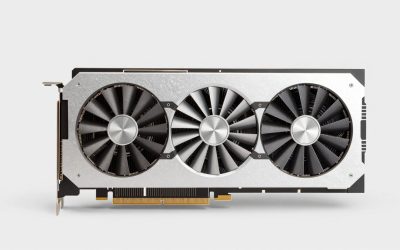
- Top Pick: MSI GeForce RTX 5060 8G VENTUS 2X OC Graphics Card – RTX 5060 GPU, 8GB GDDR7 (28Gbps/128-bit), PCIe 5.0 – DUAL-Fan Thermal Design (2 x TORX FAN 5.0) – HDMI 2.1b, DisplayPort 2.1b
- Best Value: Sapphire 11348-03-20G Pulse AMD Radeon™ RX 9070 XT Gaming Graphics Card with 16GB GDDR6, AMD RDNA 4
- Premium Choice: GIGABYTE GeForce RTX 5070 Eagle OC SFF 12G Graphics Card, 12GB 192-bit GDDR7, PCIe 5.0, WINDFORCE Cooling System, GV-N5070EAGLE OC-12GD Video Card
Call of Duty: Warzone is a well-optimized game that still manages to eat hardware, because the target is not 60 fps but 144, 240, or higher. The engine scales across many CPU threads, so the graphics card is usually the limiting component at 1440p and 4K, while at 1080p on competitive settings a fast processor matters as much. Pairing for Warzone therefore starts with your monitor: match the GPU to the refresh rate you actually own, then make sure the CPU and RAM can hold frame times steady in a 150-player lobby. The five cards below cover every sensible budget, with attributed performance ranges and the platform costs that come with each tier.
Quick Picks
| Pick | Tier | Why |
|---|---|---|
| MSI GeForce RTX 5060 Ventus 2X OC 8G | Budget 1080p | 144Hz at 1080p with DLSS 4 on a small budget |
| Sapphire Pulse Radeon RX 9060 XT 16GB | Value 1080p/1440p | 16GB and FSR 4 for high textures at 1440p |
| Gigabyte GeForce RTX 5070 Windforce OC 12G | Sweet spot 1440p | 165Hz at 1440p with headroom |
| Sapphire Pulse Radeon RX 9070 XT 16GB | High-end 1440p / 4K entry | Near-flagship raster per dollar |
| MSI GeForce RTX 5080 Ventus 3X OC 16G | 4K high refresh | 4K at 120 fps and beyond |
How We Chose
Warzone is a rasterization workload with strong upscaler support, so we ranked cards on raster performance using the positioning in launch reviews from TechPowerUp, Hardware Unboxed, and TechSpot, all of whom test the Call of Duty engine directly. We then weighed VRAM, since high textures at 1440p push past 8GB, and efficiency, because competitive players often run compact, quiet builds. Finally we considered latency features like NVIDIA Reflex and AMD Anti-Lag 2, which matter in a battle royale.
As an Amazon Associate we earn from qualifying purchases at no extra cost to you.
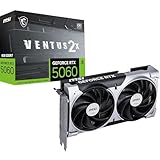


MSI GeForce RTX 5060 Ventus 2X OC 8G
The RTX 5060 is the card for a 1080p 144Hz player on a strict budget. In TechPowerUp’s and Hardware Unboxed’s launch testing of the Call of Duty engine, this class of card landed roughly in the 110-140 fps range at 1080p with competitive settings, and DLSS 4 quality mode pushes higher. Reflex keeps input latency low. At 1440p it holds 80-100 fps on medium-high, and 4K is not realistic. The con: 8GB of VRAM. Warzone’s high texture setting at 1440p can exceed that and cause hitching, so you will run medium textures above 1080p.
Sapphire Pulse Radeon RX 9060 XT 16GB
The RX 9060 XT 16GB is the better buy if you might move to 1440p or want high textures without thinking about it. Hardware Unboxed and TechSpot placed it 15-25 percent ahead of the RTX 5060 in rasterization, which in Warzone means roughly 130-160 fps at 1080p and 95-120 fps at 1440p on balanced settings, with FSR 4 quality adding margin. Anti-Lag 2 handles latency. At 4K it manages 55-70 fps with upscaling. The con: a 128-bit memory bus limits scaling at 4K, so it is a 1440p card at heart.
Gigabyte GeForce RTX 5070 Windforce OC 12G
The RTX 5070 is our sweet spot for 1440p at 165Hz. TechPowerUp’s launch review positioned it 20-30 percent ahead of the RX 9060 XT class, translating to around 140-170 fps at 1440p on balanced settings and 90-110 fps at 4K with DLSS 4 quality. Multi-frame generation is available but adds latency, so competitive players will leave it off. Twelve gigabytes handles 1440p high textures. The con: at 1080p the card is CPU-bound on all but the fastest processors, so the money is better spent on the CPU at that resolution.
Sapphire Pulse Radeon RX 9070 XT 16GB
The RX 9070 XT is for 1440p at 240Hz or 4K at 100 fps or more. Hardware Unboxed and Gamers Nexus found it trading blows with the RTX 5070 Ti, and in the Call of Duty engine that class delivers roughly 180-220 fps at 1440p balanced settings and 110-135 fps at 4K high with FSR 4 quality. Sixteen gigabytes covers 4K textures without compromise. The con: it draws over 300W under load and wants a quality 750W or 850W power supply, and the extra heat matters in a compact case.
MSI GeForce RTX 5080 Ventus 3X OC 16G
The RTX 5080 is the card for a 4K 144Hz display where you want native rendering. TechPowerUp and Tom’s Hardware placed it 15-25 percent above the RTX 5070 Ti and RX 9070 XT, meaning around 130-160 fps at 4K high natively in Warzone and more with DLSS 4. At 1440p it is CPU-bound with anything short of a Ryzen 7 9800X3D. The con: price. For 1440p competitive play the RX 9070 XT reaches the same frame-rate ceiling for far less, and the difference funds a better CPU and monitor.
Platform Costs to Budget For
Warzone scales well across cores, so the platform does not need to be exotic, but it cannot be neglected either. A B650 or B850 motherboard covers any Ryzen; a B860 board covers Intel Core Ultra. RAM: 32GB of DDR5-6000 CL30 is the standard, because the game plus Discord and a browser comfortably passes 16GB in a lobby. Cooling: a 120mm tower cooler handles a Ryzen 5 or Core Ultra 5; an eight-core or X3D processor deserves a dual-tower or 240mm liquid cooler for long sessions. Power supplies: 550W for the RTX 5060, 650W for the RX 9060 XT and RTX 5070, and 850W for the RX 9070 XT and RTX 5080.
Bottleneck Check by Resolution
At 1080p, Warzone is CPU-bound past the RX 9060 XT. A Ryzen 5 9600X or Core Ultra 5 245K holds roughly 160-200 fps on competitive settings regardless of GPU, and a Ryzen 7 9800X3D lifts that ceiling into the 220-260 range; if you want 240Hz at 1080p, spend on the processor. At 1440p the RTX 5070 and RX 9070 XT are well matched with an eight-core CPU, and the GPU is the limit at 165Hz. At 4K every card here is GPU-bound and the CPU only needs to be a modern six-core. The practical rule: 1080p buys the CPU, 1440p buys both, 4K buys the GPU.
Our Verdict
For most Warzone players in 2026, the Gigabyte GeForce RTX 5070 Windforce OC 12G at 1440p or the Sapphire Pulse Radeon RX 9060 XT 16GB at 1080p is the right card, paired with a fast six- or eight-core processor. The RX 9070 XT is the pick for 240Hz at 1440p, and the RTX 5080 is for native 4K high refresh only.
FAQ
Is Warzone more CPU or GPU intensive?
GPU intensive at 1440p and 4K, but CPU intensive at 1080p on competitive settings where frame rates exceed 200. Balance both for high refresh.
How much VRAM does Warzone need?
Eight gigabytes is enough at 1080p with medium-high textures. High textures at 1440p and any 4K preset benefit from 12GB or more.
Should I use DLSS or FSR in Warzone?
Yes, quality-mode upscaling is a free frame-rate gain at 1440p and 4K. Skip frame generation in competitive play because it adds input latency.
What GPU do I need for 240Hz in Warzone?
At 1080p, an RX 9060 XT or RTX 5070 with a fast X3D CPU. At 1440p, the RX 9070 XT or RTX 5080 with competitive settings.
Sources and Methodology
The frame-rate ranges in this guide are approximate and reflect the relative positioning of each GPU in launch reviews published by TechPowerUp, Hardware Unboxed, TechSpot, Tom’s Hardware, and Gamers Nexus, several of which include the Call of Duty engine in their test suites. We combined those rankings with the game’s known scaling behavior at each resolution to produce the ranges above. None of these figures were measured by this site, and results vary with settings, drivers, and processor.
Ready to decide? Our #1 pick for 2026 is the MSI GeForce RTX 5060 Ventus 2X OC 8G.
Live price & availability on Amazon.