Picking between the Razer DeathAdder V3 lineup and the Logitech G Pro X Superlight 2 usually comes down to one question: do you want a mouse that adapts to your grip and budget, or one nearly perfect shape refined to the gram? Razer’s DeathAdder V3 family now spans wired, Pro wireless, and HyperSpeed budget-wireless models, each chasing esports-grade speed at different price points. The Superlight 2 sticks to a single, obsessively minimal wireless design.
Both camps target competitive FPS players who care about sub-1ms clicks, sub-60g weight, and sensors that track well past anything a monitor’s refresh rate can show. Below we break down where the DeathAdder V3 options pull ahead, where the Superlight 2 still wins, and which one actually fits your setup and wallet.
As an Amazon Associate we earn from qualifying purchases at no extra cost to you.




⚡ Save on Your Next PC — Amazon Prime
Prime members get fast free shipping on the systems above, plus early access to Prime Day & Black Friday PC deals. New members get a 30-day free trial.
Watch: DeathAdder V3 vs Superlight 2: Which Mouse? — Video Review
Quick Verdict
If you want flexibility and value, the DeathAdder V3 lineup wins outright: there’s a wired version for $69 in the same shape as a $150 wireless flagship, plus a HyperSpeed model that undercuts the Superlight 2 by roughly $60 while still hitting 100 hours of battery life. The Superlight 2 remains the gold standard for pure shape and weight consistency, but in 2026 it no longer has a clear performance edge over Razer’s Focus Pro 30K sensor.
Key Differences
- Weight: DeathAdder V3 wired hits 59g, the Pro wireless is 63-64g, and the HyperSpeed drops to 55g; the Superlight 2 sits around 60g.
- Sensor: DeathAdder V3 and Pro use Razer’s 30K Focus Pro sensor with 8000Hz polling via HyperPolling dongle; the HyperSpeed uses a 26K optical sensor. Superlight 2 uses Logitech’s HERO 2, capped near 88,000 DPI but without native 8K polling.
- Battery: DeathAdder V3 Pro claims 90 hours, HyperSpeed up to 100 hours via USB-C. Superlight 2 rates around 95 hours, similar territory.
- Switches: HyperSpeed uses Gen-3 optical switches rated for tens of millions of clicks; the Pro uses Razer’s third-gen mechanical switches. Superlight 2 sticks with Logitech’s mechanical hybrid switches.
- Price spread: Razer offers three price tiers (wired, HyperSpeed, Pro) from budget to flagship. Superlight 2 only comes in one wireless configuration.
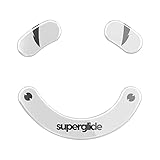
- Customization: Both support software macros and DPI profiles, but Razer’s ecosystem includes cheap replacement mouse feet (like the TALONGAMES PTFE skates or Superglide glass skates) specifically cut for the DeathAdder V3 Pro shape.
Razer DeathAdder V3 Lineup
The DeathAdder V3 wired is the value pick here: 59g, an 8000Hz-capable Focus Pro 30K sensor, and Razer’s Gen-3 optical switches, all for wired-mouse money. Step up to the DeathAdder V3 Pro (available in black or white) and you get the same shape untethered, 63-64g, and a 90-hour battery, making it the closest match to Superlight 2’s proposition. The HyperSpeed sits in between on price but actually beats both on battery life, rated up to 100 hours with USB-C fast charging, while shaving weight down to 55g using a slightly less aggressive 26K sensor.
What ties the lineup together is the ergonomic shell Razer has refined since the original DeathAdder: a right-handed, palm-and-claw-friendly hump that’s stayed essentially unchanged for over a decade. Because the Pro’s shape is so popular, aftermarket feet like the TALONGAMES 0.8mm PTFE skates or Superglide’s glass Type-S skates exist specifically to extend its glide life once the stock feet wear down, something the Superlight 2 doesn’t have nearly as much third-party support for.
Logitech G Pro X Superlight 2
The Superlight 2 built its reputation by stripping away everything non-essential: no RGB, no side grips, just a hollowed-out shell that lands around 60g with a HERO 2 sensor tuned for esports pros. Its shape is more ambidextrous-leaning than the DeathAdder’s hooked right-side design, so it appeals to a slightly different grip style, particularly fingertip and light claw grips that want a flatter back arch.
Where it struggles in 2026 is value. There’s only one configuration, priced at flagship level, with no wired or budget-wireless variant the way Razer offers. Its 95-hour battery and HERO 2 sensor are excellent, but Razer’s Focus Pro 30K and 8000Hz HyperPolling now match or exceed those numbers on paper, leaving Superlight 2’s premium harder to justify unless you specifically prefer its shape.
Which Should You Buy?
- Want the cheapest entry into esports-grade tracking: get the DeathAdder V3 wired.
- Want wireless freedom with class-leading battery life: get the DeathAdder V3 HyperSpeed.
- Want Razer’s flagship wireless sensor and switches with color options: get the DeathAdder V3 Pro in black or white.
- Already own a DeathAdder V3 Pro and want longer glide life: grab the TALONGAMES or Superglide replacement skates.
- Prefer a flatter, more ambidextrous shape above all else: the Superlight 2 is still worth the premium.
Frequently Asked Questions
Is the DeathAdder V3 Pro as fast as the Superlight 2?
Yes. With the HyperPolling dongle, the DeathAdder V3 Pro can hit 8000Hz polling and uses a 30K DPI Focus Pro sensor, both matching or exceeding the Superlight 2’s HERO 2 sensor in raw specs.
Which is lighter, DeathAdder V3 or Superlight 2?
The DeathAdder V3 HyperSpeed is the lightest at 55g. The standard wired DeathAdder V3 is 59g, close to the Superlight 2’s roughly 60g, while the Pro wireless models land at 63-64g.
Do I need special feet for the DeathAdder V3 Pro?
Not immediately, but stock feet wear down after months of daily use. PTFE skates like the TALONGAMES set or glass skates like Superglide’s Type-S restore smooth glide and are cut specifically for the Pro’s shape.
Is the HyperSpeed a downgrade from the Pro?
It’s a different trade-off rather than a strict downgrade. You get a slightly less precise 26K sensor and optical switches instead of mechanical, but gain lower weight, USB-C charging, and up to 100 hours of battery at a lower price.
Final Verdict
The DeathAdder V3 family wins on flexibility and price-to-performance in 2026, offering a shape and sensor tier for nearly every budget while matching the Superlight 2 on the specs that actually affect gameplay. The Superlight 2 still earns its keep for players who prioritize its specific ambidextrous-leaning shape over anything else, but for most buyers, a DeathAdder V3 variant delivers the same competitive edge for less money.