- Top Pick: AMD Ryzen 7 5800X3D 8-core, 16-Thread Desktop Processor with AMD 3D V-Cache Technology
- Best Value: iBUYPOWER Element Gaming PC Desktop, AMD Ryzen 7 9800X3D, NVIDIA GeForce RTX 5070 12GB, 32GB DDR5 RAM, 2TB SSD, RGB Wired Keyboard and Mouse, WiFi, Windows 11 Home
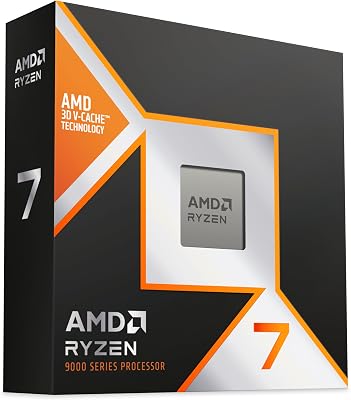
- Premium Choice: AMD Ryzen 7 9800X3D + TUF Gaming X870-PLUS WiFi
If you are building or upgrading a gaming PC in 2026, one family of processors keeps rising to the top of every benchmark chart and best-seller list: AMD’s X3D chips. These are the Ryzen CPUs stamped with 3D V-Cache, a stacked slab of extra L3 cache glued directly on top of the compute die. That single design choice has turned AMD into the undisputed gaming CPU leader, with the Ryzen 7 9800X3D sitting at the throne and a whole lineup of siblings covering every budget from mainstream to no-compromise flagship.
- Best X3D Gaming CPUs in 2026: Quick Comparison
- What Is 3D V-Cache and Why Does It Boost Gaming FPS?
- Ryzen 7 9800X3D: The 2026 Gaming King
- Ryzen 9 9950X3D vs 9800X3D: Do You Need 16 Cores?
- AM5 Platform, Cooling, and Memory: What You Need to Know
- Gaming vs Productivity: Which X3D Is Right For You?
- The Verdict: Best X3D Gaming CPU Picks for 2026
- Related Guides
- Frequently Asked Questions
- Related Articles
Why do gamers care so much about cache? Games are latency-sensitive and love to reuse the same data over and over as they draw frames. When more of that data lives in a huge, fast on-chip cache instead of being fetched from comparatively slow system RAM, the CPU stalls less and pushes more frames per second. The result is that a 3D V-Cache chip can beat processors with higher clock speeds and even more cores in real-world gaming, especially at 1080p and 1440p where the CPU, not the GPU, sets the pace.
As an Amazon Associate we earn from qualifying purchases at no extra cost to you.





This guide breaks down the best X3D gaming CPUs you can actually buy in 2026, who each one is for, and how to pair them with the right AM5 motherboard, cooling, and memory. Whether you want the outright fastest gaming experience or the smartest value pick, there is an X3D chip with your name on it.
As an Amazon Associate we earn from qualifying purchases. Prices and availability are accurate as of publication and may change. We only recommend hardware we would put in our own gaming rigs.
🛒 Best Price Today on Amazon
Prime members get fast, free shipping on everything above, plus member-only deals. New members get a 30-day free trial — cancel anytime.
Best X3D Gaming CPUs in 2026: Quick Comparison
Here is a side-by-side look at the five X3D processors that matter most for gamers this year. Use it as a shortcut, then read the deep dives below for the details that decide your build.
| CPU | Cores/Threads | 3D V-Cache | Best For | Approx Price (2026 USD) |
|---|---|---|---|---|
| Ryzen 7 9800X3D | 8 / 16 | 64MB (Zen 5, 2nd-gen) | Best overall gaming CPU | $449 |
| Ryzen 9 9950X3D | 16 / 32 | 64MB (Zen 5) | Gaming + heavy productivity | $629 |
| Ryzen 7 7800X3D | 8 / 16 | 64MB (Zen 4) | Best value gaming pick | $339 |
| Ryzen 9 7950X3D | 16 / 32 | 64MB (Zen 4) | Last-gen do-it-all flagship | $489 |
| Ryzen 5 7600X3D | 6 / 12 | 64MB (Zen 4) | Budget 1080p gaming | $219 |
What Is 3D V-Cache and Why Does It Boost Gaming FPS?
Standard desktop CPUs carry a fixed amount of L3 cache built into the main die. AMD’s 3D V-Cache technology stacks an additional layer of SRAM vertically on top of that die, roughly tripling the total L3 pool to around 96MB on the eight-core parts. Because the extra cache sits physically on top of the cores rather than off to the side, data travels a very short distance at very low latency.
Games are the ideal workload to exploit this. Simulation-heavy titles, open-world engines, strategy games, and esports shooters constantly re-read the same textures, geometry, and game-state data. When that working set fits inside the cache, the processor rarely has to wait on main memory. That is why a chip like the 7800X3D can outpace processors with far higher raw clock speeds. It is not doing more math per second, it is simply waiting less.
- Higher minimum frame rates: The biggest gains often show up in 1% lows, meaning smoother, stutter-free gameplay rather than just a bigger average number.
- Bigger wins at lower resolutions: At 1080p and 1440p the CPU does more of the work, so X3D advantages are dramatic. At native 4K the GPU becomes the bottleneck and the gap narrows.
- Great efficiency: X3D chips hit these numbers at modest power draw, so they run cool and quiet compared to power-hungry rivals.
If you want a primer on how CPU choice interacts with the rest of your parts, our complete gaming PC build guide walks through balancing your processor with graphics and memory.
Ryzen 7 9800X3D: The 2026 Gaming King
The Ryzen 7 9800X3D is the processor most gamers should aim for in 2026. It is built on the Zen 5 architecture with AMD’s second-generation 3D V-Cache design, and the key change is that the cache now sits underneath the compute cores rather than on top. That reordering lets the cores clock higher and, for the first time on an X3D part, run fully unlocked for overclocking while still enjoying the huge cache benefit.
In practice, the 9800X3D delivers the highest gaming frame rates of any consumer CPU on the market, often several percent ahead of its own predecessor and comfortably ahead of anything from the competition. With eight cores and sixteen threads it also handles streaming, background apps, and light content creation without breaking a sweat. For the vast majority of gamers pairing it with a high-end GPU, this is the sweet spot where you stop leaving frames on the table.
It runs cooler and more overclock-friendly than earlier X3D chips, but it still rewards a strong cooler. See our best CPU coolers for Ryzen roundup to get the most out of it. If your main use is pure gaming, you can stop reading here and buy the 9800X3D with confidence.
Ryzen 9 9950X3D vs 9800X3D: Do You Need 16 Cores?
The Ryzen 9 9950X3D is the flagship: sixteen Zen 5 cores, thirty-two threads, and 3D V-Cache on one of its two core clusters. For gaming, it trades blows with the 9800X3D and lands within a hair of it, because games rarely use more than eight cores and both chips share the same cache-boosted gaming die. So the real question is not which is faster in games, but whether you also do serious work.
Here is how to decide between them:
- Choose the 9800X3D if you primarily game, want the simplest and cheapest path to top-tier frame rates, and do not run heavy multi-core workloads.
- Choose the 9950X3D if you game and also render video, compile code, run 3D software, or stream to a demanding audience. Those extra eight cores roughly double productivity throughput.
One nuance: on the dual-cluster 9950X3D, Windows and AMD’s chipset software steer games onto the cache-heavy cores and productivity tasks onto the high-clock cores. This scheduling works well in 2026, but the single-cluster 9800X3D avoids the complexity entirely, which is part of its appeal. If your workload is genuinely mixed, the 9950X3D is a phenomenal all-rounder that never asks you to compromise. If it is gaming-first, save the money.
AM5 Platform, Cooling, and Memory: What You Need to Know
Every current X3D chip drops into the AM5 socket, and AMD has committed to supporting AM5 with new CPUs for years to come. That longevity is a major reason to buy in: a motherboard you buy today should accept future upgrades. Keep these platform essentials in mind:
- Motherboard: A B650 or B850 board is the value sweet spot for most builders, while X670E and X870E add extra PCIe lanes and connectivity for high-end rigs. All support the X3D lineup after a simple BIOS update if needed.
- Memory: AM5 uses DDR5. A 32GB kit of DDR5-6000 with tight timings is the proven pairing for Ryzen and hits the platform’s efficiency sweet spot. Enable the EXPO memory profile in BIOS or you leave performance on the table.
- Cooling: X3D chips are efficient but the cache stack limits how fast heat escapes. A quality air cooler handles the eight-core parts, while the sixteen-core 9950X3D is happiest with a 280mm or 360mm AIO liquid cooler under heavy load.
- Power: These processors sip power compared to rivals, so a mid-range PSU is plenty. Prioritize your budget on the GPU instead.
New to the socket? Our AM5 motherboard buying guide explains chipsets, VRM quality, and which features actually matter for a gaming build.
Gaming vs Productivity: Which X3D Is Right For You?
The X3D family splits cleanly along one line. If frame rates are all you care about, an eight-core part like the 9800X3D or the value-focused 7800X3D gives you flagship gaming performance without paying for cores you will not use. Games simply do not scale past eight cores in any meaningful way, so more cores rarely translate into more FPS.
If you mix gaming with content creation, software development, heavy multitasking, or professional applications, the sixteen-core 9950X3D or last-gen 7950X3D earns its premium by cutting render and export times roughly in half. And if you are on a tight budget targeting 1080p, the six-core Ryzen 5 7600X3D delivers a shocking amount of the X3D magic for the money, making it the smart entry point into 3D V-Cache gaming.
The Verdict: Best X3D Gaming CPU Picks for 2026
After all the benchmarks and price checks, our recommendations are simple:
- Best overall: Ryzen 7 9800X3D. The fastest gaming CPU you can buy, and the default choice for a high-end 2026 build.
- Best value: Ryzen 7 7800X3D. Still elite gaming performance for meaningfully less money, ideal for 1440p rigs.
- Best for creators who game: Ryzen 9 9950X3D. No-compromise gaming plus professional-grade multi-core muscle.
- Best budget: Ryzen 5 7600X3D. The cheapest ticket into 3D V-Cache, perfect for 1080p high-refresh gaming.
Whichever you choose, pair it with a strong GPU, a DDR5-6000 kit, and adequate cooling, and you will have a machine that stays fast for years thanks to the long-lived AM5 platform. For the other half of the equation, browse our best gaming graphics cards guide to finish the build.
Frequently Asked Questions
Is the Ryzen 7 9800X3D worth it over the 7800X3D?
If you want the absolute highest frame rates and plan to keep the chip for many years, yes. The 9800X3D is faster, runs cooler, and can be overclocked. But the 7800X3D remains an outstanding value that delivers most of the gaming experience for less money, so budget-conscious builders lose very little by choosing it.
Do X3D CPUs need special cooling?
They do not require exotic cooling, but the stacked cache limits heat transfer, so a good cooler helps them hold peak clocks. A quality air cooler is fine for the eight-core and six-core parts, while the sixteen-core 9950X3D performs best with a 280mm or larger liquid AIO under sustained loads.
Will a 3D V-Cache CPU help at 4K?
At native 4K the graphics card usually becomes the bottleneck, so the gap between CPUs shrinks. You still benefit from smoother 1% lows and the headroom to run demanding simulation games, and if you use upscaling that lowers the internal render resolution, the CPU advantage returns.
Are X3D processors good for streaming and productivity?
The eight-core chips handle gaming plus streaming comfortably. For serious productivity like video rendering, 3D work, or code compilation alongside gaming, step up to the sixteen-core 9950X3D or 7950X3D, which pair the cache-boosted gaming cores with twice the multi-threaded horsepower.
Ready to decide? Our #1 pick for 2026 is the Ryzen 7 9800X3D.
Live price & availability on Amazon.