This guide breaks down the best gaming mini PCs you can buy in 2026 across three clear performance tiers, explains the real-world GPU limits, and helps you match a machine to your budget and resolution target. Whether you want a silent living-room emulation box or a serious 1440p rig that fits in a backpack, there’s a small-form-factor option here that punches well above its size.
- What to Look for in a Gaming Mini PC
- Best Gaming Mini PCs 2026: Comparison Table
- Performance Tiers Explained: iGPU vs. Dedicated GPU
- Cooling, Noise, and Thermal Throttling
- Upgradeability and Longevity
- Verdict: Which Gaming Mini PC Should You Buy?
- Related Guides
- Frequently Asked Questions
- Related Guides
- Related Articles
As an Amazon Associate we earn from qualifying purchases. Prices and availability are accurate as of publication and may change; we only recommend hardware we would run ourselves.
As an Amazon Associate we earn from qualifying purchases at no extra cost to you.

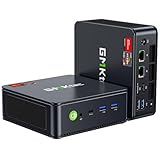



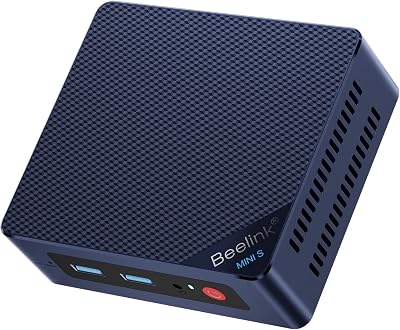


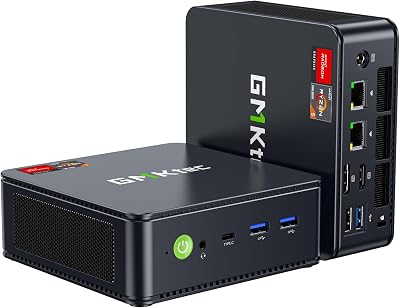

🛒 Best Price Today on Amazon
Prime members get fast, free shipping on everything above, plus member-only deals. New members get a 30-day free trial — cancel anytime.
What to Look for in a Gaming Mini PC
Not every “mini PC” is built to game. Before you buy, weigh these five factors — they separate a genuine small-form-factor gaming machine from a glorified office box.
- GPU type. This is everything. Integrated graphics (Radeon 890M, Arc 140V) handle esports titles and older AAA games at 1080p low-to-medium. A dedicated mobile GPU (RTX 4060/4070/5070) unlocks real 1440p gaming with ray tracing. If a listing hides the GPU, assume it’s integrated.
- Cooling and noise. A small chassis has nowhere to dump heat. Look for dual-fan designs, vapor chambers, or vented aluminum shells. Cheap boxes throttle hard after 15 minutes.
- RAM and configuration. Integrated GPUs share system memory, so 32GB dual-channel is the sweet spot. Single-channel RAM can cut iGPU performance by 20-30%.
- Ports and connectivity. You want USB4/Thunderbolt (handy for an external GPU), HDMI 2.1, DisplayPort, and 2.5GbE. Wi-Fi 6E or Wi-Fi 7 matters for wireless play.
- Upgradeability. Most minis let you swap SO-DIMM RAM and add a second M.2 SSD. Soldered-everything designs (common with the thinnest models) lock you in.
If you’re still deciding between a compact desktop and a full build, our breakdown of mini PC vs. full tower trade-offs covers the cost-per-frame math in detail.
Best Gaming Mini PCs 2026: Comparison Table
| Model | CPU / GPU | RAM | Best For | Approx Price |
|---|---|---|---|---|
| ASUS ROG NUC 970 (2026) | Core Ultra 9 285H / RTX 5070 (Mobile) | 32GB DDR5 | Serious 1440p gaming | $1,699 |
| Minisforum AtomMan G7 Ti | Ryzen 9 8945HX / RTX 4070 (Mobile) | 32GB DDR5 | Best price-to-performance | $1,299 |
| Minisforum UM890 Pro | Ryzen 9 8945HS / Radeon 780M | 32GB DDR5 | 1080p esports + emulation | $699 |
| GEEKOM A9 Max | Ryzen AI 9 HX 370 / Radeon 890M | 32GB LPDDR5X | Handheld-class iGPU gaming | $849 |
| GEEKOM Mini IT13 | Core i9-13900H / Iris Xe | 32GB DDR4 | Budget light gaming + work | $549 |
Performance Tiers Explained: iGPU vs. Dedicated GPU
Gaming mini PCs fall into three distinct tiers, and knowing which one you need saves both money and disappointment.
Tier 1: Integrated Graphics (Radeon 780M / 890M, Arc 140V)
These APU-based boxes — the GEEKOM A9 Max and Minisforum UM890 Pro — are the value darlings of 2026. The Radeon 890M rivals a desktop GTX 1650 and comfortably runs esports staples like Valorant, CS2, and Rocket League at 1080p high, plus AAA titles at 1080p low-medium with FSR upscaling. They’re silent, sip power (under 90W total), and double as fantastic emulation and retro machines. What they can’t do is native 1440p AAA at high settings — that’s simply beyond a shared-memory GPU.
Tier 2: Mid-Range Mobile GPU (RTX 4060/4070)
The Minisforum AtomMan G7 Ti with its mobile RTX 4070 is the mainstream sweet spot. Expect 1440p high at 60-90 FPS in most titles, and 1080p with ray tracing enabled thanks to DLSS. This is the tier where a mini PC genuinely replaces a mid-tower for the vast majority of gamers. If you want the same GPU class in a laptop instead, compare notes with our best RTX 4070 gaming laptops roundup.
Tier 3: High-End Mobile GPU (RTX 5070/5080)
The ASUS ROG NUC 970 sits at the top, pairing a Core Ultra 9 with a mobile RTX 5070. This is 1440p-ultra territory and even entry-level 4K with DLSS Frame Generation. You pay a premium and accept a slightly larger chassis, but nothing else this small comes close.
Cooling, Noise, and Thermal Throttling
The single biggest reason a gaming mini PC underperforms its spec sheet is heat. When a 45-140W CPU and a mobile GPU share a two-liter enclosure, thermal management becomes the deciding factor between smooth frames and a stuttering slideshow.
The best 2026 designs use vapor chambers and dual blower fans (ROG NUC, AtomMan G7 Ti) to sustain clocks under load. Cheaper single-fan boxes hit 90°C+ and throttle within minutes. Before buying, check sustained-load reviews, not just peak benchmarks. Noise is the trade-off: expect 40-45 dBA under full gaming load on the dedicated-GPU models — noticeable but not jet-engine loud. iGPU minis stay near-silent. If quiet operation matters, our guide to reducing PC fan noise has repaste and undervolt tips that apply to minis too.
Upgradeability and Longevity
A mini PC is not a full ATX build, so temper your expectations. What you can typically upgrade: SO-DIMM RAM (up to 64-96GB on most AMD models) and M.2 NVMe storage, often with a spare slot. What you usually cannot: the GPU. In these machines the graphics chip is soldered, so the GPU you buy is the GPU you keep. That makes buying one tier up front the smart long-term play.
The exception is USB4/Thunderbolt-equipped models, which support external GPU enclosures. It’s a niche upgrade path and bandwidth-limited, but it does extend the life of an iGPU box for future titles.
Verdict: Which Gaming Mini PC Should You Buy?
For most gamers who want a true 1440p experience in a tiny package, the Minisforum AtomMan G7 Ti delivers the best balance of price, power, and thermals at around $1,299. If money is no object and you want the fastest small box available, the ASUS ROG NUC 970 with its RTX 5070 is unmatched. Budget-focused buyers and emulation fans should grab the GEEKOM A9 Max or Minisforum UM890 Pro — near-silent, endlessly capable at 1080p, and a fraction of the cost. Whichever tier fits your resolution target and wallet, 2026 is the first year where “gaming mini PC” is a promise these machines actually keep.
Frequently Asked Questions
Can a mini PC really run modern AAA games?
Yes, provided you pick the right tier. Models with a dedicated mobile RTX 4070 or 5070, like the AtomMan G7 Ti or ROG NUC, handle current AAA titles at 1440p high with DLSS. Integrated-graphics minis are limited to 1080p low-medium for demanding games but excel at esports titles.
Do gaming mini PCs overheat and throttle?
The budget single-fan models can throttle under sustained load, but well-designed 2026 boxes with vapor chambers and dual fans maintain their clocks. Always check sustained-load reviews rather than peak benchmarks, and ensure the machine has adequate ventilation around it.
Can I upgrade the graphics card in a mini PC?
No. The GPU in nearly every gaming mini PC is soldered to the board and cannot be replaced. You can upgrade RAM and storage, and models with USB4/Thunderbolt support external GPU enclosures, but plan to buy the GPU tier you need up front.
Is a gaming mini PC worth it over a full desktop?
If space, portability, or a clean living-room setup matters to you, absolutely. You pay a premium of roughly 20-30% over an equivalent tower and lose GPU upgradeability, but you gain a machine that fits behind a monitor or in a backpack while still playing modern games well.
Related Guides
- Best Left-Handed Gaming Mice in 2026
- Best Gaming Keyboards for PS5 & Xbox Series X in 2026
- Best Gaming Laptops for Golf Simulators in 2026
Ready to decide? Our #1 pick for 2026 is the ASUS ROG NUC 970 (2026).
Live price & availability on Amazon.