AMD’s Ryzen 5 line has quietly become the default recommendation for anyone building a gaming PC on a real-world budget. In 2026, the six-core, twelve-thread formula still hits a sweet spot that gamers actually care about: enough threads to feed a modern GPU, high single-thread clocks for the games that lean on one or two cores, and a price that leaves room in the budget for a better graphics card. Whether you are reviving an aging AM4 board or starting fresh on AM5, there is a Ryzen 5 that fits.
- AM4 vs AM5: Which Platform Should a Gamer Buy in 2026?
- Ryzen 5 CPU Comparison Table for Gaming
- Ryzen 5 5600 vs 5600X vs 5600G: The AM4 Trio Explained
- Ryzen 5 7600 and 7600X: The AM5 Sweet Spot
- Ryzen 5 9600X and Value Picks: Getting the Most Frames Per Dollar
- Verdict: Which Ryzen 5 Should You Buy?
- Related Guides
- Frequently Asked Questions
- Related Articles
The challenge is that “Ryzen 5” now spans three different platforms and roughly four years of silicon. You can buy the ancient-but-affordable Ryzen 5 5600, the slightly quicker 5600X, the APU-equipped 5600G with Radeon graphics baked in, or step up to the Zen 4 generation with the 7600, 7600X, and 9600X on the newer AM5 socket. Each one targets a different buyer, and the “best” pick depends heavily on whether you already own DDR4 memory, whether you want an upgrade path, and how much you care about squeezing out the last few frames per second.
As an Amazon Associate we earn from qualifying purchases at no extra cost to you.





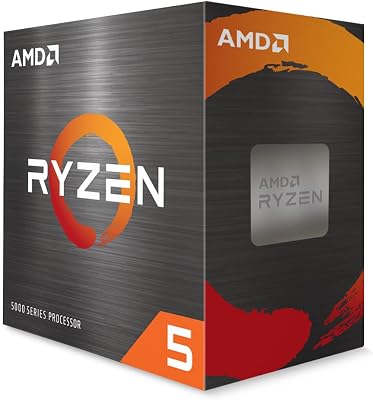


This guide breaks down every current Ryzen 5 worth buying for a gaming build in 2026, compares AM4 against AM5, explains where integrated graphics matter, and finishes with concrete value picks and a verdict so you can stop researching and start building.
As an Amazon Associate we earn from qualifying purchases…
🛒 Best Price Today on Amazon
Prime members get fast, free shipping on everything above, plus member-only deals. New members get a 30-day free trial — cancel anytime.
AM4 vs AM5: Which Platform Should a Gamer Buy in 2026?
The single biggest decision when choosing a Ryzen 5 is not the CPU itself, it is the socket. AM4 is AMD’s older platform, using DDR4 memory and PCIe 4.0. It is mature, dirt cheap, and motherboards can be found for well under $100. If you already own a decent AM4 board and DDR4 kit, dropping in a Ryzen 5 5600 or 5600X is one of the best value moves in all of PC gaming. There is simply no faster way to breathe life into an older Ryzen build.
AM5 is the modern platform. It requires DDR5 memory, supports PCIe 5.0, and, crucially, AMD has promised socket support through at least 2027. That means an AM5 board bought today can eventually host a much faster chip down the road without a full teardown. The tradeoff is higher upfront cost: AM5 boards start around $110 to $130, and DDR5 kits, while far cheaper than at launch, still carry a small premium over comparable DDR4.
Our rule of thumb for 2026: if you are building brand new and want longevity, go AM5 with a Ryzen 7600 or 9600X. If you are on a tight budget or reusing parts, AM4 with a 5600 delivers 90 percent of the gaming experience for a fraction of the money. For a deeper platform breakdown, see our AM4 vs AM5 upgrade guide.
Ryzen 5 CPU Comparison Table for Gaming
| CPU | Cores / Threads | Platform | Best For | Approx Price (2026 USD) |
|---|---|---|---|---|
| Ryzen 5 5600 | 6 / 12 | AM4 (DDR4) | Budget builds & AM4 upgrades | $105 |
| Ryzen 5 5600G | 6 / 12 | AM4 (DDR4) | Integrated graphics / GPU-less builds | $125 |
| Ryzen 5 7600 | 6 / 12 | AM5 (DDR5) | Best all-around value on AM5 | $185 |
| Ryzen 5 7600X | 6 / 12 | AM5 (DDR5) | Higher clocks, enthusiast tuning | $210 |
| Ryzen 5 9600X | 6 / 12 | AM5 (DDR5) | Newest Zen 5, future-proof builds | $249 |
Ryzen 5 5600 vs 5600X vs 5600G: The AM4 Trio Explained
These three chips look nearly identical on a spec sheet, but they serve very different buyers. Understanding the differences here will save you money.
Ryzen 5 5600: The Undisputed Value King
The plain Ryzen 5 5600 is the one we recommend to most budget gamers. It clocks up to 4.4 GHz, ships with a Wraith Stealth cooler in the box, and trades blows with much pricier chips in real games once paired with a capable GPU. At around $105, it frees up cash for the graphics card, which is where gaming performance actually lives. For a 1080p or 1440p build with a mid-range GPU, the 5600 will not bottleneck you in the vast majority of titles.
Ryzen 5 5600X: A Marginal Step Up
The 5600X boosts slightly higher (4.6 GHz) and historically commanded a premium. In 2026, the gap between the 5600 and 5600X in gaming is typically 2 to 4 percent, which is imperceptible during actual play. Only buy the 5600X if it happens to be on sale at a price close to the 5600. Otherwise, the cheaper chip is the smarter money.
Ryzen 5 5600G: When You Need Integrated Graphics
The 5600G is the odd one out. It includes Radeon Vega integrated graphics, meaning it can run a display and play light games with no dedicated GPU at all. That makes it ideal for a placeholder build during GPU shortages, a budget esports rig for titles like League of Legends or CS2 at low settings, or an emergency backup if your graphics card dies. The catch: the 5600G uses a monolithic die with only PCIe 3.0 and slightly weaker gaming performance once you add a real GPU. Buy it specifically for the iGPU, not as a general upgrade. If you want a GPU-free machine, our best APU builds guide covers memory and cooling tips that matter more than usual with integrated graphics.
Ryzen 5 7600 and 7600X: The AM5 Sweet Spot
It delivers a substantial generational leap over the 5600, often 25 to 40 percent faster in CPU-bound scenarios, thanks to higher IPC, faster DDR5 memory, and clocks reaching 5.1 GHz. It also ships with AMD’s Wraith Stealth cooler, which keeps it running quietly under gaming loads without an aftermarket purchase.
The 7600X pushes clocks to 5.3 GHz and runs a higher power limit, but it does not include a bundled cooler, so factor in $30 to $40 for a decent air tower. In gaming, the 7600 and 7600X land within a few percent of each other, so the non-X 7600 is once again the value champion. Both chips support PCIe 5.0 for next-gen SSDs and graphics cards, and both drop into the long-lived AM5 socket. If you are torn between the six-core Ryzen 5 and stepping up a tier, our Ryzen 5 vs Ryzen 7 comparison lays out exactly when the extra cores are worth it.
Ryzen 5 9600X and Value Picks: Getting the Most Frames Per Dollar
The newest option, the Ryzen 5 9600X, uses AMD’s Zen 5 architecture. It brings modest IPC gains and improved efficiency over the 7600, boosting up to 5.4 GHz within a lower 65W TDP envelope. In pure gaming, the uplift over a 7600 is small, usually single digits, but the 9600X runs cooler and is the most future-proof six-core option for a fresh AM5 build. It does not include a cooler, so budget for one.
When we rank these chips by price-per-frame, the value story is clear:
- Absolute best value on any budget: Ryzen 5 5600 on a cheap AM4 board with existing DDR4. Nothing beats it for dollars-per-frame.
- Best new-build value: Ryzen 5 7600. The DDR5 platform, bundled cooler, and PCIe 5.0 support make it the smartest fresh-start pick.
- Best for GPU-free or backup rigs: Ryzen 5 5600G, purely for the integrated Radeon graphics.
- Best for longevity: Ryzen 5 9600X, the newest silicon on a socket AMD will support for years.
- Skip unless on sale: The X-suffix chips (5600X, 7600X) rarely justify their premium for gaming alone.
One frequently overlooked cost is the cooler. The 5600, 5600G, 5600X, and 7600 all ship with a capable box cooler, so a gamer can build without spending extra on cooling. The 7600X and 9600X do not, so remember to add that to your total. For help choosing components around your new CPU, our budget gaming PC build guide pairs each of these chips with matching motherboards and GPUs.
Verdict: Which Ryzen 5 Should You Buy?
For most gamers in 2026, the answer comes down to two chips. If you value raw affordability or already own an AM4 platform, the Ryzen 5 5600 remains the smartest gaming CPU you can buy, delivering flagship-adjacent gaming performance for around $105. If you are building fresh and want a modern platform with an upgrade path, the Ryzen 5 7600 is the clear winner: it is fast, includes a cooler, supports DDR5 and PCIe 5.0, and sits on the long-lived AM5 socket.
Choose the 5600G only if you specifically need integrated graphics, and reach for the 9600X if maximum longevity and efficiency justify the extra spend. Whichever you pick, remember the golden rule of gaming builds: past a certain point, your money buys more frames in the GPU than in the CPU. A Ryzen 5 gets you across that threshold without draining the budget your graphics card needs.
Frequently Asked Questions
Is a Ryzen 5 enough for gaming in 2026?
Yes. A six-core, twelve-thread Ryzen 5 like the 5600 or 7600 comfortably handles modern AAA and esports titles when paired with a suitable GPU. For pure gaming, these chips rarely bottleneck mid-range and even many high-end graphics cards at 1440p and 4K, where the GPU does most of the work.
Should I buy the Ryzen 5 5600 or the 7600?
Buy the 5600 if you already have an AM4 motherboard and DDR4 memory, or if budget is your top priority. Buy the 7600 if you are building a new PC and want the faster Zen 4 performance, DDR5, PCIe 5.0, and a socket that supports future upgrades. The 7600 is roughly 25 to 40 percent faster in CPU-limited scenarios.
Do Ryzen 5 CPUs come with a cooler?
Most do. The Ryzen 5 5600, 5600X, 5600G, and 7600 all include a bundled AMD Wraith cooler that is adequate for gaming. The Ryzen 5 7600X and 9600X do not ship with a cooler, so plan to spend an extra $30 to $40 on an air or liquid cooler for those two chips.
Can the Ryzen 5 5600G run games without a graphics card?
Yes, within limits. The 5600G’s integrated Radeon Vega graphics can run esports titles like CS2, Valorant, and League of Legends at low-to-medium settings and 1080p. It is not powerful enough for demanding AAA games at high settings, but it is an excellent choice for a GPU-free build, an office-and-light-gaming machine, or a temporary rig until you add a dedicated graphics card.
Ready to decide? Our #1 pick for 2026 is the Ryzen 5 5600.
Live price & availability on Amazon.